Sulla the dictator
He was the first to lead a Roman army against Rome. Then he made himself dictator, posted lists of men anyone could kill, and retired to his villa.
Decisions, questions and your own progress, in the app
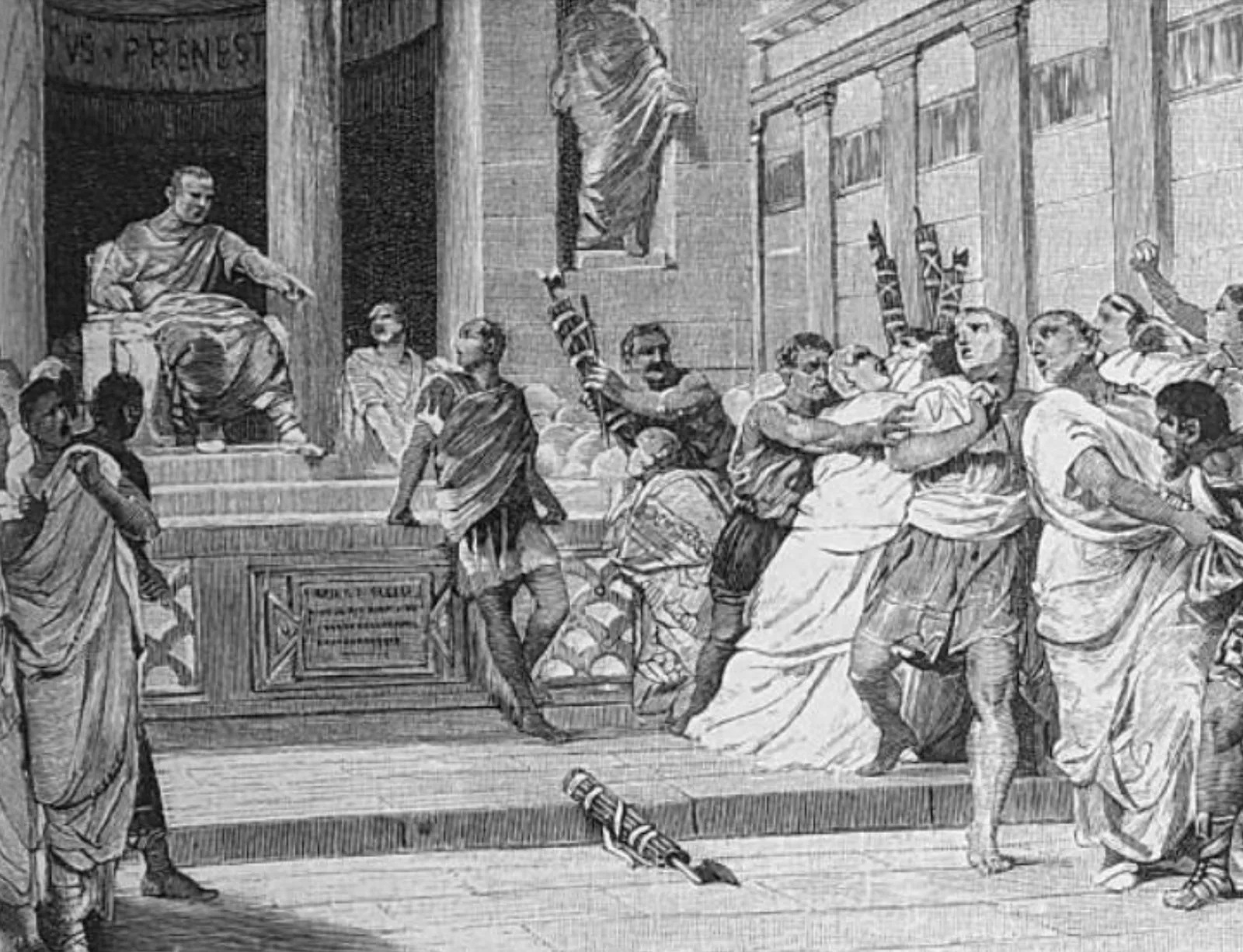
Lodovico Pogliaghi, The Praenestines before the tribunal of Sulla, c. 1885. From Francesco Bertolini, Storia di Roma (Milan, 1886) · Public domain · Source page
A man walks home
A private citizen, without guards
Rome, about 79 BC. A man of nearly sixty walks home from the Forum with a few friends and no guards. A young man follows him all the way, shouting insults. At the door the man says only: “This young man will prevent any future holder of such power from laying it down.”
The man is Lucius Cornelius Sulla. Nine years earlier he had become the first Roman to lead a Roman army into Rome. Then he had posted lists of citizens whom anyone could kill for a reward, and ruled as dictator with no time limit. And now he has given it all back.
A monster? The saviour of the Republic? Or something stranger? Follow him and decide for yourselves.
Our witnesses
A man who wrote his own story
Sulla wrote memoirs, 22 books. They are lost, but much of what we know comes from writers who read them: above all Plutarch, a Greek biographer born about AD 46 in Chaeronea, and Appian, a Greek from Alexandria writing about AD 150.
When Plutarch writes “as Sulla himself says”, remember who is talking: a man defending his own record.
Lucius Cornelius Sulla Felix
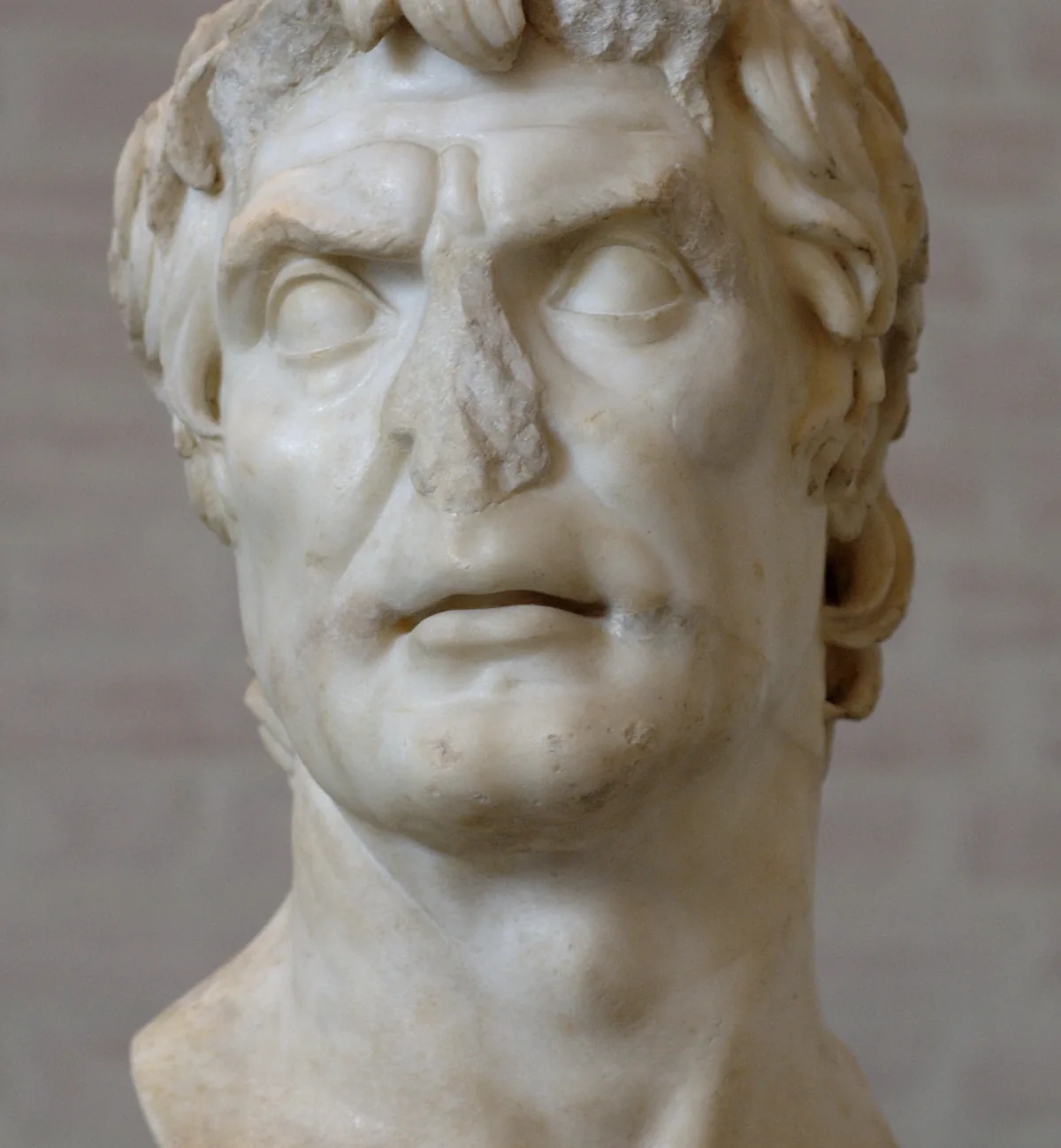
Marble head, the so-called Sulla, Roman copy. Glyptothek, Munich (inv. 309). Photo: Bibi Saint-Pol · Public domain · Source page
The first Roman to take Rome with a Roman army, and the first dictator with no time limit, who yet gave up his power of his own free will.
- Born: 138 BC, Rome; a poor branch of the patrician Cornelii
- Died: 78 BC, His estate near Cumae and Puteoli, on the Bay of Naples, a sudden haemorrhage after a long illness, aged about 60
- Won: The capture of Jugurtha, 105 BC (by negotiation); The southern campaign of the Social War, 89 BC; Athens and the Piraeus, 86 BC; Chaeronea, 86 BC, and Orchomenus, 86 or 85 BC; Sacriportus and the Colline Gate, 82 BC
- Lost: The election for praetor, c. 99 BC; His eastern command, taken from him by law, 88 BC; His left wing at the Colline Gate, 82 BC
“I was not sent to Athens by the Romans to learn its history, but to subdue its rebels.”
Background
A poor patrician
Sulla was born in 138 BC into one of Rome’s oldest families, the patrician Cornelii, but his branch had sunk into poverty. As a young man, Plutarch says, he lived in cheap rooms, spent his time with actors and comedians, and loved an actor named Metrobius all his life. An Athenian joker, mocking his blotched red-and-white face, called him “a mulberry sprinkled o’er with meal”.
Two inheritances paid for a political career, which he began late, as quaestor at about 31.
Rome against Rome
Rivals
The ring
In 107 BC Sulla went to Africa as quaestor to Gaius Marius, the general of the previous lesson, in the war against King Jugurtha of Numidia. In 105 he walked, with a handful of men, into the camp of King Bocchus of Mauretania, who was weighing whether to betray Jugurtha to Sulla or Sulla to Jugurtha. Bocchus chose Rome.
Marius had the triumph. Sulla had a signet ring made showing Jugurtha’s surrender, and sealed his letters with it all his life. He then fought the Cimbri under Marius, then under Marius’s colleague Catulus, whose army he fed so well that it had grain to spare for Marius’s men. Plutarch traces their rivalry to the ring and to humiliations like this.
91–88 BC
War with Italy
In 91 BC Rome’s Italian allies, who fought in every Roman war without being citizens, rose in revolt. Rome won partly by giving way: by 89 BC it had granted citizenship to most of them.
In the south, Sulla was Rome’s most successful general. He destroyed Stabiae, besieged Pompeii and won the grass crown, Rome’s highest honour for saving an army. When his soldiers clubbed an officer to death, he did not punish them: already, Plutarch thought, he was buying their loyalty.
The East
One day in Asia
Across the Aegean, King Mithridates VI of Pontus, on the Black Sea, saw Rome tied down in Italy. In 89–88 BC he overran the Roman province of Asia, in today’s western Turkey, and many Greek cities welcomed him. Then, Appian says, he sent secret orders: on one day, every Roman and Italian in the cities, with their wives and children, was to be killed.
The cities obeyed. Modern historians call it the “Asian Vespers”, after a massacre in medieval Sicily. Valerius Maximus and Memnon give 80,000 dead, Plutarch 150,000; both figures are probably inflated. But the massacre was real, and Rome needed a general.
Mithridates VI Eupator, king of Pontus
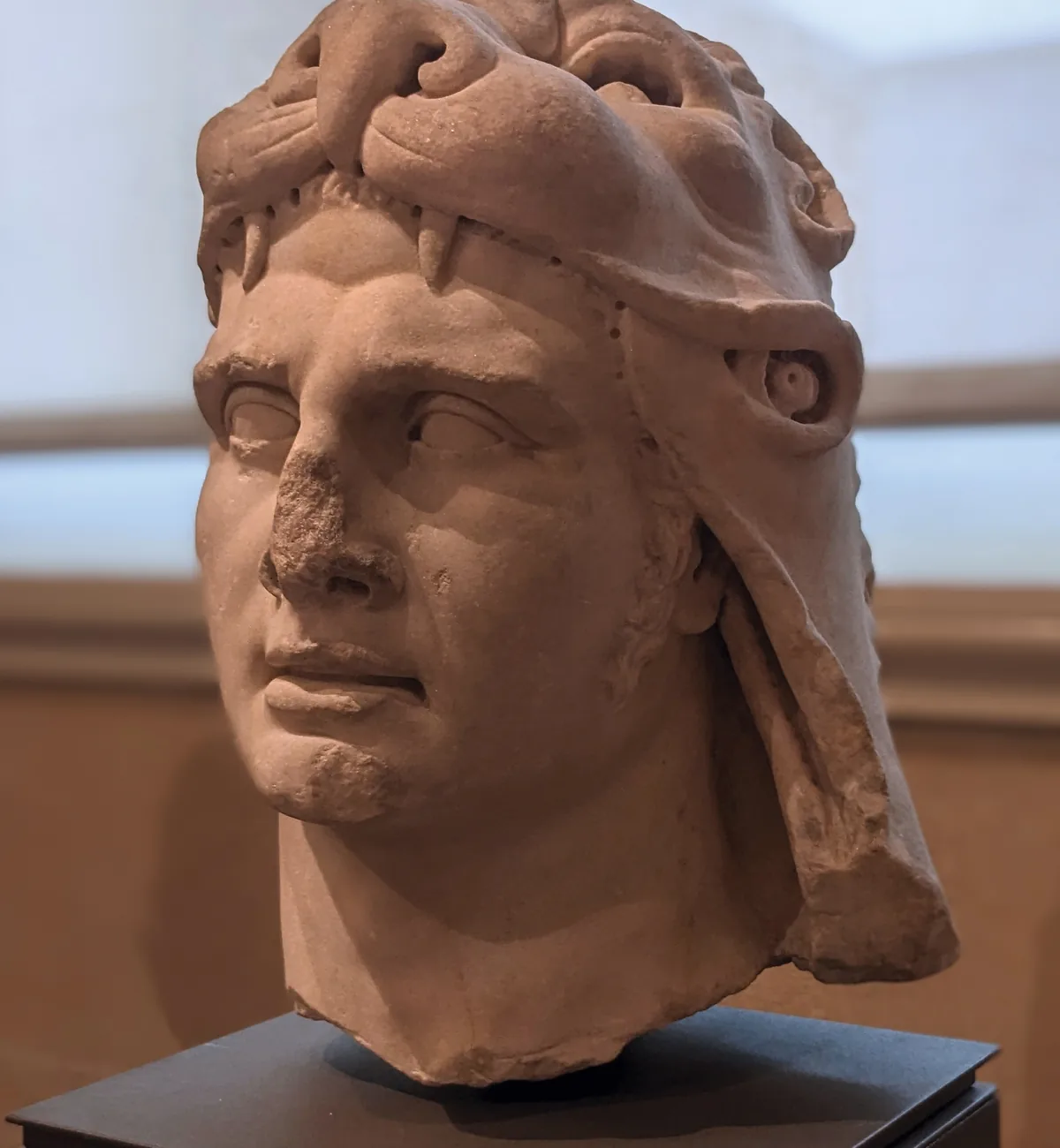
Head of Mithridates VI as Heracles, marble, 1st century AD. Louvre, Paris (Ma 2321). Photo: Shonagon · CC0 · Source page
Rome’s most stubborn enemy in the East: he fought it in three wars over 25 years, and Sulla let him go.
- Born: c. 134 BC (some say 132), Probably Sinope, on the Black Sea coast
- Died: 63 BC, Panticapaeum (Kerch, in Crimea), after his son rebelled: poison failed, so he had an officer kill him (Appian)
- Won: The conquest of the province of Asia, 89–88 BC
- Lost: Chaeronea, 86 BC, and Orchomenus, 86 or 85 BC (his generals); The Third Mithridatic War, against Lucullus and Pompey, 73–63 BC
“Mithridates, who was king of twenty-two nations, administered their laws in as many languages, and could harangue each of them, without employing an interpreter.”
Consul, 88 BC
The command is taken away
In 88 BC Sulla, almost fifty, was elected consul and drew by lot the war against Mithridates, the richest command a Roman could hope for. Then a tribune of the plebs, Publius Sulpicius Rufus, put several laws to the people. One spread the new Italian citizens across all the voting tribes, giving them real weight. Another gave the eastern command to Marius, who held no office at all.
Sulpicius’s gangs fought in the Forum, and Sulla’s son-in-law was killed. The laws passed, and Marius’s officers set out to take over Sulla’s army.
A decision point
You are Lucius Cornelius Sulla, consul.
The army camp at Nola, east of Naples (Appian says Capua), 88 BC
You have six legions, veterans of the Social War. A law passed amid riots has given your war to Marius, a private citizen of nearly seventy, and his officers are on their way to take your army.
Your soldiers want the rich eastern war and fear Marius will take other men. Your officers know that no Roman general has ever led an army against Rome. The law was passed by force, but it is a law.
What do you do?
- Hand over the army and fight the law in the Senate and the courts You stay consul and keep the law on your side. But Marius sails east with your army and your war, and Sulpicius’s gangs still rule the Forum. Your career would probably end in the courts, or worse.
- Stay with the army and ask the Senate to cancel the laws as passed by violence Legal and patient: only three years ago the Senate voided the tribune Drusus’s laws as improperly passed. But it is frightened of Sulpicius’s gangs, and meanwhile Marius’s men reach your camp; your soldiers may decide for you.
- Sail east with the army anyway, ignoring the law You fight the war you want, but as a rebel with no money or orders from Rome, while Marius rules the city behind you and can declare you an enemy.
- March on Rome to “free it from tyrants” and cancel the laws You can undo the laws in days. But you would be the first Roman to bring an army into the city, and every ambitious general after you would remember it.
What really happened
March on Rome to “free it from tyrants” and cancel the laws
Sulla marched. His soldiers stoned Marius’s officers; his own officers, all but one quaestor, deserted him. Asked by envoys why he was marching on his country, he replied, in Appian’s words: “To deliver her from tyrants.”
His men broke in at the Esquiline gate. When the crowd threw tiles from the roofs, Sulla seized a torch and set houses alight. Marius fled to Africa; Sulpicius was betrayed and killed.
Plutarch, probably drawing on Sulla’s memoirs, says he hesitated until a goddess put a thunderbolt in his hand in a dream. Appian says the soldiers voiced what he dared not, and sees in it the turning point: “From this time the seditions were decided only by the arbitrament of arms.”
88–86 BC
Rome changes hands
Sulla had Marius and eleven others declared public enemies, and in 87 BC sailed for Greece. Behind him the consul Cinna turned against him, though he had sworn to support him; with Marius he took Rome, killed Sulla’s friends and destroyed his house. Marius died in January 86 BC. Sulla, an outlaw at home, was fighting Rome’s war abroad.
War in Greece
87–86 BC
The groves of the Academy
Athens had gone over to Mithridates, and the king’s best general, Archelaus, held its port, the Piraeus. Sulla, besieging both, cut down the sacred groves of the Academy, where Plato had taught, to build siege engines, and took the temple treasures of Delphi and Olympia to pay his men. Starving Athenians ate leather. Athens fell at midnight on 1 March 86 BC.
The battlefield
Plutarch’s home town
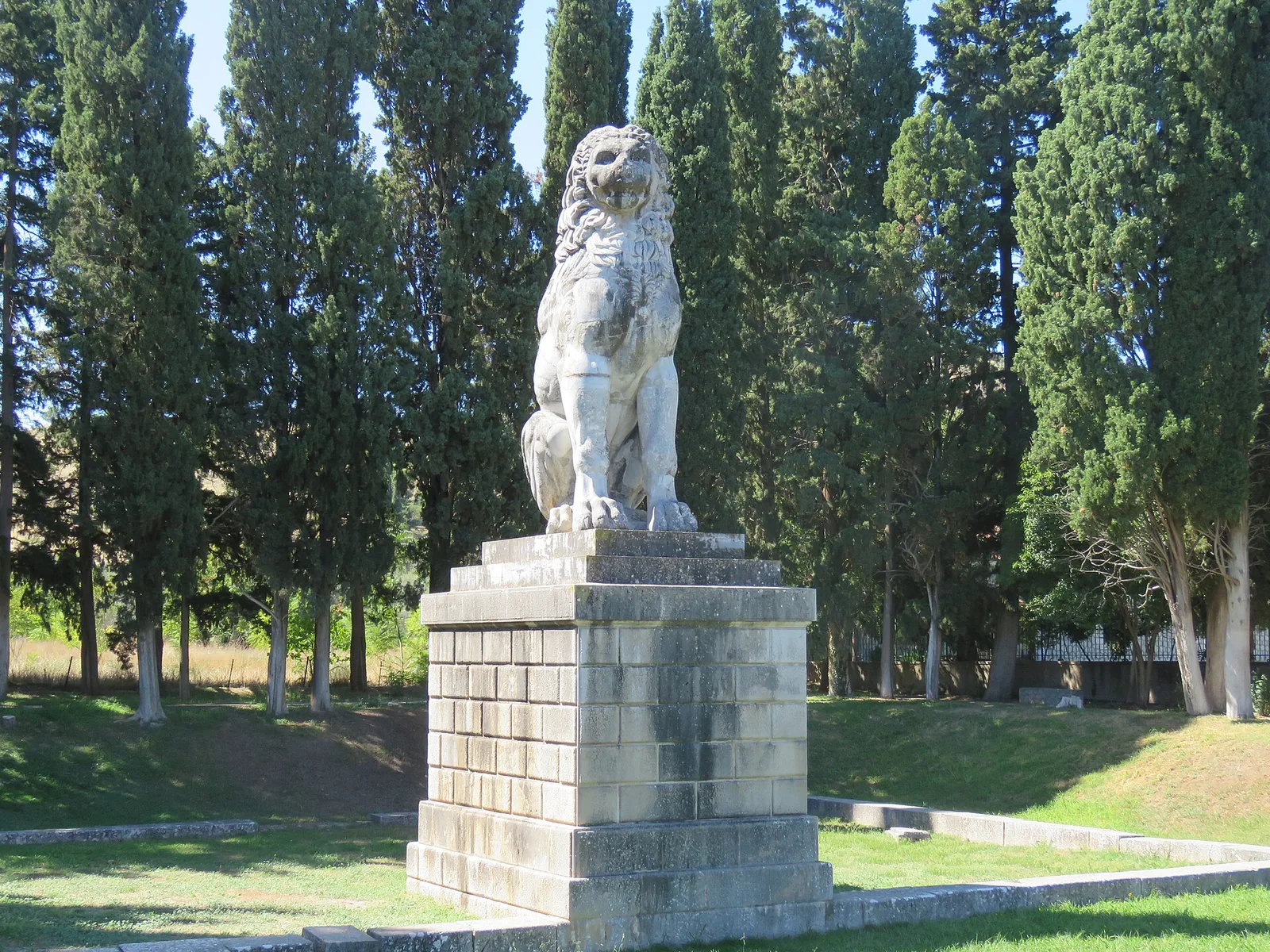
The Lion of Chaeronea, c. 338 BC, re-erected 1902. Photo: Calistemon, 2022 · CC BY-SA 4.0 · Source page
Then the king’s main army came south into Boeotia under Archelaus and Taxiles. Sulla met it at Chaeronea, Plutarch’s home town. Plutarch knew the ground and read Sulla’s memoirs, so this is the best-described battle of Sulla’s life, and the most suspect.
Chaeronea: who fought whom
Spring or summer 86 BC
The Kephissos plain by Chaeronea, in Boeotia
Sulla’s army
- Commanders: Sulla (right wing), Lucius Licinius Murena (left wing), Hortensius and Galba (reserves)
- Strength: under 15,000 foot and 1,500 horse (Plutarch, from Sulla’s memoirs); less than a third of the enemy (Appian); about 16,500 Romans and Italians; perhaps 30,000 with Greek allies (Modern estimate)
- Losses: 14 missing, two of whom came back that evening (Plutarch, from Sulla); 15 lost, two of whom turned up later (Appian)
No historian believes this figure for a long infantry battle.
Mithridates’ army
- Commanders: Archelaus, Taxiles
- Strength: 120,000 (Plutarch and Appian); 100,000 foot, 10,000 horse, 90 scythed chariots (Plutarch, on Taxiles’ army); over 60,000 (Memnon of Heraclea); about 60,000, perhaps more (Modern estimate)
- Losses: only 10,000 escaped to Chalcis (Plutarch and Appian)
Outcome: A crushing victory for Sulla. Archelaus escaped with the survivors to Chalcis on Euboea.
Plutarch, and probably Appian, took these numbers from Sulla’s memoirs, which made the enemy huge and Sulla’s losses tiny. Memnon, who seems not to have used them, gives a much lower figure.
The battle of Chaeronea
86 BC, one day in spring or summer
Mithridates’ main army has come south into Boeotia under Archelaus and Taxiles, and meets Sulla on the plain between Chaeronea and the Kephissos river. Sulla faces east. In front of Archelaus’s phalanx stand scythed chariots, and a Pontic force holds the hill of Thourion, above the Roman right.
One reconstruction, after Plutarch, Sulla 16–19 (Plutarch was born at Chaeronea), as read by J. Kromayer (1907) and N. G. L. Hammond (1938). No ancient source says which way the lines faced: here the Roman line faces east across the plain between the town and the Kephissos.
Mount Thourion is put on Isoma hill, where a stone naming Homoloichus and Anaxidamus was found in 1990 (Camp et al., 1992); whether it is Sulla’s trophy is disputed. Kromayer put Thourion nearer the citadel. The course of the brook Molos and the sites of the camps are uncertain. The Kephissos follows its modern course; unit depths are exaggerated so they can be seen; positions are approximate. Plutarch says some fugitives from Thourion ran into Murena’s men; on this layout they would have run along the whole Roman front.
Phases of the battle
- The lines form Sulla’s line faces east across the plain: Murena on the left by the river, Sulla on the right by the town, reserves behind. Opposite stands Archelaus’s army, scythed chariots before the phalanx. A Pontic force holds Thourion hill, above the Roman right.
- Thourion is taken Two men of Chaeronea, Homoloichus and Anaxidamus, lead Roman soldiers by a hidden path above the Pontic force on Thourion. It flees down the slopes, losing 3,000 men, Plutarch says, and its fugitives spread panic in their own lines.
- Sulla charges Sulla closes the gap fast, so the chariots never gather speed; the Romans laugh and call for more, “as they are wont to do at the races”. The legions meet the deep phalanx, whose front ranks, 15,000 freed slaves, give ground only slowly.
- Archelaus goes round Archelaus’s horsemen ride round the Roman left. Hortensius is pushed back towards the hills, and Sulla rides across to save him. Archelaus then wheels on the Roman right, now without its general, while Taxiles attacks Murena.
- Rout to the river Sulla returns to his right and breaks the Pontic line by the brook Molos, where a trophy later stood; Murena drives off Taxiles. The Pontic army flees to the river and its camp. Plutarch says only 10,000 reached Chalcis.
The strategy
- Sulla’s army: Sulla’s line faces east: Murena on the left by the river, Sulla on the right by the town, reserves behind. He closes the distance fast, so the chariots cannot gather speed. Roman soldiers, led by two men of Chaeronea, climb a hidden path to attack the Pontic force on Thourion from above.
- Mithridates’ army: Archelaus places scythed chariots before his phalanx, to break the Roman line as it charges. The force on Thourion sits above the Roman right, and his horsemen are meant to ride round the Roman left.
- Men of Chaeronea: Two men of Chaeronea, Homoloichus and Anaxidamus, lead Roman soldiers by a hidden path above the Pontic force on Thourion. The sources give no more detail of the townspeople’s plan.
What decided it: The chariots never gathered speed, because Sulla closed the distance fast, and the fugitives from Thourion spread panic through the Pontic ranks. Sulla then returned to his right and broke the Pontic line by the brook Molos.
86 or 85 BC
“Tell them: at Orchomenus”
Mithridates sent another army, 80,000 strong in the sources. Sulla met it near Orchomenus, by the marshes of Lake Copais. When his line broke, he leapt from his horse, seized a standard and ran at the enemy, crying, in Plutarch’s version: “For me, O Romans, an honourable death here; but you, when men ask you where you betrayed your commander, remember to tell them, at Orchomenus.” His men rallied.
A decision point
You are Sulla, Rome’s commander in the East, and at home a public enemy.
Boeotia, winter 86/85 BC
You have beaten two royal armies. But your enemies rule Rome: they have outlawed you, destroyed your house and sent an army to replace you. Your wife Metella and many senators have fled to your camp. That army, now under the ruthless Fimbria, is in Asia beating Mithridates on its own.
Archelaus asks to talk. You have almost no fleet and no money. And Mithridates’ hands are red with the blood of the Italians of Asia.
What do you do?
- Follow Mithridates into Asia and Pontus and destroy him It is what your soldiers want, and what the dead of Asia deserve. But without a fleet it could take years, Fimbria might win first, and your enemies would have all that time to secure Italy against you.
- Join forces with Fimbria and finish the war together Rome’s two armies together could probably finish Mithridates. But Fimbria serves the men who outlawed you; you would be handing your enemies the victory and your army.
- Make a quick peace: the king gives back his conquests, pays and hands over ships, and you go home The war ends in months, and you have money, ships and a loyal army to deal with Rome. But the king who ordered the massacre keeps his throne and can strike again.
What really happened
Make a quick peace: the king gives back his conquests, pays and hands over ships, and you go home
Sulla made peace. Mithridates gave up his conquests, paid 2,000 talents and handed over 70 warships, says Plutarch (3,000 and 80, says Memnon), and kept his kingdom. When they met at Dardanus, near Troy, in 85 BC, Sulla told the king: “surely it is the part of suppliants to speak first, while victors need only to be silent.” Fimbria’s army went over to Sulla, and Fimbria killed himself.
His soldiers were furious that the king who had butchered the Romans of Asia sailed home with his plunder. Sulla said he could not fight Mithridates and Fimbria at once. Historians agree on the deeper reason: he put the war at home before Rome’s war abroad.
85–84 BC
Asia pays
The cities of Asia paid for the war, 20,000 talents in Plutarch, and stayed in debt to Roman moneylenders for a generation. On his way home Sulla also carried off from Athens a library holding most of Aristotle’s works: the man who cut down Plato’s grove brought Aristotle’s books to Rome.
Master of Rome
83–82 BC
Civil war
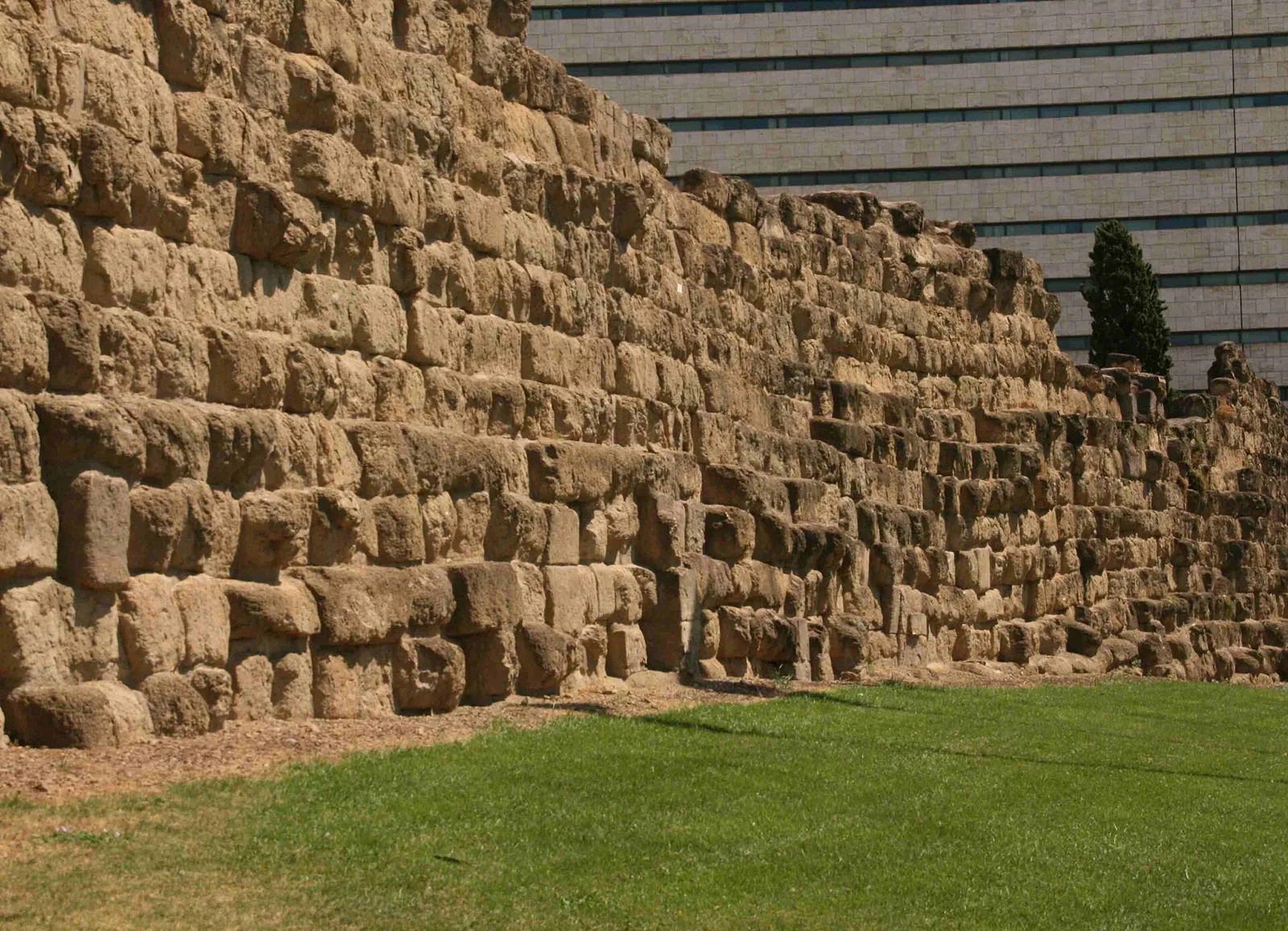
The Servian wall at Piazza dei Cinquecento, Rome. Photo: Roundtheworld (Wikivoyage), 2010 · Public domain · Source page
In spring 83 BC Sulla landed at Brundisium with about 40,000 men. Nobles joined him: the veteran general Metellus Pius, the young Marcus Licinius Crassus, and the 23-year-old Pompey with three legions he had raised himself. His enemy Carbo complained, Plutarch says, that “in making war upon the fox and the lion in Sulla, he was more annoyed by the fox.”
In 82 BC Sulla beat Marius’s son and shut him up in Praeneste. Then the Samnites, Rome’s old enemies and the last Italians still in arms, marched on Rome itself.
The Colline Gate: who fought whom
1 November 82 BC, afternoon and night
Outside the Colline Gate, on the north-east edge of Rome
Sulla’s army
- Commanders: Sulla (left wing), Marcus Licinius Crassus (right wing)
- Strength: give no figure (Ancient sources); unknown; probably several legions, tired after a forced march (Modern estimate)
- Losses: not given; the left wing was shattered and “many friends” lost (Plutarch)
Samnites, Lucanians and Marians
- Commanders: Pontius Telesinus, the Samnite, Marcus Lamponius, the Lucanian
- Strength: 40,000 (Velleius Paterculus); 70,000 (Appian, on the relief army before the battle)
- Losses: 6,000 / more than 8,000 prisoners killed after the battle (Plutarch / Appian)
Outcome: Victory for Sulla after a night of fighting. Telesinus was killed; Praeneste surrendered, the younger Marius killed himself, and Sulla had most of its men put to death.
Round, probably inflated figures. Appian gives 50,000 dead on both sides together; the prisoners range from 4,000 to more than 8,000.
The battle of the Colline Gate
1 November 82 BC
On 1 November 82 BC, the Samnites, Lucanians and Marians, led by Pontius Telesinus, camp about two kilometres from the Colline Gate of Rome, after a night march from Praeneste. Sulla’s army hurries towards them, tired from a forced march.
After Plutarch, Sulla 29–30, Appian, Civil Wars 1.93, and Velleius 2.27. No source says which way the lines faced. This reconstruction, with Sulla’s left by the gate and Crassus on the right, follows from the left wing’s flight to the camp and the gate and from Crassus’s pursuit north to Antemnae. The Samnite camp is put about 1.7 km from the gate (Plutarch’s “nine furlongs”). Appian, unlike Plutarch, gives the victory on the right to Sulla himself.
The Servian wall and gates follow the standard topography; the roads follow the later Via Salaria and Via Nomentana; the Aurelian walls did not yet exist. The high ground follows the surface of the modern city, so it is only a guide. Modern river courses; positions approximate.
Phases of the battle
- Morning: the Samnites at the gate Pontius Telesinus has marched by night from Praeneste and camps under two kilometres from the Colline Gate. Young Roman nobles ride out and are cut down. Balbus arrives with 700 of Sulla’s horsemen; Sulla’s army hurries behind.
- Four o’clock: Sulla attacks Sulla camps by the gate and feeds his tired men. Against his officers’ advice he sounds the charge, “though it was now getting on towards four o’clock in the afternoon” (Plutarch). Sulla holds the left, by the gate; Crassus the right.
- The left breaks, the right wins Crassus routs the enemy in front of him, but on the left the Samnites drive Sulla’s men back. Two spearmen aim at Sulla on his white horse; his groom whips it on, and the spearheads only graze its tail.
- Night: the gate and Antemnae Sulla’s left flees to the gate, where the guards drop the portcullis and crush many of their own. The rest fight on into the night; Telesinus is killed and his camp taken. Late at night Crassus sends for supper: he has chased the enemy to Antemnae.
- The next day: the prisoners Sulla has the prisoners, 6,000 in Plutarch and over 8,000 in Appian, killed on the Campus Martius (in the Villa Publica, says Livy; in the circus, says Plutarch), while he addresses the Senate in the nearby temple of Bellona: “some criminals were being admonished, by his orders”.
The strategy
- Sulla’s army: Sulla holds the left, by the gate, and Crassus the right. Against his officers’ advice he sounds the charge, close to four in the afternoon.
- Samnites, Lucanians and Marians: Telesinus marched by night from Praeneste and camped under two kilometres from the Colline Gate, intending to march on the city itself. The sources give no more detail of his plan.
What decided it: The decision came from the right: Crassus routed the enemy in front of him and chased it as far as Antemnae, while the left was driven back to the gate. The fighting went on into the night, until Telesinus was killed and his camp taken.
A decision point
You are Sulla, master of Rome.
Rome, November 82 BC
You have won, and your enemies’ armies are destroyed. Twice the friends of Marius have murdered your friends in Rome, most recently the chief priest Scaevola. Men on your side have already begun killing on their own.
In the Senate young Gaius Metellus stands up: “We do not ask thee to free from punishment those whom thou hast determined to slay, but to free from suspense those whom thou hast determined to save.”
What do you do with your enemies?
- Declare an amnesty and try only a few leaders Rome might begin to heal, and you would look like a statesman. But your soldiers and friends want revenge and rewards, and the men who killed your friends would walk free.
- Put your enemies on trial in the ordinary courts Legal and slow. The juries include men of both sides, trials could last years, and every acquittal would be a defeat for you.
- Post a public list of enemies, so that everyone not on it knows he is safe It would stop the random killing, as Metellus asks. But a list of men to be killed needs rules: who kills them, who gets their property, and what happens to anyone who hides them.
What really happened
Post a public list of enemies, so that everyone not on it knows he is safe
Sulla posted a list, and turned it into a killing machine. Eighty names, then 220, then 220 more: these were the first proscriptions. Anyone could kill a listed man; the killer received two talents, even a slave who killed his master. Anyone who hid one was put to death. The listed man’s property was sold, and his sons and grandsons were barred from office.
Plutarch and Appian saw cruelty and greed. The historian François Hinard argued that the lists were also meant to limit a killing already under way and give it the form of law. If so, they failed.
82–81 BC
“His great house killed this man”
The killing spread far beyond the names. Many died for their property: “his great house killed this man, his garden that man, his warm baths another,” even the killers said, according to Plutarch. A quiet man, Quintus Aurelius, found his name on the list and said: “Ah! woe is me! my Alban estate is prosecuting me.” The lists stayed open for months, and thousands more died in the towns of Italy.
Gaius Julius Caesar, 18, Marius’s nephew by marriage, refused Sulla’s order to divorce his wife, Cinna’s daughter. Sulla let him live, but warned, the story goes, that in this boy there were “many Mariuses”. The next lesson follows that boy.
The dictator who left
82–81 BC
Dictator, with no time limit
Both consuls were dead. The interrex, a temporary stand-in, proposed a law making Sulla dictator, in Appian’s words, “for the enactment of such laws as he himself might deem best and for the regulation of the commonwealth”. Rome had had no dictator for 120 years. Sulla walked with 24 lictors, like the old kings, Appian says.
Then he rebuilt the state for the Senate. He doubled it to about 600 members. He bound the tribunes: no laws without the Senate’s approval, and no higher office for any man who had been tribune. He fixed the cursus honorum by law and gave the courts back to senators. In 81 BC he celebrated a triumph and took the name Felix, “the Fortunate”.
Myth
Sulla made himself dictator for life.
The truth
He was made dictator with no time limit, which was new and shocking. But he gave up the office within a few years and died a private citizen. The first Roman named “dictator for life” was Julius Caesar, in 44 BC.
The evidence
Appian, Civil Wars 1.98–104; Plutarch, Sulla 33–34. The date he gave it up is disputed: 81, 80 or 79 BC.
A decision point
You are Lucius Cornelius Sulla Felix, dictator.
Rome, 80 BC
Your laws are passed. Tens of thousands of your veterans hold farms across Italy; 10,000 freed slaves of the dead carry your name in Rome. Your rivals are dead or far away. You are almost sixty, and still strong.
You could keep your power. But you believe in your laws, in the Senate and in your luck.
What do you do?
- Stay dictator for life and rule through the magistrates Your laws would be safe while you live. But you would be a king in all but name, the thing Romans hated most, and your system would die with you.
- Give up the dictatorship but stay in Rome as consul year after year, guarding your laws A legal way to watch over your work. But a permanent consul is a dictator in a toga, and the Senate would never learn to rule without you.
- Give up everything, dismiss your lictors and go home a private citizen The boldest proof that you fought for the Republic and not for yourself. But your laws must now stand without you, and your enemies’ sons are still alive.
What really happened
Give up everything, dismiss your lictors and go home a private citizen
Sulla came close to the second, then did the third: consul in 80 BC, probably while still dictator, he refused a second consulship and by 79 had given up all his power. He dismissed his lictors and retired to his estate near Cumae and Puteoli to hunt, fish and write his memoirs. Appian, who called him a tyrant, found it “wonderful”: no one before had given up such power freely.
Appian guessed: “because he was weary of war, weary of power, weary of Rome, he finally fell in love with rural life.” Julius Caesar, who kept his power until he was killed, mocked him, says a hostile witness in Suetonius: Sulla “did not know his A. B. C.”
78 BC
No better friend, no worse enemy
Sulla died in 78 BC, aged about sixty. The day before, Plutarch says, he had a local official strangled in front of him; shouting at him, he burst an abscess, and after a night of agony he died. His veterans escorted his body through Italy to a state funeral.
On his tomb in the Campus Martius, Plutarch was told, was an epitaph he wrote himself, “and the substance of it is, that no friend ever surpassed him in kindness, and no enemy in mischief.”
Myth
Sulla died eaten alive by worms, a punishment for his crimes.
The truth
That is Plutarch’s story, but it is a stock death for hated rulers: Jewish and Christian writers gave the same end to Antiochus IV and Herod Agrippa. Appian says only that Sulla fell into a fever and died in the night. A burst abscess and heavy bleeding suggest a real illness we cannot name.
The evidence
Plutarch, Sulla 36–37; Appian, Civil Wars 1.105; 2 Maccabees 9:9; Acts 12:23. The Greek word means lice; Perrin translated it “worms”.
What Sulla left behind
- 88 BC Sulla marches on Rome: the first Roman army to take the city.
- 78–77 BC The consul Lepidus revolts against Sulla’s system and is crushed.
- 70 BC Pompey and Crassus, as consuls, restore the tribunes’ powers: the heart of Sulla’s system is undone.
- 63 BC Catiline, who killed for Sulla in the proscriptions, plots to seize Rome; many of Sulla’s veterans join him.
- 49 BC Caesar crosses the Rubicon and marches on Rome, as Sulla had in 88.
- 43 BC Antony, Octavian and Lepidus revive Sulla’s proscriptions; Cicero is killed.
How do we know?
Source: An order to kill
“he wrote secretly to all his satraps and magistrates that on the thirtieth day thereafter they should set upon all Romans and Italians in their towns… He threatened to punish any who should bury the dead or conceal the living, and offered rewards to informers and to those who should kill persons in hiding, and freedom to slaves for betraying their masters.”
Appian wrote this about 240 years after the massacre; another of his books tells of Sulla’s proscriptions.
- Compare the king’s order with Sulla’s proscription rules. What is alike? Almost everything: rewards for killers and informers, punishment for hiding victims, rewards even for slaves who turn on their masters. Either Sulla borrowed the method, or Appian, who wrote both stories, told them in the same terms.
- Why do the death tolls (80,000; 150,000) differ so much? Nobody counted. The figures appear in writers living a century or more later, in passages meant to shock. Round, huge numbers for an enemy’s atrocities are a warning sign.
Source: Silver for the soldiers
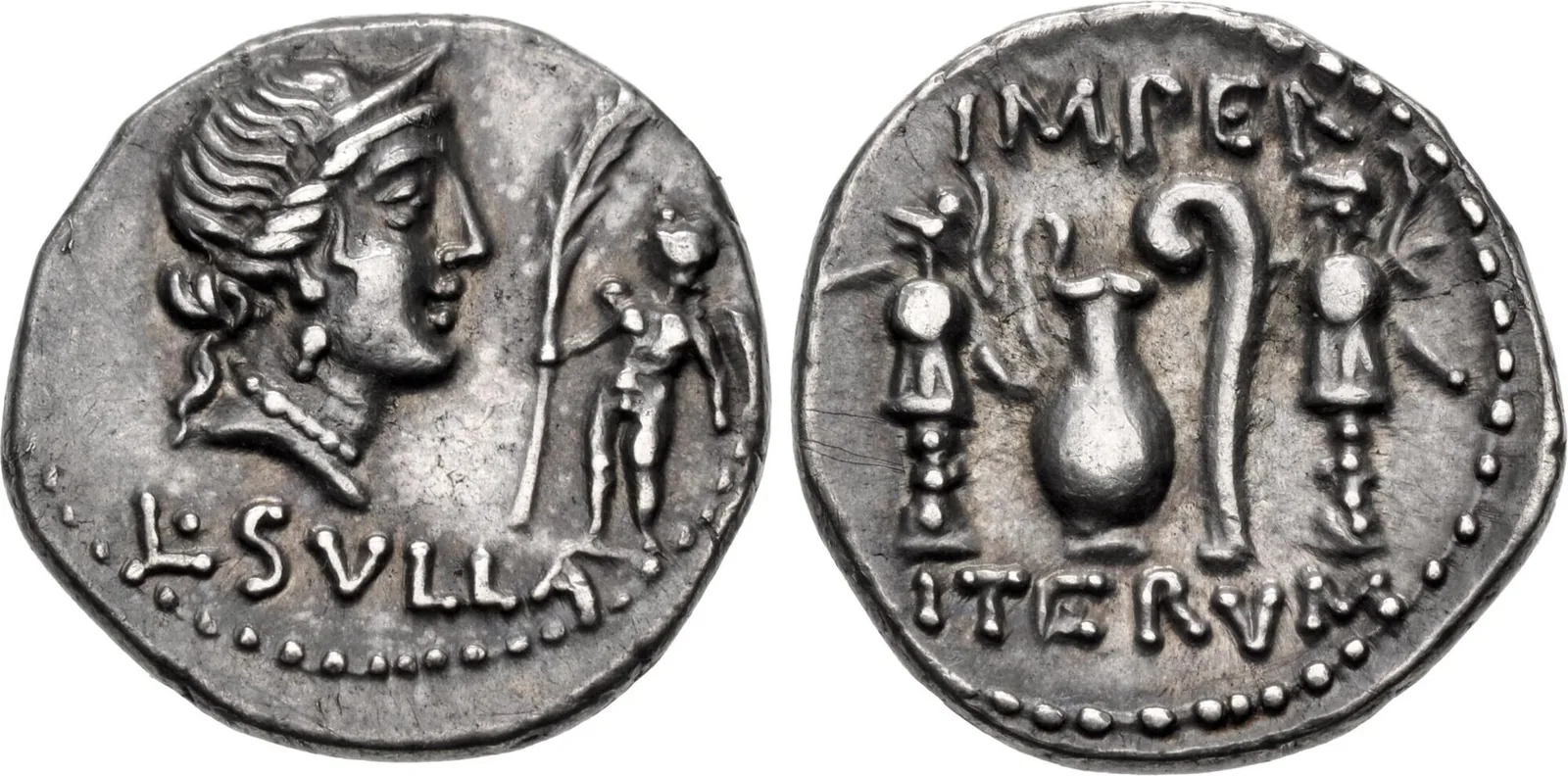
Silver denarius of L. Cornelius Sulla, 84–83 BC (RRC 359/2). Photo: Classical Numismatic Group · Classical Numismatic Group (CNG) · CC BY-SA 2.5 · Source page
Denarius of Sulla, from a mint travelling with his army, 84–83 BC
Sulla paid his army with coins like this on the way home to civil war. Venus was his protecting goddess; IMPER ITERVM means “hailed as victorious general a second time”.
- Who held these coins, and what message did they get? His soldiers, first of all. Two trophies, perhaps for Chaeronea and Orchomenus, and Venus, the goddess of his luck: the gods favour Sulla and his victories are real, just as he heads into civil war.
- Is a coin better evidence than Plutarch? It is from the time and was issued by Sulla himself, so it shows what he wanted people to believe. It does not prove the victories were as great as he claimed: it is propaganda in silver.
Source: Shame or sorrow
“He was well versed alike in Grecian and Roman letters, of remarkable mental power, devoted to pleasure but more devoted to glory… Before his victory in the civil war he was the most fortunate of all men… As to what he did later, I know not if one should speak of it rather with shame or with sorrow.”
Sallust, a supporter of Caesar, wrote this about 37 years after Sulla’s death.
- Where does Sallust stop, and why? At the civil war. He praises the young officer and will not describe the dictator: his silence is the verdict.
- Sallust was Caesar’s man. Does that make his praise more or less believable? In a way, more: a Caesarian had every reason to blacken Sulla, and still he admits his gifts. That is evidence against the writer’s interest.
Myth
Sulla was simply a monster. Or, as others say, simply the reformer who saved the Republic.
The truth
Each is half the story. The proscriptions, the massacre of prisoners and the killings at Praeneste happened, and Romans who shared much of his politics, like Cicero, condemned them. The laws were real too, some lasted, and he gave up absolute power of his own will. Plutarch himself asked whether power changed Sulla or only revealed him.
The evidence
Cicero, On Duties 2.27 (44 BC): in Sulla’s case “an unrighteous victory disgraced a righteous cause”; Livy, Summary of Book 88; Appian, Civil Wars 1.103; Plutarch, Sulla 30.
Saviour or killer of the Republic?
Did Sulla save the Roman Republic, or kill it?
- Ernst Badian, Lucius Sulla: The Deadly Reformer (1970) Sulla was an able soldier and a ruthless politician, not a far-sighted statesman. His “reform” handed power back to a narrow oligarchy that had already failed, and the system began to come apart within a decade. What lasted was his example: a general and his army could take Rome and rewrite the state.
- Arthur Keaveney, Sulla: The Last Republican (1982; 2nd ed. 2005) Sulla sincerely believed in government by the Senate. He used force, then gave it up, and the resignation is the proof. The failure was not his but that of the senatorial class, which did not know how to use what he gave it.
- Harriet Flower, Roman Republics (2010) There was no single “Roman Republic”. The old republic of the nobles died in the violence that began in 88. Sulla’s laws created a new and different republic, more legalistic and resting on force, which lasted only about a generation. Asking whether Sulla “saved” the old one misses that it was already gone.
Sulla broke every rule to restore the rules, then went home. Can a state be saved by the methods that destroy it?
What do you know now?
Check yourself
What did Sulla’s signet ring show?
Answer: King Bocchus handing Jugurtha over to him. Right. Marius got the triumph, but Sulla sealed his letters all his life with the moment he himself took Jugurtha. Plutarch sees the rivalry starting there.
Check yourself
Why did Sulla march on Rome in 88 BC?
Answer: A tribune’s law had transferred his command against Mithridates to Marius. Right. Sulpicius’s law, passed amid riots, took the rich eastern war from him. Sulla said he came “to deliver her from tyrants”.
Check yourself
Why did Sulla make a quick peace with Mithridates in 85 BC?
Answer: To go home with money, ships and a loyal army and fight his enemies in Rome. Right. He was an outlaw at home, and a rival Roman army was fighting in Asia. He put the war at home first.
Check yourself
Why do historians distrust the numbers for Chaeronea?
Answer: They come, through Plutarch and probably Appian, from Sulla’s own memoirs. Right. 120,000 enemies and 14 Romans missing are a victor’s figures. Memnon, who seems not to have used the memoirs, gives over 60,000.
Check yourself
What was a proscription?
Answer: A posted list of men anyone could kill for a reward, whose property was then sold. Right. The killer got two talents, anyone who hid a listed man was put to death, and sons and grandsons were barred from office.
Check yourself
“Sulla was dictator for life.” What is true?
Answer: He was appointed with no time limit, but gave up power within a few years and died a private citizen. Right. The first dictator “for life” was Julius Caesar, in 44 BC.
Terms
- consul One of the two magistrates elected each year to lead Rome and command its armies.
- quaestor The lowest rung of the ladder of offices: in charge of money, in Rome or beside a general. Sulla made every quaestor a member of the Senate.
- tribune of the plebs One of ten officials elected each year, who could put laws to the people’s assembly and veto any magistrate. Sulla cut their powers.
- dictator An old Roman emergency office: one man with supreme power, normally for six months at most. Sulla held it with no time limit.
- proscription A posted list of men declared outlaws: anyone could kill them for a reward, and their property was sold.
- cursus honorum The “course of honours”: the order of Roman offices, from quaestor through praetor to consul. Sulla fixed it by law.
- Italian allies The peoples of Italy who fought for Rome without being its citizens. In 91 BC they rebelled to win citizenship: the “Social War”, from socii, allies.
- legion The main unit of the Roman army, about 5,000 men on paper and often fewer in practice.
- phalanx The deep infantry formation of the Hellenistic kingdoms: packed ranks of men with very long pikes.
- lictors and fasces Lictors were the attendants of Roman magistrates; they carried the fasces, bundles of rods (with an axe outside the city), the sign of the power to punish. A dictator had 24.
- talent A Greek weight of about 26 kilograms of silver, used to count large sums.
- Plutarch A Greek writer who lived long after Sulla and wrote biographies of famous men. He copied much of Sulla's memoirs.
- Appian A Greek historian from Alexandria who wrote about Rome's past. Many stories about Sulla come from him.
- Cicero A Roman orator and politician who lived through Sulla's time. In a speech of 80 BC he blamed Sulla's freedman, not Sulla himself.
- Livy A Roman historian who wrote the history of Rome. His books on this period are lost; only short summaries survive.
- Memnon A historian from Heraclea on the Black Sea. He probably did not use Sulla's memoirs, and his numbers are very different.
- Gaius Marius A Roman general. Sulla served under him as quaestor in Africa, and later became his great rival.
- Jugurtha King of Numidia in North Africa, who fought against Rome. At the end of the war he was handed over to the Romans by King Bocchus of Mauretania.
- Numidia A kingdom in North Africa, in the area of today's Algeria and Tunisia.
- Mauretania A kingdom in north-west Africa, in the area of today's Morocco and Algeria.
- Cimbri A warlike tribe from northern Europe who fought against the Romans.
- Social War The war in which Rome's Italian allies rose in revolt in 91 BC. By 89 BC most of the rebels had been given Roman citizenship.
- Asian Vespers The name for the massacre of Romans and Italians in the cities of Asia, on Mithridates' orders. It is named after a massacre in medieval Sicily.
- Mithridates VI King of Pontus, a kingdom on the Black Sea. He overran Roman Asia and fought Rome in the east.
- Pontus A kingdom on the Black Sea coast, in today's northern Turkey.
- Grass crown A crown of grass, Rome's highest military honour, given to a man who saved a whole army. Sulla won one.
- Publius Sulpicius Rufus A tribune of the people who pushed through laws by force and gave the eastern command to Marius. His gangs fought in the Forum.
- Piraeus Athens' port. During the war it was held by Archelaus, the king's best general, until Sulla besieged it.
- Delphi A town in Greece with a famous temple of Apollo. Sulla took its treasures to pay his men.
- Chaeronea A town in Greece, in Boeotia. Sulla beat a royal army of Mithridates there, and Plutarch was born there.
- Orchomenus A town in Boeotia, by Lake Copais. Sulla beat another army of Mithridates there.
- Fimbria A Roman general sent to Asia with an army to replace Sulla. His army went over to Sulla, and he killed himself.
- Brundisium A port in southern Italy. In 83 BC Sulla landed there with about 40,000 men, back from Greece.
- Praeneste A town not far from Rome. In 82 BC Sulla shut Marius's son up there.
- Interrex A temporary stand-in when both consuls had died. He proposed the law that made Sulla dictator.
- Roman Senate Rome's council of elder statesmen, mostly men who had held public office. Sulla enlarged it to about 600 members.
Sources
- Plutarch, Life of Sulla, trans. Bernadotte Perrin, Plutarch’s Lives vol. IV (Loeb Classical Library, 1916)
- Plutarch, Life of Caesar 1, trans. Bernadotte Perrin, Plutarch’s Lives vol. VII (Loeb Classical Library, 1919)
- Appian, Civil Wars 1.55–106, trans. Horace White, Appian’s Roman History vol. III (Loeb Classical Library, 1913)
- Appian, Mithridatic Wars 22–63, trans. Horace White, The Roman History of Appian of Alexandria (Macmillan, 1899)
- Sallust, The War with Jugurtha 95–96, trans. J. C. Rolfe (Loeb Classical Library, 1921)
- Cicero, On Duties 2.27–29, trans. Walter Miller (Loeb Classical Library, 1913); Pro Roscio Amerino 6, 128
- Suetonius, The Deified Julius 1 and 77, trans. J. C. Rolfe (Loeb Classical Library, 1914)
- Velleius Paterculus, Roman History 2.17–28, trans. F. W. Shipley (Loeb Classical Library, 1924)
- Livy, Periochae 77–90 (Latin summaries of the lost books)
- Memnon of Heraclea, FGrHist 434 F 22–25, in Photius, Bibliotheca cod. 224; Valerius Maximus 9.2; Florus 2.9; Seneca, On Mercy 1.12
- Pliny the Elder, Natural History 7.24, trans. J. Bostock and H. T. Riley (1855)
- Sulla’s memoirs (lost): fragments in T. J. Cornell (ed.), The Fragments of the Roman Historians (Oxford: Oxford University Press, 2013), no. 22
- Arthur Keaveney, Sulla: The Last Republican (London: Croom Helm, 1982; 2nd ed. London: Routledge, 2005)
- E. Badian, Lucius Sulla: The Deadly Reformer (Sydney: Sydney University Press, 1970)
- Harriet I. Flower, Roman Republics (Princeton: Princeton University Press, 2010)
- François Hinard, Les proscriptions de la Rome républicaine (Rome: École française de Rome, 1985); Sylla (Paris: Fayard, 1985)
- Federico Santangelo, Sulla, the Elites and the Empire: A Study of Roman Policies in Italy and the Greek East (Leiden: Brill, 2007)
- Robin Seager, “Sulla”, in J. A. Crook, A. Lintott and E. Rawson (eds), The Cambridge Ancient History IX, 2nd ed. (Cambridge: Cambridge University Press, 1994)
- B. C. McGing, The Foreign Policy of Mithridates VI Eupator, King of Pontus (Leiden: Brill, 1986)
- Adrienne Mayor, The Poison King: The Life and Legend of Mithradates, Rome’s Deadliest Enemy (Princeton: Princeton University Press, 2010)
- A. N. Sherwin-White, Roman Foreign Policy in the East, 168 B.C. to A.D. 1 (London: Duckworth, 1984)
- Alexandra Eckert, Lucius Cornelius Sulla in der antiken Erinnerung (Berlin: De Gruyter, 2016)
- N. G. L. Hammond, “The Two Battles of Chaeronea (338 B.C. and 86 B.C.)”, Klio 31 (1938), 186–218
- J. McK. Camp, M. Ierardi, J. McInerney, K. Morgan and G. Umholtz, “A Trophy from the Battle of Chaironeia of 86 B.C.”, American Journal of Archaeology 96 (1992), 443–455
- J. Kromayer, Antike Schlachtfelder in Griechenland, vol. II (Berlin: Weidmann, 1907); E. Kountouri, N. Petrochilos and S. Zoumbaki, “The Tropaion of Sulla over Mithridates VI Eupator: A First Approach”, in V. Di Napoli et al. (eds.), What’s New in Roman Greece?, Meletemata 80 (Athens, 2018), 359–368
- T. W. Africa, “Worms and the Death of Kings: A Cautionary Note on Disease and History”, Classical Antiquity 1 (1982), 1–17
- M. H. Crawford, Roman Republican Coinage (Cambridge: Cambridge University Press, 1974), nos. 359/2 and 426/1
Image credits
- Lodovico Pogliaghi, The Praenestines before the tribunal of Sulla, c. 1885. From Francesco Bertolini, Storia di Roma (Milan, 1886) · Public domain · Source page
- Marble head, the so-called Sulla, Roman copy. Glyptothek, Munich (inv. 309). Photo: Bibi Saint-Pol · Public domain · Source page
- Head of Mithridates VI as Heracles, marble, 1st century AD. Louvre, Paris (Ma 2321). Photo: Shonagon · CC0 · Source page
- The Lion of Chaeronea, c. 338 BC, re-erected 1902. Photo: Calistemon, 2022 · CC BY-SA 4.0 · Source page
- The Servian wall at Piazza dei Cinquecento, Rome. Photo: Roundtheworld (Wikivoyage), 2010 · Public domain · Source page
- Silver denarius of L. Cornelius Sulla, 84–83 BC (RRC 359/2). Photo: Classical Numismatic Group · Classical Numismatic Group (CNG) · CC BY-SA 2.5 · Source page


