Jean-de-Dieu Soult
The “first manoeuvrer in Europe” took the key heights at Austerlitz, lost Spain to Wellington, and ended as prime minister of France.
Decisions, questions and your own progress, in the app
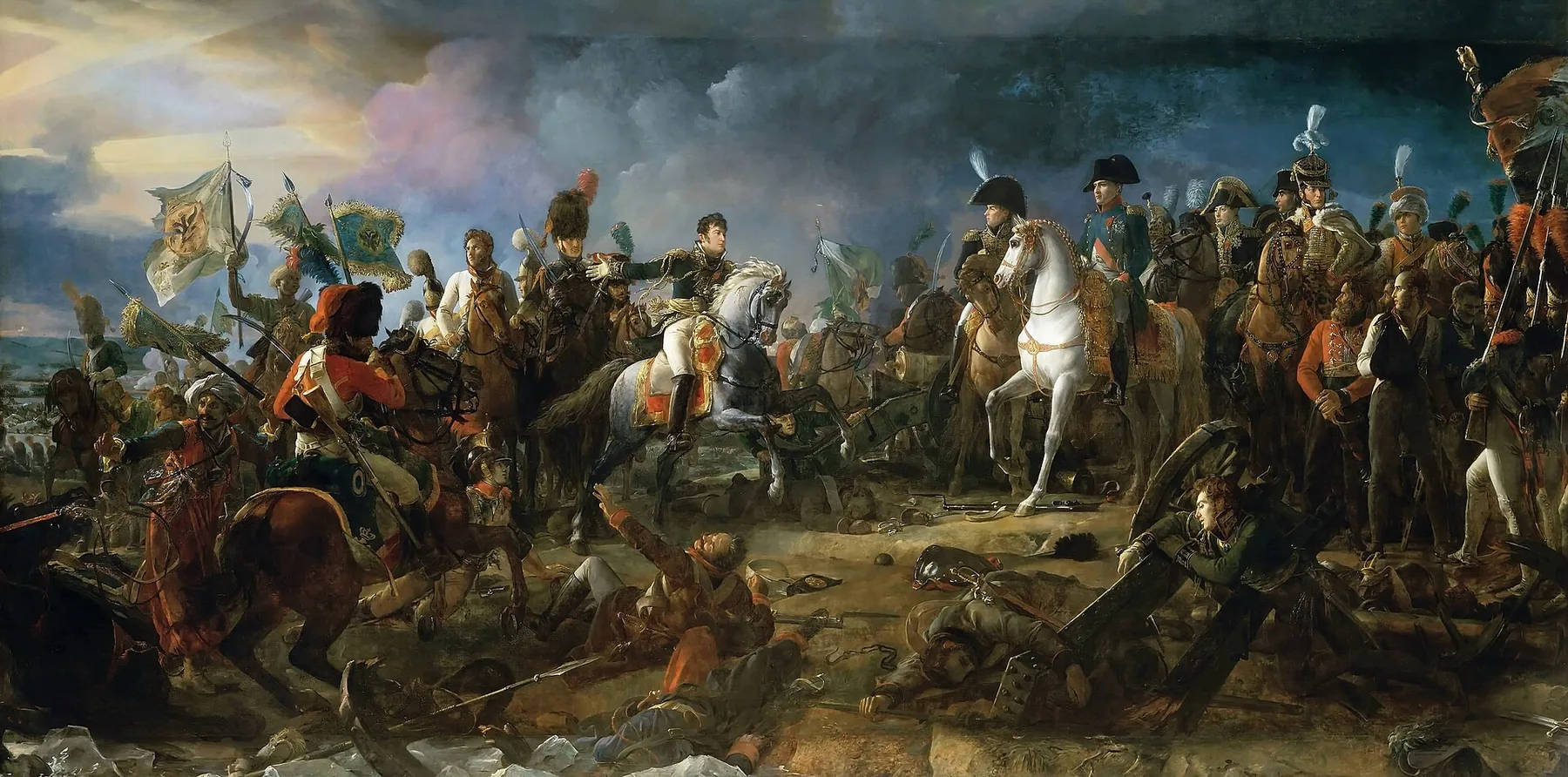
François Gérard, The Battle of Austerlitz, 2 December 1805, 1810. Palace of Versailles · Public domain · Source page
A ridge near Austerlitz
A ridge near Austerlitz
Dawn, 2 December 1805. Fog fills the valleys near Austerlitz, in Moravia. Napoleon points at a long, bare ridge, the Pratzen Heights, and, so the story goes, asks one of his marshals how long he needs to take it. “Ten minutes,” says one witness. “Twenty at most,” says another. The marshal is Jean-de-Dieu Soult.
Within hours his men will cut the Allied army in two. In 1847 he will become Marshal-General of France, a dignity held before him by Turenne and only a few others. Between those dates Wellington beats him repeatedly, he loots Spain, he calls Napoleon an “adventurer”, and he serves him anyway. Who was he?
Jean-de-Dieu Soult
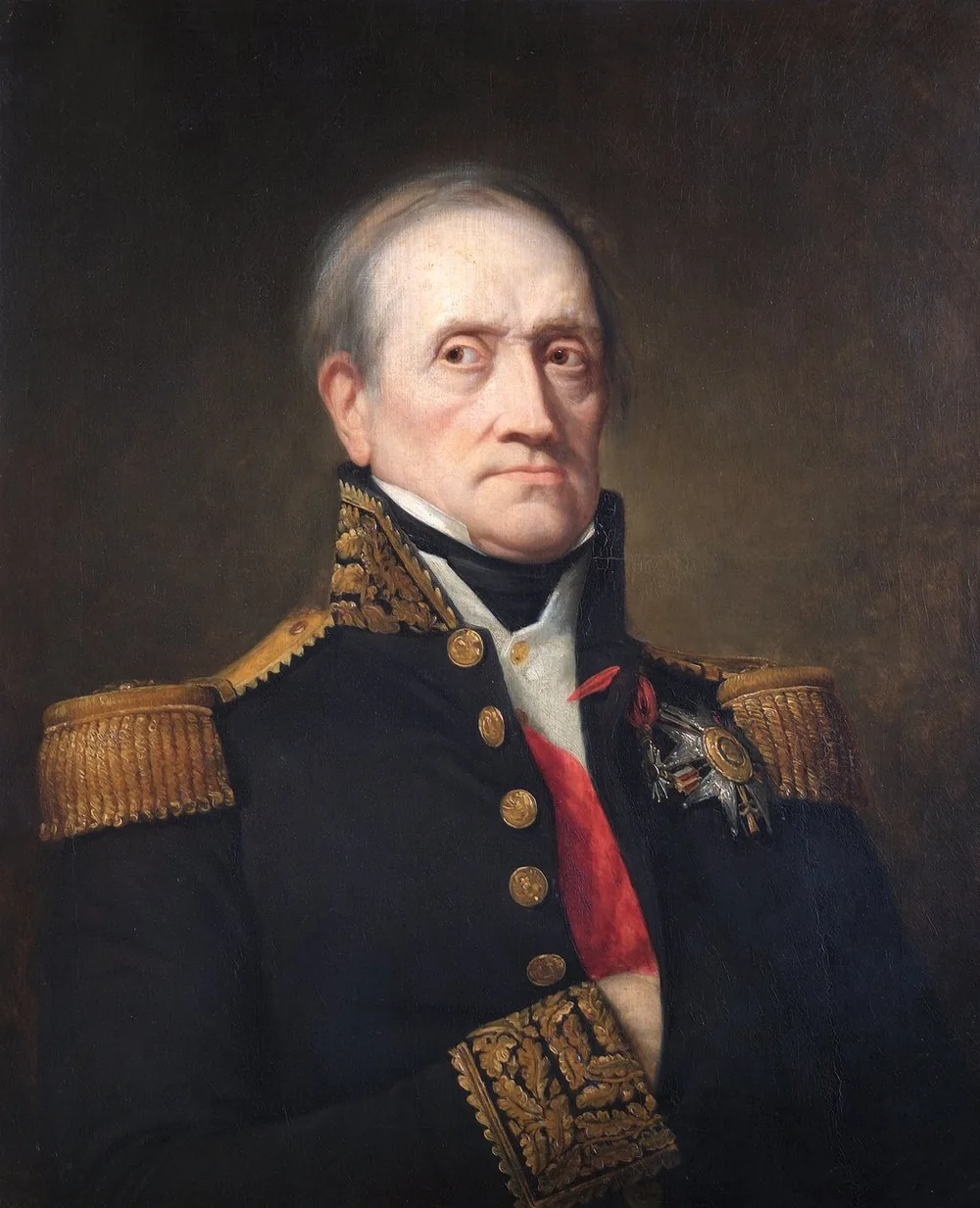
George P. A. Healy, Marshal Soult, Duke of Dalmatia, 1840. Apsley House, London (English Heritage, Wellington Collection) · Public domain · Source page
A notary’s son who rose from private to marshal and prime minister: superb at moving armies, accused of ambition, loot and shifting loyalties.
- Born: 29 March 1769, Saint-Amans-la-Bastide, Languedoc (today Saint-Amans-Soult)
- Died: 26 November 1851, Soultberg, near Saint-Amans, At home, aged 82, a few days before Louis-Napoléon’s coup
- Won: The Linth, 1799; Austerlitz, 1805 (IV Corps); Ocaña, 1809
- Lost: Oporto, 1809; Albuera, 1811; Orthez, 1814
“Let us not defraud the enemy of the praise which is due to him.”
The notary’s son
Background
Tax collectors in the house
16
Jean-de-Dieu Soult was born in 1769 in a village in Languedoc, the eldest son of a country notary. In 1785 the family fell behind with the royal tax, and tax collectors moved into the house. As his biographers tell it, the sixteen-year-old signed up for the Royal-Infanterie and gave his ten silver écus of enlistment money to his mother.
Before 1789, in practice only nobles became officers. Soult spent nearly seven years in the ranks: he made corporal after two, and sergeant only in 1791, when he was drilling volunteers.
1789–1800
From sergeant to general
The Revolution opened the ranks. Soult became an officer in 1792 and after the battle of Fleurus in 1794, at 25, he was a brigadier general. In 1799 he commanded a division under André Masséna (the first lesson in this series), and in September, while Masséna beat the Russians at Zurich, Soult crossed the river Linth and beat an Austrian corps whose general, Hotze, was killed.
In 1800, besieged in Genoa, he was badly wounded in the leg in a sortie and captured. He was freed after Marengo.
1804–1805
The Iron Arm
Napoleon took power in 1799, and Soult rose with him. In 1804 he was among the first eighteen marshals. Napoleon was massing an army on the Channel coast to invade Britain, and Soult trained one of its corps, the IV, at the camp of Saint-Omer near Boulogne. His harsh drill earned him, it is said, the nickname “Iron Arm”.
The invasion never came: the covering fleet never arrived, and Nelson (the last lesson in this series) would settle the matter at Trafalgar. In August 1805 the army marched east instead, and after the Austrian surrender at Ulm, Soult’s corps reached Moravia in November.
Austerlitz, 1805
2 December 1805
A trap that looks like weakness
Napoleon needed a battle, and the Russians and Austrians, some 85,000 men, were eager to give him one. So he made himself look weak. He thinned his right wing along the Goldbach stream and left the high ground in the centre, the Pratzen Heights, to the enemy. The Allies took the bait: they would march down, crush the French right and cut the road to Vienna.
Once their centre had come down, a French fist could climb the hill and split their army. The fist was two divisions of Soult’s IV Corps, hidden in fog at its foot. His third division, Legrand’s, and Davout’s III Corps (the previous lesson), hurrying in from Vienna, had to hold the stream.
A decision point
You are Marshal Soult.
About 8 a.m., 2 December 1805, beside Napoleon
Fog fills the valleys, but on the heights the sun is breaking through. You can see the plateau emptying as the Allied columns march south towards the Goldbach villages, where Legrand’s division of your own corps, with Davout’s first men coming up, is already under attack. Only the fourth column is still up there.
Your other two divisions, some 16,000 men, wait in the mist at the foot of the Pratzen, two kilometres from the top. Napoleon, calmer than you, holds you back: “How long do you need to take that hill?”
What do you advise?
- “Now, Sire. Every minute costs Davout men.” Your men would probably reach the top while the fourth column and much of the Russian command were still there, so the fight for the plateau would be harder. Davout would be helped sooner, but the Allied centre would be thicker on the hill and fewer Allied troops would be tied down at the stream, so the trap would catch less.
- “Ten or twenty minutes. Let us wait a little: the fog will hide us, and the enemy will be further from the hill.” You wait about a quarter of an hour. The last Russians leave the plateau, and the fog still hides your men.
- Send a division to help Davout first, and take the hill afterwards Davout would get help, but the Allied centre would still sit on the Pratzen, above your flank. Napoleon’s plan depends on cutting the army in two, and you would probably miss the moment when the plateau is almost empty.
What really happened
“Ten or twenty minutes. Let us wait a little: the fog will hide us, and the enemy will be further from the hill.”
Napoleon made him wait. Both Ségur and Thiébault, whose memoirs tell the story, say the Emperor held Soult back for about a quarter of an hour. Then the divisions of Saint-Hilaire and Vandamme climbed out of the fog.
The decision was Napoleon’s: he wanted the Allies deep in the valley before he cut them off, and the fog hid his men. In Ségur’s version Soult wanted to go at once; we cannot know. Soult supplied the estimate, and the confidence.
Austerlitz: who fought whom
2 December 1805
The Pratzen Heights and the Goldbach valley, about 20 km east of Brno
France
- Commanders: Napoleon, Soult (IV Corps) and Davout (III Corps), Lannes, Bernadotte and Murat
- Strength: about 65,000 to 75,000 men, 139 to 157 guns (Modern estimates); 23,600 on paper; about 16,000 on the Pratzen (Soult’s IV Corps)
- Losses: about 8,600 to 9,300: some 1,300 to 1,500 killed, 6,700 to 7,000 wounded, 600 to 750 captured (Modern estimates)
Russia and Austria
- Commanders: Kutuzov, with Tsar Alexander I and Emperor Francis II on the field, Buxhöwden (left wing) and Bagration (right wing), Prince Liechtenstein (cavalry)
- Strength: about 85,000 (between 73,000 and 89,000), some 70% Russian; about 280 to 320 guns (Modern estimates)
- Losses: about 27,000 to 36,000: 15,000 to 16,000 killed and wounded, 12,000 to 20,000 prisoners; about 180 guns and 45 standards (Modern estimates)
There is no reliable Russian casualty return, and prisoners and wounded left on the field are counted in different ways.
Outcome: A decisive French victory. The Allied army was cut in two, the Russians withdrew, and Austria made peace within the month.
The numbers differ because of paper strength against men present, the arrival of Davout’s corps in pieces, and different counts of prisoners.
The battle of the Pratzen
2 December 1805, from about 7:30 a.m. to about 4 p.m.
On the foggy morning of 2 December 1805, near Austerlitz, Napoleon’s army faces the Russians and Austrians. The Allies mean to come down from the heights and crush the French right. Napoleon has made himself look weak: he has thinned his right wing, and the Pratzen heights in the centre are left to the enemy.
A simplified reconstruction after modern Czech maps of the field and the standard accounts (Duffy 1977; Goetz 2005). The terrain is schematic; only one of the two ponds, the Satschan, is drawn, approximately (both have since been drained); unit positions and clock times differ by up to an hour between sources.
Phases of the battle
- Fog and bait Around half past seven the Allied columns I, II and III are already down at the Goldbach, attacking Legrand’s thin line, Soult’s third division, as Davout’s men come up. Only the fourth column and Kutuzov are left on the Pratzen. Below them, hidden by fog, Soult’s other two divisions wait.
- The climb Saint-Hilaire and Vandamme climb from the north-west: about two kilometres uphill, in the fog. They fall on the fourth column, some of it still half in marching order. At the stream Davout’s first troops retake Telnitz, only to lose it again.
- The crest Kutuzov’s reserve and Austrian battalions counter-attack, and the fight for the summit lasts over an hour. Kutuzov is wounded. By about eleven the Pratzen is French, the Allied army is cut in two, and Napoleon rides up to the plateau.
- The Russian Guard strikes back About half past twelve Grand Duke Constantine’s Russian Imperial Guard, foot and horse, hits Vandamme’s flank from the east, and one French regiment loses its eagle. Napoleon sends in his Guard cavalry and part of Bernadotte’s corps, and the Russian Guard is broken.
- South, to the ponds Soult’s divisions turn south and take the Allied left in the rear at Sokolnitz and Aujezd, while Davout presses them from the south-west. Thousands surrender. Others flee towards the frozen Satschan pond and the narrow dyke beside it.
The strategy
- French: Napoleon needs a battle, so he thins his right along the Goldbach and leaves the Pratzen to the enemy. Once the Allied centre has come down, two of Soult’s divisions, hidden in the fog at the foot of the hill, will climb it and split the Allied army. Legrand and Davout hold the stream.
- Russians and Austrians: The Allies want to march down to the Goldbach, crush the French right and cut the road to Vienna. They read the thinned wing as weakness, and three columns are already going down. Only the fourth column and Kutuzov remain on the Pratzen.
What decided it: The fog hid the climb, and the Pratzen fell to the French, cutting the Allied army in two. Soult’s divisions then turned south and struck the Allied left from behind, which decided the battle.
Afterwards
What was left of the Pratzen
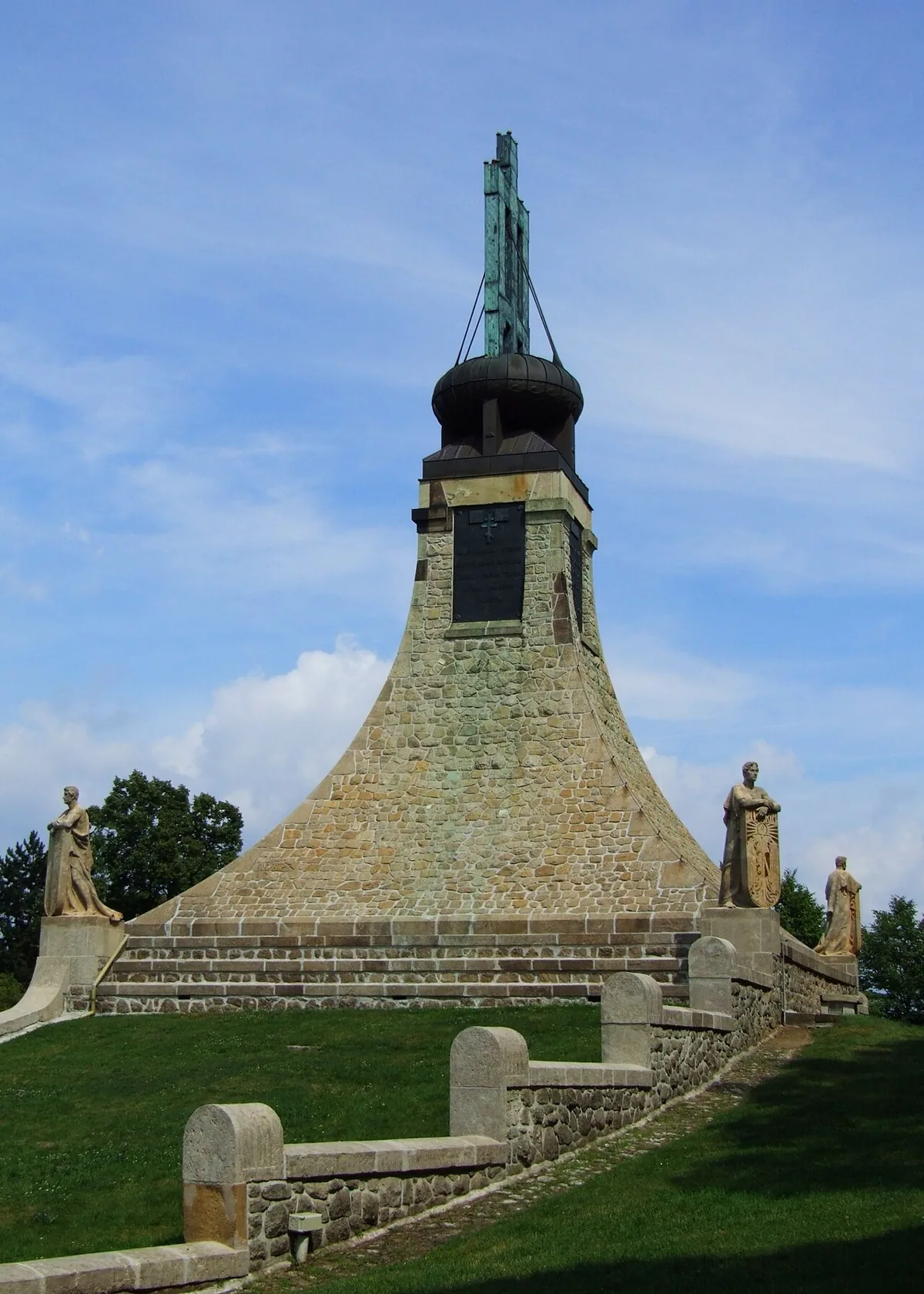
The Cairn of Peace (Mohyla míru), Prace, Czech Republic. Architect: Josef Fanta, 1910–12. Photo: Pudelek (Marcin Szala), 2008 · CC BY-SA 4.0 · Source page
By evening the Allied army had lost a third or more of its men, and on 26 December Austria signed the Peace of Pressburg.
Source: Ten minutes or twenty?
Ségur: “How much time do you require to crown that summit?” “Ten minutes,” answered the marshal.—“Then go,” resumed the Emperor, “but you can wait another quarter-of-an-hour, and it will be time enough then!”
Thiébault: “How long will your troops take to crown the Pratzen plateau?” … On the answer that twenty minutes at most would be enough, the Emperor … added, “Very good; we will wait another quarter of an hour.”
Both wrote long afterwards. Ségur was on Napoleon’s staff and writes as if he stood near him; Thiébault led a brigade in Saint-Hilaire’s division and disliked Soult.
- Where do the witnesses agree, and where not? Both say Napoleon asked how long, then made Soult wait about a quarter of an hour. They differ on the answer: ten minutes or twenty.
- Could Thiébault have heard it? Probably not: he was down in the valley with his brigade. Ségur, on the Emperor’s staff, may have heard it, but published 68 years later.
- Does the climb itself help? From the valley to the top is about two kilometres uphill: ten minutes is impossible, and even twenty is optimistic. The numbers may belong to the legend.
Myth
At Austerlitz Napoleon drowned thousands of Russians by firing at the ice of the ponds.
The truth
Some men did drown. Ségur, who was there, describes “a few other thousands” on the ice as it gave way under French bullets, but he wrote decades later, and the big numbers began with Napoleon’s bulletin of 3 December, written to magnify the victory. Estimates of the drowned run from about 200 to 2,000. When the ponds were drained days later, workers reportedly found some 150 dead horses and two or three human bodies.
The evidence
The 30th Bulletin of the Grande Armée (1805); Ségur, memoirs (1873); later studies of the reports on the draining of the ponds.
Moore, Wellesley and a crown
1806–1808
Jena, Eylau and a dukedom
In October 1806 Soult’s corps fought at Jena, on the day that Davout beat the main Prussian army at Auerstedt. In February 1807 it fought at Eylau, a bloody battle in the snow that Napoleon nearly lost. In 1808 Soult became Duke of Dalmatia, a title named after the coast that Austria had lost after Austerlitz.
1808–1809
A new war, in the mountains
In 1808 Napoleon put his brother Joseph on the Spanish throne, and Spain rose against him. This was the Peninsular War, a war without one front, with guerrillas who killed couriers and stragglers. A British army under Sir John Moore marched in to help the Spaniards, and Napoleon came to drive it out. Moore slipped away west through the snowy mountains of Galicia towards the port of Corunna. In January 1809 Napoleon left for Paris and handed the chase to Soult.
A decision point
You are Marshal Soult.
12 January 1809, on the river Mero, facing Corunna
For two weeks you have chased Moore’s army through the snow. He has reached Corunna but found no ships: contrary winds are holding the transports back. His engineers have blown the bridge at El Burgo, and your men are exhausted and strung out along the mountain road, the guns still behind. Napoleon’s order is to destroy the British army.
What do you do?
- Attack at once, before the ships arrive You might catch the British with their backs to the sea and no ships to board. But the bridge is broken, the British reserve is rested and holds the far bank, and you have no guns. A failed rush could wreck your own advance guard.
- Wait for the guns and the rest of your corps, then attack The guns cross on 14 January, the same evening that the transports reach Corunna. You attack on the 16th, in the afternoon, against an army with ships behind it.
- Do not attack: let the British go You would save men and still end the British threat in northern Spain. But you would disobey Napoleon’s order to destroy Moore, and the British army would sail away intact to fight again.
What really happened
Wait for the guns and the rest of your corps, then attack
Soult waited. His guns crossed on 14 January, the transports arrived that evening, and on the 16th he attacked. The British held, Moore was mortally wounded, and during the night the army embarked.
Napier says the French were so worn by the chase that they were not all on the Mero before the 12th. Defenders point to the broken bridges and the winter; critics think a bolder marshal would have struck before the ships came.
16 January 1809
A monument to an enemy
Moore lived a few more hours. In Napier’s account his last words were: “I hope the people of England will be satisfied! I hope my country will do me justice!” He was buried in his cloak in the citadel of Corunna, and Napier, writing twenty years later, says that Soult “raised a monument to his memory”. The British army got away, to return under the man Soult would meet next.
March–May 1809
Oporto: a city, and perhaps a crown
Napoleon ordered Soult on into Portugal. He stormed Oporto on 29 March 1809, but did not march on Lisbon, far to the south. He stayed in the north six weeks, settling the country, with worn-out men and Portuguese guerrillas cutting his supplies. And rumour said he had other plans.
Myth
Soult plotted to make himself “King Nicolas” of Portugal.
The truth
Less than the legend, more than nothing. On 19 April 1809 a circular from his headquarters asked the generals to back a petition: northern Portugal should have a king, and the army wanted Soult. Officers already discontented and plotting saw treason in it; one, d’Argenton, contacted the British. Napoleon called the circular possible lèse-majesté, but pardoned Soult. Was it his plan? Unproven: a northern Portuguese kingdom had been Napoleon’s own idea in 1807, and Napier thought the belief an error many fell into. “King Nicolas” was a soldiers’ taunt, not a title, and Nicolas was not even his name.
The evidence
Napier, vol. 2 (1829); Garnier’s entry “Soult” in Tulard’s Dictionnaire Napoléon (1999).
12 May 1809
A barber’s boat on the Douro
In April 1809 Sir Arthur Wellesley landed at Lisbon to command the British in Portugal. On 12 May he stood south of the Douro, facing Oporto. Soult, in a house west of the city, thought the river above it safe. In a barber’s skiff, a British staff officer, Colonel Waters, crossed with the barber and a Portuguese prior and brought back three or four big barges. An officer and 25 men of the Buffs rowed over to a huge unfinished building on the far bank, unnoticed by the French.
By the time they woke, three battalions were inside. Soult escaped east by mountain tracks, without his guns and most of his baggage, and lost about 4,000 men.
Arthur Wellesley, Duke of Wellington
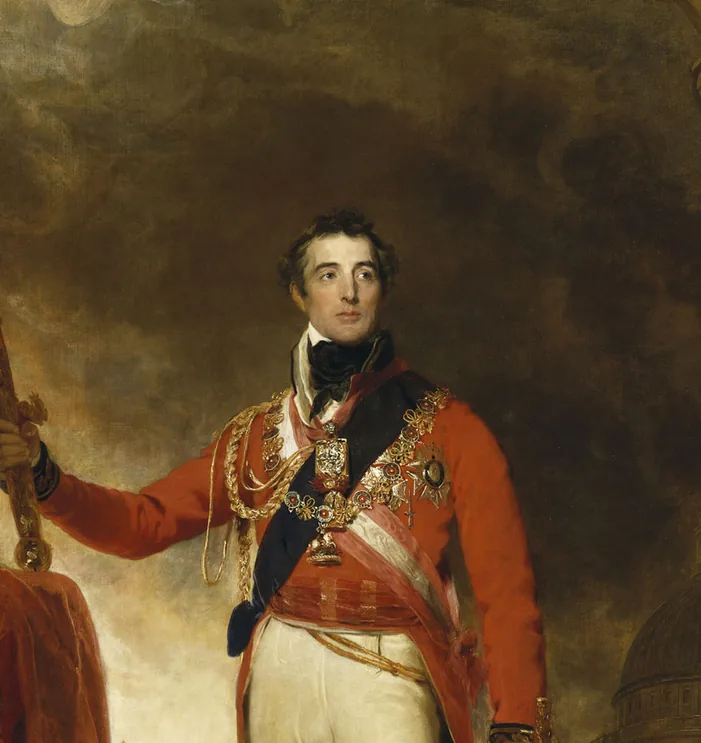
Sir Thomas Lawrence, Arthur Wellesley, 1st Duke of Wellington, 1814–15. Royal Collection · Public domain · Source page
The British general who drove Soult out of Portugal, then out of Spain and into southern France, and in 1815 beat Napoleon at Waterloo.
- Born: 1769 (29 April or 1 May; the date is uncertain), Dublin, Ireland
- Died: 14 September 1852, Walmer Castle, Kent
- Won: Oporto, 1809; Salamanca, 1812; Vitoria, 1813; Waterloo, 1815
- Lost: The siege of Burgos, 1812 (abandoned)
“It has been a damned nice thing—the nearest run thing you ever saw in your life.”
Andalusia and Albuera
1809–1812
The ruler of the south
In 1809 Soult joined King Joseph’s staff as chief of staff. In November he helped to smash a Spanish army at Ocaña, and in January 1810 he invaded Andalusia. Seville fell on 1 February. Only Cádiz, behind the sea and the British fleet, held out. In the winter of 1810–11 Napoleon ordered Soult to help Masséna, who was stuck before the Lines of Torres Vedras (the first lesson in this series). Soult chose to take the Spanish frontier fortress of Badajoz first; it fell in March 1811, days after Masséna had begun to retreat. For two years Soult ruled the south like a viceroy. He also collected: by one count more than 180 paintings, most of them Spanish, many taken from churches, convents and hospitals.
Source: Whose Murillo is this?
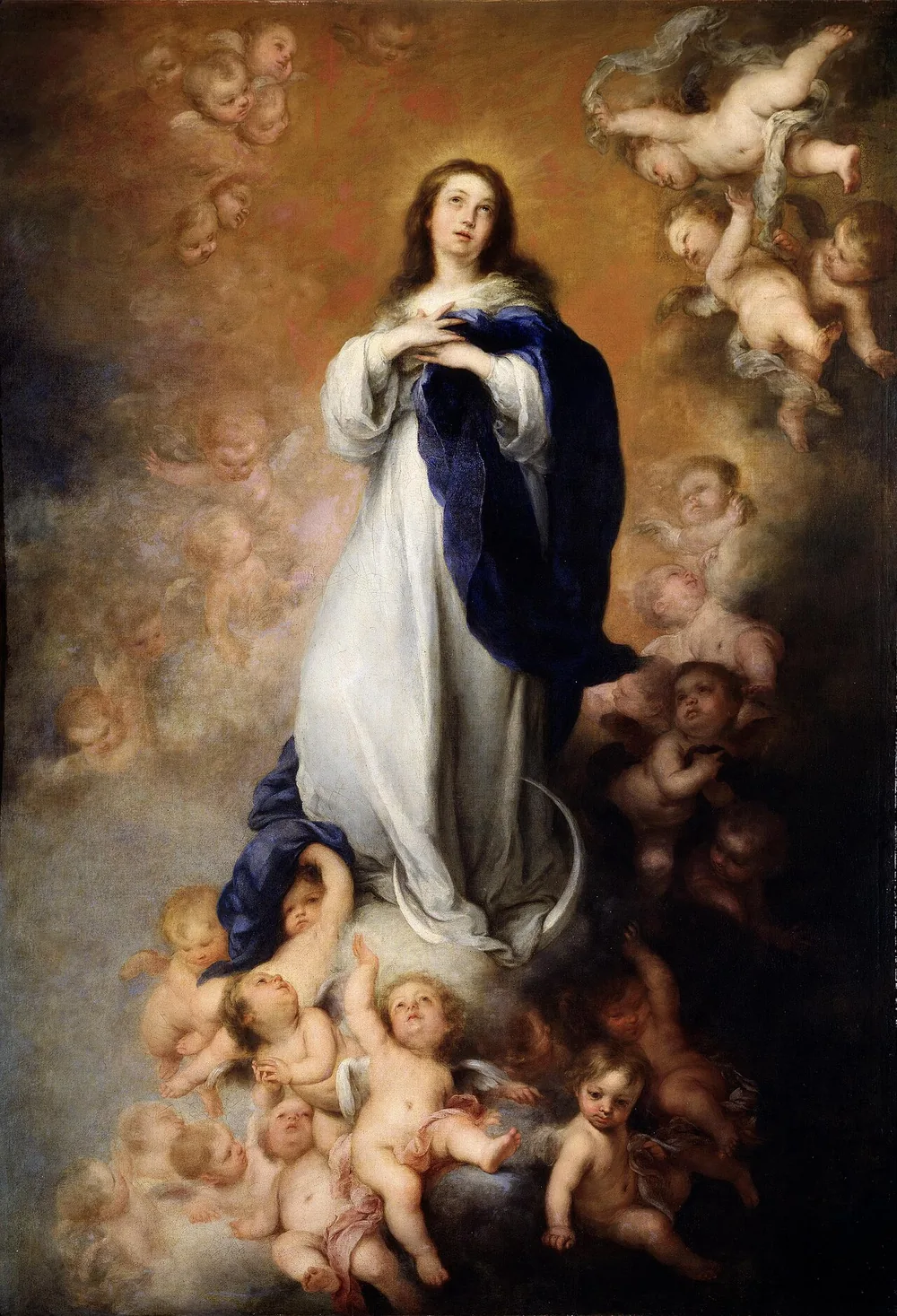
Bartolomé Esteban Murillo, Immaculate Conception of the Venerables (“of Soult”), c. 1678. Museo del Prado, Madrid · Public domain · Source page
Bartolomé Esteban Murillo, Immaculate Conception of the Venerables, c. 1678. Museo del Prado, Madrid
Murillo painted this about 1678 for a hospital in Seville. Soult took it from Seville and kept it until his death. At the sale of 1852 the Louvre bought it for 615,300 francs, reputedly a record for a painting. In 1941 it returned to Spain in an exchange with France; at the Prado it is still called “Soult’s Immaculate Conception”.
- Why does a Seville painting carry a French marshal’s name? Because for about forty years he owned it. The chain of owners is called provenance: the Seville hospital, Soult, the Louvre, the Prado.
- Does this prove that Soult looted it? It shows that it left Spain while he ruled the region, not how: some paintings were seized, some sold under pressure, some “given” to a powerful man. Each painting needs its own evidence.
A decision point
You are Marshal Soult.
Evening of 15 May 1811, on the Seville road south of Albuera
You have marched from Seville with about 24,000 men to relieve Badajoz, besieged by a British and Portuguese army. Its commander, Beresford, has lifted the siege and drawn up his men on a ridge at Albuera, with the village and bridge in front.
You ride forward to look. His line is long and thin. Its southern end is higher, and open: the Spaniards meant to hold it will not arrive before the 17th, you hear. And a wooded hill opposite that end could hide your men.
What do you do?
- Attack the village and bridge head-on You would meet the strongest part of the line, where Beresford’s guns cover the bridge and his best troops hold the village and the central hill. The French columns would be cut down crossing the stream, and the open southern end would go unused.
- A feint at the village, and most of the army swung round the open southern end You hide the main force behind the wooded hill. Godinot’s attack on the bridge draws Beresford’s eye, and two-thirds of your infantry go up the southern hill at an angle to the allied line.
- Wait for reinforcements Blake’s Spaniards and the 4th Division would probably be in line by the 17th, and the weakness you spotted would be gone. You would face a stronger, better-placed army, and the siege of Badajoz would probably resume behind it.
What really happened
A feint at the village, and most of the army swung round the open southern end
Soult chose the flank, and Beresford’s army was still turning to face it when the French arrived.
He had found the one real weakness in the allied position, and the wooded ground hid the attack until the last minute. The plan’s weakness was the formation: dense French columns on a narrow hill could not use their muskets against the British line.
Albuera: who fought whom
16 May 1811
Albuera, about 20 km south of Badajoz, Spain
France
- Commanders: Soult, Girard, Gazan, Werlé and Godinot, Latour-Maubourg (cavalry) and Ruty (artillery)
- Strength: about 19,000 infantry, over 4,000 cavalry, 50 guns (Napier (1831)); about 24,000 in all (Oman (1911))
- Losses: over 8,000 (Napier); about 5,900 to 7,900 (Modern estimates)
Britain, Portugal and Spain
- Commanders: Beresford (overall command), Blake (Spaniards), Stewart (2nd Division), Cole (4th Division), Alten, Hamilton (Portuguese) and Lumley (cavalry)
- Strength: about 30,000 infantry, over 2,000 cavalry, 38 guns; but fewer than 7,000 British infantry (Napier); about 35,000 in all (Oman (1911))
- Losses: nearly 7,000 (Napier); about 5,900 to 7,000 killed and wounded, plus about 1,000 prisoners (Modern estimates)
Outcome: Soult withdrew on 18 May; both sides claimed a victory. Badajoz stayed French until Wellington stormed it in April 1812.
The gaps come from what is counted: gunners, cavalry, and whether the Spaniards count.
The battle of Albuera
16 May 1811, from about 9 a.m. to the afternoon
On 16 May 1811, at the village of Albuera, Soult has come from Seville to relieve Badajoz. Beresford, who lifted the siege, has drawn his British and Portuguese army up on a ridge facing the village and bridge, with late-arriving Spaniards on the open southern end. Most of Soult’s army waits behind a wooded hill opposite that end.
A schematic reconstruction after Napier (vol. 3, book 12, chapters 6–7) and Oman (1911). The Albuera is formed just south of the village by two brooks, the Chicapierna in the west and the Nogales, or Feria, in the east; the French flank march crossed both. There is no surveyed plan of the field: the direction of the streams, hills and roads is approximate, and unit positions and times are estimates. Napier writes from the British side and plays down the Spaniards’ part.
Phases of the battle
- Two armies, one ridge On the morning of 16 May the allied army holds a ridge facing the village and bridge of Albuera: Portuguese on the left, the British 2nd Division in the centre, late-arriving Spaniards on the open southern end, where most of Soult’s army waits behind a wooded hill.
- The feint At about nine Godinot attacks the bridge with ten guns, as if that were the whole attack. Beresford sees Werlé is not following, guesses the real blow is on his right, and orders Blake to turn the Spaniards south. Blake argues, then obeys slowly.
- The flank blow Girard’s columns cross the streams and climb the southern hill while French cavalry sweeps round behind. Colborne’s brigade deploys in line and fires into the French flank; then, in a hailstorm, hussars and Polish lancers ride out of the murk behind it and destroy most of it.
- The fatal hill Hoghton’s brigade stands in line in the open. French guns and columns cut it to pieces, but it does not give way. Beresford thinks of retreating. Colonel Hardinge urges Cole forward, and the Fusiliers climb the hill against the columns.
- The columns break The Fusiliers fire into the packed French columns, and for a time all hangs in the balance. Then the columns break and go down the hill. Of some 6,000 British soldiers who climbed it, Napier says, 1,500 were left unwounded. Soult withdraws on 18 May.
The strategy
- French: Soult feints at the village: Godinot attacks the bridge with ten guns. Girard’s columns cross the streams and climb the southern hill, the open end, with cavalry sweeping round behind. Soult has heard that the Spaniards will not reach that end before the 17th.
- British, Portuguese and Spaniards: Beresford holds the ridge: Portuguese on the left, the British 2nd Division in the centre, the Spaniards on the southern end. Seeing that Werlé is not following, he guesses the real blow will fall on his right, and orders Blake to turn the Spaniards south. Blake argues, then obeys slowly.
What decided it: The decision came on the hill: the Fusiliers fired into the packed French columns, and the columns broke and went down. Beresford had thought of retreating, but Colonel Hardinge pressed General Cole forward, and the Fusiliers climbed the hill.
Afterwards
Four hours
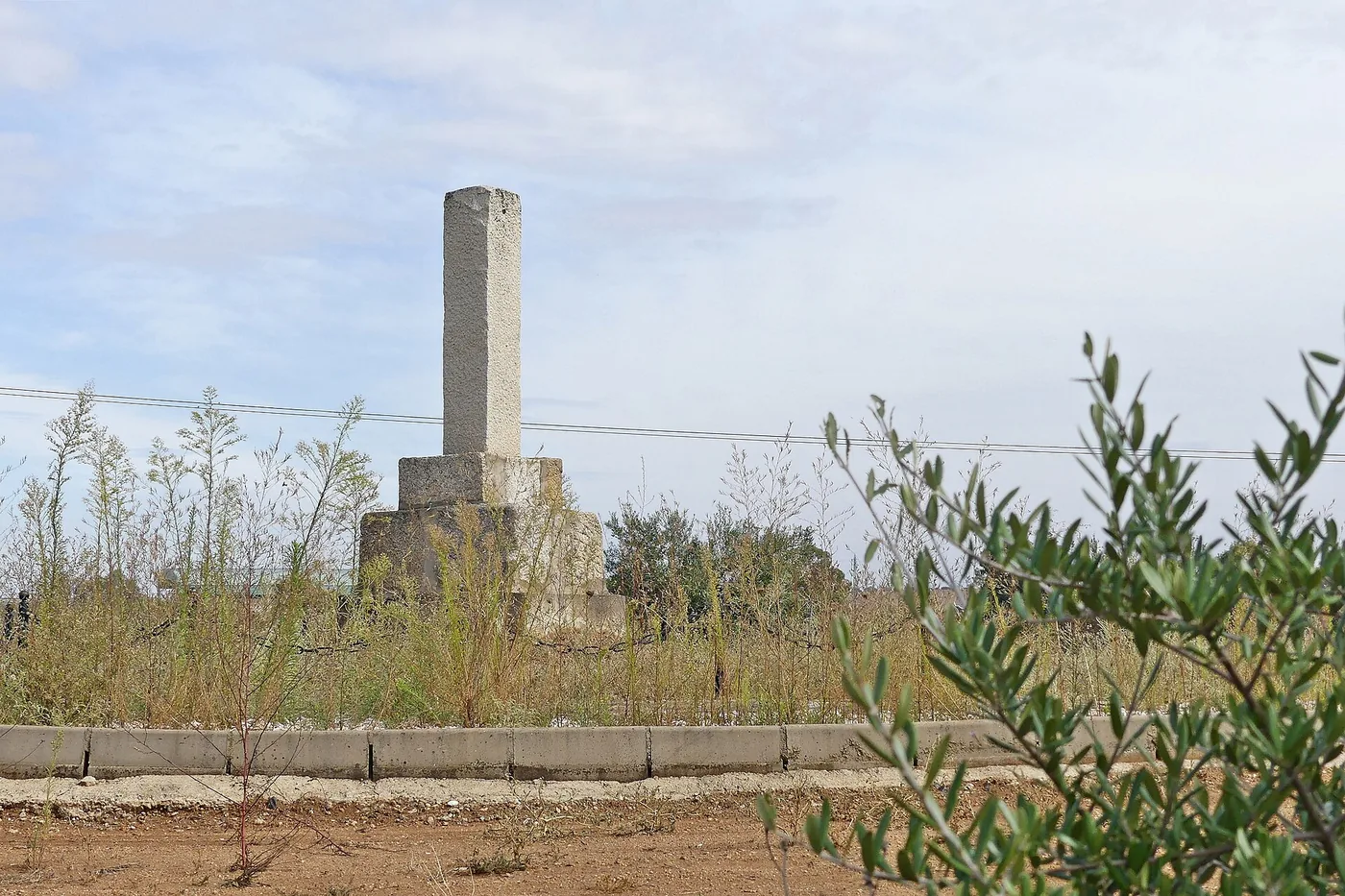
Memorial at Las Baterías, battlefield of Albuera, Spain, erected 1978. Photo: Alta Falisa, 2018 · CC BY-SA 4.0 · Source page
The serious fighting lasted about four hours. Napier counted nearly 7,000 allied and more than 8,000 French men struck down; modern counts are lower but still appalling. For the numbers engaged, it was the bloodiest battle of the Peninsular War.
Soult stayed in the south another year. In 1812 Wellington’s victory at Salamanca made Andalusia impossible to hold, and he abandoned it, lifting the siege of Cádiz.
The long way home
1813
Back to the mountains
In spring 1813 Napoleon took Soult to the war in Germany. In June Wellington crushed the French at Vitoria, and on 1 July the Emperor sent Soult back to rebuild the beaten army. On 25 July he attacked through the Pyrenean passes to relieve besieged Pamplona, and at Sorauren, on 28 July, he found Wellington waiting. Napier passes on the hearsay that Wellington called him “a great commander, but a cautious one”. In the week-long Battle of the Pyrenees the French lost about 13,000 men, the allies about 7,000.
1814
Orthez and Toulouse
In October 1813 Wellington crossed into France. On 27 February 1814 Soult fought him from a strong ridge at Orthez and lost about 4,000 men to Wellington’s 2,200. On 10 April he made his last stand at Toulouse, on the ridges east of the city. Both sides claimed the victory, and neither knew that Napoleon had abdicated on 6 April. More than seven thousand men were killed or wounded for nothing. Soult left the city on the night of the 11th and agreed an armistice on the 17th.
Source: “Die arms in hand”
“… As to us soldiers our duty is clear. Honour and fidelity. This is our motto and we will fight to the last the enemies of our emperor and France. … Be in fine Frenchmen and die arms in hand sooner than survive dishonour.”
Soult issued it a few days after Orthez, with Wellington advancing, the south wavering, and the Bourbon Duke of Angoulême at the allied headquarters. Napier called it “a judicious well-timed and powerful address”.
- Whose side is Soult on here, and what is he afraid of? Napoleon’s: “our emperor”. But the full text, which Napier prints, also rails against Frenchmen who welcome the enemy and hide deserters. Soult fears his own side: the south was leaning towards the Bourbons.
- Napier, a British officer, translated and defended it. What should we make of that? That he was generous to Soult. But he also owed Soult a favour: Soult had lent him his papers (see the debate). Honest praise can come with gratitude attached.
- What can a proclamation like this prove about what Soult believed? Very little. It was written to rally men at a bad moment. Within a year Soult would write against Napoleon, and weeks later against the Bourbons. Each text tells us what he wanted his men to hear that day.
A decision point
You are Marshal Soult.
11 March 1815, Paris
You are Louis XVIII’s Minister of War. Ten days ago Napoleon landed from Elba with about a thousand men, and the regiments sent to stop him are going over to him. Three days ago you issued an order of the day calling him an “adventurer”. The royalists suspect you all the same, and today you have lost your office.
Napoleon is marching on Paris, and the King is about to flee. You served the Emperor for ten years, the King for less than one.
What do you do?
- Follow the King into exile and stay loyal to him You would keep your oath and your honour with the Bourbons, but you would watch the Hundred Days from Ghent. If Napoleon won, you would have no army, no office and no future in France.
- Retire to your estate and wait You would avoid choosing, and might sit out the months of upheaval in peace. But the minister who called Napoleon an adventurer would probably be suspect to both sides, and the marshal of Austerlitz would miss his chance to command in the field.
- Offer your sword to Napoleon Napoleon, who needs experienced men, forgives the order and makes you his chief of staff and then a peer of France. You are at the centre of the Hundred Days campaign, and of its defeat.
What really happened
Offer your sword to Napoleon
Soult rallied to Napoleon, and soon issued a new proclamation, full of invective against the Bourbons. Napoleon made him his chief of staff in May and a peer of France in June.
In exile Napoleon said that Soult “did not betray Louis”, knew nothing of the return, and for some days thought the Emperor mad (O’Meara, 1822). His enemies saw an opportunist, “the servile flatterer of every regime” in the words of the Dictionnaire Napoléon. But most of the army went over as he did.
1815
Chief of staff at Waterloo
In May 1815 Soult took the post Berthier had held for years, chief of staff. It did not suit him. The staff work of the campaign was slow and sometimes confused, and Soult shares the blame. On the morning of 18 June, as it was told later, he warned Napoleon not to underrate Wellington and urged him to call back part of Grouchy’s 33,000 men, sent after the Prussians. Napoleon replied, so the story goes, that the battle would be no more serious than “eating breakfast”. By evening his army was beaten.
1815–1851
From exile to Marshal-General
After Waterloo Soult was banished. He published a memoir to justify his conduct in 1815, spent over three years in exile in the Rhineland and came home in 1819. After the revolution of 1830 he backed the new king, Louis-Philippe, and the July Monarchy made him Minister of War and, three times between 1832 and 1847, prime minister. In 1838 he went to London as France’s envoy to Queen Victoria’s coronation, and the crowds cheered Wellington’s old enemy. He died on 26 November 1851, aged 82, six days before Louis-Napoléon’s coup.
What was left behind
- 26 December 1805 The Peace of Pressburg: Austria loses Dalmatia, which will give Soult his title.
- 1809 The British army escapes from Corunna; in April Wellesley lands in Portugal with another, and the war will last five more years.
- 6 April 1814 Napoleon abdicates, four days before Toulouse.
- 1815 Waterloo ends the Hundred Days, and Soult goes into exile.
- 1831 The French Foreign Legion is founded while Soult is Minister of War.
- 1847 Soult becomes Marshal-General of France, a dignity revived for him; only a handful of men had held it before.
How good was Soult?
Was Soult a great general with a doubtful character, or a man smeared more than he deserved?
- William Napier (1828–40), British officer and historian Napier fought in the Peninsula and praised his enemy: at Orthez Soult “proved himself a hardy captain full of resources”, and at Albuera his talent was “immeasurably greater” than Beresford’s. But in his preface he thanks Soult for lending him his papers. Admiration, perhaps, but also gratitude: Soult supplied the French side of Napier’s story.
- Jacques Garnier (1999) and the Encyclopaedia Britannica (1911) Garnier: a good general, cool-headed with a sure eye, but his character fell short of his talent; a “servile flatterer” of every regime, and one of the marshals who plundered the conquered countries most, Spain above all. The 1911 Britannica is sharper: it was said that he “had character only in front of the enemy”.
- Peter Hayman (1990) Hayman’s biography is called Soult: Napoleon’s Maligned Marshal. The title is the argument: that Soult’s reputation is worse than he deserved.
Napoleon’s own verdict, on St Helena, was that Soult was an excellent minister of war or chief of staff, who understood the organising of an army better than commanding one in chief. Weigh the evidence and judge for yourself: the Pratzen climb, Oporto, Albuera, Orthez, the paintings.
What do you know now?
Check yourself
Why did the sixteen-year-old Soult join the army in 1785?
Answer: Tax collectors were living in his family’s house, and he gave his enlistment money to his mother. Right. As his biographers tell it, the family had fallen behind with the tax, and he signed up and gave his coins to his mother.
Check yourself
What did Soult’s IV Corps do at Austerlitz?
Answer: Climbed the Pratzen Heights and cut the Allied army in two. Right. After the wait in the fog, Saint-Hilaire’s and Vandamme’s divisions climbed, and then turned south to take the Allied left in the rear.
Check yourself
Ségur says Soult asked for ten minutes, and Thiébault says twenty. What is the best conclusion?
Answer: Neither number is safe: both wrote decades later, and the climb itself would take longer; only the quarter-hour is common to both. Right. Ask who wrote, when, and what he could know. What two separate witnesses both tell is more likely to be true.
Check yourself
Why is a Murillo in the Prado still called “Soult’s”?
Answer: Because Soult owned it for decades after it left Spain; the Louvre bought it at the sale of his collection in 1852. Right. The chain of owners, the provenance, stays in the name.
Check yourself
What was Soult’s plan at Albuera?
Answer: A feint at the bridge, then most of the army swung round the open southern end. Right. Godinot drew the eye at the bridge, and Girard and the cavalry went up the southern hill.
Check yourself
Which of these was Soult never?
Answer: King of Portugal. Right. “King Nicolas” was a rumour and a soldiers’ joke; he was never crowned, and there is no proof he tried.
Terms
- Marshal of the Empire The highest rank in Napoleon’s army. On 19 May 1804 he named the first 18, and Soult was one of them. A marshal commanded a corps or a whole army.
- corps A small self-contained army, usually of 15,000 to 30,000 men, with its own infantry and cavalry divisions, guns and staff, led by a marshal or general. Napoleon’s corps marched apart and joined to fight. Soult’s was the IV Corps.
- Pratzen Heights A broad, gently sloping plateau in Moravia (today the Czech Republic), between Brno and Slavkov (Austerlitz). Its top is about 324 metres high, some 100 to 130 metres above the Goldbach villages at its foot. In Czech it is Prace.
- column and line Two ways to deploy infantry. A column is narrow and deep and moves fast, but few muskets can fire; a line is wide and shallow, and every musket fires. The French often attacked in columns, and the British defended in lines.
- guerrilla Spanish for “little war”: Spanish and Portuguese fighters who ambushed French couriers and stragglers rather than meet armies in battle. The word entered English during the Peninsular War.
- Peninsular War The war in Spain and Portugal, 1808–1814, between France and a Spanish, Portuguese and British alliance. The British call it the Peninsular War; the Spaniards call it the War of Independence.
- lèse-majesté An offence against the dignity of the sovereign: treason, or close to it. Napoleon asked whether a circular written for Soult in Portugal amounted to lèse-majesté.
- chief of staff The officer who turns a commander’s plans into written orders and sends them to the corps. Napoleon’s was Marshal Berthier until 1814; in 1815 it was Soult.
- lancer A cavalryman armed with a long lance. In rain and poor light, lancers could gallop in unseen and cut down infantry who had not yet formed up, as happened at Albuera.
- Hundred Days The months between Napoleon’s return to Paris from Elba (20 March 1815) and Louis XVIII’s return (8 July 1815): about 110 days.
- July Monarchy The regime of King Louis-Philippe, 1830–48, which began with the July Revolution of 1830. Soult was its Minister of War and its prime minister.
- Marshal-General of France A dignity above marshal, given to only a handful of men, among them Lesdiguières (1621), Turenne (1660), Villars (1733) and Saxe (1747); Louis-Philippe revived it for Soult in 1847. Turenne has a lesson of his own on this site.
- Wellington A British commander who beat the French again and again in the Peninsular War.
- Austerlitz Valleys in Moravia where Napoleon defeated the Allied army.
- Moravia A region in central Europe, today part of the Czech Republic.
- Nelson A British admiral who settled the matter at Trafalgar.
- Trafalgar A sea battle off the coast of Spain, won by Britain.
- Ségur An officer who wrote memoirs and was on Napoleon's staff.
- Masséna A French marshal who served under Napoleon.
- Davout A French marshal whose corps arrived at Austerlitz in pieces.
- Legrand A commander of a French division in Soult's corps.
- Saint-Hilaire A French division commander whose men climbed out of the fog onto the ridge.
- Corunna A port in northern Spain, where Moore's British army reached the coast.
- Napier A British historian who wrote about the Peninsular War.
- Andrew Roberts A historian who gives the Le Caillou conversation in slightly different wording.
- Turenne A French commander who held the title Marshal-General of France before Soult.
- Louis-Philippe The king who came to power after the revolution of 1830; Soult backed him.
- Bourbons A royal family of France that returned to power after Napoleon.
- Angoulême A Bourbon duke who sat at the allied headquarters in southern France.
- Elba An island off the coast of Italy, from which Napoleon returned to France.
- Le Caillou Napoleon's headquarters on the morning of the battle of Waterloo.
- Pyrenees The mountain range between France and Spain.
- Douro A river in northern Portugal, by the city of Oporto.
- Lisbon The capital of Portugal, in the south of the country.
- Seville A city in southern Spain, which fell to the French in 1810.
Sources
- William F. P. Napier, History of the War in the Peninsula and in the South of France from the Year 1807 to the Year 1814, vol. 1 (London: Thomas & William Boone, 1828), book 4: Corunna.
- Napier, History of the War in the Peninsula, vol. 2 (London: Boone, 1829): Oporto and the d’Argenton conspiracy.
- Napier, History of the War in the Peninsula, vol. 3 (London: Boone, 1831), book 12, chapters 6–7: Albuera.
- Napier, History of the War in the Peninsula, vol. 6 (London: Boone, 1840), book 21 (the Pyrenees, with Soult’s order of the day of 23 July 1813) and book 24, chapters 2–3 (Orthez; Soult’s proclamation of March 1814).
- Philippe de Ségur, An Aide-de-Camp of Napoleon: Memoirs of General Count de Ségur, 1800–1812, trans. H. A. Patchett-Martin (New York: D. Appleton, 1895), p. 249.
- Paul Thiébault, The Memoirs of Baron Thiébault, trans. and condensed by Arthur John Butler, 2 vols (London: Smith, Elder, 1896), vol. 2, p. 153.
- Barry E. O’Meara, Napoleon in Exile; or, A Voice from St. Helena, 2 vols (London: Simpkin and Marshall, 1822), vol. 1.
- The Creevey Papers, ed. Sir Herbert Maxwell (London: John Murray, 1903): Thomas Creevey’s account of Wellington after Waterloo.
- 30th Bulletin of the Grande Armée, Austerlitz, 3 December 1805 (the official French account of the battle).
- Charles Oman, A History of the Peninsular War, vol. 4 (Oxford: Clarendon Press, 1911): Albuera and its strengths (appendix).
- Charles Esdaile, The Peninsular War: A New History (London: Allen Lane, 2002).
- David G. Chandler, The Campaigns of Napoleon (New York: Macmillan, 1966).
- Christopher Duffy, Austerlitz 1805 (London: Leo Cooper, 1977).
- Robert Goetz, 1805: Austerlitz, Napoleon and the Destruction of the Third Coalition (London: Greenhill Books, 2005).
- Andrew Roberts, Napoleon: A Life (New York: Viking, 2014).
- Peter Hayman, Soult: Napoleon’s Maligned Marshal (London: Arms and Armour Press, 1990).
- Jacques Garnier, “Soult”, in Jean Tulard (ed.), Dictionnaire Napoléon (Paris: Fayard, 1999); online at napoleon.org.
- “Soult, Nicolas Jean de Dieu”, Encyclopaedia Britannica, 11th edition, vol. 25 (1911).
Image credits
- François Gérard, The Battle of Austerlitz, 2 December 1805, 1810. Palace of Versailles · Public domain · Source page
- George P. A. Healy, Marshal Soult, Duke of Dalmatia, 1840. Apsley House, London (English Heritage, Wellington Collection) · Public domain · Source page
- The Cairn of Peace (Mohyla míru), Prace, Czech Republic. Architect: Josef Fanta, 1910–12. Photo: Pudelek (Marcin Szala), 2008 · CC BY-SA 4.0 · Source page
- Sir Thomas Lawrence, Arthur Wellesley, 1st Duke of Wellington, 1814–15. Royal Collection · Public domain · Source page
- Bartolomé Esteban Murillo, Immaculate Conception of the Venerables (“of Soult”), c. 1678. Museo del Prado, Madrid · Public domain · Source page
- Memorial at Las Baterías, battlefield of Albuera, Spain, erected 1978. Photo: Alta Falisa, 2018 · CC BY-SA 4.0 · Source page


