Sekigahara, 1600: the day the shogunate was decided
Two armies meet in a valley in central Japan on 21 October 1600, and the winner’s family will rule the country for more than two centuries. Much of what we know about the battle was written long afterwards, so the story itself has to be checked.
Decisions, questions and your own progress, in the app
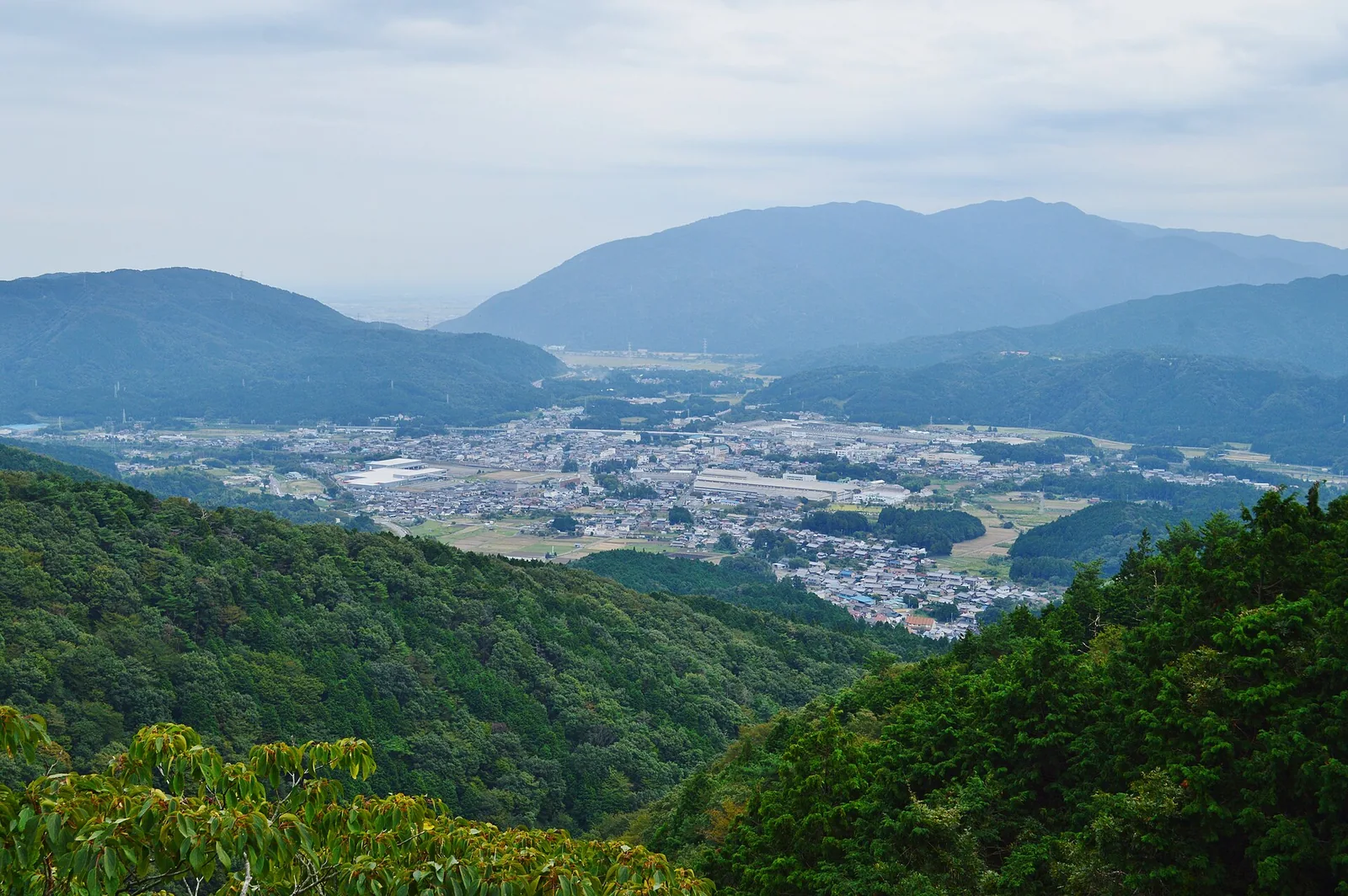
Photo: Saigen Jiro, 2017. Battlefield of Sekigahara seen from Ibukiyama Drive Way. · CC0 · Source page
The scene
A valley in Japan, autumn 1600
Two armies face each other in a small mountain valley in central Japan. Tens of thousands of men are waiting for the battle to begin.
The battle is fought on 21 October 1600. The family of the winner will rule Japan for more than two centuries.
Who fought here, and why here? And how much of the story do we really know?
Background
Who rules Japan?
In 1600 Japan has no single ruler. Great lords, called daimyo, hold land and armies. The strongest of them, Toyotomi Hideyoshi, who had brought much of the country together, died in 1598, according to Japanese sources. He left his son Hideyori as heir.
Two men now compete for the power Hideyoshi held. Tokugawa Ieyasu leads the Eastern army. Ishida Mitsunari, a civil administrator rather than a general, leads the Western army in the field.
Tokugawa Ieyasu
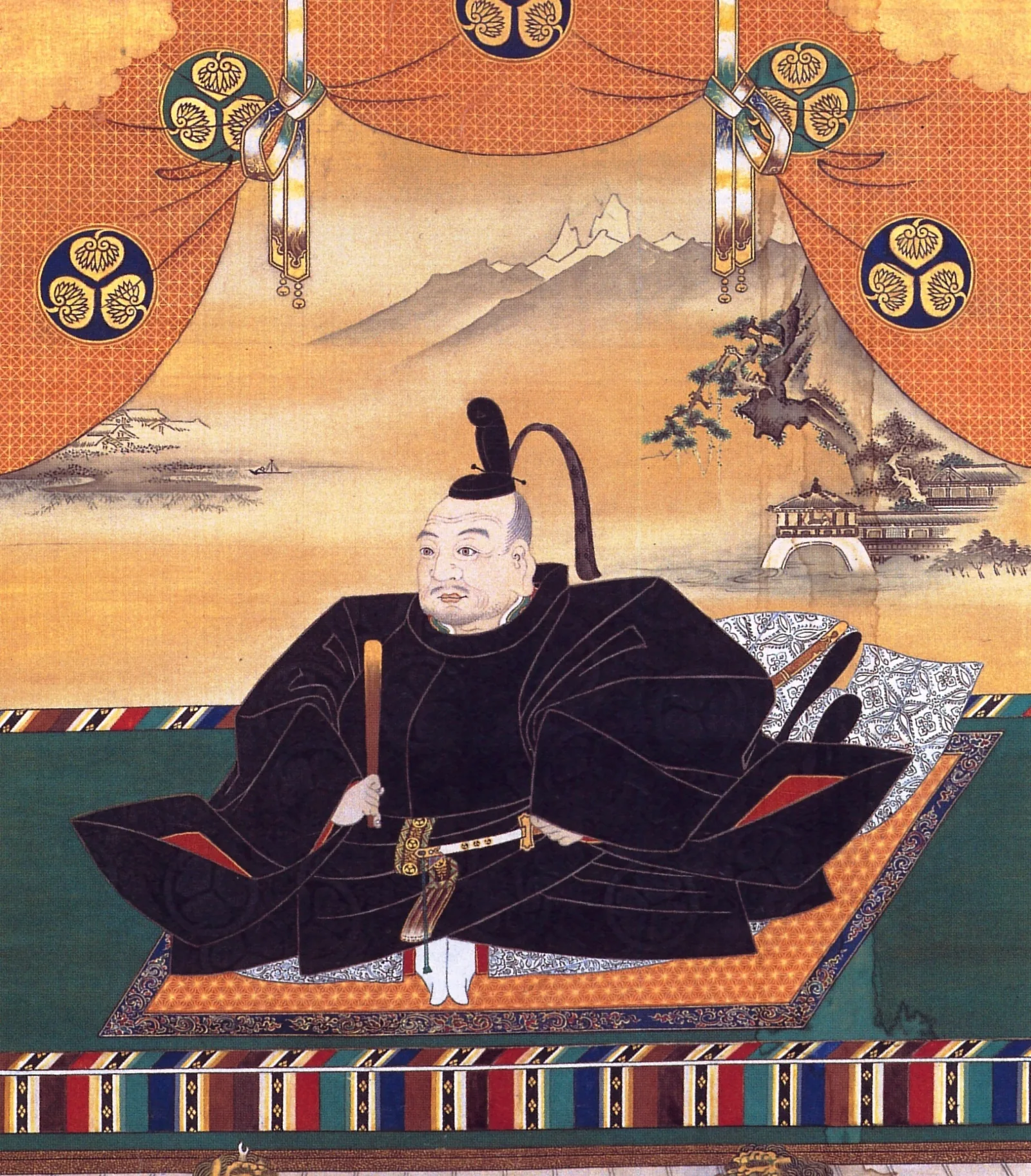
Kanō Tan’yū (attributed), portrait of Tokugawa Ieyasu, early Edo period. Osaka Castle collection. · Public domain · Source page
The lord of the east who won Sekigahara and held the title of shogun from 1603.
- Born: 1543, Okazaki Castle, Mikawa
- Died: 1616
- Won: Sekigahara, 1600; Osaka Castle, 1615
- Lost: His son Hidetada misses the battle (according to a Japanese encyclopedia article)
“he became the de facto ruler of Japan”
The road to it
The quarrel
The West rises
In the summer of 1600 the quarrel turns into open war. Ishida Mitsunari and the lords of the west gather around Osaka, where Hideyoshi’s heir Hideyori is.
The road north
Ieyasu leaves Edo
Ieyasu has left Edo, his seat in the east. He has already set out with his army for the north, to fight Uesugi Kagekatsu in Aizu. Trouble is growing in the west.
Ishida Mitsunari
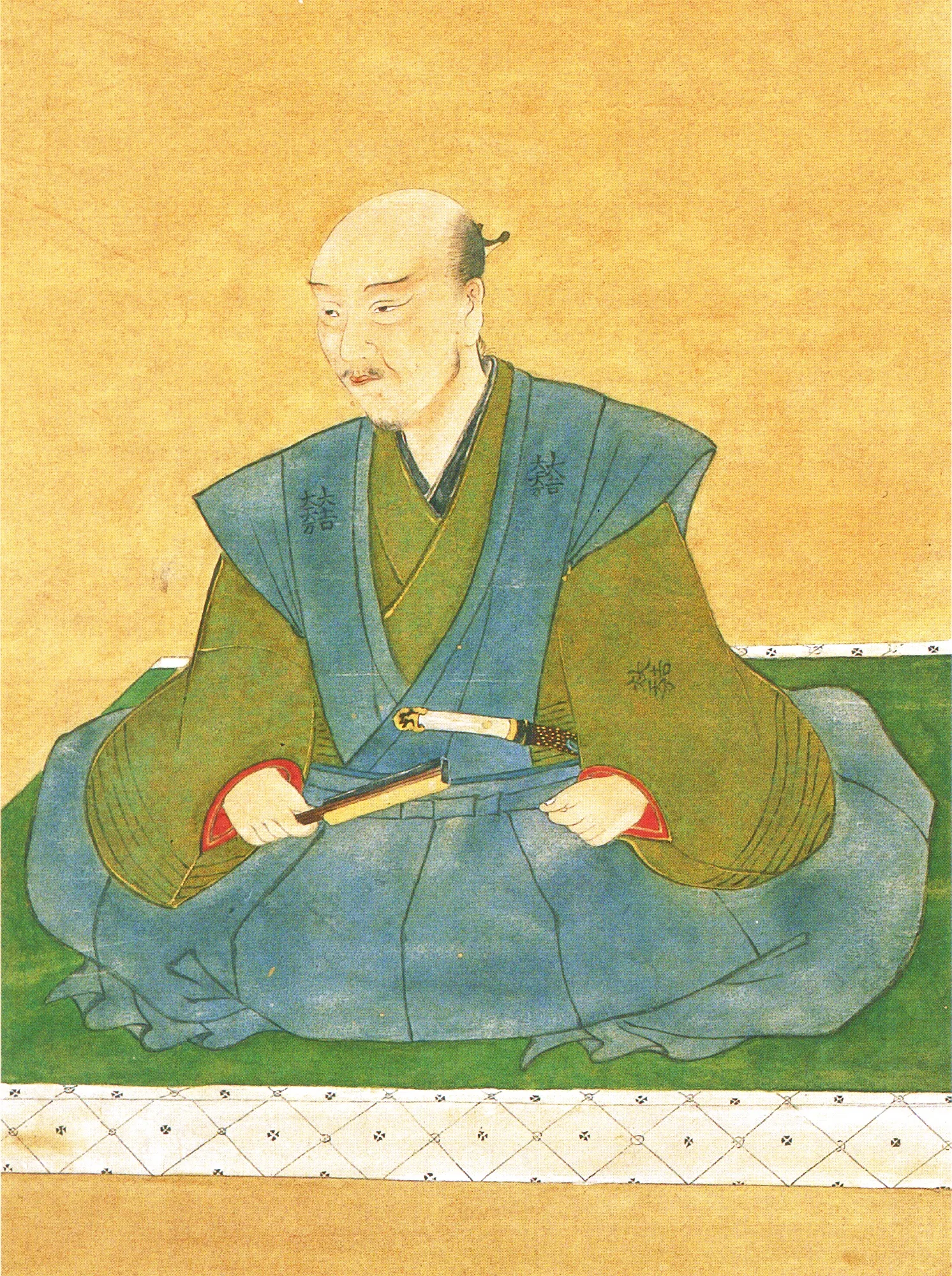
Portrait traditionally identified as Ishida Mitsunari, 17th century, painter unknown. Wikimedia Commons. · Public domain · Source page
A civil administrator rather than a general, who led the West in the field and lost at Sekigahara.
- Born: 1560 (Japanese sources), Ishida village, Ōmi
- Died: 1600, Beheaded in Kyoto in November 1600, according to Japanese sources
- Won: Fushimi castle, 1600 (the date is disputed)
- Lost: Sekigahara, 1600
“a civil administrator more than a general”
A decision point
You are Tokugawa Ieyasu.
Late July 1600, at Oyama, on the road north
Your army has marched north from Edo toward Aizu. At Oyama your generals gather for a council.
News has come from the west: Ishida Mitsunari and other lords have risen against you, and they hold Osaka, where Hideyoshi’s heir is. You are far from home, and the enemy is now behind you on the road north.
What do you do?
- Carry on north and defeat Uesugi in Aizu first. Deal with the west later. Probably you win in Aizu. But the lords of the west would have months to gather troops and hold Osaka, and your army would be far from home when it finally turned.
- Turn back west at once and meet Ishida’s army in the open. Probably you bring the fight to the enemy sooner, and it can be settled in one campaign. But the war reaches your own lands, and the lords of Aizu are free to strike at your rear.
- Return to Edo and wait to see which lords show their hand. Probably you keep your army whole, but the western lords gain time to organise, and the undecided lords see the initiative pass to them.
What really happened
Turn back west at once and meet Ishida’s army in the open.
Ieyasu turned his army west. After the council at Oyama he dropped the march north and turned against Ishida. The sources date the council to 25 July or to 28 July, and Japanese sources say no document from the time records the council itself.
The sources record the decision, but not his reasons in his own words. We do not know what he weighed at Oyama. Historians can only work backwards from what followed.
The event
Late summer
A castle on the road
about 20,000
Ogaki is a castle in the West’s hands, on the road to the valley. Japanese sources say the Eastern army faces about 20,000 defenders there in late August.
The walls can hold for a while. The Eastern army cannot simply walk past a castle that is still armed.
Mitsunari now has to decide what to do with his army.
Sekigahara: the two armies
21 October 1600
Sekigahara, Mino Province (now Gifu Prefecture)
Eastern army
- Commanders: Tokugawa Ieyasu
- Strength: about 88,000 (EBSCO (no source named)); 74,000 to 104,000 (Japanese Wikipedia infobox (no source)); about 60,000 (historyofwar.org)
- Losses: No reliable figure; the chronicles disagree widely (Edo-period chronicles)
Western army
- Commanders: Ishida Mitsunari
- Strength: about 80,000 (EBSCO (no source named)); 80,000 or more (Japanese Wikipedia infobox (no source)); about 60,000 (historyofwar.org)
- Losses: No reliable figure; the chronicles disagree widely (Edo-period chronicles)
Outcome: An Eastern victory. The Western line breaks, and, according to EBSCO, Mitsunari abandons his army and flees.
Historians do not agree on these numbers. The figures above come from different sources, and we do not choose one.
A decision point
You are Ishida Mitsunari, the Western commander in the field.
Late summer 1600, in Ogaki castle
Your army holds Ogaki, and the Eastern army is posted in front of it.
The simple plan is to sit behind the walls and let the enemy break against them. But walls buy time, and time gives the lords around you room to change their minds. You hear that some who fight for you are said to resent you.
What do you do?
- Hold Ogaki and make the Eastern army break itself against the walls. Probably the siege drags on and gives Osaka time to send help. But a long siege lets the doubtful lords choose their side, and your garrison is trapped behind the walls.
- Leave the castle at night and fight in the open valley at Sekigahara. Probably you fight on ground of your choosing, quickly, and you give up the walls. A battle in the open is decisive, and if you lose, nothing stands behind you.
- Withdraw west to regroup, and give up Ogaki to the enemy. Probably you keep your army whole, but the Eastern army moves forward unopposed, and the lords who are still wavering see the West give ground.
What really happened
Leave the castle at night and fight in the open valley at Sekigahara.
Mitsunari chose the second. On the night before the battle he burned the outer enclosure of Ogaki and marched his army to Sekigahara. By the old Japanese calendar, that was the night of the 14th day of the ninth month.
The reasons are disputed. One theory says a rumour lured him out, but historians who doubt the rumour give other reasons. Another says Ogaki was only a delay while another castle was finished. We do not know which is right.
The valley
A small valley
Sekigahara is, in the words of one history website, “a small mountain valley in central Japan”. Both armies meet here on 21 October 1600.
The day
Hour after hour
The fighting in the valley lasts hours. For the West the question is not only how many men it has, but whether the men beside each other keep fighting.
A defection can break a line from within. The Western line is held by lords whose loyalty is not equal. One of them is posted on a hill above the valley, and he has not yet chosen a side.
What we really know
Sources
Who wrote it down?
Most of what we read about Sekigahara was written long after the battle. Many accounts date from the Edo period, when the Tokugawa were in power.
A few documents are much closer to the day. Japanese sources cite a letter by Konoe Sakihisa, written days after the battle.
So for each story, ask three questions: who wrote it, when, and why?
Source: A folding screen of the battle
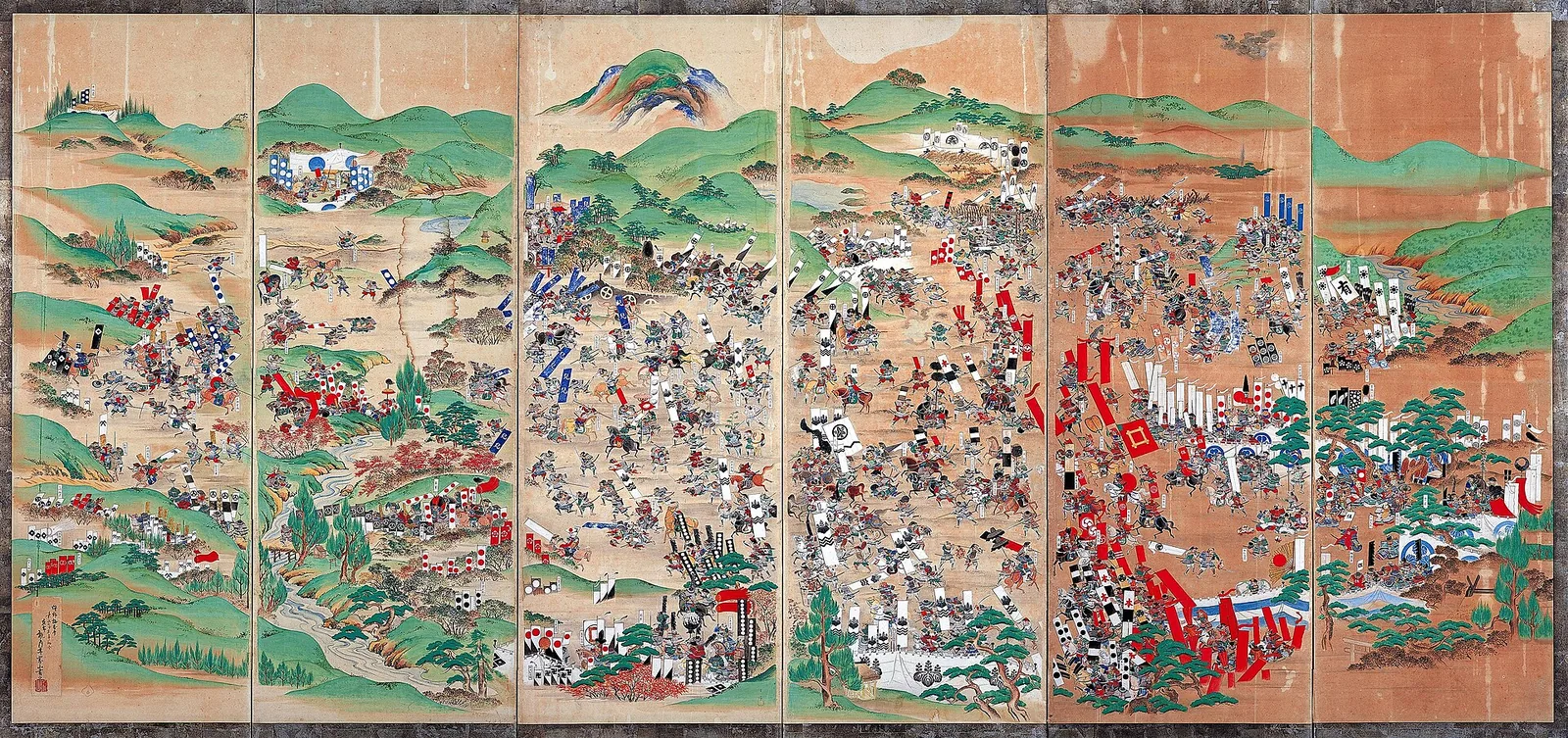
Sekigahara Kassen Byōbu, replica of 1854. Collection of the Town of Sekigahara archive; uploaded to Wikimedia Commons by LordAmeth. · Public domain · Source page
Sekigahara Kassen Byōbu, a replica from 1854 (Town of Sekigahara archive, via Wikimedia Commons)
A folding screen shows scenes, not dates. This copy was painted in 1854, and its Commons description says it is not an exact copy of the older original.
- Who painted this copy, and when? It is dated 1854, more than 250 years after the battle. The painter is not named in the record we checked.
- What does the picture show, and what does it leave out? It shows warriors, horses and armour, not a timeline. It cannot show when a lord turned, or how many men fought.
- Is this proof of the order of events? No. It is a picture of a battle made long after it, and it is better used as a clue than as proof.
Myth
Hideaki changed sides only after Ieyasu ordered his arquebuses to fire at him.
The truth
This is a later story. No source from the battle confirms it. The oldest version one article lists is a family history from 1688, nearly ninety years later.
The evidence
Two other accounts of the battle do not mention it. Another historian, Kasaya Kazuhiko, argues that a source from Bizen supports it, so the question is not settled.
Source: A modern military historian’s verdict
“a complete myth”
A military historian’s blog post, written in 2019 for a publisher’s readers, more than four centuries after the battle. It is his verdict, and some historians disagree with it.
- Who is judging the story, and from when? A modern military historian, in 2019, looking back more than four centuries.
- What is the blog post for? A short argument for a general reader. It gives a verdict, and a verdict is not the same as evidence.
- What would you need before accepting it? The evidence behind the verdict, and what the historians who disagree actually say.
A decision point
You are Kobayakawa Hideaki, a young lord posted at Matsuo castle, above the valley.
21 October 1600, the day of the battle
Japanese sources say you entered Matsuo castle the day before the battle. From the hill you can see the valley below, where the Western line is fighting. Messages have reached you from both camps.
Your men expect you to fight for the West. According to some accounts, you have also kept a secret contact with Ieyasu’s side. No one knows what you will do.
What do you do?
- Stay on the hill and fight for the West when the enemy comes to you. Probably the Western line holds a little longer. But you stay tied to a side that is losing ground, and the Eastern commanders will count you as an enemy.
- Turn against the Western line now, before the fighting reaches your hill. Probably the Eastern commanders welcome you early, but the Western troops around you become enemies at once, and your men are exposed on open ground.
- Wait until the battle is under way, then strike the Western line from the hill. Probably the Western line breaks soon after you turn, if other lords follow. But a switch made late earns less trust, and it depends on whether others join you.
What really happened
Wait until the battle is under way, then strike the Western line from the hill.
Kobayakawa turned on the Western line during the battle. The sources agree that he did, and that the line broke after several lords turned: EBSCO says five lords switched sides with him, and historyofwar.org says four others. They disagree on when and where. EBSCO says about noon. A Japanese encyclopedia article reports that the historian Shiramine Jun puts it at about ten in the morning, and Turnbull puts the turn at the start of the battle. They also disagree on the target.
No source records his reasons in his own words. Some articles say he had long been committed to Ieyasu. That is disputed, and we cannot settle it here.
What followed, and the quiz
Afterwards
Sixteen more years
Ieyasu wins the battle, but he does not yet hold the top title. In 1603 the emperor appoints him shogun, and the shogunate becomes the government he runs. That came years after the battle, not on the day of it.
One online encyclopedia article says he needed another sixteen years to secure undisputed rule of Japan.
In practice he becomes what the WorldHistory summary calls the ruler of Japan. His family rules until 1867 or 1868, depending on which event you count as the end. That is about 265 years in all.
After the battle
- 1603 The emperor appoints Ieyasu shogun.
- 1605 Ieyasu hands the title to his son Hidetada.
- 1615 Osaka Castle falls. Hideyori dies, and the Toyotomi clan is destroyed.
- 1616 Ieyasu dies.
- 1867–1868 The shogunate ends, after about 265 years of Tokugawa rule.
Was the gunfire story true?
Did Ieyasu really order guns fired at Kobayakawa?
- Stephen Turnbull, military historian He calls the gunfire story a complete myth. He also places Kobayakawa’s turn at the start of the battle, not halfway through.
- Kasaya Kazuhiko, Japanese historian He argues that a source from Bizen supports the gunfire story.
The question is still open. The earliest written version we can trace is from the Edo period, and the Bizen source is still in dispute. The sources also disagree on the time of Kobayakawa’s turn.
Check yourself
What did Ieyasu decide at Oyama?
Answer: To turn his army west and meet Ishida Mitsunari.. Right. After the council at Oyama he dropped the march north and turned west against Ishida and the lords of the West.
Check yourself
Why is the gunfire story treated with caution?
Answer: The earliest version we can trace is from the Edo period.. Right. The story appears in later accounts, and the oldest version one article lists is a family history from 1688.
Check yourself
In which year did the emperor appoint Ieyasu shogun?
Answer: 1603.. Right. The emperor appointed him in 1603, three years after the battle.
Check yourself
What did Mitsunari do at Ogaki on the night before the battle?
Answer: He burned Ogaki’s outer walls and marched to Sekigahara.. Right. On the night before the battle the Western army set fire to the outer enclosure and marched out to fight in the open.
Check yourself
What do the sources say about the time when Kobayakawa turned?
Answer: The sources disagree about the time.. Right. EBSCO says about noon, a Japanese encyclopedia article gives about ten in the morning, and Turnbull puts it at the start of the battle.
Check yourself
What is the best reason to be careful with the 1854 folding screen as proof?
Answer: A copy from 1854, and pictures show scenes, not order.. Right. The copy was made more than 250 years after the battle, and a picture cannot show when a lord turned.
Terms
- shogun The military ruler of Japan, appointed by the emperor. The government he led was the shogunate.
- shogunate The government run by the shogun.
- daimyo A great lord who held large lands and his own armed men.
- de facto In practice, though without the formal title.
- defection Switching sides in the middle of a war or battle.
- chronicle A written account of events, often compiled years after they happened.
- arquebus An early hand-gun, fired with a match or a flame.
- folding screen (byōbu) A painted folding screen, used in Japanese houses and palaces.
- Edo period The years 1603 to 1868, when the Tokugawa shoguns ruled Japan.
- Toyotomi Hideyoshi A Japanese leader who brought much of Japan together. He died in 1598 and left his son as heir.
- Tokugawa Ieyasu A Japanese commander who led the Eastern army at Sekigahara. He later became shogun.
- Ishida Mitsunari A Japanese civil administrator, not a general, who led the Western army.
- Hideyori Hideyoshi's son, who inherited his position. He was in Osaka during the war.
- Osaka A large city in western Japan. During the war the western lords held it.
- Edo The city from which Ieyasu ruled eastern Japan. Today it is called Tokyo.
- Uesugi Kagekatsu A Japanese lord in the Aizu region, in the north. Ieyasu set out against him and then turned back.
- Oyama The place where Ieyasu's generals met in council on the road north.
- Ogaki A castle in Japan held by the West, on the road to the valley.
- Matsuo Castle A castle in Japan, which one lord entered the day before the battle.
- Kobayakawa A Japanese lord who turned against the Western line during the battle of Sekigahara.
- Konoe Sakihisa A Japanese lord whose letter, written days after the battle, is quoted in the sources.
- Folding screen A screen made of several panels that show painted scenes. In this lesson it is a later painting.
- Kuroda family history A history of the Kuroda family, dated 1688. It is the oldest version the article lists.
- Shiramine Jun A historian cited in a Japanese encyclopedia article, who placed Kobayakawa's turn in the morning.
- Turnbull A military historian who wrote about Sekigahara. The lesson says he placed Kobayakawa's turn at the start of the battle.
Sources
- Sekigahara Kassen Byōbu, folding screen, replica of 1854 (Town of Sekigahara archive; image on Wikimedia Commons)
- Stephen Turnbull, blog post on the Battle of Sekigahara, Osprey Publishing, 2019
- EBSCO Research Starters, “Battle of Sekigahara”, military history and science
- WorldHistory.org, “Tokugawa Ieyasu”
- Anthony J. Bryant, Sekigahara 1600: The Final Struggle for Power (Osprey, Campaign 40, 1995)
- Conrad Totman, Tokugawa Ieyasu: Shogun (Heian International, San Francisco, 1983)

Image credits
- Photo: Saigen Jiro, 2017. Battlefield of Sekigahara seen from Ibukiyama Drive Way. · CC0 · Source page
- Kanō Tan’yū (attributed), portrait of Tokugawa Ieyasu, early Edo period. Osaka Castle collection. · Public domain · Source page
- Portrait traditionally identified as Ishida Mitsunari, 17th century, painter unknown. Wikimedia Commons. · Public domain · Source page
- Sekigahara Kassen Byōbu, replica of 1854. Collection of the Town of Sekigahara archive; uploaded to Wikimedia Commons by LordAmeth. · Public domain · Source page


