Cai Lun and the making of paper
Decisions, questions and your own progress, in the app
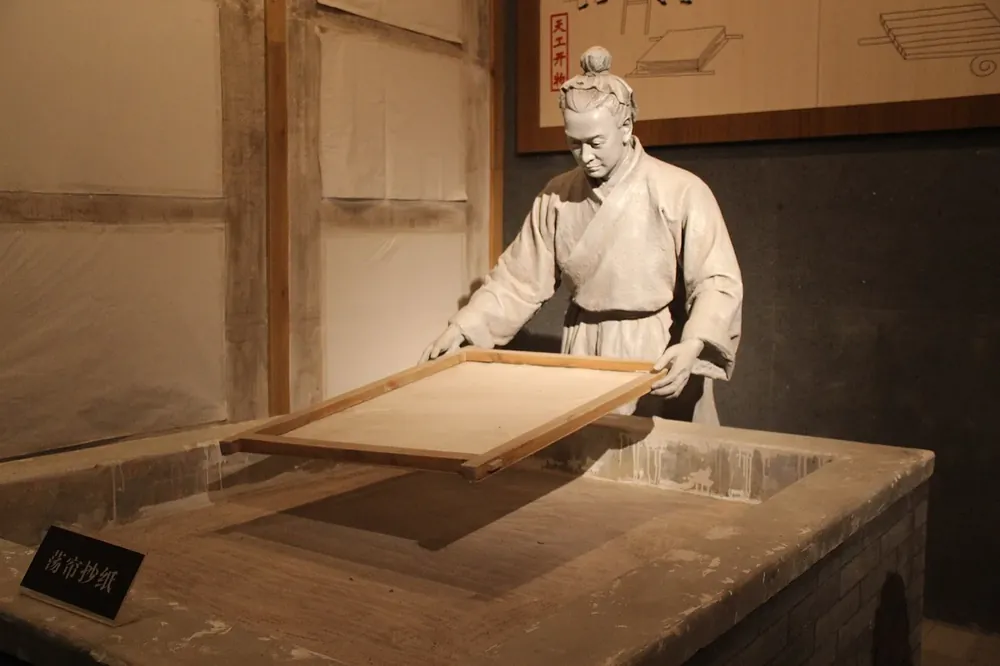
A museum figure of a Han-dynasty papermaker · Gary Todd from Xinzheng, China · CC0 · Source page
Writing on bamboo
In early China, people wrote on bamboo strips tied together, or on silk. Bamboo was heavy and bulky. Silk was light but very expensive.
Cai Lun's recipe
In 105 AD, a Han court official named Cai Lun presented a new kind of paper to the emperor. He made it from tree bark, hemp, old rags and fishing nets.
An older idea improved
Archaeologists have found rougher paper made in China before Cai Lun. His method made paper cheaper and better for writing. Over the following centuries, paper slowly replaced bamboo and silk across China.
Paper travels west
Papermaking spread to Korea and Japan. By about 800, Baghdad was making paper, and the Islamic world used it for books and records. From there it reached Spain and the rest of Europe.
A long journey
about 1,000 years
Paper took about 1,000 years to travel from China to Europe. Europe's first paper mills appeared in Muslim Spain around the 1100s.
Why it still matters
Cheap paper made books, maps, money and government records far easier to produce. Later, printing presses depended on it. Paper is still used everywhere today.
Review question
Which materials did Cai Lun use to make paper?
Answer: Tree bark, rags and fishing nets. Cai Lun mixed tree bark, hemp, old rags and fishing nets. Papyrus was an Egyptian writing material.
What did Chinese writers commonly use before paper?
Answer: Bamboo strips and silk. Bamboo strips were cheap but heavy, and silk was light but costly. Paper solved both problems.
Image credits
- A museum figure of a Han-dynasty papermaker · Gary Todd from Xinzheng, China · CC0 · Source page
