The Opium War, 1839–1842: the letter to the Queen
Canton, 1839. An imperial commissioner orders the foreign merchants to hand over their opium, and about 20,000 chests come into Chinese hands. Within months Britain and China are at war. Was it a war about a drug, or about something larger?
Decisions, questions and your own progress, in the app
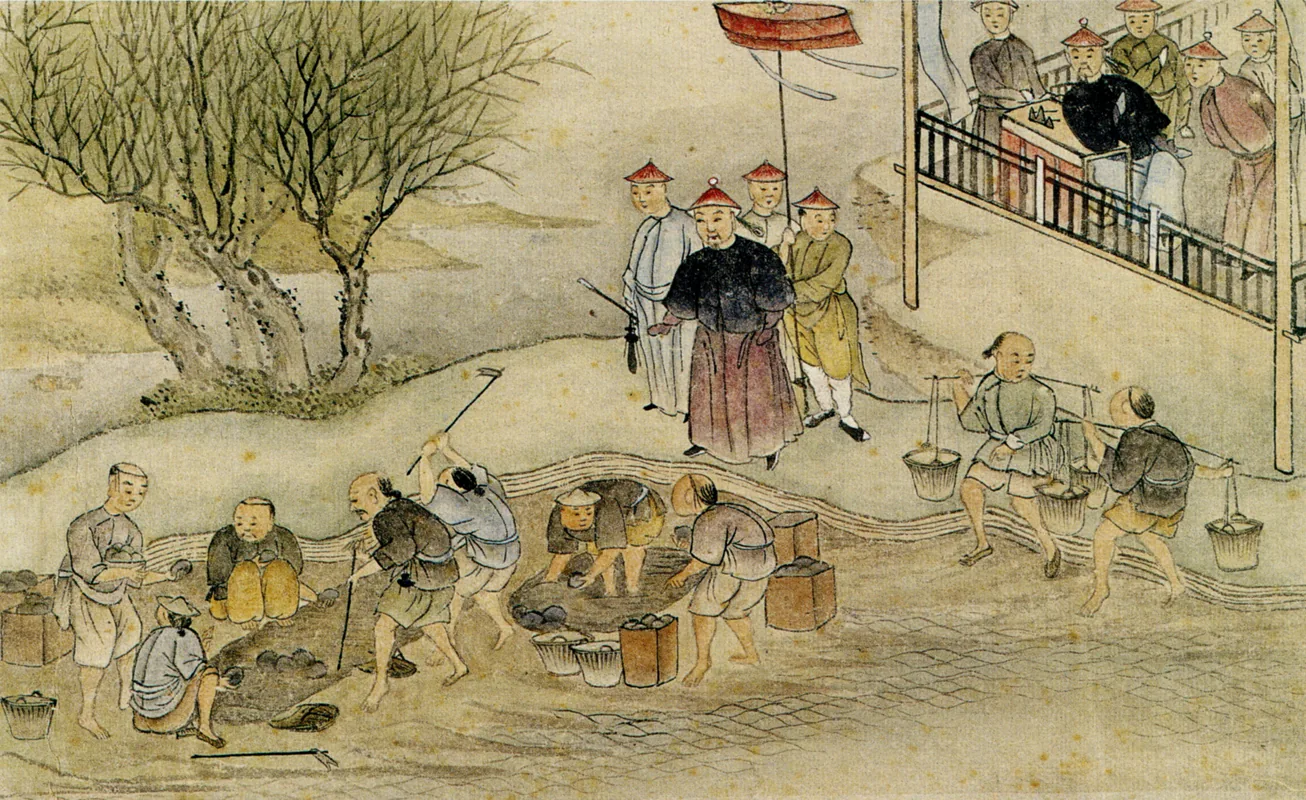
Chinese artist (not named), ‘Commissioner Lin and the Destruction of the Opium in 1839’, 19th century. Hong Kong Museum of Art. · Public domain · Source page
The scene
Canton, 1839: the order
Canton, spring 1839. The emperor’s commissioner, Lin Zexu, gives the foreign merchants one order: hand over your opium. Within weeks some 20,000 chests are in Chinese hands. What happens to them, and how Britain and China come to war within months, is this lesson’s question.
Was this a war about a drug, or about something larger? The answer depends on which sources you trust.
The place
Canton
Canton, today Guangzhou in southern China, was the port where foreign merchants traded with China. Their ships brought goods in, and the trade in opium grew in the same port.
What is new in 1839 is a commissioner with the power to carry out the emperor’s decision to stop it.
The question is simple to ask and hard to answer: how did a trade in one drug lead to war?
Lin Zexu (also spelled Lin Tse-hsu)
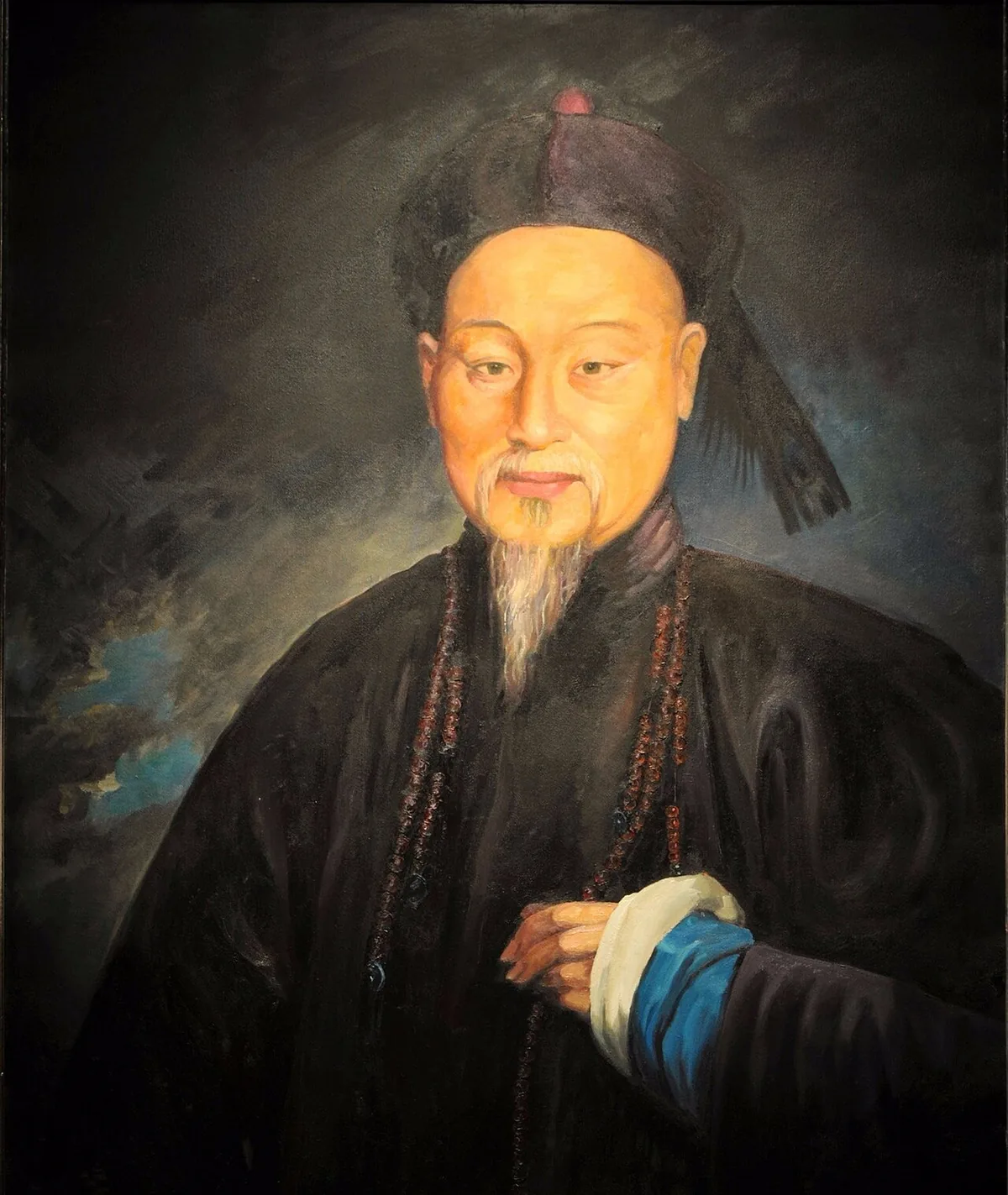
Attributed to Lam Qua, ‘Portrait of Lin Zexu’, 19th century. Opium War Museum, Humen, via Google Arts & Culture. · Public domain · Source page
The emperor’s commissioner at Canton in 1839, who took the merchants’ opium and wrote to Queen Victoria.
- Born: 1785
- Died: 1850
- Won: The surrender of about 20,000 chests of opium, 1839
- Lost: War with Britain, 1839–1842
The drug harms the people, and the trade must end.
The road to it
Background
A ban decided in the capital
In 1836 an official sent the emperor a memorial with a different idea: let the trade be legal, and tax it. Two years later another memorial argued for a total ban, and in 1838 the emperor approved the ban.
Daoguang had reigned since 1820. At the end of 1838 he named Lin Zexu imperial commissioner and sent him south, to Canton, to end the trade.
Note the order. The ban was decided in the capital, before Lin had seen Canton. Historians still argue about what the court really thought, and we will come back to that.
1839
The foreign merchants
Lin reached Canton in 1839, though accounts differ on when. He dealt with Britain’s superintendent, Charles Elliot, and with the merchants who held the opium.
Lin wanted the stock handed over, and the opium stayed in the merchants’ hands while the pressure grew.
According to one account, Lin’s rules made foreign traders liable to execution. For anyone holding opium, that was a frightening rule.
A decision point
You are Charles Elliot, Britain’s chief superintendent of trade in China.
Late March 1839, Canton.
The British merchants hold a large stock of opium. Lin has demanded it, and the merchants are waiting for your decision.
You have heard that Lin’s rules make foreign traders liable to execution. You have also heard that the merchants fear losing their money if they hand their stock over for nothing.
You do not know whether London will pay for the opium.
What do you do?
- Order the merchants to hand over their opium, and promise that the government will pay for it. Probably the chests come in and the trade stops for now. But the promise would be yours alone, and London might refuse to honour it.
- Refuse, and let the merchants keep their chests until London decides. Probably Lin would press harder. According to one account, his rules made foreign traders liable to execution, so the merchants would be in danger.
- Ask Lin for more time, and wait for London’s answer before giving any order. Probably Lin would grant a short delay. But delay would not end the trade, and the stand-off would only grow.
What really happened
Order the merchants to hand over their opium, and promise that the government will pay for it.
Elliot set the deadline and ordered the merchants to surrender their opium, and he also asked Lin for more time. Owners said he had promised them compensation from the British government. The sources disagree on what he promised, and on whether he had the authority to promise it.
Elliot was responsible for the British in Canton, and he could not know whether London would pay. Historians still argue over how far his promise went.
The chests
Spring 1839
The surrender
about 20,000 chests
According to most accounts, the surrender went on through April and May 1839. The total is about 20,000 chests, a figure that comes mostly from Lin’s own letter.
The exact number is disputed. Later books give slightly different totals, so remember it as about 20,000.
Now the chests are in Chinese hands, and the question is what to do with them.
The argument
Why the drug is the problem
Lin’s letter makes two arguments. The first is moral: the drug harms the people who use it. The second is economic: the trade drains wealth out of China.
We will read the letter itself in chapter four, because its date is uncertain.
Keep these two arguments in mind. They help explain the choice in front of him.
A decision point
You are Lin Zexu, the emperor’s commissioner at Canton.
May 1839, Canton.
The merchants’ opium is now in your hands: about 20,000 chests. The emperor wants the trade ended, and that is why you were sent.
You believe the drug harms people, and that the trade drains wealth out of China.
There are two ways to be rid of the chests. Each has its risks.
What do you do with the opium?
- Destroy it on the shore at Humen, and let the river carry the remains out to sea. Probably the chests are gone for good, and the ban looks serious. But the merchants lose their stock, and London may treat the act as a reason for war.
- Sell the opium through local buyers, and put all the money into the state’s treasury. Probably the money goes to the state, but the drug keeps its market. The ban would then look like a trade, and the harm would go on.
What really happened
Destroy it on the shore at Humen, and let the river carry the remains out to sea.
Lin chose to destroy it. The work began at Humen on 3 June 1839.
His letter argues that the drug harms people, so destruction fitted his case. No source we know of shows him weighing a sale. The second choice is offered for analysis, not as something he considered.
3 June 1839
Into the sea
about 23 days
On 3 June 1839 the destruction began at Humen, on the river not far from Canton. According to most accounts, workers mixed the opium with salt and lime and washed it out to sea.
The work took about 23 days. For the foreign merchants it meant the loss of their stock. For Britain, the loss became a reason to fight. Historians call such a reason a casus belli.
What we really know
Source: Lin’s letter to the Queen
Paraphrase, not a quotation. Lin asks the Queen to stop her subjects trading in opium. He says the drug harms people, and that the trade drains China’s wealth.
The letter has no date beyond the year. Some sources suggest it was lost on the way, and historians still debate whether the Queen ever read it.
- Who wrote it, and to whom? An imperial commissioner, writing to a foreign queen. It is a diplomatic appeal: Lin asks her to act.
- When was it written? Only the year 1839 is known. It was written weeks or months after the merchants handed over their opium, but the day is not known.
- What is missing? Any answer from the Queen, and any proof that the letter reached her. We hear only one side: that of the official who seized the stock.
Myth
Britain fought the Opium War for free trade.
The truth
Only partly, and historians disagree on how much. Stephen Platt, in his 2018 book, presents the British push to open trade as the start of the collapse of the Qing dynasty, China’s ruling house, and reviews of the book are divided. Others put the drug at the centre of the story. The version that Britain forced opium on China is also only partly true.
The evidence
Article IV of the 1842 treaty makes China pay for the opium surrendered in 1839. The articles say nothing about the trade itself.
Source: Article III: one island
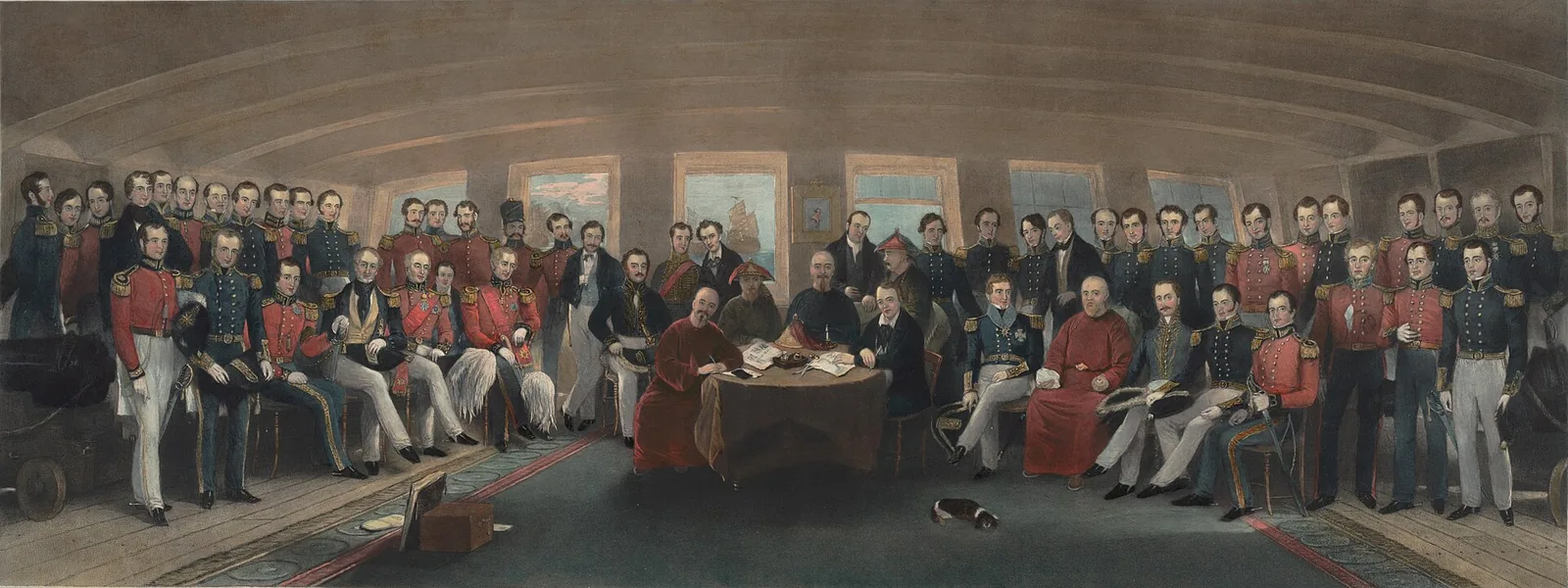
The Signing of the Treaty of Nanking. Painted by Captain John Platt, engraved by John Burnet, published 20 April 1846. Anne S. K. Brown Military Collection. · Public domain · Source page
“the Island of Hong-Kong, to be possessed in perpetuity by Her Britannic Majesty”
The treaty was signed at Nanking, aboard the British warship HMS Cornwallis. It was written at the end of the war, by the winning side, under naval pressure.
- Who wrote it, and who held the upper hand? British and Qing negotiators drafted it, but at the end of a war that Britain had won at sea. The text was shaped under naval pressure.
- What does the article say the island is for? It says the island is to be held “in perpetuity”, that is, for ever. It does not say why Britain wanted it.
- What is left out? Kowloon, on the mainland opposite the island, is not in this article. The article also says nothing about the opium trade.
A decision point
You are William Ewart Gladstone, Member of Parliament for Newark.
8 April 1840, the House of Commons in London. Two years before the treaty.
The Commons is debating the war with China. A motion against the government’s handling of it is before the House, moved by Sir James Graham.
You know the facts of the seizure at Canton. Some say the merchants were promised compensation. Others say the superintendent had no authority to end the trade at all.
Other members will speak from the other side. Your words will be recorded in the official report of Parliament.
Do you rise to speak, and what do you say?
- Speak in the debate against the war, and give your reasons. Probably the government’s friends answer you sharply, and both sides quote your words. But the House hears a clear case against the war.
- Speak in the debate in defence of the government’s conduct, and give your reasons. Probably the government’s supporters welcome you, and the motion looks weaker. But you would be defending a war whose causes historians still dispute.
- Stay silent, keep your views to yourself, and let the debate go on without you. Probably your name does not appear in the debate, and nobody can say where you stood. But the motion is decided without your voice.
What really happened
Speak in the debate against the war, and give your reasons.
Gladstone spoke against the war, saying it was unjust in its origin (col. 818). The House held a division on 9 April: 262 for the motion and 271 against.
The record shows his argument, not his private reasons. Others took the other side: Lushington argued that the superintendent had no authority to end the trade, and Sandon called the attacks on Gladstone unjust.
William Ewart Gladstone
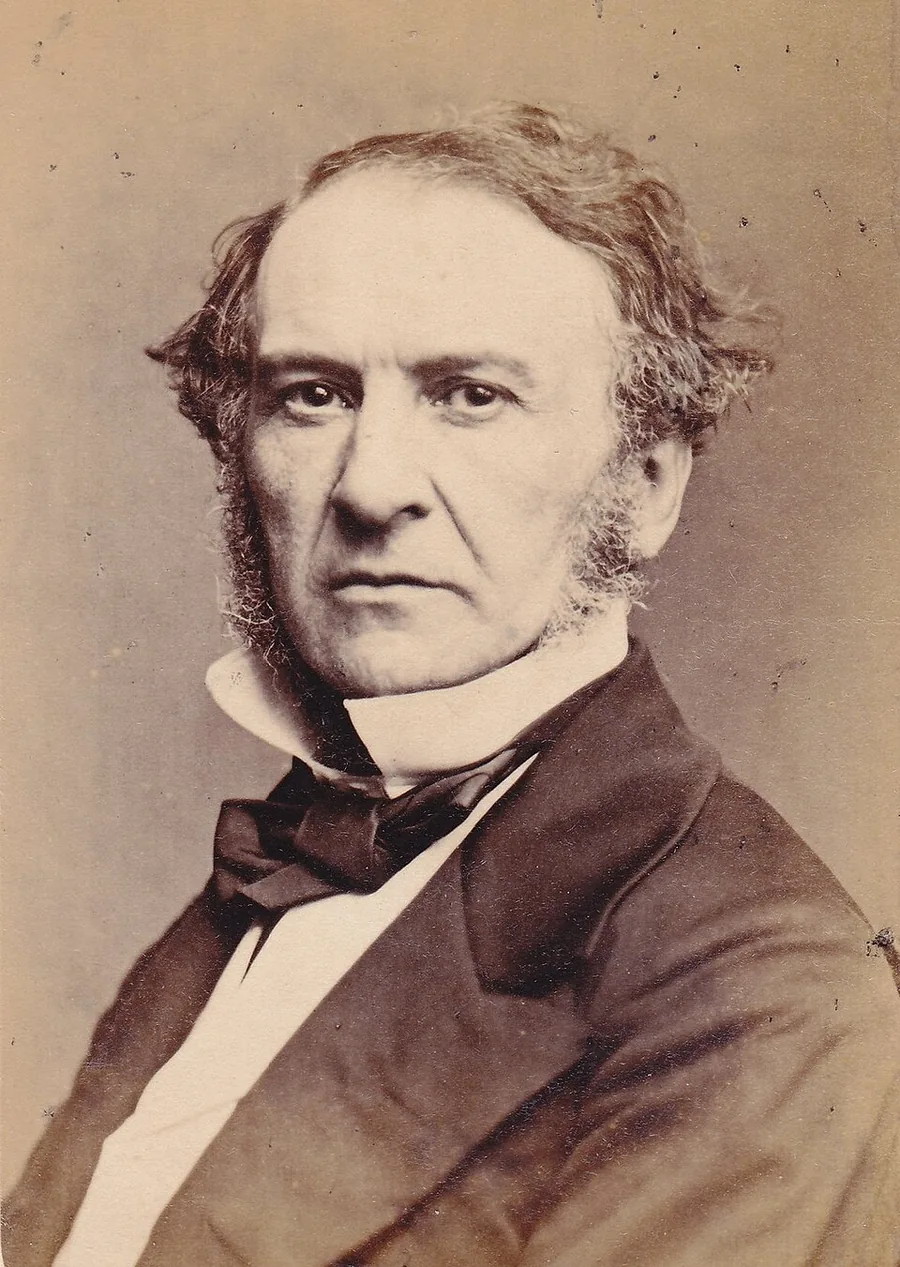
John Jabez Edwin Mayall, ‘William Ewart Gladstone’, carte de visite, 1861. · Public domain · Source page
A Member of Parliament for Newark, who was in the Commons in April 1840.
- Born: 1809
- Died: 1898
“a war more unjust in its origin, a war more calculated in its progress to cover this country with permanent disgrace”
What followed, and the quiz
1842
The price of the peace
21 million dollars
On 29 August 1842 the treaty was signed at Nanking, aboard a British warship. China agreed to cede the island of Hong Kong, and to open five treaty ports, among them Shanghai, to British trade.
China also agreed to pay an indemnity of 21 million dollars. The first payment, 6 million dollars, was due at once. The rest was due in instalments until the end of 1845.
For Britain, the result was an island and five new ports. For China, it was a large bill and the loss of an island. Historians still argue about what the war was for, and about what the treaty really meant.
What followed, in order
- End of 1838 The emperor names Lin Zexu imperial commissioner at Canton.
- 3 June 1839 Destruction of the opium at Humen begins. It lasts about 23 days.
- 4 September 1839 A naval clash at Kowloon.
- 9 April 1840 The Commons debates the war. A motion against the government is defeated by a majority of nine, 262 to 271.
- 7 January 1841 British naval and army forces take two forts at the mouth of the Pearl River.
- 29 August 1842 The Treaty of Nanking is signed aboard HMS Cornwallis.
- 26 June 1843 The two governments exchange ratifications at Hong Kong.
Why did the war happen?
What was the war really about: the drug, the trade, or the politics of the Qing court?
- Stephen R. Platt, 2018 British efforts to open trade, he argues, set off the collapse of the Qing. Several causes lay behind that collapse: rebellion, the Canton trading system, and a split at court over whether to legalise opium or drive out the foreigners. Reviews of his book disagree about how much weight he gives each cause.
- Julia Lovell, 2011 Her book of 2011 is titled for the drug and the dreams around it, and its title alone places the opium trade at the centre of the story. Read the book for the full argument.
- James Polachek, 1992 His book, The Inner Opium War, looks at the fight inside the Qing court. According to a review, Lin’s supporters pushed for hard resistance for reasons of domestic politics.
Which side do you find strongest, and what evidence would change your mind?
Check yourself
Who decided that the opium trade must end, before Lin reached Canton?
Answer: The emperor, after a debate in the capital.. Right: the ban was approved in the capital in 1838, before Lin was named commissioner.
Check yourself
How long did the destruction at Humen last, according to most accounts?
Answer: About three weeks, from 3 June 1839.. Right: most accounts date the work from 3 June and count about 23 days.
Check yourself
What territory did the Treaty of Nanking give Britain?
Answer: The island of Hong Kong, to be held in perpetuity.. Right: Article III names the island of Hong Kong, to be possessed in perpetuity.
Check yourself
What was the result of the Commons vote of 9 April 1840?
Answer: 262 for and 271 against, so the motion lost by nine.. Right: the record shows 262 ayes, 271 noes, and a majority of nine for the government.
Check yourself
Which statement about the causes of the war do the sources support?
Answer: Historians disagree: some put the drug at the centre, others trade and a wider collapse.. Right: the myth step and the debate both show that the causes are disputed.
Check yourself
Why can we not be sure that Queen Victoria read Lin’s letter?
Answer: The letter has no exact date, and its delivery is disputed.. Right: the letter is dated only 1839, and the sources disagree on whether it reached the Queen.
Terms
- opium A drug made from the opium poppy. It was the centre of the trade that Lin Zexu tried to end.
- imperial commissioner An official sent by the emperor to carry out one task. Lin Zexu was sent to Canton to end the opium trade.
- memorial A formal written proposal that an official sent up to the emperor. If the emperor approved it, it became policy.
- superintendent Charles Elliot’s title in 1839: Chief Superintendent of British Trade in China, Britain’s most senior official there.
- division A formal, counted vote in the House of Commons.
- casus belli Latin for ‘cause of war’: an event that a state can use to justify going to war.
- indemnity A sum that the defeated side pays the winner for losses or the costs of a war.
- treaty port A port that a treaty opens to foreign trade.
- cede To hand over territory to another power, usually by treaty.
- ratification The formal approval of a signed treaty by the government that signed it.
- Canton A port in southern China where foreign merchants traded with China. Today it is called Guangzhou.
- Daoguang Emperor of China from 1820. At the end of 1838 he named Lin Zexu imperial commissioner.
- Charles Elliot Britain's superintendent at Canton. Sources disagree on what he promised the merchants, and whether he had the authority.
- Humen A place on the river, not far from Canton, where the destruction of the opium began in 1839.
- Gladstone A British politician who spoke against the war with China in the Commons. He later became prime minister.
- Sir James Graham A British politician who brought a motion in the Commons against the government's handling of the war.
- Stephen Platt Historian whose 2018 book presents the British push to open trade as the start of the Qing collapse. Reviews are divided.
- Qing dynasty The imperial dynasty that ruled China at the time of the war.
- HMS Cornwallis A British warship aboard which the Treaty of Nanking was signed in 1842.
- House of Commons The lower house of the British Parliament, whose members are elected. Debates and votes take place there.
- Hong Kong An island off southern China, handed to Britain by the Treaty of Nanking in 1842.
- Shanghai A port city on China's east coast, opened to British trade by the Treaty of Nanking.
- Nanking A Chinese city where the treaty ending the war was signed in 1842. Today it is called Nanjing.
- Ransom Money paid to avoid an attack, or to free prisoners. In this war it was deducted from the indemnity.
- Dollar The currency in which the indemnity was counted. At that time it was a silver coin, not today's dollar.
- Guangzhou The modern name of Canton, a port city in southern China.
Sources
- Treaty of Nanking, 29 August 1842, English text of Articles III to VII, as printed on Wikisource
- Hansard, House of Commons, “War with China - Adjourned Debate”, 8 and 9 April 1840 (HC Deb vol. 53, cols. 844-950)
- Lin Zexu, letter to Queen Victoria, 1839 (dated only by the year), in the translation by Teng Ssu-yu and John K. Fairbank, in China’s Response to the West (Cambridge, MA: Harvard University Press, 1954)
- Stephen R. Platt, Imperial Twilight: The Opium War and the End of China’s Last Golden Age (New York: Alfred A. Knopf, 2018)
- Julia Lovell, The Opium War: Drugs, Dreams and the Making of China (London: Picador, 2011)
- James M. Polachek, The Inner Opium War (Cambridge, MA: Harvard University, Council on East Asian Studies, 1992)
Image credits
- Chinese artist (not named), ‘Commissioner Lin and the Destruction of the Opium in 1839’, 19th century. Hong Kong Museum of Art. · Public domain · Source page
- Attributed to Lam Qua, ‘Portrait of Lin Zexu’, 19th century. Opium War Museum, Humen, via Google Arts & Culture. · Public domain · Source page
- The Signing of the Treaty of Nanking. Painted by Captain John Platt, engraved by John Burnet, published 20 April 1846. Anne S. K. Brown Military Collection. · Public domain · Source page
- John Jabez Edwin Mayall, ‘William Ewart Gladstone’, carte de visite, 1861. · Public domain · Source page


