Mussolini: how fascism was born
In 1914 he was the best-known socialist editor in Italy. After a war, strikes and violence in the streets, he faced a country with elections, a parliament and a king. What decided the fate of Italian democracy?
Decisions, questions and your own progress, in the app
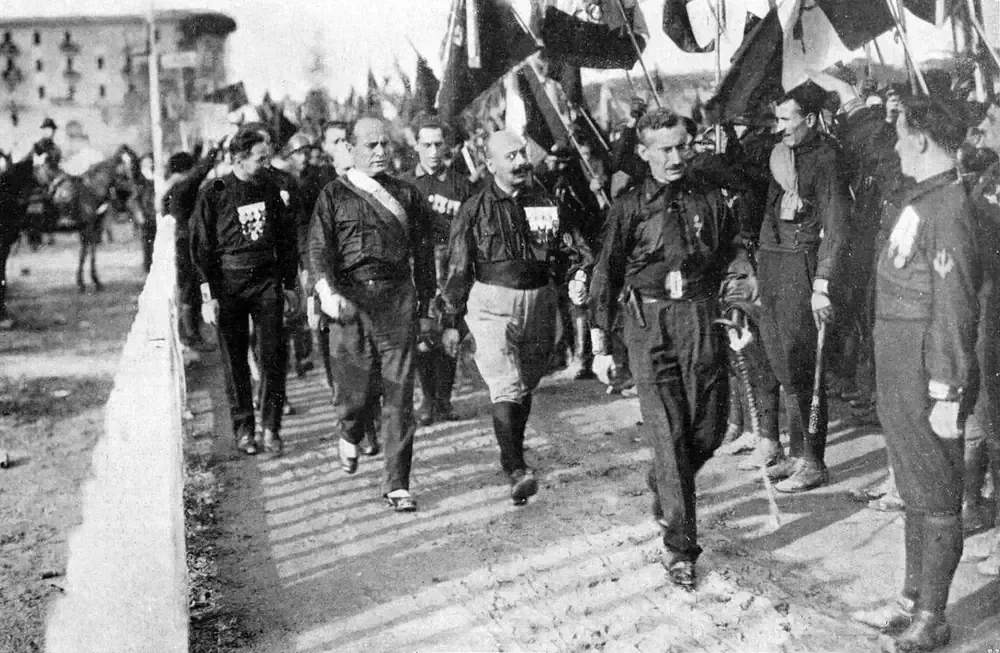
Illustrazione Italiana, 1922, no. 45. Wikimedia Commons · Public domain · Source page
The editor who changed sides
Italy, 1914
Autumn 1914. Europe is at war, and Italy has not yet joined it.
At the desk of Avanti!, the Socialist Party's daily paper, sits its most famous editor, Benito Mussolini. The party tells its writers what to think about the war. Mussolini is beginning to think differently. What will he do?
Background
A party that said no to war
When the war broke out in 1914, the Italian Socialist Party held to neutrality. Italy was not yet at war, and the party wanted it to stay out.
Mussolini had been director of Avanti! since December 1912, when he moved to Milan to take the job. His was the best-known voice in the paper.
A decision point
You are Benito Mussolini, editor of Avanti!.
Bologna, 20 October 1914
At the party meeting in Bologna, the leadership rejects your turn towards Italy joining the war. You are still the editor of the party's daily, and your readers know your name.
You believe Italy should go to war. The party does not.
What do you do?
- Keep the party's neutrality line and stay as editor. You keep the paper and your influence in the party. The argument about war goes on inside it, and you are only one voice. Probably a slow and wearing struggle.
- Stay in the party and fight inside it for intervention, to win a vote. You might win over part of the party, but the leadership is against you and the members are divided. You would probably lose the vote, and the paper would stay in the leadership's hands.
- Resign the editorship, start a paper of your own that backs the war, and fight the party from outside. You lose the party's paper but keep your readers. A new paper can say what you want. The party would probably expel you, and you would become a rival rather than a member.
What really happened
Resign the editorship, start a paper of your own that backs the war, and fight the party from outside.
On 20 October you resigned as editor of Avanti!. On 15 November the first issue of your own paper, Il Popolo d'Italia, went on sale.
On 24 November the party's Milan section decided to expel you, after a stormy meeting that you attended.
You believe Italy should go to war, and the party's line does not let you say so and keep your place.
Historians disagree about how much of this was conviction and how much was ambition. The sources show what he did but do not give one clear answer to why, and this lesson does not pretend that they do.
November 1914
A new paper

Masthead of Il Popolo d'Italia, 1914–1942. Wikimedia Commons · Public domain · Source page
The first issue of Il Popolo d'Italia went on sale on 15 November 1914. The masthead in the picture is the paper's name as it appeared at the top of the page.
This paper would become the voice of the movement Mussolini founded in 1919. It was not just a newspaper: it was the platform he spoke from.
A hall in Milan, 1919
1918–1919
A victory that felt like a loss
When the war ended in 1918, Italy was on the winning side. Many Italians did not feel like winners. The peace did not give Italy what the war had seemed to promise.
The phrase vittoria mutilata, the mutilated victory, is attributed to the poet Gabriele D'Annunzio. It became the slogan of those who felt cheated at the peace table.
23 March 1919
A meeting in a square
On 23 March 1919 a meeting was called in Piazza San Sepolcro, in Milan. It was first planned for the Teatro Dal Verme, a large theatre. When the turnout looked likely to be lower than expected, the meeting was moved to a meeting room of the Industrial Alliance on the square.
Cesare Goldmann, the president of the Industrial Alliance, took part. He had also financed Il Popolo d'Italia. That day the Fasci di Combattimento, the “combat leagues”, were founded.
How many came?
How many came?
50–300
Estimates of the crowd vary. One account gives between 50 and 200 people. Another gives 100 to 300, and cites a police report that said no more than 300.
The safest reading is: a few hundred at most.
24 March 1919
A programme from the left
A summary of the programme, printed in Il Popolo d'Italia the day after the meeting, asks for proportional representation, votes for women, a voting age of 18, and the annexation of Fiume and Dalmatia. This is a summary, not the programme's own words, and the full Italian text is not quoted here.
Most of these demands would have sounded like demands of the left.
Source: The room in Piazza San Sepolcro
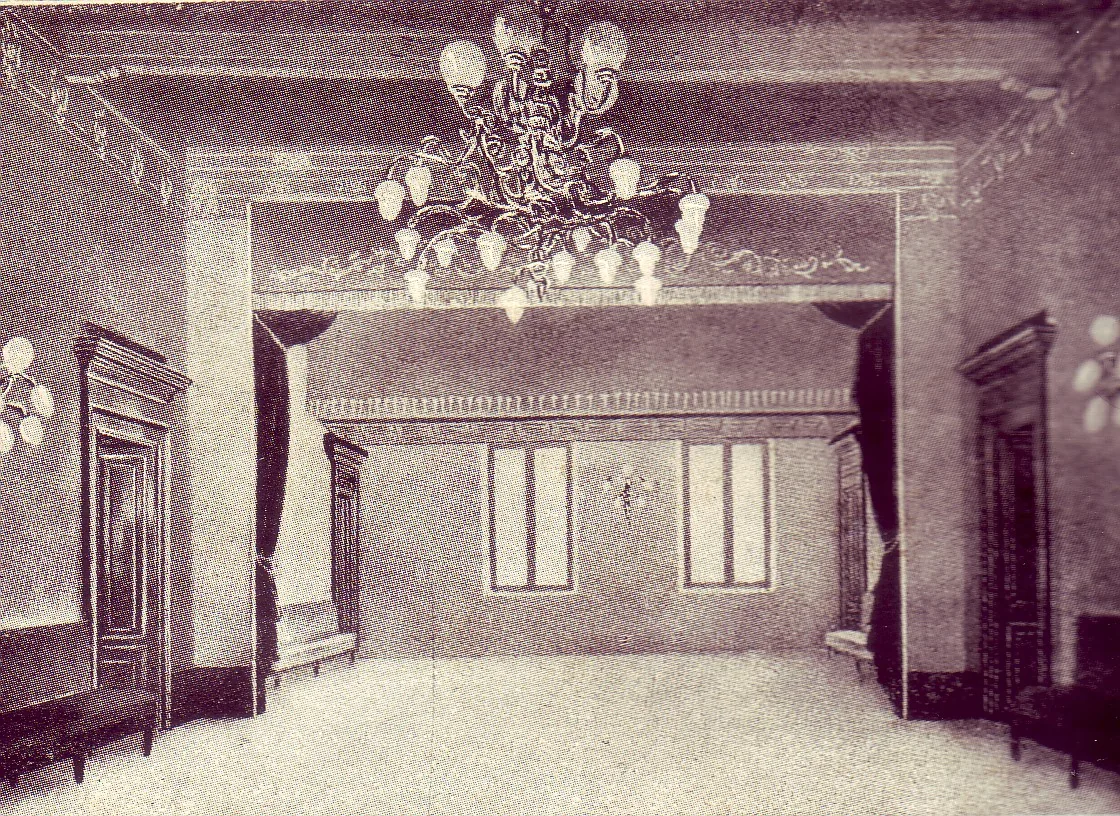
Meeting room in Piazza San Sepolcro, Milan. Photograph dated 23 March 1919. Wikimedia Commons · Public domain · Source page
Photograph of the meeting room in Piazza San Sepolcro, Milan. Wikimedia Commons, dated 23 March 1919.
The Commons file gives the date, but the photograph itself does not say when it was taken. There are no people in it.
- Who is in the picture? No one. The room is empty: a chandelier, tall doors and a row of windows. A photograph of an empty room cannot tell us how many came to the meeting.
- What does the date on the file tell us, and what does it not? It links the room to the meeting of 23 March. It does not prove that the photograph was taken that day, or during the meeting.
- Who would want a picture of this room, and why? A place of origin can become a memorial. Ask who took the picture, and for what purpose, before you trust what it seems to show.
The squads and the vote
1919–1920
A bad election, a new course
In the general election of 1919 no Fasci candidate was elected. By the end of that year fewer than 4,000 members were left. The movement then turned to the right, and one account says its membership grew about tenfold in the last seven months of 1920.
The strikes and factory occupations of the post-war years, the two red years, frightened landowners and industrialists.
1920–1922
The squads
Local groups of fascist militants, the squadristi, began to attack socialist offices, union halls and their members.
Historians describe their work in plain words: beatings, arson and killings. The death toll is disputed, so this lesson gives no number, because the sources do not agree on one.
May 1921
Thirty-five seats
35 of 535
In the May 1921 election the fascists won 35 of the 535 seats, with about 7 per cent of the vote. Their Nationalist allies won ten more seats. Mussolini himself was one of the 35.
The fascists entered parliament in an alliance with the government of Giovanni Giolitti, who hoped to use them against the socialists and the new Communist Party.
November 1921
A party at last
In November 1921 the movement was renamed and reorganised as the National Fascist Party (PNF).
From then on it was a party with a name and a structure of its own, not only a group of fighters in a square.
Four days in October
24 October 1922
A rally in Naples
On 24 October 1922 the leaders of fascism met in Naples for a national council of their party. The caption on Commons calls the rally a dress rehearsal for the march on Rome.
There the date was fixed: mobilisation would begin on 28 October.
A decision point
You are King Victor Emmanuel III.
Rome, the morning of 28 October 1922
On your desk is a proposal from the prime minister, Luigi Facta: a state of siege for Rome. The army would take control of the city, and fascist columns are on the roads to the capital. The proposal needs your signature.
The alternative is a new government. The monarchy and the industrialists would rather have a government led by Antonio Salandra or Giovanni Giolitti, both former prime ministers. Mussolini's movement is not in the government.
What do you do?
- Sign the state of siege that Facta proposes. The army holds Rome against the fascist columns. Street fighting in the capital becomes likely, with a real risk of many deaths. A government that used force against its own marchers would have to hold its ground by force.
- Refuse to sign, and ask Antonio Salandra or Giovanni Giolitti to form a government. The parliamentary system survives. The fascists are kept out of government. A new cabinet would still need a majority, and the fascist deputies would be there to oppose it.
- Refuse to sign, and call Benito Mussolini to form a government. The fascists enter government by constitutional means, with the state's authority behind them. Their power would probably grow from inside the state, and their violence would be harder to stop.
What really happened
Refuse to sign, and call Benito Mussolini to form a government.
The King refused to sign the state of siege on the morning of 28 October. Power then passed in stages. On 28 October Mussolini was in Milan, where he received a delegation at the paper's offices. On 29 October the commission to form a government reached him by telegram. On 30 October the King handed him power. On 31 October he formed his government in Rome.
The sources show what the King did: he did not want to sign the state of siege, and in the end he chose Mussolini rather than Salandra or Giolitti.
They do not give a full account of his reasons, and historians argue about them. Notice the difference between what the King did and what we know about why he did it.
31 October 1922
The parade
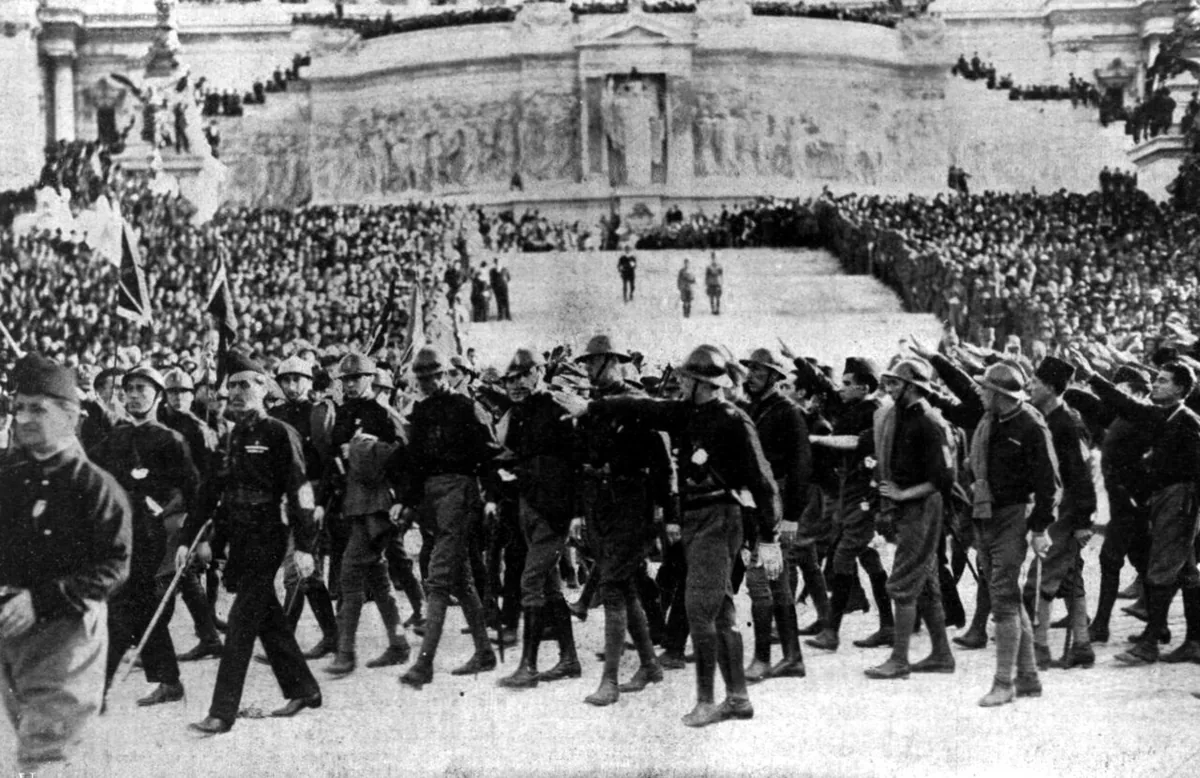
Illustrazione Italiana, 1922. Wikimedia Commons · Public domain · Source page
On 31 October tens of thousands of fascists paraded through Rome, the day Mussolini formed his government. Pictures of the march were printed in the newspapers and magazines of the time.
The militiamen marched in dark uniforms and steel helmets. Their strength lay in their numbers and their appearance rather than in a battle. It was a threat, even without a fight.
Myth
The March on Rome seized power by force.
The truth
Power passed without a battle for the capital. The King refused to sign the state of siege, the commission came by telegram on 29 October, and on 30 October the King handed over power. The threat of force was real, and tens of thousands marched, but the fascists did not take the capital in a fight.
The evidence
The sequence of the four days is in the Treccani biography of Mussolini. The English article on the March on Rome describes the handover as taking place without armed conflict.
An election and a speech
July–November 1923
A law for the winner
Two-thirds
The Acerbo law, named after Giacomo Acerbo, changed the rules of the election. The largest list that won at least a quarter of the votes received two-thirds of the seats in the Chamber of Deputies.
Parliament passed the law in the summer and autumn of 1923. The sources give different days for the vote, so this lesson gives only the months.
6 April 1924
A vote under pressure
The election of 6 April 1924 took place, according to the Treccani biography, in an atmosphere of intimidation and fascist violence. The fascist list won a large majority under the new law.
A decision point
You are Giacomo Matteotti, a Socialist deputy.
Rome, the Chamber of Deputies, 30 May 1924
The Chamber is about to approve the validity of the election, and with it the seats of the new majority. You believe the election was won through fraud and violence.
Some colleagues say the majority will vote as it likes, whatever you say. Every word you speak will go into the official record.
What do you say in the Chamber?
- Accept the validation and say nothing, to keep the session calm. The election is confirmed without debate. The complaints about the vote go unrecorded in the Chamber, and the majority keeps its seats unchallenged.
- Speak only about the procedure, with no names and no accusations. Your protest is on record, but it is thin. It protects you from attack, but it does not put the evidence before the House, and the majority probably passes the validation anyway.
- Speak in full, naming the violence, the intimidation and the votes you consider invalid. The case against the election is heard in public, and the record holds it. The majority will answer you sharply, and the exchange will be public. Whatever follows, the speech stays on the record.
What really happened
Speak in full, naming the violence, the intimidation and the votes you consider invalid.
On 30 May Matteotti spoke in full against the validation. On 10 June 1924 he was abducted in Rome by squadristi and killed. The five men who carried out the killing were arrested in the days that followed.
Treccani says the murder was carried out on the orders of close aides of the Duce. Who ordered it exactly is still debated; see the last chapter.
Silence or a narrow protest were the safer choices. Matteotti chose to put his charges on the record.
Historians link the speech to the murder that followed eleven days later, though they argue about the killers' motives.
Giacomo Matteotti
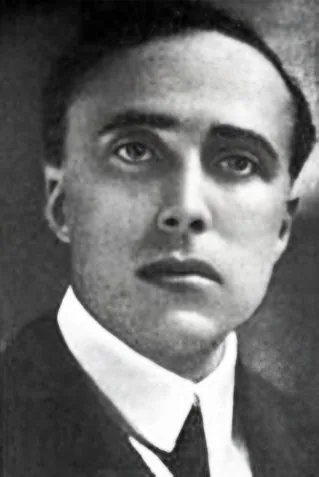
Giacomo Matteotti. Undated photograph, before 1924. Wikimedia Commons · Public domain · Source page
A Socialist deputy from the Veneto who denounced the 1924 election as fraudulent, and was murdered eleven days after his speech.
- Born: 1885, Fratta Polesine, near Rovigo
- Died: 1924, Abducted in Rome on 10 June 1924 and killed. His body was found in August.
The election, in our view, is essentially invalid.
Source: Matteotti, 30 May 1924: the Mexico line
Perhaps in Mexico they hold elections not with ballot papers, but with the courage to face revolvers.
The line is ironic. The speaker is not talking about Mexico: he is talking about the Italian vote. Irony makes a hard point, and it is harder to answer with a plain denial.
- Which claims in this speech can be checked, and which are opinion? Figures and incidents can be checked against records. Words such as “invalid” are his judgment, which he argues for in the speech.
- Why would a speaker mock instead of accusing plainly? Mockery makes the point sharper and is hard to answer with a simple denial. It also shows the listener what the speaker thinks of the vote.
- Who was the audience, and what did they have to decide? The deputies had to decide whether the election was valid. The speech was public and recorded, so it spoke to the record as well as to the room.
After the murder
27 June 1924
The walkout
Opposition deputies refused to go back to the Chamber after the murder. On 27 June 1924 they walked out together and stayed out. Historians call this the Aventine secession, after the Aventine hill in Rome, where the ancient plebeians once withdrew in protest.
16 August 1924
A body by the road
On 16 August 1924 Matteotti's body was found in woodland beside the Via Flaminia, outside Rome. The five men who had carried out the killing had already been arrested.
Investigators also arrested two senior fascists: Cesare Rossi, Mussolini's press chief, and Giovanni Marinelli, the party's administrative secretary. They were treated as the second instigators of the crime.
Autumn 1924
A memorandum
The opposition papers now print a memorandum written by Cesare Rossi, a former fascist who was jailed in the Matteotti affair. It raises a “moral question” against the head of government.
A decision point
You are an opposition deputy who walked out with the Aventine.
Rome, autumn 1924
Since June you have stayed out of the Chamber. The government is still in place, and so is its majority. You hold Cesare Rossi's memorandum about the murder.
Some colleagues want to go back into the Chamber and fight there, in the open. Others say that leaving was the only honest thing to do. What do you do?
What do you do?
- Stay out of the Chamber and wait. The protest is kept, but the majority can keep passing laws without you. Probably the walkout loses its force as time passes.
- Go back to the Chamber and fight for the truth there, in the open. You can challenge the government every day and make the majority answer. But the majority can outvote you, and the murder is argued line by line in a house that does not want to hear it.
- Take the memorandum to the King and ask him to dismiss Mussolini. The King would have to decide whether to act against the government that has the majority. If he refused, the opposition would look helpless. If he acted, the crisis would change direction at once.
What really happened
Take the memorandum to the King and ask him to dismiss Mussolini.
In late 1924 the opposition decided to show the memorandum to King Victor Emmanuel III. Ivanoe Bonomi, a former prime minister, was given the task of taking it to the King. The move had no political follow-up: the King did not dismiss Mussolini, and the Aventine stayed out of the Chamber.
On 3 January 1925 Mussolini stood up to speak in the Chamber.
The opposition was divided between those who wanted to fight in the Chamber and those who wanted the King to act. The sources show that it chose the King, and that this route led nowhere.
Historians still disagree about whether leaving the Chamber helped the opposition or weakened it. People at the time argued about it too.
Benito Mussolini
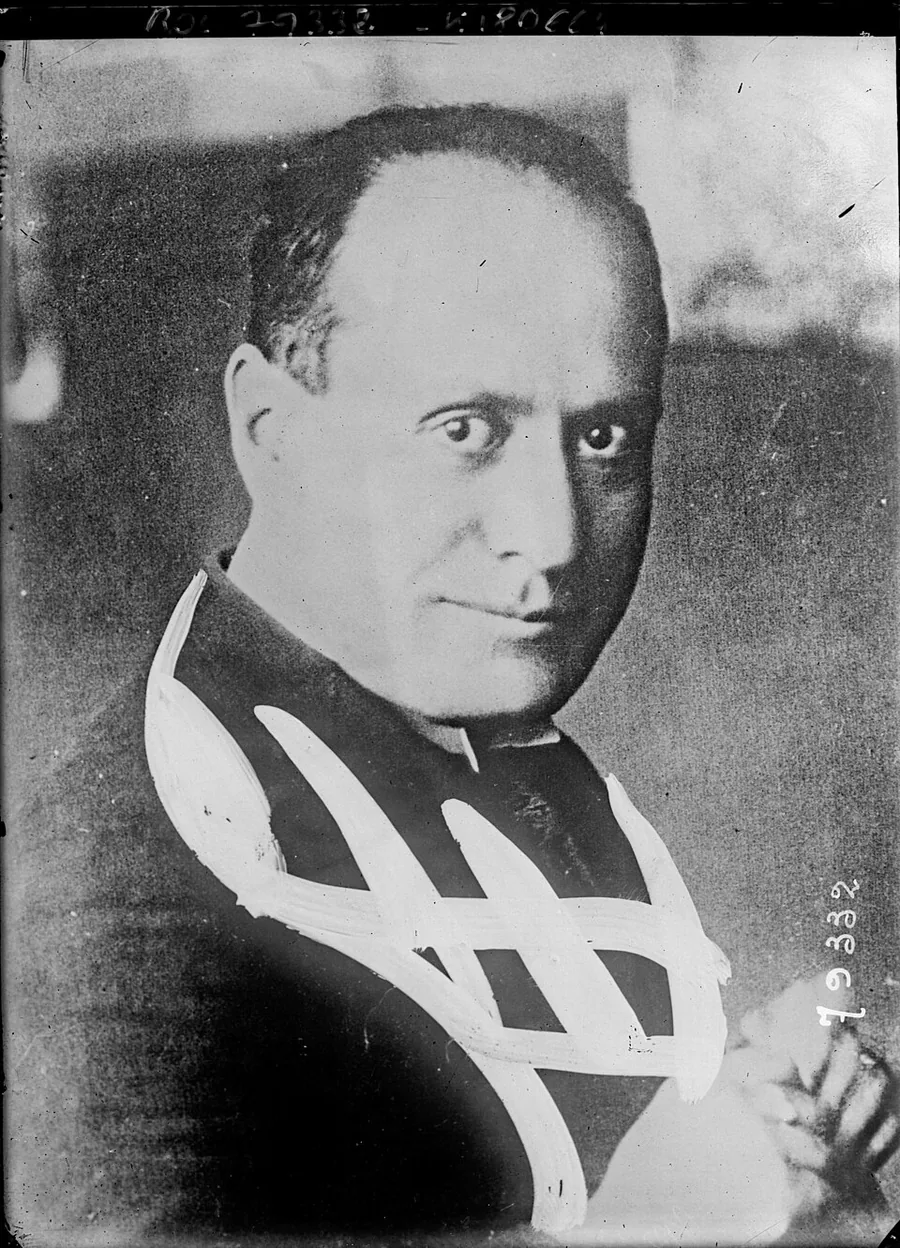
Benito Mussolini, press photograph by Agence Rol, 1922. Bibliothèque nationale de France, via Wikimedia Commons · Public domain · Source page
A socialist journalist who built a movement of his own, and who led Italy's government from 1922.
- Born: 1883, Dovia, near Predappio (Forlì)
- Died: 1945, Giulino di Mezzegra, Captured by partisans while fleeing north, and shot the next day.
- Won: Head of government, October 1922; The one-party laws, 1925–1927
- Lost: Expelled from the Socialist Party, November 1914
If Fascism has been nothing but castor oil and the cudgel, and not instead a proud passion of Italy's best youth, then the blame is mine!
Source: Mussolini, 3 January 1925: the responsibility
I declare here before this assembly and before the whole Italian people that I, I alone, assume the political, moral and historical responsibility for everything that has happened.
Italy, gentlemen, wants peace, wants tranquillity, wants a working calm; we will give it with love, if possible, or with force if necessary.
Mussolini spoke after the commanders of the militia had urged him, on 31 December 1924, to crush the opposition (Treccani). The speech accepts responsibility in general terms. Whether it confessed to anything is one of the questions of this chapter.
- Who is speaking, and to whom? The head of government, speaking to the Chamber and, through it, to the country. The card above gives the castor-oil line from this same speech.
- What does he take responsibility for, and what does he leave out? He takes responsibility for what “has happened”, in political, moral and historical terms. English accounts disagree on whether he names the murder itself. Read the full Italian text and decide for yourself.
- What does the last line tell you about the regime in January 1925? Force is named as a last resort, “if necessary”. It shows that he is ready to use it against the opposition, and that the speech was meant to end the crisis by strength as well as by words.
What the historians argue
1923–1925
One word
Anti-fascist intellectuals were the first to call the new regime totalitarian, in 1923. The sources do not agree on the exact day of the first use.
In 1925 Mussolini began to accept the word. In a speech on the third anniversary of the March on Rome, in October 1925, he said that everything was done for the state, that nothing was outside the state, and that nothing and no one was against it. This is a paraphrase: the Italian wording is not quoted here.
From a law to a one-party state
- July–November 1923 The Acerbo law is passed.
- 6 April 1924 The election is held amid intimidation and violence.
- 30 May 1924 Matteotti speaks against the validity of the election.
- 10 June 1924 He is abducted in Rome and killed.
- 27 June 1924 The Aventine walkout begins.
- 3 January 1925 Mussolini takes responsibility for what has happened, in the Chamber.
- 1925–1927 A series of laws, the so-called fascistissime, makes Italy a one-party state.
- 1926 The Chamber declares that about 120 Aventine deputies have lost their seats.
- End of 1926 Other parties, unions and non-fascist associations have been closed down.
- 1927 OVRA, the secret police, is founded.
Myth
Mussolini made the trains run on time.
The truth
The railways were badly damaged in the First World War and improved during the 1920s. But much of the repair work had been done before 1922, and fact-checkers rate the claim false. Some writers repeated it while admitting the regime's brutality.
The evidence
The fact-checking site Snopes, in “Mussolini and On-Time Trains” (1999), rates the claim false.
Myth
Fascism means any dictatorship.
The truth
“Fascism” names a particular movement and regime: the Fasci from 1919, the National Fascist Party from 1921, and a one-party state built in 1925–1927. A dictatorship is not fascist just because it is harsh.
The evidence
The historian Richard Griffiths made the point in 2000 that “fascism” was the most misused word of its time. We have not read his text itself, so this is a paraphrase. The movement's 1919 programme was partly left-wing, and it moved to the right after its poor result in the 1919 election. The word covers a changing movement, not a fixed set of ideas.
How was power taken?
Did Mussolini seize power, or was it handed to him? And what made the fall of parliamentary Italy possible?
- Adrian Lyttelton, The Seizure of Power (1973) The fascist seizure of power was a process, not one day. It ran from 1919 into the later 1920s. Street violence, electoral pressure and the choices of the state all count. The march of October 1922 was one stage, not the end.
- Robert O. Paxton, The Anatomy of Fascism (2004) Fascism is better understood by what it did than by its ideas alone. A mass party worked with the traditional elites of state and economy, and that alliance helped it into power. The process matters more than any single definition.
- Denis Mack Smith, Mussolini (1981) Weaknesses in the Italian political system, which he traces back to the Risorgimento, the unification of Italy, helped make fascism possible. Other Italian historians, Renzo De Felice among them, criticised him for not treating fascism as an aberration.
The murder of Matteotti raises a further question. Treccani says the killers acted on the orders of close aides of the Duce. Whether Mussolini himself ordered it is still argued over, and this lesson does not decide it. Read the sources and decide what the evidence supports.
Check yourself
Where and when were the Fasci di Combattimento founded?
Answer: In Milan, in Piazza San Sepolcro, on 23 March 1919. Correct. The meeting in the Milan square on 23 March 1919 founded the Fasci di Combattimento.
Check yourself
On what day did the Milan section of the Socialist Party decide to expel Mussolini?
Answer: 24 November 1914, after a stormy meeting in Milan. Correct. That was the Milan section's decision, after a stormy meeting.
Check yourself
On what morning did King Victor Emmanuel III refuse to sign the state of siege?
Answer: 28 October 1922, the morning the proposal lay on his desk. Correct. On the morning of 28 October the King refused to sign.
Check yourself
On what day did Matteotti speak in the Chamber against the 1924 election?
Answer: 30 May 1924, in the debate on the validation. Correct. He spoke that day in the Chamber about the vote.
Check yourself
What did the Acerbo law give to the largest list?
Answer: Two-thirds of the seats, if it won at least a quarter of the votes. Correct. The largest list that won at least a quarter of the votes received two-thirds of the seats.
Check yourself
In the Chamber speech of 3 January 1925, what did Mussolini say he took on alone?
Answer: The political, moral and historical responsibility for what had happened. Correct. He said that he alone bore the political, moral and historical responsibility for everything that had happened.
Terms
- fascism A movement that began in Italy in 1919 under Benito Mussolini. It stood for a strong, nationalist state and used violence against socialists and other opponents. The name comes from the Latin fasces, the bundle of rods with an axe that stood for authority in ancient Rome.
- squadristi The armed fascist squads of 1920 to 1922. They attacked socialist offices, union halls and opponents.
- mutilated victory The phrase, attributed to the poet Gabriele D'Annunzio, for a war Italy won but whose peace, many felt, gave it less than it had been promised.
- biennio rosso The name given to the wave of strikes, protests and factory occupations by socialist workers after the First World War. It frightened landowners and industrialists.
- state of siege An emergency decree that puts a city or region under military control. For Rome in 1922 it needed the King's signature.
- Acerbo law The electoral law of 1923, named after Giacomo Acerbo. The largest list that won at least a quarter of the votes received two-thirds of the seats.
- Chamber of Deputies The lower house of the Italian parliament. Its members, the deputies, are elected by the voters.
- Aventine secession The walkout of opposition deputies from the Chamber in June 1924, after the murder of Matteotti. The name copies an old Roman story, when the plebeians withdrew to the Aventine hill in protest.
- one-party state A state in which only one party is allowed. Italy became one by law between 1925 and 1927: by the end of 1926 the other parties, unions and non-fascist associations had been closed down.
- OVRA Mussolini's secret police, founded in 1927. It watched opponents and arrested them.
- Duce The Leader, the title Mussolini gave himself and that fascist propaganda used.
Sources
- Benito Mussolini, Discorso alla Camera dei deputati sul delitto Matteotti, 3 gennaio 1925 (Italian text, Italian Wikisource)
- Giacomo Matteotti, Discorso alla Camera dei deputati di denuncia di brogli elettorali, 30 maggio 1924 (Italian text, Italian Wikisource)
- Emilio Gentile, «Mussolini, Benito», Dizionario Biografico degli Italiani, Istituto dell'Enciclopedia Italiana (Treccani)
- Mauro Canali, «Matteotti, Giacomo», Dizionario Biografico degli Italiani, Istituto dell'Enciclopedia Italiana (Treccani)
- Denis Mack Smith, Mussolini, 1981
- Adrian Lyttelton, The Seizure of Power, 1973
- Robert O. Paxton, The Anatomy of Fascism, New York: Alfred A. Knopf, 2004
- Emilio Gentile, Storia del Partito fascista 1919–1922, 1989
- Renzo De Felice, Mussolini il fascista, vol. I, 1966
- Aventine Secession, English Wikipedia
Image credits
- Illustrazione Italiana, 1922, no. 45. Wikimedia Commons · Public domain · Source page
- Masthead of Il Popolo d'Italia, 1914–1942. Wikimedia Commons · Public domain · Source page
- Meeting room in Piazza San Sepolcro, Milan. Photograph dated 23 March 1919. Wikimedia Commons · Public domain · Source page
- Illustrazione Italiana, 1922. Wikimedia Commons · Public domain · Source page
- Giacomo Matteotti. Undated photograph, before 1924. Wikimedia Commons · Public domain · Source page
- Benito Mussolini, press photograph by Agence Rol, 1922. Bibliothèque nationale de France, via Wikimedia Commons · Public domain · Source page


