Marie Curie: a scientist between the laboratory and the press
She moved from Warsaw to Paris and worked for years in hard conditions. Which choices carried her that far, and how did she cope when the newspapers turned against her?
Decisions, questions and your own progress, in the app
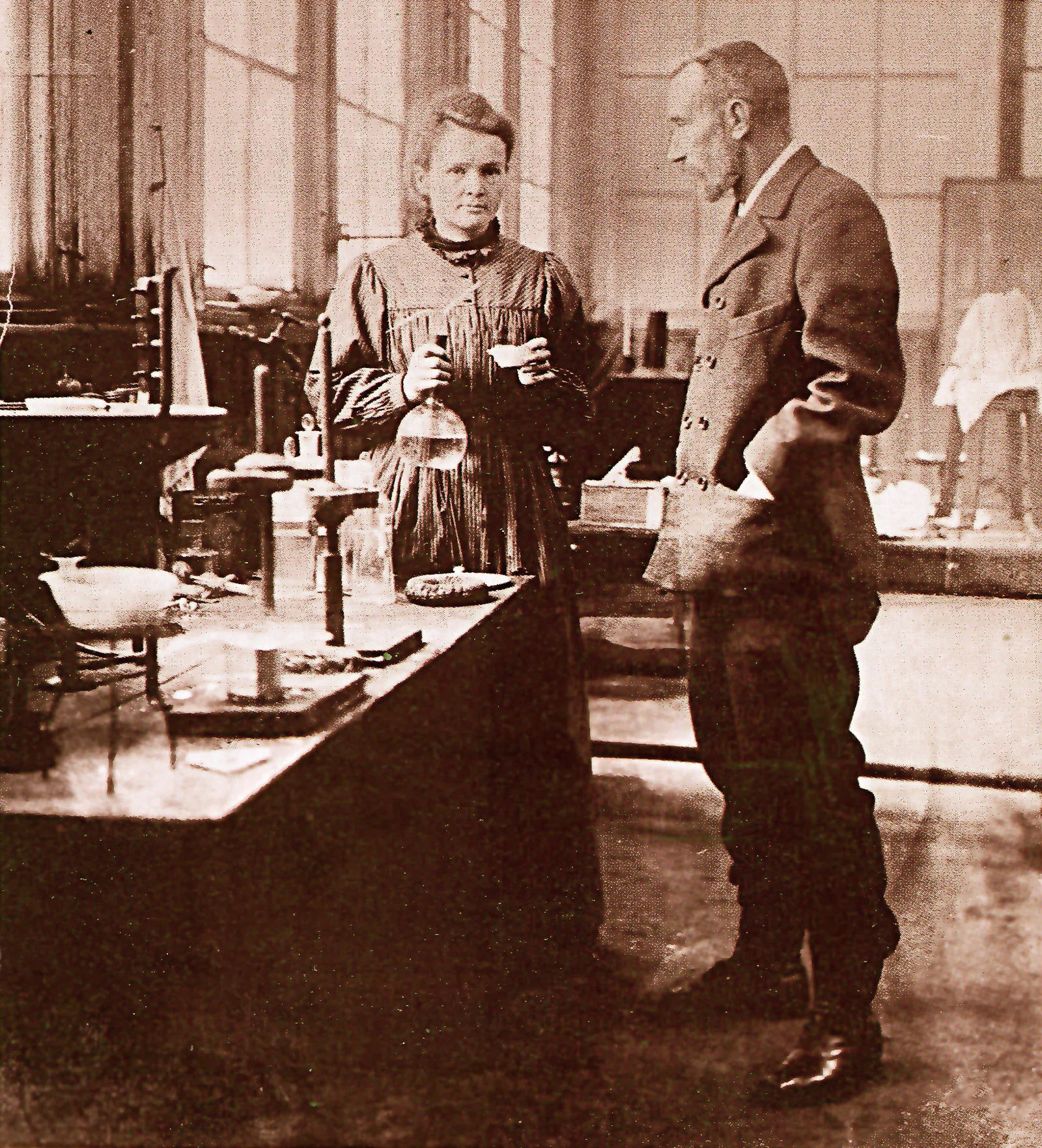
Unknown photographer, about 1900. Public domain · Public domain · Source page
A girl in Warsaw who was not allowed in
Paris, November 1911
A Paris newspaper prints a story about a famous scientist. It speaks of “the fires of radium” and of a family in tears. The story is not really about the science.
The scientist is Marie Curie. Twenty years earlier, in Warsaw, a girl named Maria Skłodowska was barred from the university, which did not admit women. She went to a secret night school instead.
Which was harder for her: the laboratory, or the newspapers? Keep that question in mind.
Background
A city under Russian rule
Maria Skłodowska was born in Warsaw on 7 November 1867. Poland had been divided among three empires for more than seventy years, and Warsaw belonged to the Russian Empire. The Russian authorities ran the schools and the university, and the university did not take women.
Clever girls who wanted more learning had few options. Some of them turned to the Flying University, an illegal school that taught women what the official system would not.
Warsaw, 1880s
A secret night school
The Flying University was an illegal school for women in Warsaw. It moved from place to place to keep out of the authorities’ reach, and that is how it got its name. It is also written as the Floating University.
Maria studied there in the evenings. In the daytime she gave private lessons, and for two years she worked as a governess in a country house, looking after children and earning her living. In 1890 and 1891 she also found time for lab work in Warsaw.
A pact
A debt that ran the other way
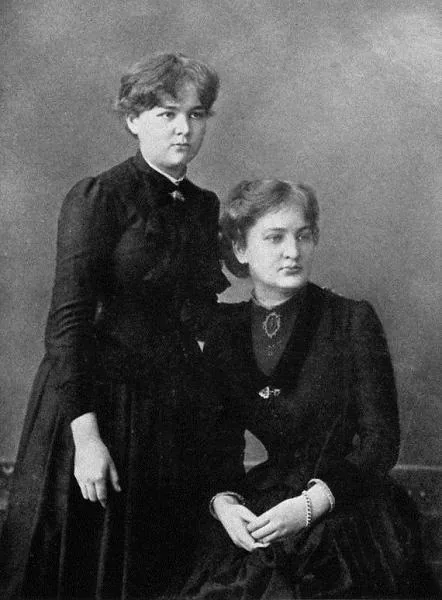
Unknown photographer, Maria Skłodowska and Bronisława, about 1886. Public domain · Public domain · Source page
Maria had an older sister, Bronisława, known as Bronia. The sisters had made a pact. Bronia would study medicine in Paris first, and Maria would help pay for it. Two years later, when Maria was ready for Paris, Bronia would pay for her.
Notice the order. The debt ran from Maria to Bronia first. Bronia married Casimir Dłuski, and the couple made a home in Paris, an hour’s horse-bus ride from the university.
A decision point
You are Maria Skłodowska, aged 24, in Warsaw.
Warsaw, 1891
You have spent years learning in secret, and you earn your living as a tutor and a governess. Your sister Bronia, married and at home in Paris, reminds you of the pact. She is ready to help you study at the Sorbonne, as you once helped her.
Warsaw has no place for you at the university. The Flying University is illegal, and its lessons are no substitute for a degree. A move to Paris means a long journey to a strange city, and depending on your sister for a time.
What do you do?
- Stay in Warsaw, keep tutoring, and let Bronia’s offer wait. You keep your income and your home city, but the road to a degree stays shut. Bronia’s offer may not wait for ever.
- Go to Paris now, and live in Bronia’s home while you study. You reach the Sorbonne sooner, with your sister’s help. You are far from home and far from money of your own, but a degree becomes a real possibility.
- Stay with the Flying University, and put Paris off for years. You keep learning in secret, but without a degree, a laboratory or a university post. Years would pass before a chance like this came again.
What really happened
Go to Paris now, and live in Bronia’s home while you study.
In the real story you went to Paris in late 1891. At first you lived in Bronia’s home. Later you moved into the Latin Quarter, where you lived as a poor student.
The sources give several reasons. Bronia’s offer made the move practical. The Nobel biography says that you had become involved in a students’ revolutionary group and found it wise to leave Warsaw. And the Sorbonne admitted women, which Warsaw did not.
Paris, the poorest student
Paris
The Latin Quarter
In Paris Maria became Marie. She enrolled at the Sorbonne and studied physics and mathematics. She lived in a small room in the Latin Quarter, and money was tight. The sources say she often went hungry, and that she once fainted from it.
She took her physics degree in 1893 and her mathematics degree in 1894, according to the Nobel biography.
1894
Pierre
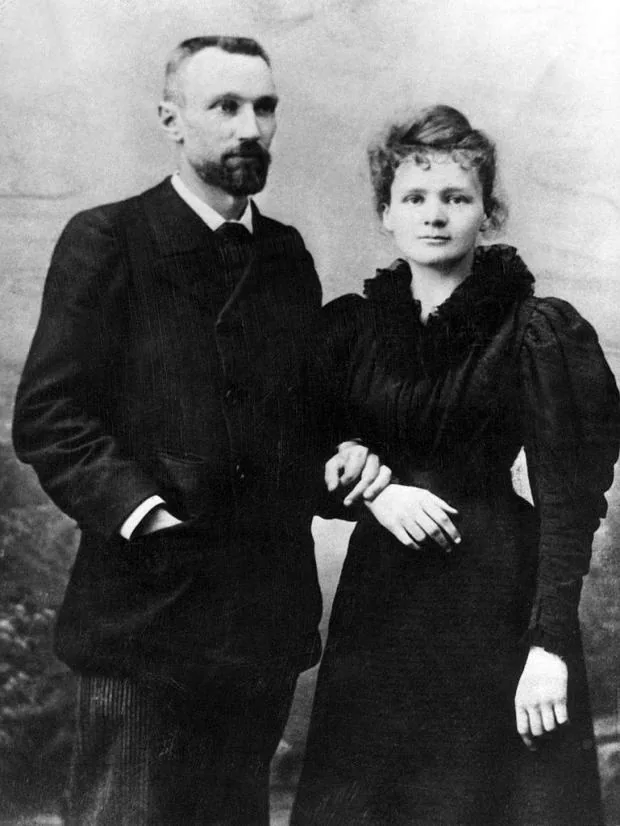
Unknown photographer, Pierre and Marie Curie, about 1895. Public domain · Public domain · Source page
In 1894 she met Pierre Curie, a physicist who taught at the Municipal School of Industrial Physics and Chemistry. He was eight years older than she was.
They married in 1895, and from then on they worked together.
1895–1896
Rays from nowhere
In December 1895 the German physicist Wilhelm Röntgen announced X-rays that passed through the body and showed the bones. Physicists across Europe tried them at once. In 1896 Henri Becquerel found that uranium salts gave off rays of their own, with no outside source of energy.
Becquerel’s rays were new and largely unexplored. Marie needed a subject for her doctoral thesis, and she chose them.
1897
Choosing the rays
In her Nobel lecture of 1911 Marie wrote that in 1897 she began a study of the radiation of uranium compounds.
The question was simple to state and hard to answer: where did the rays come from, and were other minerals just as active?
A mineral that was too active
1898
More active than uranium
Marie tested the minerals she could get. The one that surprised her most was pitchblende, a black ore from the mines at Joachimsthal. Those mines lay in Austria then, and they are in the Czech Republic today.
Pitchblende was more active than the uranium inside it. What was left after the uranium had been removed was cheap, and the Curies got large amounts of it.
There was only one explanation that Marie could see. Something new, something chemically unknown, must be hidden in the ore.
A decision point
You are Marie Curie, 30, in Paris, working with Pierre.
Paris, July 1898
You and Pierre have measured the pitchblende. It is more active than the uranium inside it, and uranium alone cannot explain that. Something new must be in the ore.
No one has yet separated a new element from it. Many chemists doubt that an element exists until it has been isolated in a pure form, and the Academy of Sciences will judge only what you can show.
You can publish your evidence now, or wait until the element is in your hands.
What do you publish?
- Publish only a hypothesis that an unknown element is present, and wait until you can isolate it. Careful and safe. But another laboratory could beat you to the discovery, and your name would stay tied to a guess for years.
- Announce a new element now, on the evidence of its activity, and announce a second as soon as the evidence allows. A bold claim. Chemists would test it, and if it failed your reputation would suffer. If it held, the discoveries would be yours from the start.
- Publish only the rays of uranium and thorium, the safe ground of your thesis. Nobody could doubt it. But the most interesting result of the year would go unnamed, and another team might find it first.
What really happened
Announce a new element now, on the evidence of its activity, and announce a second as soon as the evidence allows.
In the real story you chose the bold path. In July 1898 you and Pierre announced polonium, named after Poland, Marie’s native country. In December you, Pierre and G. Bemont announced radium, in a note presented to the Academy by Henri Becquerel.
The Curies’ reasoning was simple. The ore was more active than the uranium inside it, so something new had to be there. Other chemists did not accept the claim until the elements were separated from the ore, and the Curies’ evidence was indirect.
Source: Her own account, 1911
“All the elements emitting such radiation I have termed radioactive”
Written thirteen years after the discovery, for an audience that already knew her name. It is her own account, written with hindsight.
- Who wrote this, when, and to whom? Marie Curie herself, in 1911, to a Nobel audience in Stockholm. She is describing events from more than a decade earlier, so the account shows how she wanted them remembered.
- What does she claim to have named? The property these elements share, radioactivity. The lecture says she termed them radioactive, and historians credit her with coining the word.
- What does the lecture leave out? The doubts of 1898 and the years of separation. A finished success reads more clearly than a struggle, and the reader has to look elsewhere for the struggle.
A tonne of residue and three years
1899
A miserable old shed
The Curies had no proper laboratory for this work. They used a shed in the courtyard of the Municipal School. It had once been a dissecting room at a medical school, it was poorly equipped, and it was not weatherproof.
Marie called it her “miserable old shed”, and most of the work was done there.
1899–1902
Tons of residue
The raw material came from the Joachimsthal mines. The sources disagree on how the Curies got it. The American Institute of Physics exhibit says the Austrian government donated it. Marie’s own 1923 book credits the Academy of Sciences of Vienna, and she writes that “we secured several tons of these residues at an advantageous price.”
The first job was to pull the radium out. Marie’s Nobel lecture gives the scale: from one ton of residue came about 10 to 20 kilograms of crude material containing radium.
Refining it took patience. The work was dissolving, crystallising and measuring, then doing it all again. It took more than three years to make one decigram (0.1 g) of pure radium chloride, in 1902.
The first decigram came from about a tonne of residue. Over the whole effort the Curies worked through several tonnes. Part of the work was paid for through a firm, the Central Chemical Products Company, which took a share of the radium salts.
Myth
She carried radium tubes in her pocket.
The truth
The pocket burn in the sources is Becquerel’s, not Marie’s. Her 1923 book describes his burn, from “carrying in his vest pocket a glass tube containing radium salt.” We found no source that shows Marie doing the same.
The evidence
The 1923 book describes Becquerel’s burn, while popular articles repeat the pocket story about Marie without a source.
Early 1900s
Pierre’s arm
The Curies learned about the danger slowly. Pierre tested radium on himself. He held a sample against his arm for several hours, and the burn took months to heal, the 1923 book says.
Becquerel had a similar burn from a tube he carried, and he is said to have joked, “I love it, but I owe it a grudge!”
Nobody yet knew how dangerous radium would turn out to be. Pierre himself warned of the risk in his Nobel lecture of 1905. We come back to that warning later.
Who gets the prize?
1903
A list with two names
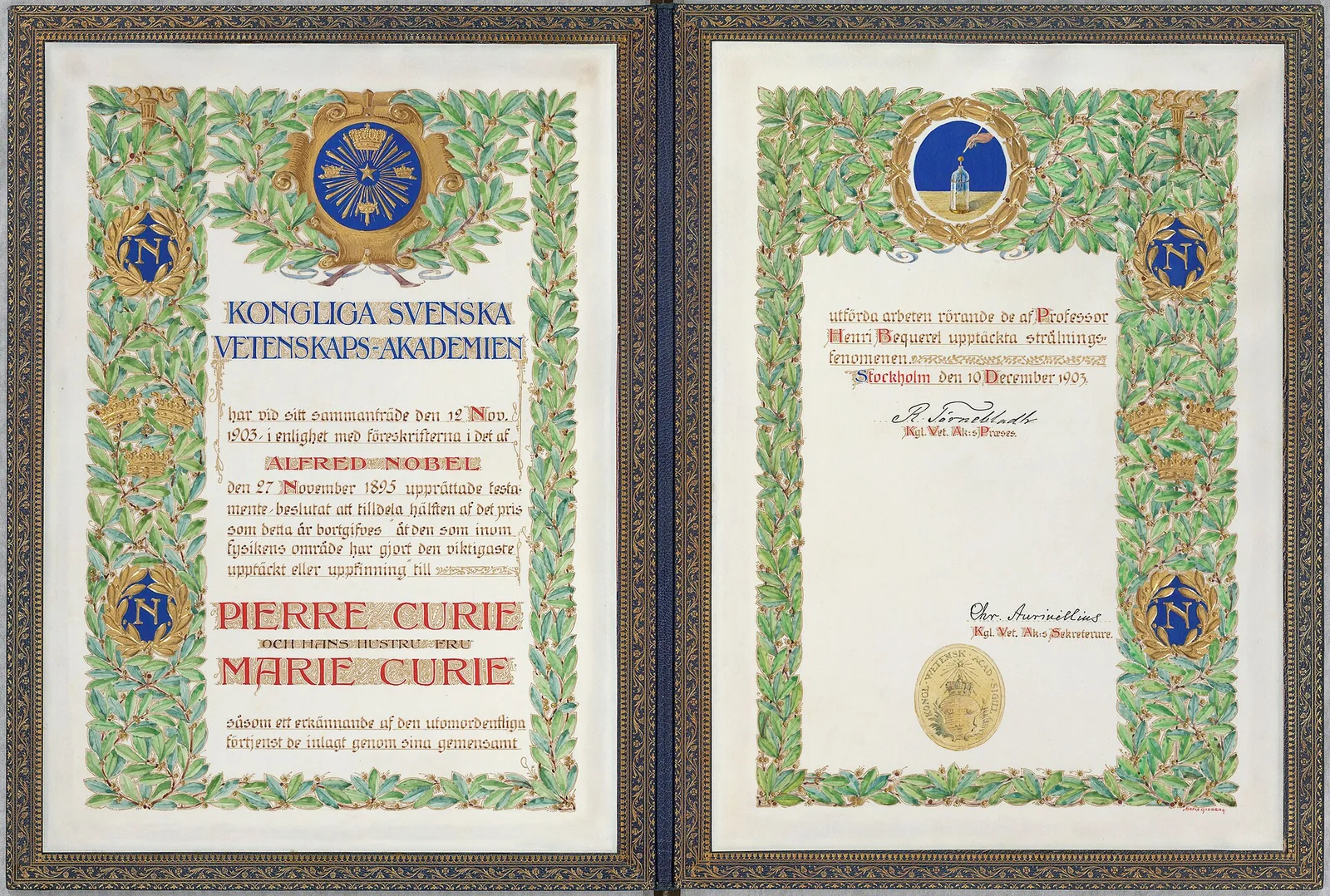
Nobel Foundation diploma, 1903. Scan by Sofia Gisberg, uploaded and retouched by Jebulon. Public domain · Public domain · Source page
In 1903 the French Academy of Sciences nominated Henri Becquerel and Pierre Curie for the Nobel Prize in Physics. Marie was not on the list. The Nobel committee’s first plan followed the nominations and meant to honour only Pierre and Becquerel.
Gösta Mittag-Leffler, a Swedish mathematician on the committee, wrote to Pierre about the prize. The American Institute of Physics exhibit describes Mittag-Leffler as an advocate of women scientists.
A decision point
You are Pierre Curie, 44, in Paris.
Paris, late 1903
You teach physics at the Municipal School. Your work on the rays has made you known to the committee.
Mittag-Leffler has written to you. The committee is thinking of honouring you and Becquerel alone. Marie has worked on the same discoveries with you, and her name is not on the list.
You can reply in several ways, and each reply will change what the committee does next.
What do you write back?
- Accept the prize on the terms the nominations set. The prize would go to Becquerel and to you. Marie’s part would go unnamed, and the committee would have no reason to look again.
- Write that you wish Marie to be considered with you, because the work on radioactive substances is joint. The committee would probably have to reconsider. It would be hard to refuse a nominee who asked for his wife to be considered with him. The prize might be shared three ways.
- Refuse the prize until the nomination is put right. It would be a dramatic gesture. The committee would probably look for another way to honour the work, and you would have made your point at the cost of the prize itself.
What really happened
Write that you wish Marie to be considered with you, because the work on radioactive substances is joint.
In the real story you wrote to Mittag-Leffler that you wished to be considered together with Madame Curie. The 1903 physics prize was divided: half to Becquerel, and half to you and Marie.
Pierre’s letter is the best evidence we have of his reasons, and it reads as a plain demand for fairness: the work was joint, so the name should be too. The sources do not record his private thoughts, and we should not claim more than the letter says.
1903–1905
Not December, but June
The Curies did not go to Stockholm for the December ceremony in 1903. Marie wrote in her 1923 book: “our health prevented us from attending the ceremony”. The sources say no more about the illness.
They went to Stockholm in June 1905, when Pierre gave the Nobel lecture himself.
Source: Pierre Curie to Gösta Mittag-Leffler, 1903
“I very much wish to be considered together with Madame Curie”
A private letter from a nominee to a member of the committee that would decide. We have read it in the AIP translation; the French original is not checked here.
- Who wrote it, and to whom? Pierre, to Mittag-Leffler, a member of the committee. The letter goes straight to a person who decides, which is why it matters.
- What does he ask for? That he and Marie be considered together, on their work on radioactive substances. He asks for joint judgement of the work, not a prize for himself alone.
- What is missing? A reason for the first list. The letter does not say why the Academy left Marie out, so historians must read other sources, and those sources do not agree.
Myth
She discovered radium alone.
The truth
Radium was announced in December 1898 in a note by Pierre Curie, Marie Curie and G. Bemont, presented to the Academy by Becquerel. The pure metal was made in 1910 by Marie and A. Debierne.
The evidence
The 1898 note carries three names. In her 1911 lecture Marie describes the work as hers and Pierre’s together. The myth turns a team into a single hero.
The widow’s chair
Marie Curie
A physicist and chemist who discovered two new elements, won a Nobel prize, and went on working after her husband’s death.
- Born: 7 November 1867, Warsaw
- Died: 4 July 1934, Sancellemoz sanatorium, Passy, Haute-Savoie, Aplastic anaemia, probably linked to radiation
- Won: Nobel Prize in Physics, 1903 (shared); Polonium and radium, announced in 1898
- Lost: A seat in the French Academy of Sciences, January 1911, by two votes
I undertook a study of the radiation of uranium compounds.
19 April 1906
The rain, the street and the wagon
It was raining on 19 April 1906. Pierre crossed a Paris street because the doors of the publisher he was heading for were locked by a strike. A horse-drawn wagon loaded with military uniforms ran him over.
He was 46. Pierre Clerc, a laboratory assistant at the Sorbonne, later said that Pierre had not been careful enough in the street and was “thinking of other things”. That is blame, not evidence. It puts the fault on the dead man.
May 1906
A chair and a pension
On 13 May 1906, less than a month after Pierre’s death, the Sorbonne invited Marie to take his post. She became the first woman to hold a professorship there, and she taught general physics.
The French government offered her a state pension. She refused it, and said she could support her children herself.
She also wrote that she could not forget what her husband used to say: that even without him, she ought to continue her work.
November 1910
The seat she lost
In November 1910 Marie stood for a seat in the French Academy of Sciences. The Academy was the most prestigious scientific body in France, and it had no woman member.
Some right-wing newspapers attacked her. They ran “scientific” analyses of her handwriting and her face.
On 23 January 1911 the Academy elected Édouard Branly. He won by two votes.
That defeat came in the same year as the storm that broke in November.
Myth
Radium killed her.
The truth
She died on 4 July 1934 at a sanatorium in Passy, aged 66, of aplastic anaemia. That disease is probably linked to her long exposure to radiation, from her research and from her X-ray work in the war. “Probably” is the honest word.
The evidence
The link is an inference from her exposure, not a proven cause. Popular accounts state it more firmly than the sources do.
Source: Pierre Curie’s warning, printed in 1923
“It is possible to conceive that in criminal hands radium might prove very dangerous”
The words open the 1923 book, written by his widow seventeen years after his death. The warning reaches us through the book she chose to publish.
- Who chose these words, and when were they first spoken? Pierre spoke them in his Nobel lecture of 1905. The book printed them in 1923, and Marie chose to open with them. Ask why.
- What does a warning like this do in a book from 1923? It casts Pierre as someone who saw the danger early. Readers may take that as proof that the Curies understood the risk. That is a claim to test, not a fact the quotation proves.
- What is missing? Measurement. A warning is not a measurement. It tells us what Pierre feared, not how much harm radium actually did.
Scandal, Stockholm and the little Curies
November 1911
The story in the paper
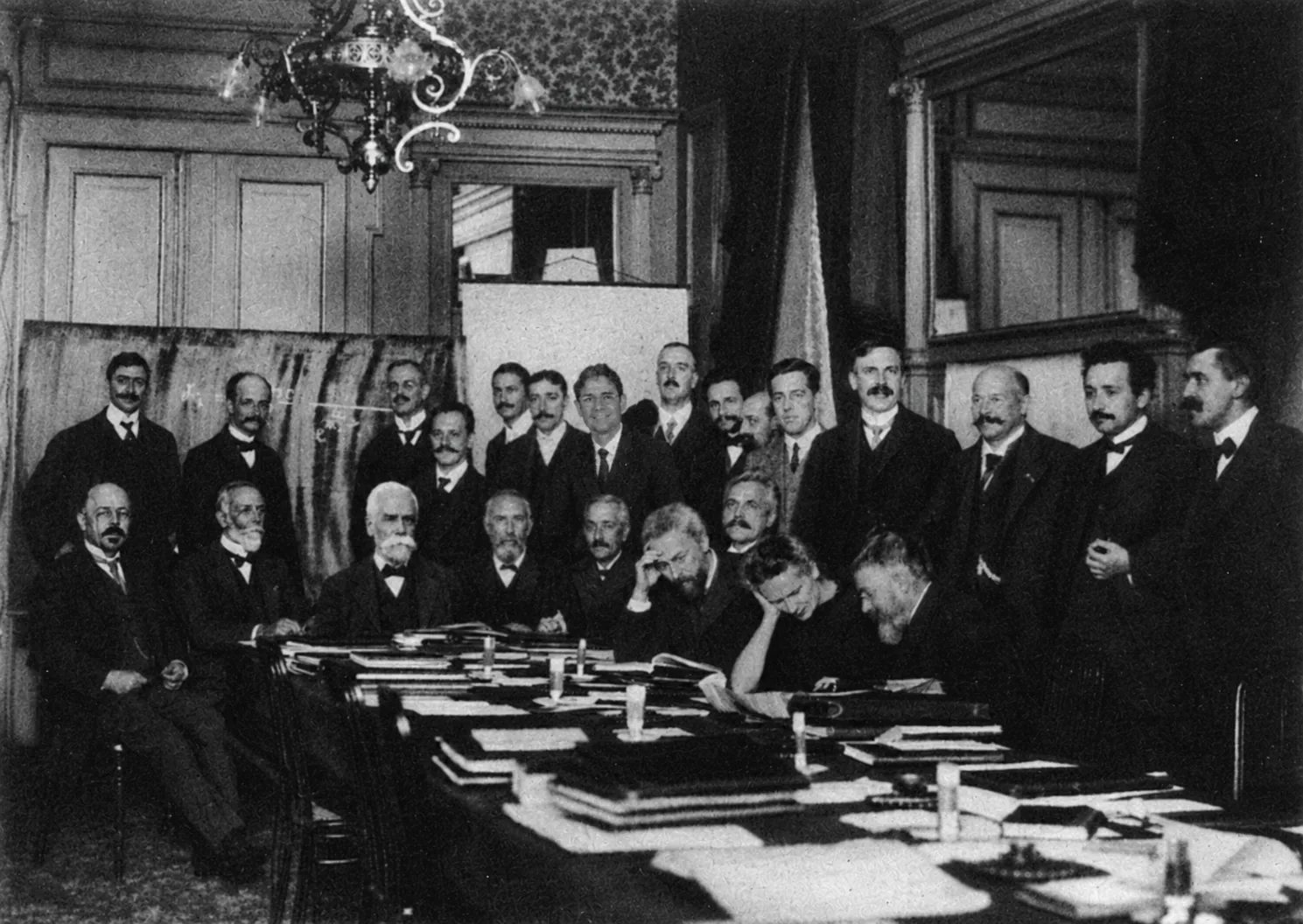
Albert K. Johnson, group photograph of the first Solvay Conference, 1911. Public domain · Public domain · Source page
Paul Langevin, a physicist, had left his home in July 1910. The press later turned his relationship with Marie into its main story.
On 4 November 1911 the Paris newspaper Le Journal printed letters between them. Marie was in Brussels at the time, at a scientific conference.
The paper’s language was theatrical. It spoke of the fires of radium and of a family in tears.
Source: Le Journal, 4 November 1911
“have just lit a fire in the heart of one of the scientists”
A story written to sell newspapers. It turns a private matter into a drama and puts a scientist’s family on display.
- Whose family does the paper describe as suffering? The scientist’s wife and children. The story is about his household, and it uses radium as an image, as if the element itself were the cause of the trouble.
- Why would a writer use an image of fire? Because it makes the affair look like a force of nature. Radium’s glow was a striking image, and the paper used it for effect.
- What is missing? Any word from Marie, and any word about her science. The story is about her, but neither she nor her work is allowed to speak in it.
Stockholm, 1911
Lies, and a second prize
Some papers went further. They called her a foreigner and a home-wrecker. Some antisemitic papers revived an old lie, that she was Jewish, and used it as an insult. The sources treat that claim as false, and as part of a campaign against her.
Svante Arrhenius, chair of the chemistry committee, urged her to stay away from the ceremony in Stockholm. According to one account, he cited doubts about her moral standing.
The academy that gives the chemistry prize overcame the opposition and honoured her a second time.
A decision point
You are Marie Curie, 44, in Paris.
Paris, mid-November 1911
The chemistry prize has been awarded to you for polonium and radium. It is your second Nobel. No one has won two before you.
The press calls you a home-wrecker and a foreigner. The Academy seat you wanted went to Branly by two votes, and Arrhenius has urged you to stay away from the ceremony in Stockholm.
At Sceaux a crowd has gathered outside your house, and your daughters are frightened.
What do you do?
- Decline the prize quietly, and send a letter of regret. You avoid the spectacle, and the committee loses its chance to honour the work. The press would read your silence as an admission.
- Accept the invitation to Stockholm, and give the lecture. You would stand before the scientists who had honoured you. The press would have its pictures, and the scandal would not end, but the prize would be yours and your science would be discussed.
- Go to Stockholm, but refuse all interviews and public events beyond the lecture. You would keep your science apart from the press. Journalists would still write about you, and a refusal to talk might look like defeat.
What really happened
Accept the invitation to Stockholm, and give the lecture.
In the real story you replied that you would be present at the ceremony. You also wrote that the prize had been given for your discovery of polonium and radium, and that your private life had no relation to your scientific work. You went to Stockholm and gave your Nobel lecture on radioactivity.
Her reply is the best evidence. She separated the prize from her private life, and she refused to let the press decide what her science was worth. As far as the printed text shows, the lecture does not mention the affair, and historians read that silence in different ways.
After the ceremony
Two prizes
Marie became the first person to win two Nobel prizes. Only one other laureate has prizes in two fields: Linus Pauling.
October 1914
The little Curies
In 1914 France had one gram of radium for research, and it was in Marie’s laboratory. When war came, she took it to Bordeaux by military train, in a heavy lead box.
Then she turned to the wounded. She built X-ray vehicles, mobile units that could reach the front. Her first radiological assistant was her daughter Irène, then 17. Marie gave herself crash courses in anatomy and X-ray work, and she learned to drive.
The first of twenty vehicles was ready in October 1914. French soldiers called them the petites Curies, the little Curies. The Radium Institute also trained women to work the equipment, but the sources do not give a number.
1921–1929
Gifts and a name
In 1921 President Warren Harding gave her one gram of radium, on behalf of American women. In 1929 President Herbert Hoover gave $50,000 to buy radium for Warsaw. Her name had travelled a long way from the miserable old shed.
What followed
- 1891 Maria leaves Warsaw for Paris and the Sorbonne.
- 1898 Polonium (July) and radium (December) are announced.
- 1902 The first decigram of pure radium chloride, from about a tonne of residue.
- 1903 The physics prize is divided: half to Becquerel, half to Pierre and Marie.
- 1906 Pierre dies on 19 April. In May the Sorbonne invites Marie to take his post.
- 1911 January: she loses the Academy seat by two votes. November: the press campaign. December: she goes to Stockholm.
- 1914 The first of twenty X-ray vehicles is ready.
- 1934 Marie dies at Sancellemoz on 4 July, aged 66.
Why was she left out in 1903?
Was Marie left off the 1903 nomination by a procedural accident, or by choice?
- The procedural reading The nominations came in the way they did, and the committee’s first plan followed them. On this reading the list was wrong but not an insult. Pierre’s letter fixed it, and no one needed to intend the omission.
- The gendered reading The AIP exhibit argues that Marie was never really nominated, and that her 1902 nomination was accepted for 1903 only after influential people intervened. On this reading the omission shows how the men who judged science treated a woman’s work. Mittag-Leffler, who wrote to Pierre, is described as an advocate of women scientists, so the question is whether the committee listened to him.
The two readings may both hold in part. The evidence is thin: a few letters, the lists of nominations and later accounts. The committee’s private discussions are not in our sources. Françoise Giroud’s 1986 biography is one of the books that take up this question.
Check yourself
How was the 1903 Nobel Prize in Physics divided?
Answer: Half to Becquerel, half to Pierre and Marie Curie. Right. The committee gave one half to Becquerel, and the other half to Pierre and Marie together.
Check yourself
Why was polonium given its name?
Answer: After Poland, Marie’s native country. Right. Marie named the element after Poland, her native country, which had then been divided among three empires.
Check yourself
How much pure radium chloride did Marie and Pierre isolate in 1902?
Answer: One tenth of a gram. Right. From about a tonne of residue they obtained one decigram, after more than three years of work.
Check yourself
What did French soldiers call the mobile X-ray vehicles of the First World War?
Answer: The petites Curies. Right. The first of the twenty vehicles was ready in October 1914, and the soldiers called them the little Curies.
Check yourself
How did Pierre Curie die in April 1906?
Answer: Run over by a horse-drawn wagon in the street. Right. In the rain he crossed the street, and a wagon loaded with military uniforms ran him over.
Check yourself
What did the Sorbonne invite Marie to take up in May 1906?
Answer: Pierre’s own chair of general physics. Right. She took his place as professor of general physics, the first woman to hold that post.
Terms
- radioactivity The property of certain elements, such as uranium, polonium and radium, that makes them give off radiation on their own. Marie Curie coined the term.
- pitchblende A black uranium ore. After the uranium was removed, the residue was still highly active, and the Curies worked with it.
- polonium A radioactive element that the Curies announced in July 1898. They named it after Poland.
- radium A radioactive element announced in December 1898. In 1902 the Curies isolated one decigram of pure radium chloride.
- X-rays Rays discovered by Wilhelm Röntgen in 1895. They pass through the body and show the bones.
- Flying University An illegal school for women in Warsaw that moved from place to place. It is also written as the Floating University.
- Sorbonne The main university of Paris, in the Latin Quarter, where Marie studied physics and mathematics.
- Academy of Sciences The French Academy of Sciences in Paris, a learned society of researchers. Membership was a mark of scientific standing.
- aplastic anaemia A disease in which the bone marrow stops making enough blood cells.
- petites Curies The mobile X-ray vehicles of the First World War. French soldiers gave them this name.
- Warsaw A city in Poland, where Maria Skłodowska was born and studied at a secret night school.
- Russian Empire The empire that ruled Warsaw. Russian authorities ran its schools and its university, which did not admit women.
- Latin Quarter A district of Paris, where Marie lived as a poor student.
- Bronisława Maria’s older sister, known as Bronia. She studied medicine in Paris and lived there with her husband.
- Casimir Dłuski Bronia’s husband. The couple made a home in Paris.
- Municipal School A city school in Paris for industrial physics and chemistry. Pierre Curie taught there, and an old shed in its courtyard was their workplace.
- Central Chemical Products Company A company that helped pay for part of the work and took a share of the radium salts.
- Joachimsthal Mines that were then in Austria and are now in the Czech Republic. The pitchblende came from there.
- X-ray vehicle A mobile unit that Marie Curie built in the war, with X-ray equipment to reach the front.
- Bordeaux A city in south-west France, where Marie took the radium by military train when the war broke out.
- Passy A place in Paris, home to the sanatorium where Marie Curie died.
- Stockholm The capital of Sweden, where the Nobel Prize ceremonies are held.
- Svante Arrhenius A Swedish chemist, chair of the Nobel chemistry committee, who urged Marie to stay away from the ceremony.
- Gösta Mittag-Leffler A Swedish mathematician on the Nobel committee. He wrote to Pierre about the prize.
- Henri Becquerel A French physicist who found that uranium salts give off rays. Marie and Pierre built on his discovery.
- Wilhelm Röntgen A German physicist who announced X-rays. The rays passed through the body and showed the bones.
- Édouard Branly A French man elected to the Academy of Sciences instead of Marie, by two votes.
- Paul Langevin A French physicist whose relationship with Marie became a major newspaper story.
- Le Journal A Paris newspaper that printed letters between Marie and Langevin in 1911, in a theatrical style.
- Linus Pauling A Nobel laureate who won prizes in two different fields, like Marie Curie.
- Warren Harding The president of the United States, who gave Marie a gram of radium in 1921 on behalf of American women.
- Herbert Hoover The president of the United States, who gave $50,000 in 1929 to buy radium for Warsaw.
- Irène Marie’s daughter. At 17 she was her first assistant in X-ray work during the war.
- uranium A radioactive chemical element. Pitchblende was more active than the uranium inside it.
Sources
- Marie Curie, Pierre Curie, trans. Charlotte and Vernon Kellogg (New York: Macmillan, 1923). Public domain in the United States.
- Marie Curie, Nobel lecture, 1911 (English text as printed on nobelprize.org).
- Pierre Curie to Gösta Mittag-Leffler, 1903; and Le Journal (Paris), 4 November 1911. Both in English translation in the American Institute of Physics exhibit.
- Nobel Prize, biographies of Marie Curie for the 1903 and 1911 prizes.
- Eve Curie, Madame Curie, trans. Vincent Sheean (1937). A family biography written by the daughter; read it critically.
- Françoise Giroud, Marie Curie: A Life, trans. Lydia Davis (New York: Holmes & Meier, 1986).
- Wikipedia, “Marie Curie” (English), used as a map to further sources.
Image credits
- Unknown photographer, about 1900. Public domain · Public domain · Source page
- Unknown photographer, Maria Skłodowska and Bronisława, about 1886. Public domain · Public domain · Source page
- Unknown photographer, Pierre and Marie Curie, about 1895. Public domain · Public domain · Source page
- Nobel Foundation diploma, 1903. Scan by Sofia Gisberg, uploaded and retouched by Jebulon. Public domain · Public domain · Source page
- Albert K. Johnson, group photograph of the first Solvay Conference, 1911. Public domain · Public domain · Source page


