Manzikert, 1071: the emperor in captivity
In late August 1071, on a plain by Lake Van, the Byzantine emperor Romanos IV Diogenes is taken prisoner. Within a year he will be dead. Was this really the day the empire lost Anatolia?
Decisions, questions and your own progress, in the app
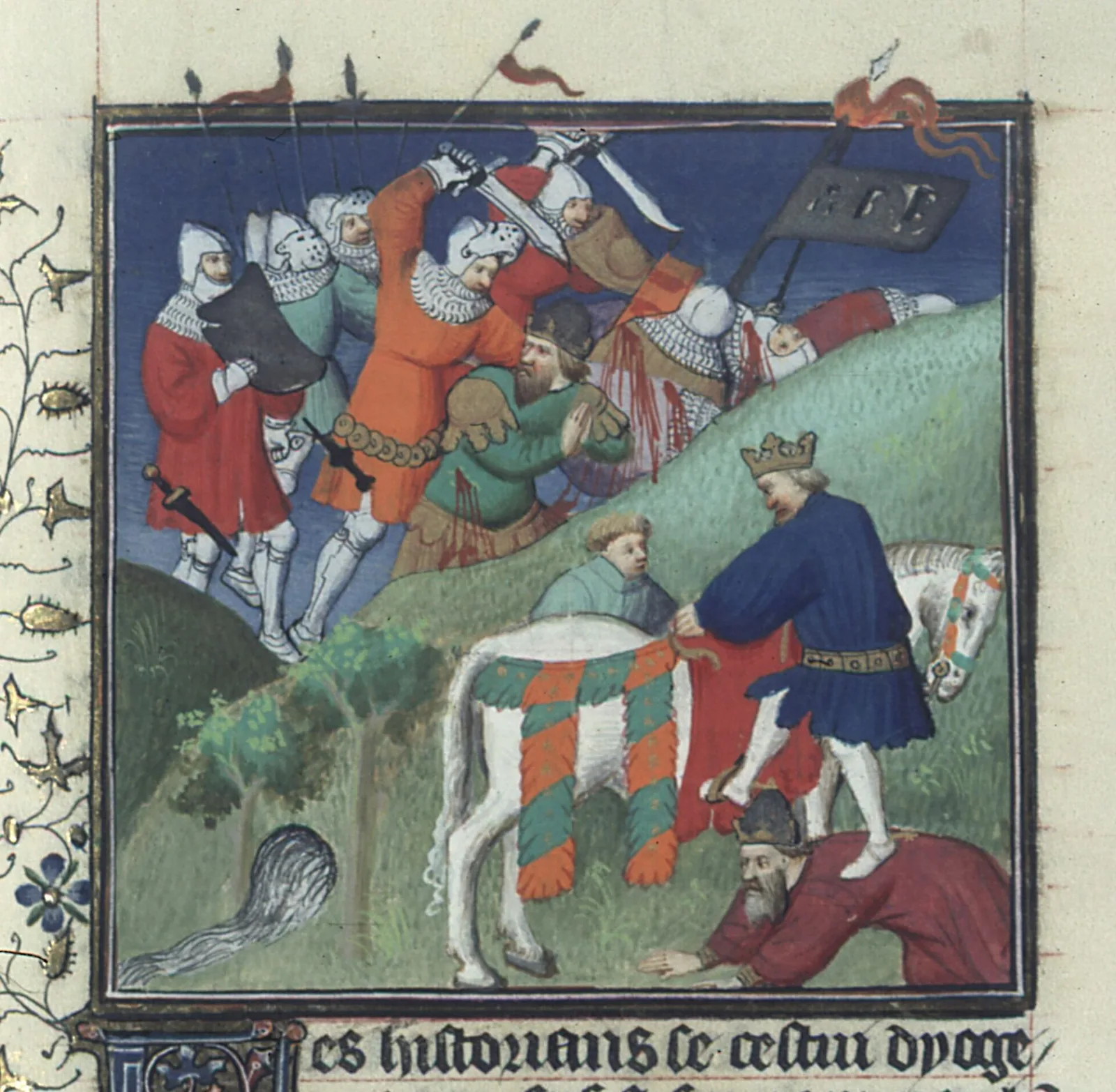
Rohan Master, miniature in Boccaccio, De casibus virorum illustrium, 15th century. Bibliothèque nationale de France, Français 226, fol. 265 · Public domain · Source page
The scene
A plain by a lake, 1071
It is late August 1071, on a plain near Lake Van, in what is eastern Turkey today.
By the end of the battle the Byzantine emperor, Romanos IV Diogenes, is a prisoner of the sultan. Within a year he will be dead.
How did one battle end a reign? And did it really cost the empire its land?
Why it matters
The day the land was lost?
This battle is often told as the day the Byzantines lost Anatolia, the land that today forms most of Turkey.
Some historians call it a strategic disaster. Others argue that the real loss came later, over decades.
So what happened on that plain, and how much of the story is true?
Romanos IV Diogenes
A Byzantine emperor who marched east to meet the sultan, was captured at Manzikert, and died within a year.
- Born: Not known for certain
- Died: 4 August 1072, Prote, Blinded at Kotyaion on 29 June 1072, about five weeks before he died.
- Won: Took the throne, 1068
- Lost: Manzikert, 1071: the army broken and the emperor captured; The throne, after his release, 1071–72
Paraphrase of Psellos: the emperor himself is to blame for the defeat.
The road to it
Background
A sultan in the east
In 1063 Alp Arslan became sultan of the Seljuks, a Turkish ruling house.
Raiders had hit Anatolia, and the emperor knew it. The sultan was busy in Syria.
Romanos had taken the throne in 1068, and now the raids were his problem.
The road east
A blurred picture
In summer 1071 Romanos holds a war council at Theodosiopolis, modern Erzurum. Joseph Trachaneiotes urges him to stay on the defensive.
At home his rivals wait, among them the Doukai. John Doukas, the father of Andronikos Doukas, was a rival of Romanos.
He knows about the raids, but not where the sultan’s main army is or what it plans. Theotokis argues that his intelligence was weak.
A decision point
You are Romanos IV Diogenes, emperor of Byzantium.
Summer 1071, at Theodosiopolis (Erzurum).
Raiders keep hitting your land, and you do not know where the sultan’s main army is.
The army is large, but it cannot be everywhere at once. You can keep it together, march east to find the enemy, or split it. Half could go to Khliat, on Lake Van.
What do you do?
- Stay on the defensive, as Trachaneiotes advises, and wait for the sultan. Probably the army stays together and keeps its supplies. But the raids go on, and the court sees an emperor who will not fight.
- March the whole army east, and find the sultan’s army first. Probably you meet the enemy with your full strength. But the long march is hard on supplies, and a battle far from your bases is a gamble.
- Split the army: about half to Khliat under two commanders, the rest with you. Probably the half sent to Khliat could not return in time for the battle, and the emperor fought with the rest.
What really happened
Split the army: about half to Khliat under two commanders, the rest with you.
Romanos split the army: about half went to Khliat under Roussel de Bailleul and Joseph Trachaneiotes. The detachment could not return in time for the battle of 26 August.
The sources do not record his own reasons. Theotokis argues that he misread the sultan’s intentions and planned a withdrawal under pressure.
The day of the battle
The armies meet
Two armies, one plain
In late August the two armies come close. The battle falls on Friday, 26 August.
According to Worldhistory.org, Romanos turned down a truce delegation before the fighting, and its terms are not recorded.
Who fought whom
26 August 1071
The plain by Lake Van, near Manzikert (Malazgirt)
The Byzantine army
- Commanders: Romanos IV Diogenes, the emperor, Andronikos Doukas, rear guard
- Strength: 300,000 (Some sources, as Worldhistory.org reports); 60,000–70,000 (Modern historians, as Worldhistory.org reports); about 40,000 effective fighting men (Paul Markham, 2005)
- Losses: no more than about 8,000 casualties; about 30,000 troops survived (Paul Markham, 2005)
These are Markham’s own reconstructions, not a count made by witnesses.
The Seljuk army
- Commanders: Alp Arslan, the sultan
- Strength: about 10,000 at the Euphrates, later reinforced by recruits (Paul Markham, 2005)
- Losses: No separate figure survives (The sources)
The Seljuk figures are the weakest part of this card, and modern estimates vary.
Outcome: A Seljuk victory. The imperial centre is overwhelmed, and the emperor is taken prisoner.
Each number here is one writer’s claim or one modern estimate, and they differ widely.
The far detachment
By Khliat
Half the army is not on the plain. Roussel de Bailleul and Joseph Trachaneiotes are near Khliat, on Lake Van.
Orders are sent to call the force back. The sources disagree on whether the order reached Trachaneiotes.
The detached force takes no part in the battle.
The battle
The centre under pressure
The emperor is with the centre of the Byzantine line, and the centre is under pressure.
Behind it stands the rear guard, under Andronikos Doukas, whose job is to cover a retreat.
Then a rumour runs through the army that the emperor is dead. Nobody can confirm it.
A decision point
You are Andronikos Doukas, commander of the rear guard.
26 August 1071, on the battlefield.
The imperial centre is bending, and you have men in reserve behind it.
Your orders are to cover the retreat. A rumour says the emperor is dead, and no one can confirm it.
You can hold, go to the aid of the centre, or pull back to the camp. There is no time to ask.
What do you do?
- Hold your ground, and send men to the aid of the centre. Probably your men are drawn into the fight and some are lost. But if the emperor still lives, he has support on the field.
- Cover the retreat as ordered, keeping good order. Probably the retreat is covered. But the centre fights on without the men it was counting on.
- Pull back to the camp with the rear guard, and save your men. Probably the rear guard reaches the camp, and the centre is cut off and the emperor is captured.
What really happened
Pull back to the camp with the rear guard, and save your men.
Andronikos Doukas withdrew to the camp. The centre was cut off, and the emperor was wounded and captured. Attaleiates, Skylitzes and Zonaras read the withdrawal as treachery.
The sources differ on his motive. Theotokis argues that blaming Doukas hides the emperor’s own errors, and that the gap between the rear guard and the centre explains the failure. Markham thinks treachery mattered.
Captured
The emperor falls
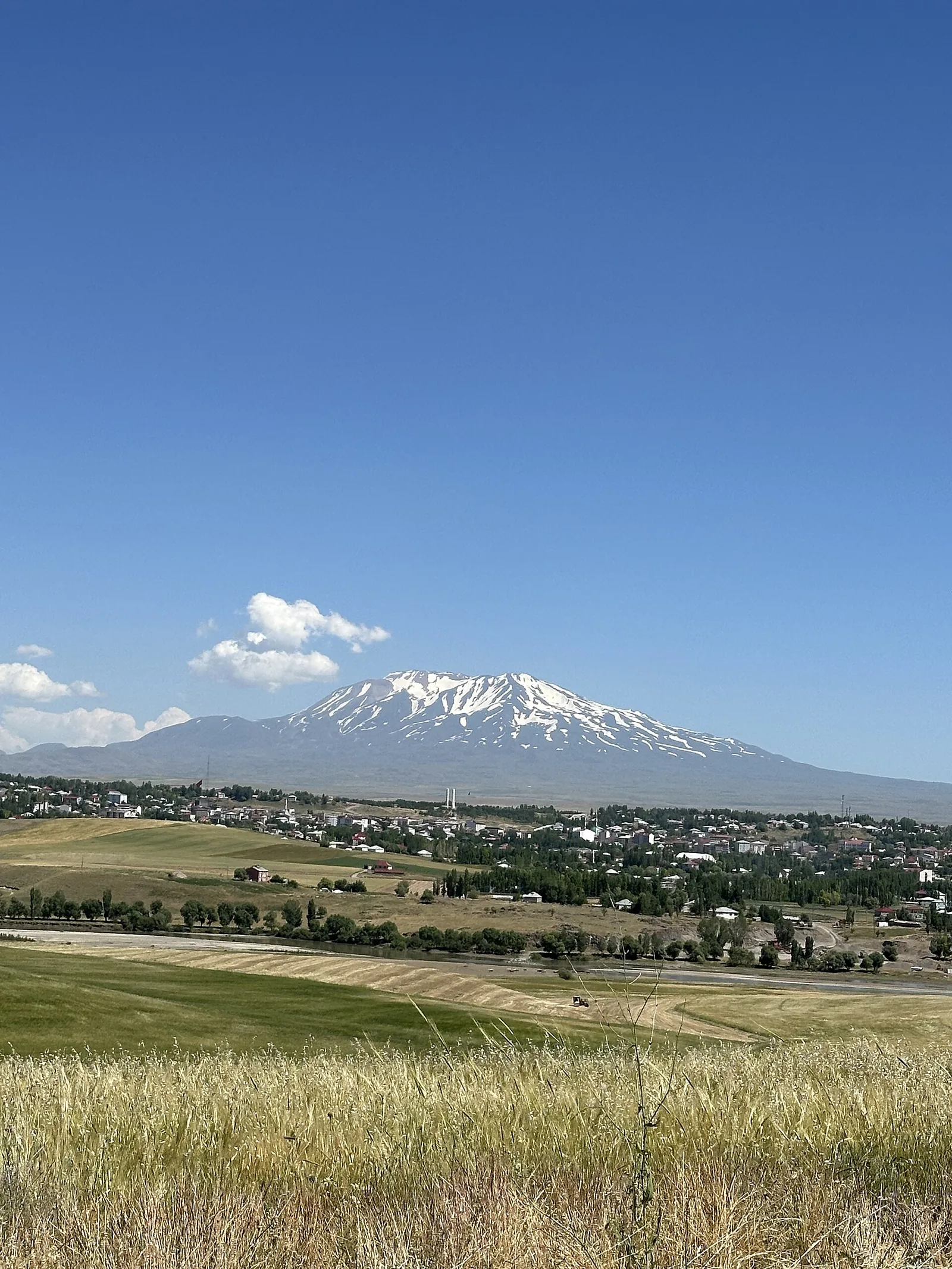
Goştxwir, photo of Malazgirt, 2024. Wikimedia Commons · CC BY 4.0 · Source page
With the rear guard gone, the centre is cut off. The emperor is wounded and taken prisoner on the field.
The army breaks up. The battle is lost, and the emperor is in the sultan’s hands.
What we really know
Source: A judge who stayed in the camp
Paraphrase of Attaleiates: the commander of the rear guard withdrew to the camp and spread a false report that the emperor was dead. Trachaneiotes, whose retreat west he condemns, is treated harshly.
A military judge on the campaign, who stayed in the camp and favoured Romanos.
- Where was the writer during the battle? In the camp, away from the fighting. Theotokis says he was not an eyewitness of the events, though the publisher calls the account one.
- Whose side is he on? Romanos’s. He is harsh on Trachaneiotes.
- What is missing? The Seljuk voice, and the emperor’s own reasons for his plan.
Myth
Manzikert lost Anatolia in a day.
The truth
No, not in a day. The defeat and the capture were a shock, but the land was lost over decades. Markham blames civil wars, in which rival usurpers hired Turkish soldiers, and Turkish settlement. Theotokis calls the battle a strategic disaster.
The evidence
Markham argues that the loss had little to do with battles. Sources date Seljuk power at Nicaea (Iznik) to around 1077 to 1078.
Source: A writer in the capital
Paraphrase of Michael Psellos: the emperor himself is to blame. The story of a betrayal by Andronikos Doukas is not in his account.
Psellos wrote from Constantinople, far from the battlefield. According to Theotokis, he blames Romanos.
- Was he at the battle? Not as far as the sources show. He wrote from the capital, so he could only report what he had heard.
- Whom does he blame? The emperor. He never mentions a betrayal by Andronikos Doukas.
- Why might a writer leave things out? Because of who he serves and who will read him. Compare his silence with Attaleiates’s accusation.
Source: The biggest number
Paraphrase: a later chronicler claims the Byzantine army was over a million men.
Matthew was an Armenian chronicler, writing well after the battle and far from it. Markham calls his figure absurd.
- Who wrote this, and when? An Armenian chronicler, writing long after the battle and far from it.
- Is the figure believable? Markham calls it absurd. Modern estimates for the whole army are about 40,000 to 70,000.
- What is missing? A count made by someone who was there.
A decision point
You are Romanos IV Diogenes, a prisoner in the sultan’s camp.
Late August to early September 1071.
Your army has been beaten, and you are a prisoner. Your fate is in other hands.
The sultan’s envoys offer terms: a ransom, some cities, and a yearly payment. The sources differ on the sums and the cities.
At home your rivals wait. Refuse, and you may die a prisoner. Agree, and you may go home.
What do you do?
- Refuse, and hope for rescue or a better offer. Probably you stay a prisoner, and the army that could rescue you is already broken.
- Accept the terms and go home. Probably you are released about a week after the battle, with gifts and an escort.
- Ask for a smaller ransom, and keep every city. Probably the sultan refuses, or gives way only a little. You stay a prisoner for longer.
What really happened
Accept the terms and go home.
Romanos accepted. According to Worldhistory.org, he promised a personal ransom of 1.5 million gold coins, plus 360,000 a year. Markham gives one million solidi, so sources differ.
A captive has little room to bargain. The sources do not record what he thought, but say that Alp Arslan treated him kindly.
What followed, and the quiz
Aftermath
Blinded at Kotyaion
36 days
Michael VII sends Andronikos Doukas and his brother Constantine to intercept the released emperor. They defeat him in Cilicia.
Andronikos takes his surrender and leads him toward Constantinople, in 1072. He is said to have opposed the blinding. The Doukai had Romanos blinded at Kotyaion on 29 June 1072.
On 4 August 1072 he died on Prote.
The road from Manzikert
- 1068 Romanos IV Diogenes takes the throne.
- 26 August 1071 Manzikert: the army is beaten, and the emperor is captured.
- About a week later He is released on terms, with gifts and an escort.
- 1071–72 His rivals depose him. He is defeated in Cilicia and surrenders.
- 1072 Blinded at Kotyaion on 29 June. He dies on Prote on 4 August.
- c. 1077–78 Seljuk power reaches Nicaea (Iznik), which becomes the capital of a Turkish state in Anatolia.
Did the battle lose Anatolia?
Was the battle the cause of the loss, or were the years after it?
- Paul Markham, essay of 2005 A political failure, not a military one. The civil wars after 1071, in which rival claimants hired Turkish soldiers, and the Turkish settlement of the land did most of the damage.
- George Theotokis, book of 2024 A strategic disaster that left the Seljuks a free hand, caused largely by Romanos’s own errors. The blame on Doukas, Trachaneiotes and Roussel is scapegoating, and it hides the emperor’s mistakes.
- Carole Hillenbrand, book of 2007 A different question: what did the battle come to mean? Hillenbrand shows how Arabic and Persian writers, and later Turkish national identity, made it a founding myth.
Which evidence would change your mind? Would a Byzantine account of the years after 1071 settle it?
Check yourself
What happened to Romanos after the battle?
Answer: He was released on terms, deposed by his rivals, and blinded in 1072.. Right. He was released, deposed, blinded at Kotyaion, and died on Prote in August 1072.
Check yourself
Why is Attaleiates a problematic witness to the battle?
Answer: A military judge who stayed in the camp, wrote later, and backed Romanos.. Right. Each part matters: where he was, when he wrote, and whose side he took.
Check yourself
Why do the figures for the Byzantine army differ so much?
Answer: Later writers gave huge figures; modern estimates are lower and vary.. Right. The biggest figures come from writers far from the battle, and the modern estimates still differ among themselves.
Check yourself
Why is the claim that Manzikert ‘lost Anatolia in a day’ wrong?
Answer: Because the land was lost over decades, in civil wars and Turkish settlement.. Right. The myth squeezes decades into a day. Civil wars and Turkish settlement did much of the damage.
Check yourself
What is the accusation against Andronikos Doukas, and how do modern historians read it?
Answer: Byzantine writers say he withdrew, and historians disagree: treachery, or scapegoating?. Right. The Byzantine writers accuse him, and modern historians split: Theotokis sees scapegoating, while Markham thinks treachery mattered.
Check yourself
According to Paul Markham, what mainly lost Anatolia?
Answer: Byzantine politics: civil wars after 1071, and Turkish settlement.. Right. Markham argues the real causes came after the battle, in politics and settlement, not in one fight.
Terms
- Seljuk A Turkish ruling house and its army. In 1063 Alp Arslan became its sultan.
- sultan A title for a Muslim ruler. In this story the sultan is Alp Arslan, leader of the Seljuks.
- Anatolia The Asian part of today’s Turkey, and most of its land. In Byzantine times it was the empire’s land in Asia.
- Doukai A powerful Byzantine family and rivals of Romanos. Michael VII, a Doukas, held the throne after him, and the Doukai had Romanos blinded.
- rear guard The troops at the back of an army. They cover a retreat, and they leave the field last.
- ransom A payment to free a prisoner. Here, the sum the captive emperor promised himself.
- usurper Someone who seizes power without a lawful right to it.
- mercenary A soldier who is hired to fight, not for a country or a cause. His loyalty is to his pay.
- scapegoat A person blamed for other people’s mistakes, so that the real causes stay hidden.
- chronicle A history that tells events in the order of the years, often written long after them.
- Alp Arslan Sultan of the Seljuks from 1063. While raids hit Anatolia, he was busy in Syria.
- Michael VII A Byzantine emperor who sent Andronikos Doukas and his brother to intercept Romanos after his release.
- Andronikos Doukas A commander from the Doukai family, who covered the retreat in the battle. Several writers accused him of spreading a false report of the emperor's death.
- Roussel de Bailleul A commander who took about half the army to Khliat; the split force could not get back in time for the battle.
- Joseph Trachaneiotes A Byzantine officer who urged Romanos to stay on the defensive, and later went with part of the army to Khliat.
- Theotokis A modern historian who calls the battle a strategic disaster and argues that Romanos's intelligence was weak.
- Attaleiates A Byzantine writer on the battle. He accused Doukas of spreading a false report of the emperor's death and read the retreat as treachery.
- Skylitzes A Byzantine writer on the battle who, with other writers, read the retreat as treachery.
- Zonaras Another Byzantine writer, who accused Doukas of spreading the rumour that the emperor was dead.
- Nikephoros Bryennios the Younger A Byzantine writer who favoured the Doukai family. He blamed the rear guard for failing to support the centre, not for treachery.
- Psellos A Byzantine writer who wrote from Constantinople, far from the battlefield. According to Theotokis, he blamed Romanos.
- Matthew of Edessa An Armenian chronicler who wrote long after the battle and far from it. Markham calls his figure absurd.
- Markham A modern historian who blames civil wars and Turkish settlement for most of the damage to the land.
- Carole Hillenbrand A historian who shows that the battle became a founding myth of Turkish identity and of Muslim literature.
- Khliat A place on Lake Van, where about half of Romanos's army went. That force did not return for the battle.
- Lake Van A large lake in what is eastern Turkey today, near the plain where the battle was fought.
- Theodosiopolis The city where Romanos held a war council in summer 1071. Today it is Erzurum.
- Cilicia A region in southern Anatolia, where Andronikos Doukas and his brother defeated Romanos after his release.
- Kotyaion A place where the Doukai had Romanos blinded on 29 June 1072.
- Prote The place where Romanos died on 4 August 1072.
- Constantinople The capital of the Byzantine Empire. Psellos wrote from there, far from the battlefield.
- Byzantines The Eastern Roman Empire, whose capital was Constantinople.
- Solidus A gold coin of the Byzantine Empire. Romanos's ransom was counted in such coins, and the sources give different sums.
Sources
- Michael Attaleiates, The History, ed. and trans. Anthony Kaldellis and Dimitris Krallis (Dumbarton Oaks Medieval Library 16, Harvard University Press, 2012)
- Michael Psellos, Fourteen Byzantine Rulers (the Chronographia), trans. E.R.A. Sewter (1966)
- George Theotokis, The Campaign and Battle of Manzikert, 1071 (Arc Humanities Press, 2024)
- Carole Hillenbrand, Turkish Myth and Muslim Symbol: The Battle of Manzikert (Edinburgh University Press, 2007)
- Paul Markham, “The Battle of Manzikert: Military Disaster or Political Failure?”, De Re Militari (1 August 2005)
Image credits
- Rohan Master, miniature in Boccaccio, De casibus virorum illustrium, 15th century. Bibliothèque nationale de France, Français 226, fol. 265 · Public domain · Source page
- Goştxwir, photo of Malazgirt, 2024. Wikimedia Commons · CC BY 4.0 · Source page

