The revolt against the Seleucids and the Temple
A king outlaws the Sabbath and the Torah. In a village called Modiin, an old priest refuses.
Decisions, questions and your own progress, in the app
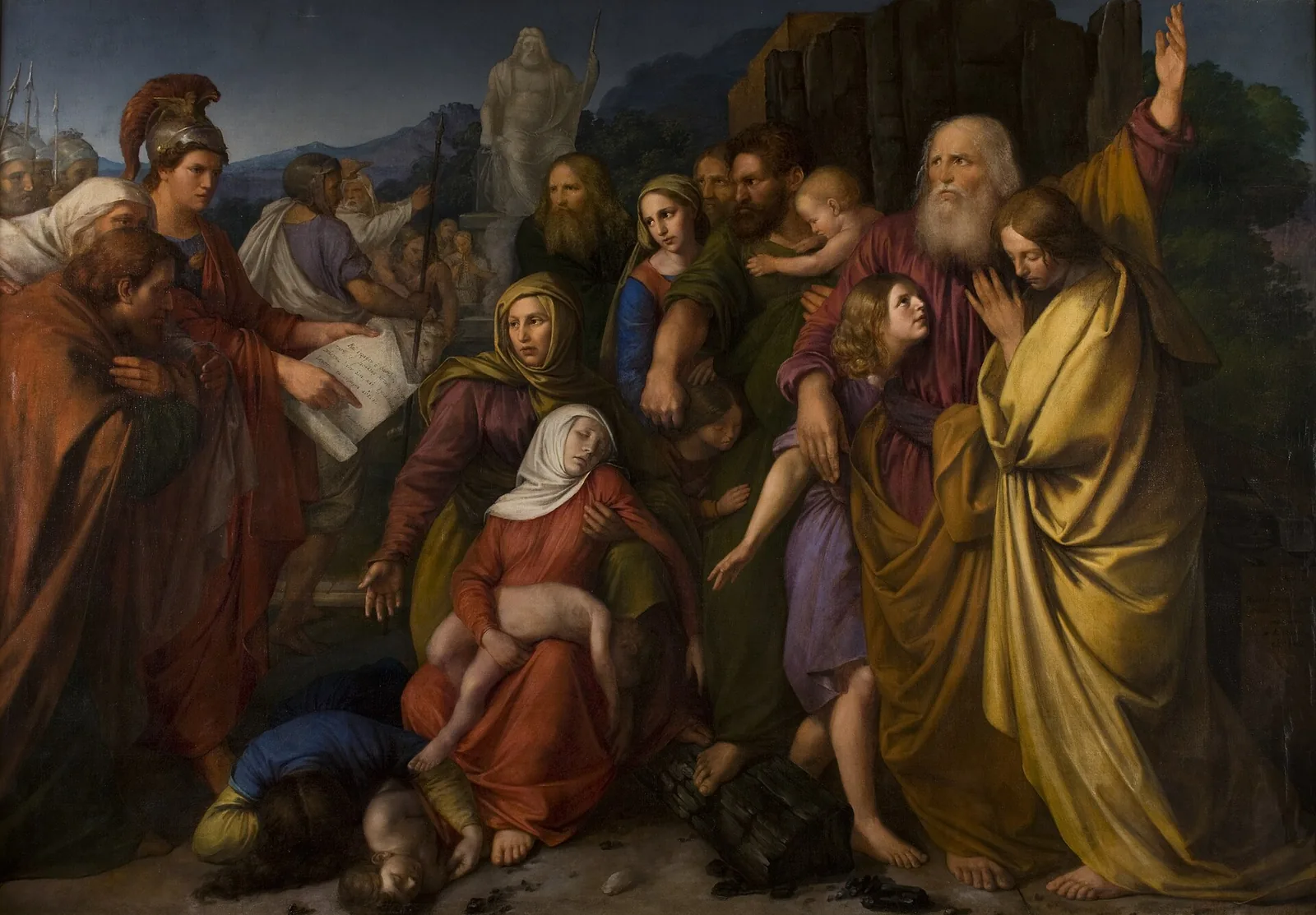
Wojciech Korneli Stattler, The Maccabees, 1830–1842. National Museum in Kraków · Public domain · Source page
An altar on the altar
Smoke over the Temple
Jerusalem, 25 Kislev, December 167 BC. In the Temple courtyard, on top of the great altar of the God of Israel, stands a new altar. Today, on the king’s orders, the first offering is made on it, to a foreign god.
Across Judea, keeping the Sabbath, circumcising a son or owning a Torah scroll can now cost you your life. Three years later to the day, rebels led by a village priest’s son will offer sacrifice again, on a new altar in a cleansed Temple. Jews still mark the day: the first day of Hanukkah.
How did a king who honoured the gods of many peoples come to ban one religion? And how did a family from a hill village beat his armies?
Our witnesses
A history written for the winners
Almost everything we know comes from two books that never entered the Hebrew Bible. 1 Maccabees was written in Hebrew about 60 years after the revolt, probably at the court of Judah’s nephew John Hyrcanus, ruler of Judea. The Hebrew is lost; the book survives in Greek. It is the family history of the Hasmoneans, and it shows on every page.
2 Maccabees is a Greek summary of a lost five-volume history by Jason of Cyrene. It cares about the Temple, God’s justice and the martyrs, and never mentions Judah’s father at all. Josephus, writing in Rome some 250 years later, mostly retells 1 Maccabees. Almost the only writings from the persecution itself are the visions in the Book of Daniel.
Alexander’s heirs
Background
A kingdom of Macedonians
When Alexander the Great died in 323 BC, his generals carved up his empire (the lesson on Alexander tells how he won it). One of them, Seleucus, built a kingdom that ran from Syria to Iran, with its capital at Antioch. Its kings, the Seleucids, were Macedonians who ruled many peoples and, as a rule, left their gods alone.
Judea was a small temple-state around Jerusalem, led by the high priest. In 200 BC Antiochus III took it from Egypt and promised, in a decree quoted by Josephus, that the Jews could live “according to the laws of their own country”. But in 190 BC Rome crushed him, and the peace cost him a fortune in silver. His younger son, also named Antiochus, was sent to Rome as a hostage.
Antiochus IV Epiphanes
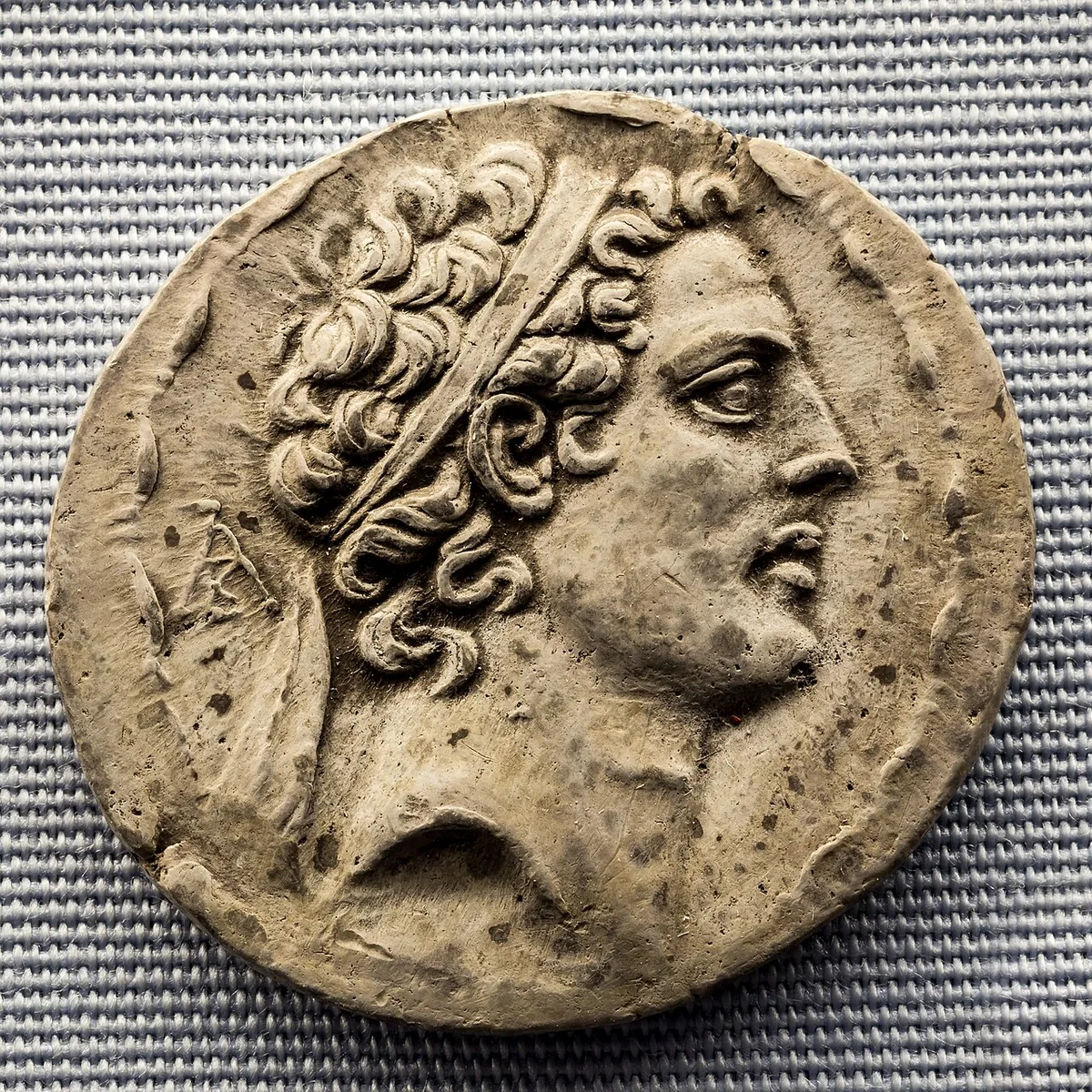
Silver tetradrachm of Antiochus IV, 175–164 BC. Staatliche Münzsammlung, Munich. Photo: ArchaiOptix · CC BY-SA 4.0 · Source page
A showman king who spent his youth as a hostage in Rome, called himself a god on his coins, and became the villain of the Hanukkah story.
- Born: c. 215 BC, Unknown; a son of Antiochus III
- Died: 164 BC, Tabae in Persis; the exact site, somewhere in today’s Iran, is unknown, of an illness, after a failed raid on a temple; the Jewish books call it divine punishment
- Won: The invasion of Egypt, 170–169 BC
- Lost: Eleusis: ordered out of Egypt by Rome, 168 BC; His generals’ defeats in Judea, 166–164 BC; The raid on a temple in Elymais, 164 BC
“All respectable men were entirely puzzled about him, some looking upon him as a plain simple man and others as a madman.”
Source: “God Manifest”: a king on his coins
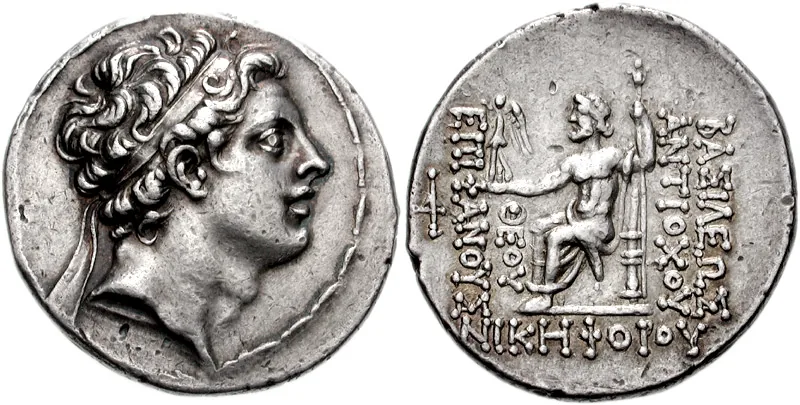
Silver tetradrachm of Antiochus IV, c. 169–164 BC. Photo: Classical Numismatic Group · CNG · CC BY-SA 3.0 · Source page
ΒΑΣΙΛΕΩΣ ΑΝΤΙΟΧΟΥ ΘΕΟΥ ΕΠΙΦΑΝΟΥΣ ΝΙΚΗΦΟΡΟΥ: “of King Antiochus, God Manifest, Bearer of Victory”
A tetradrachm is a silver coin of about 17 grams. Coins were the most widely seen royal image of the age. His early coins say only “King Antiochus”; the titles were added over the years.
- Who made this coin, and who was meant to see it? The king’s own mint. It was meant for everyone who handled money: soldiers, merchants and tax-payers across the kingdom. Propaganda in the pocket.
- A Jew in Jerusalem in 167, a Greek historian and a soldier in the royal army all read “God Manifest”. How might each react? To the Jew it is blasphemy; the Book of Daniel says the king will “magnify himself above every god”. Polybius mocked him as Epimanes, “the Madman”. To the soldier it is ordinary royal language: Hellenistic kings were often worshipped like gods. Same words, three audiences.
175 BC
A gymnasium below the citadel
In 175 BC Antiochus IV came to the throne. A Jerusalem priest named Jason, brother of the high priest Onias, came to him with an offer: 440 talents of silver for the high priesthood, and 150 more for the right to build a gymnasium and to enrol the men of Jerusalem as “Antiochenes”, citizens of a Greek-style city.
The king agreed. The gymnasium went up right below the citadel by the Temple. 2 Maccabees complains that priests left the altar to watch the discus. Nobody was forced: many in Jerusalem welcomed Greek ways. The scandal, for the writer, was that the city’s leaders, the Hellenizers, chose them.
172–168 BC
The priesthood to the highest bidder
Three years later a man named Menelaus, from outside the high-priestly family, outbid Jason by 300 talents and took the office. To pay, he sold Temple vessels.
In 169 BC, on his way home from a successful war in Egypt, Antiochus entered the Temple with Menelaus and stripped it: the golden altar, the lampstand, the hidden treasures. The next year, after a false rumour of the king’s death, Jason attacked Jerusalem with a thousand men and killed fellow Jews. The civil war began before the persecution did.
Egypt, 168 BC
A circle in the sand
In 168 BC Antiochus invaded Egypt again and approached Alexandria. At Eleusis, a suburb of the city, a Roman envoy, Gaius Popillius Laenas, handed him a decree of the Senate: leave Egypt. The king asked for time to consult his friends. Polybius tells what happened next:
“He was carrying a stick cut from a vine, and with this he drew a circle round Antiochus and told him he must remain inside this circle until he gave his decision about the contents of the letter.” (Polybius 29.27, trans. W. R. Paton, 1927)
Antiochus gave in. Rome had just destroyed the kingdom of Macedon at Pydna, and he knew it. He led his army home “deeply hurt”, says Polybius. In Judea, the Book of Daniel ties that humiliation to what the king did next.
The decrees
168–167 BC
A fortress in the city of David
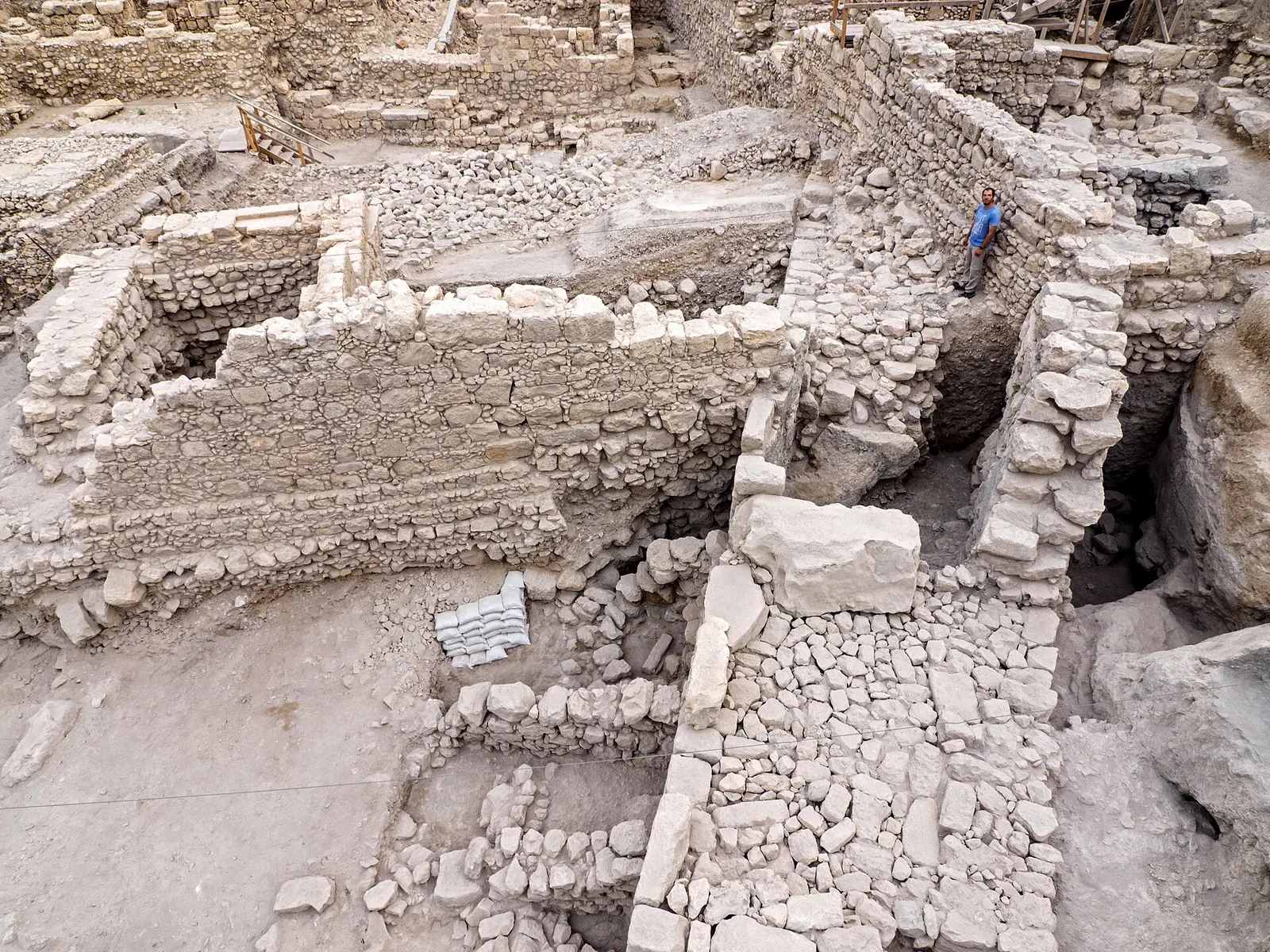
Givati Parking Lot excavation, City of David, Jerusalem, 2015. Photo: Assaf Peretz, Israel Antiquities Authority · אסף פרץ (Assaf Peretz), Israel Antiquities Authority · CC BY-SA 3.0 · Source page
Antiochus took Jason’s attack for a revolt. His troops stormed Jerusalem; 2 Maccabees speaks of 80,000 killed or sold as slaves in three days, an impossible number for a city that size. In 167 BC a commander named Apollonius entered the city in peace, then attacked on a Sabbath, when the Jews would not fight.
Next to the Temple, in the old city of David, the king’s men built a fortress: the Acra. In it sat a royal garrison and Jews loyal to the king and to Menelaus. For the next 26 years it would be a Seleucid fist in the heart of Jerusalem.
167 BC
A war on a religion
Then came the decrees. Sacrifices to the God of Israel stopped. Keeping the Sabbath and the festivals was forbidden; so was circumcision. Torah scrolls were torn up and burned, and owning one meant death. The king’s officers went from town to town, setting up altars and making people sacrifice pigs.
The Temple was dedicated to Zeus Olympios. On 15 Kislev 167 BC, what Daniel calls “the abomination of desolation” was set up on the altar: probably a pagan altar placed on top of God’s. Ten days later the first sacrifice was offered on it.
1 Maccabees claims the king ordered his whole kingdom to become “one people”. No other source knows of such an order: Babylonians and Phoenicians kept worshipping their gods. The ban was aimed at the Jews.
Source: A vision from the dark years
“And arms shall stand on his part, and they shall pollute the sanctuary of strength, and shall take away the daily sacrifice, and they shall place the abomination that maketh desolate.”
“Now when they shall fall, they shall be holpen with a little help: but many shall cleave to them with flatteries.”
The Book of Daniel is set in Babylon in the 6th century BC, and its visions are written as prophecies. Chapters 7–12 describe the reign of Antiochus IV in code: a beast, a little horn, “a king of fierce countenance”. They are the fullest Jewish voice to survive from inside the persecution.
- The book is set four centuries earlier. How can we tell these chapters were written in the 160s BC? They describe Antiochus’s wars and the defiled Temple in detail, then get his end wrong: a last war in Egypt and death in the Holy Land. He actually died in Persia in late 164, so the author wrote before the news arrived.
- “A little help”: who might that be? Many scholars think it means the Maccabean fighters: welcome, but small. The author’s hope is in God and in the wise who accept death, not in swords.
167 BC
Better to die
1 Maccabees says women who circumcised their sons were put to death with their babies. 2 Maccabees tells the stories at length. Eleazar, a scribe of ninety, refused to eat pork, or even to pretend to, lest the young think he had “gone to a strange religion”.
Then comes a mother (later tradition calls her Hannah) who watches her seven sons tortured to death one by one, each refusing to break the law. The second dies saying that the King of the world will raise them up “unto everlasting life”: one of the earliest clear statements of resurrection in Jewish writing.
These are martyr stories, told to strengthen faith, with polished speeches. That people died for the law is not in doubt; that they said these words is.
A decision point
You are Mattathias, a priest in the village of Modiin.
167 or 166 BC, in the square of Modiin
You are an old priest from a Jerusalem family that settled in Modiin, a village in the low hills north-west of Jerusalem, and you have five grown sons. Many Jews have obeyed the decrees; others have fled to the wilderness.
The king’s officers have come to the village with an altar. They turn to you, its leading man: sacrifice first, and the others will follow. In return, they promise, you and your sons will be counted among “the king’s friends”, with silver and gold. Your neighbours are watching.
What do you do?
- Sacrifice, at least for show, to protect your family and the village Your family and the village probably survive, and you keep your standing with the authorities. But in the eyes of those who keep the law you are finished, and the decrees stay in force.
- Refuse openly and accept death, as Eleazar did A witness that may move others. But you, and probably your sons, die, and the village sacrifices anyway.
- Refuse quietly and flee with your family to the hills You save your conscience and, for a while, your life. But the king’s troops hunt the fugitives, and a band of refugees changes nothing.
- Resist by force: strike down the king’s officer and call the village to arms Open rebellion. There is no way back: your family become outlaws, and every Jew must now choose a side.
What really happened
Resist by force: strike down the king’s officer and call the village to arms
According to 1 Maccabees, Mattathias refused: “Yet will I and my sons and my brethren walk in the covenant of our fathers.” When a Jew stepped forward to sacrifice, Mattathias killed him on the altar, killed the king’s officer and tore the altar down. Then he cried, “Whosoever is zealous of the law, and maintaineth the covenant, let him follow me,” and fled to the hills with his sons.
1 Maccabees compares him to Phinehas, the priest whose zeal for God won “the covenant of an everlasting priesthood”. The parallel suited a family that later took the high priesthood without belonging to the old high-priestly line. 2 Maccabees never mentions Mattathias or any scene at Modiin, and many historians see the scene as the dynasty’s founding legend, built around a real rising of country priests. And note who died first: a Jew.
Many into the hands of few
A decision point
You are Mattathias, leading a small band of rebels in the hills.
167 or 166 BC, soon after Modiin
Terrible news: about a thousand men, women and children hiding in caves in the wilderness were attacked by the king’s soldiers on the Sabbath. They did not fight back, or even block the cave mouths. “Let us die all in our innocency,” they said, and all of them died.
Your followers came to the hills to keep the law, the Sabbath included. But now the enemy knows that on the seventh day, Jews will not defend themselves.
What do you decide?
- Keep the Sabbath fully, even under attack, and trust in God You stay true to the way of the dead. But the enemy can strike every Sabbath, and a band as small as yours would probably be wiped out within months.
- Fight back if attacked on the Sabbath, but never start a battle on it Your band survives. But on the Sabbath the enemy can still march, dig and prepare undisturbed.
- Fight on the Sabbath whenever the war demands it Full freedom in war. But you break the very law many of your men are fighting for, and may lose the devout.
- Dodge the question: keep moving so no one catches you on a Sabbath Possible for a few dozen men for a while; impossible for an army that must hold ground.
What really happened
Fight back if attacked on the Sabbath, but never start a battle on it
Mattathias and his friends decided: “Whosoever shall come to make battle with us on the sabbath day, we will fight against him; neither will we die all, as our brethren that were murdered in the secret places” (1 Maccabees 2:41). Soon after, a company of devout Hasideans joined them.
Without this rule the revolt would probably have died in its first year. But note its limit: self-defence only. In 63 BC Pompey, the Roman general, built his siege works against Jerusalem on Sabbaths, knowing the defenders would not stop him. Note the author, too: he tells the massacre just before the decision, so the new rule looks unavoidable.
166 BC
The hammer
Mattathias died in 166 BC. Command passed to his third son, Judah, called Maccabee, probably from the Hebrew or Aramaic word for “hammer”. Judah fought the way the weak fight: by night, in the hills, against loyalist villages and isolated units.
His first victory was over Apollonius, a governor who marched against him from Samaria. Judah killed him and took his sword, “and therewith he fought all his life long”, as David once took Goliath’s.
Judah Maccabee
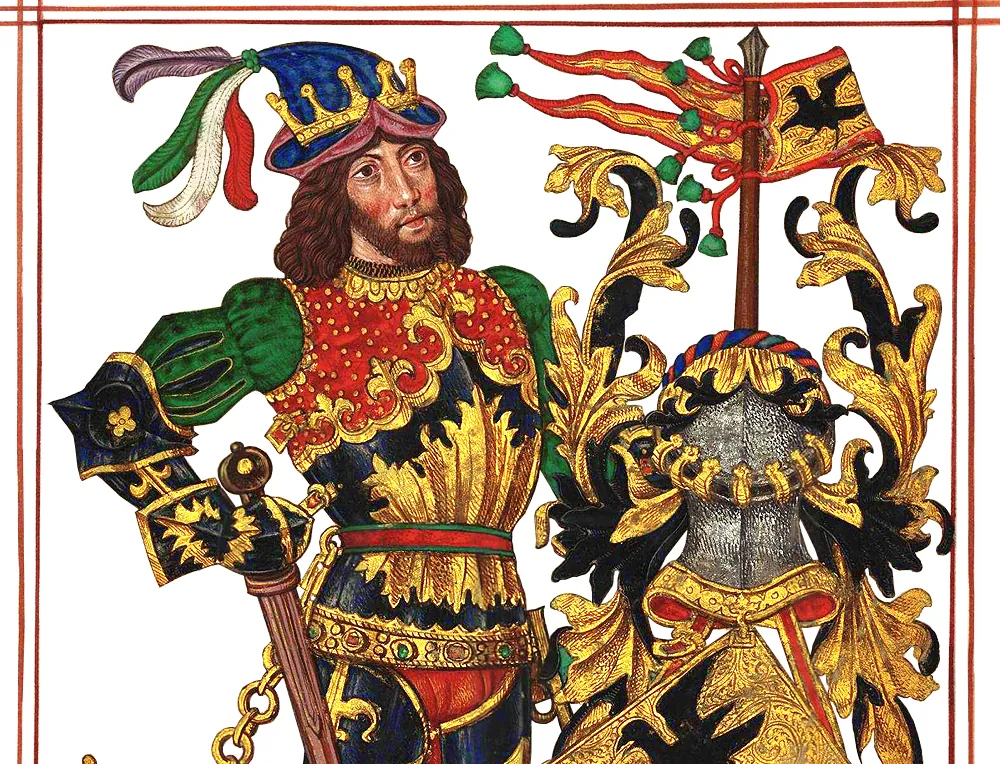
João do Cró, Livro do Armeiro-Mor, fol. 2, 1509. Torre do Tombo archive, Lisbon; from the 1956 facsimile · Public domain · Source page
A priest’s son from a hill village who defeated one royal force after another in two years and gave Jews a festival they still keep.
- Born: Unknown, The family came from Jerusalem and lived in Modiin
- Died: 160 BC, Elasa, killed in battle, as the next lesson tells
- Won: Apollonius, 166 BC; Beth Horon, 166 BC; Emmaus, 165 BC; Beth Zur, 164 BC
- Lost: Beth Zechariah, 162 BC; Elasa, 160 BC, where he fell
“For it is better for us to die in battle, than to behold the calamities of our people and our sanctuary.”
Beth Horon: who fought whom
166 BC (perhaps 165)
The ascent of Beth Horon, the road from the Ayalon valley up into the Judean hills
Judah’s rebels
- Commanders: Judah Maccabee
- Strength: “a small company” (1 Maccabees); unknown: hundreds to a few thousand (Modern estimate)
- Losses: not recorded (1 Maccabees)
Seleucid army
- Commanders: Seron, “a prince of the army of Syria”
- Strength: “a mighty host”, no figure (1 Maccabees); as large as he could gather (Josephus); smaller than the book implies (Bar-Kochva (1989))
- Losses: about 800 dead (1 Maccabees and Josephus)
Outcome: Judah’s victory: Seron’s column broke and fled down the pass to the plain. Josephus says Seron himself was killed.
1 Maccabees gives no strength figures for either side, only few against many; its one number is the 800 dead. Bar-Kochva thinks the author inflated both Seron’s rank and his army.
The battle at the ascent of Beth Horon
166 BC, on a day of fasting
Seron, a prince of the army of Syria, climbs from the Ayalon valley towards Lower Beth Horon with his column, hoping to make a name for himself by crushing the rebels. Above the steep, narrow climb, Judah's men wait in the hills, weak after a day of fasting.
A schematic reconstruction after 1 Maccabees 3:13–24 and Bezalel Bar-Kochva (1989). The road, the two villages of Beth Horon and the edge of the Ayalon valley are drawn roughly to scale. Exactly where Judah struck, and how large both forces were, we do not know; the positions are approximate.
Phases of the battle
- Up the pass Seron, “a prince of the army of Syria”, hoped to “get me a name” by crushing the rebels. His column came up from the Ayalon valley towards Lower Beth Horon. Ahead lay a steep, narrow climb.
- Few against many On the climb the column was strung out and could not form a battle line. Judah’s men, weak from fasting, lost heart at its size. Judah answered: “It is no hard matter for many to be shut up in the hands of a few.”
- The charge “As soon as he had left off speaking, he leapt suddenly upon them.” Judah struck the head of the column from above. In the narrow pass, the men behind could not help those in front.
- Down to the plain The column fled back down the pass, chased all the way to the plain. 1 Maccabees counts about 800 dead; the rest fled “into the land of the Philistines”.
The strategy
- Judah’s rebels: Judah charges suddenly from above, at the head of the column stretched out up the narrow climb. In such a pass the men behind cannot help those in front, so he relies on surprise and the ground. To his men, who had lost heart, he says: it is no hard matter for many to be shut up in the hands of a few.
- Seleucid army: Seron means to climb to Lower Beth Horon and crush the rebels, to make a name for himself. He sends his column up the narrow climb, where it stretches out and cannot form a line of battle.
What decided it: The narrow pass decided it: Seron's column could not spread out to fight, so Judah's attack on its head broke the whole column. Surprise and the ground outweighed numbers.
165 BC
Slave dealers in the camp
In 165 BC Antiochus marched east with half his army, leaving his regent Lysias to deal with Judea. Lysias sent Ptolemy son of Dorymenes with the generals Nicanor and Gorgias, and their army camped near Emmaus. Merchants came with silver and gold to buy the expected captives as slaves.
Judah gathered his men at Mizpah, north-west of Jerusalem. They fasted, prayed and opened a Torah scroll. Then, as the Torah commands, he sent home every man who had built a house, become engaged, planted a vineyard, or was afraid.
A decision point
You are Judah Maccabee.
Autumn 165 BC, evening, in the rebel camp in the hills
Your scouts bring news: at nightfall Gorgias left the royal camp at Emmaus with picked infantry and cavalry, guided by men from the Acra up the hill paths. He means to fall on your camp in the dark.
The main royal army, with its cavalry, stays in its camp in the plain. Your men number a few thousand at most, and many have no armour or proper swords.
What do you do?
- Dig in at your camp and wait for Gorgias on ground you know A night battle against professionals, and at dawn the main army may come to their aid. A heavy risk.
- Scatter into the hills and avoid battle The army survives, but the king’s troops hold the country, the slave dealers get their captives, and faith in the rebels collapses.
- March at once and strike the main camp at dawn If the timing works, the camp is caught unready. If not, your men are trapped on the open plain between two forces.
- Ambush Gorgias’s column in the hills, where cavalry is useless It depends on knowing his exact route in the dark. A miss leaves two armies loose in the night.
What really happened
March at once and strike the main camp at dawn
According to Josephus, Judah left his campfires burning and marched through the night. At daybreak he appeared in the plain before Emmaus “with three thousand men, who nevertheless had neither armour nor swords to their minds” (1 Maccabees 4:6).
Judah turned the enemy’s plan against him: with the best troops away in the hills, the camp was at its weakest. Bar-Kochva thinks Judah was warned in good time, perhaps by signal fires or riders, and that his men knew every path.
Emmaus: who fought whom
Autumn 165 BC
The royal camp in the plain by Emmaus, at the foot of the Judean hills
Judah’s rebels
- Commanders: Judah Maccabee, His brothers Simon, Jonathan and “Joseph”, probably a slip for John (2 Maccabees 8:22)
- Strength: 3,000 at dawn, poorly armed (1 Maccabees); about 6,000, in four bands of 1,500 (2 Maccabees); 3,000 (Josephus); about 6,000 in all (Bar-Kochva (1989))
- Losses: not recorded (1 and 2 Maccabees)
Seleucid army
- Commanders: Nicanor son of Patroclus, Gorgias, Over them, Ptolemy son of Dorymenes, governor of Coele-Syria
- Strength: 40,000 foot and 7,000 horse (1 Maccabees); no fewer than 20,000 (2 Maccabees); 40,000 foot and 7,000 horse (Josephus); about 10,000 regulars; with local militias perhaps 20,000 (Bar-Kochva (1989)); 5,000 foot and 1,000 horse (1 Maccabees: Gorgias’s night force)
- Losses: about 3,000 (1 Maccabees); over 9,000 (2 Maccabees)
Josephus copies 1 Maccabees. Its 47,000 is about the whole royal army that paraded at Daphne in 166 BC, and half of it had already gone east with the king.
Outcome: Judah’s victory: the royal camp was taken and burned, and Gorgias’s night force withdrew without a fight.
The battle of Emmaus
Autumn 165 BC, one night and one morning
The royal army camps on the plain by Emmaus under Nicanor and Gorgias. Judah Maccabee has gathered his men at Mizpah, about 18 km to the east and high in the hills. According to the sources the royal army is the larger, though the figures are disputed.
This follows Bezalel Bar-Kochva (1989): the rebels’ base at Mizpah (Nabi Samwil), Gorgias climbing by the Beth Horon road, Judah coming down by a southern route to a small valley south of Emmaus. 1 Maccabees 3:57 says the rebels camped “upon the south side of Emmaus”, and some scholars put their camp there, much closer. The royal camp, west of Emmaus, is placed by estimate. Jerusalem lies about 7 km south-east of Mizpah, off the map.
Phases of the battle
- Two camps The royal army camped in the plain by Emmaus. Judah’s army gathered at Mizpah, about 18 km to the east and far higher up in the hills.
- A march in the dark At nightfall Gorgias set out with picked troops, probably up the Beth Horon road. Judah heard of it and left at once by a southern route, leaving his campfires burning.
- Dawn Gorgias reached the rebel camp and found it empty. “These fellows flee from us,” he said, and searched the hills. At that hour Judah’s men came down into the plain south of Emmaus, facing the royal camp.
- The camp burns The royal troops, caught unready, broke and fled west, to Gezer and the coastal cities; 1 Maccabees counts about 3,000 dead. Judah stopped his men from looting: “Be not greedy of the spoils, inasmuch as there is a battle before us.”
- Smoke Coming back from the hills, Gorgias’s men saw their camp burning and Judah’s army drawn up in the plain, and fled “every one into the land of strangers”.
The strategy
- Judah’s rebels: Judah slips away at once by a southern route, leaving campfires burning so that the camp looks occupied. At dawn he comes down into the plain facing the main royal camp, while Gorgias is far off in the hills.
- Seleucid army: Gorgias sets out at nightfall with picked troops, probably up the Beth Horon road, to fall on the rebel camp in the dark. Most of the army stays in the camp on the plain.
What decided it: The army left in its camp was caught unready, and the force Gorgias sent into the hills came back to a burning camp. Splitting the army at night and Judah's unexpected move decided the battle.
164 BC
The road to Jerusalem opens
In 164 BC Lysias came himself, from the south, through Idumea. At Beth Zur, the fortress guarding the road from Hebron, Judah met him. 1 Maccabees claims 65,000 against 10,000 and a rebel victory; 2 Maccabees tells a different story, with a heavenly horseman and a negotiated settlement. Either way, Lysias went back to Antioch, and the road to Jerusalem lay open.
The twenty-fifth of Kislev
A decision point
You are Judah Maccabee, with the priests loyal to the law.
Jerusalem, Kislev (December) 164 BC
On the Temple Mount the gates are burned and shrubs grow in the courts “as in a forest”. Your men keep the Acra garrison next door busy while the priests clear out the pagan objects.
One question remains. For three years sacrifices to Zeus were offered on the altar of God. The Torah says how to build an altar, but not what to do with one that pagans have used. There is no prophet to ask, and the high priest is the king’s man.
What do you do with the altar?
- Purify the old altar and use it again Quick, and the Temple’s continuity is kept. But many priests would probably refuse to sacrifice on stones used for Zeus.
- Pull it down and throw its stones into an unclean place A clean break. But it treats once-holy stones as rubbish, and some would call that sacrilege.
- Pull it down and store its stones on the Temple Mount until a prophet can decide You avoid ruling on a question no one has the authority to decide, and build a new altar.
- Wait: build nothing until there is a lawful high priest or the king’s consent The worship you fought for is delayed, and the initiative passes to Menelaus and the king.
What really happened
Pull it down and store its stones on the Temple Mount until a prophet can decide
They pulled the altar down “and laid up the stones in the mountain of the temple in a convenient place, until there should come a prophet to shew what should be done with them” (1 Maccabees 4:46). They built a new altar of whole stones and relit the lamps. On 25 Kislev 164 BC, three years to the day after the first pagan sacrifice, they sacrificed on it and celebrated for eight days.
A cautious, legal-minded choice in the middle of a war: acting without the old sources of authority, the rebels left the hardest question open. The Mishnah, compiled around AD 200, still remembers the chamber where the Hasmoneans stored the stones defiled by the kings of Greece (Middot 1:6).
Source: Why eight days?
“And they kept eight days with gladness, as in the feast of the tabernacles, remembering that not long afore they had held the feast of the tabernacles, when as they wandered in the mountains and dens like beasts.” (2 Maccabees 10:6)
“The vial contained sufficient oil for one day only, but a miracle occurred, and it fed the holy lamp eight days in succession.” (Babylonian Talmud, Shabbat 21b)
Two explanations of the eight days, written some 600 years apart. 1 Maccabees says only that they “kept the dedication of the altar eight days”.
- Each writer explains the eight days differently. What does each care about? 1 Maccabees: the altar, and the Hasmonean brothers who rebuilt it. 2 Maccabees: a late Sukkot, for Jews abroad who knew that festival. The Talmud: God’s miracle, from rabbis with little love for the later Hasmonean kings.
- Josephus (AD 93) calls the feast “Lights” and explains why with “I suppose”. What does that tell you? Even Josephus, a priest from Jerusalem, could only guess why the feast was called “Lights”. He never mentions oil.
Myth
Hanukkah lasts eight days because one jar of oil, enough for a single day, burned for eight.
The truth
That is the Talmud’s explanation, centuries later, and for many Jews today it is the heart of the festival. But no source from the time of the revolt mentions it. The festival began as the anniversary of the Temple’s rededication: eight days of sacrifices and song, perhaps modelled on Sukkot.
The evidence
Historians suggest that the rabbis, after the disastrous revolts against Rome, preferred a festival of God’s miracle to one of armed rebellion.
After the victory
Late 164 BC
The death of “God Manifest”
Far to the east, Antiochus tried to plunder a temple in Elymais, in today’s Iran, was driven off, and died soon after at Tabae in Persis. A Babylonian king list shows that the news reached Babylon in Kislev 164 BC, the very month the Temple was rededicated.
The Temple was back in Jewish hands. But the Acra still stood beside it, and the war was far from over. Judah had four more years to live; the next lesson follows them.
Myth
The Maccabees fought “the Greeks”: a united people rose against foreign oppressors.
The truth
It was also a civil war. The gymnasium was a Jewish high priest’s idea; Menelaus, a Jew, served the king throughout the persecution; the first man Mattathias killed was a Jew. And the enemy were not Greeks from Greece but the army of a Macedonian dynasty in Syria, drawn from many peoples.
The evidence
Nor did the winners reject everything Greek. Two generations later Judah’s family bore Greek names, hired mercenaries and struck coins in Hebrew letters with Greek symbols.
What came next
- Late 164 BC Antiochus IV dies. His young son Antiochus V reigns, with Lysias in charge.
- 162 BC Lysias makes peace after another campaign: the decrees are formally cancelled and Menelaus is executed.
- 160 BC Judah falls in battle at Elasa.
- 152 BC His brother Jonathan becomes high priest, appointed by a rival claimant to the Seleucid throne.
- 141 BC Simon, the last of the brothers, takes the Acra. Judea is independent in all but name.
- 104 BC Aristobulus I, Simon’s grandson, takes the title of king.
- 63 BC The Roman general Pompey takes Jerusalem. Independence is over.
- From the 1890s Zionism adopts Judah as the model of the fighting Jew: Maccabi sports clubs and the torch from Modiin.
Why did a Hellenistic king ban a religion?
Hellenistic kings usually honoured their subjects’ gods. Why did Antiochus IV ban the religion of the Jews, and only theirs?
- Elias Bickerman (1937) and Martin Hengel (1969) The Jewish reformers asked for it. Antiochus was no zealot; the idea came from the radical Hellenizers around Menelaus, who wanted a Judaism without the laws that set Jews apart: a cult of the God of Heaven without Sabbath, circumcision or food laws. The king backed his own high priest. That is why the ban hit Judea alone.
- Victor Tcherikover (1959) The revolt came first. A popular rising against Menelaus broke out in 168 BC, and the king answered as he would answer any rebellion, by destroying the rebels’ institutions. In Judea that institution was the Torah. Religion was persecuted because it had become the centre of resistance.
- Erich Gruen (1993) and Sylvie Honigman (2014) Politics and money. After the humiliation at Eleusis the king needed to show strength in a border province. Honigman goes further: she sees a struggle over the Temple’s money and the king’s right to tax and to sell the priesthood, which the books of Maccabees, written for the Hasmonean house, retold as a war of religion.
Almost all the sources come from one side, and the king’s own reasons are lost. All three views agree on two things: this was no crusade to spread Greek culture, and there were Jews on both sides.
What do you know now?
Check yourself
Why must 1 Maccabees be read with care?
Answer: It was written about 60 years after the revolt, probably at the court of Judah’s own family. Right. It is the Hasmonean house’s own history: good on places and dates, but it swells the enemy and makes the family the heroes.
Check yourself
What did Mattathias and his friends decide about the Sabbath?
Answer: To fight back if attacked on the Sabbath, but not to start battles on it. Right: self-defence only. That is why in 63 BC Pompey could build his siege works on Sabbaths undisturbed.
Check yourself
How did Judah win at Emmaus?
Answer: He struck the royal camp at dawn while Gorgias was out hunting for him in the hills. Right. Gorgias found an empty camp; Judah found a weakened one.
Check yourself
What did the rebels do with the altar the pagans had used?
Answer: They pulled it down and stored its stones on the Temple Mount until a prophet could decide. Right (1 Maccabees 4:46). The Mishnah still remembered the chamber where the stones were kept.
Check yourself
When was the story of the jar of oil first written down?
Answer: In the Babylonian Talmud, some 650 years after the events. Right. The books of Maccabees and Josephus do not know it.
Check yourself
Which fact best shows that the revolt was also a civil war among Jews?
Answer: Jewish high priests, Jason and then Menelaus, led the turn to Greek ways, and Menelaus stood with the king against the rebels. Right. And the first man Mattathias killed at Modiin was a Jew.
Terms
- Seleucids The Macedonian dynasty founded by Seleucus I, one of Alexander’s generals. From its capital, Antioch in Syria, it ruled Syria, Mesopotamia and Iran, and Judea from 200 BC.
- Hellenism The Greek way of life (language, cities, gymnasia, names and gods) as it spread through the lands Alexander conquered and mixed with local cultures.
- Hellenizers Jews who wanted Jerusalem to adopt Greek ways. We know them almost only from their enemies, who call them “lawless” and “sinners”.
- gymnasium A Greek sports ground and school for young citizens, where athletes trained naked. In a Greek city it was the centre of public life and the way into citizenship.
- high priest The head of the Temple in Jerusalem and, under the kings, the leader of the Jews of Judea. The office passed from father to son, until in 175 BC men began to buy it from the king.
- talent A unit of weight and of money: about 26 kilograms of silver, or 6,000 drachmas.
- Acra The Seleucid citadel in Jerusalem, built in 167 BC close to the Temple and held by the king’s soldiers and Jewish supporters. It held out until 141 BC.
- abomination of desolation Daniel’s scornful name for the pagan altar or cult object set on the Temple altar in December 167 BC. Probably a mocking pun on Baal Shamem, “Lord of Heaven”.
- martyr Someone who chooses to die rather than give up their faith. The stories in 2 Maccabees are among the earliest Jewish martyr stories.
- Hasideans “The pious”: a group of devout Jews who joined Mattathias’s rebels (1 Maccabees 2:42). They have nothing to do with the Hasidic movement, which began in the 18th century.
- Hasmoneans Mattathias’s family, named after an ancestor, Hashmonai. Judah’s brothers and their descendants ruled Judea as high priests, and later as kings, until the Roman conquest in 63 BC; the last of them, Antigonus, was king again from 40 to 37 BC.
- Hanukkah “Dedication”: the eight-day festival from 25 Kislev that marks the rededication of the Temple in December 164 BC. The name comes from “the dedication of the altar” in 1 Maccabees.
- 1 Maccabees A book written in Hebrew about 60 years after the revolt. The Hebrew original is lost, and the book survives in Greek. It is the family history of the Hasmoneans.
- 2 Maccabees A Greek summary of a lost work. It cares about the Temple, God's justice and the martyrs, and never mentions Judah's father.
- 4 Maccabees A book from the 1st century AD that turns the story of the mother and her sons into a philosophical sermon on reason ruling the passions.
- Book of Daniel A book set in Babylon in the 6th century BC, with visions written as prophecies. Its later chapters describe the reign of Antiochus IV in code.
- Babylonian Talmud A large collection of rabbinic teachings, written centuries after the revolt. It has a similar story about a mother and her sons, set in Roman times, with no name for her.
- Babylonian king list A Babylonian document listing the kings and their reigns, which gives dates. It shows that news of Antiochus's death reached Babylon in Kislev 164 BC.
- Apocrypha The name Jews and Protestants give to the Maccabees books, which never entered the Hebrew Bible. Catholic and Orthodox churches still treat them as scripture.
- Josephus A Jewish historian who wrote in Rome some 250 years after the revolt. Mostly he retells 1 Maccabees.
- Jason of Cyrene A writer who produced a history in five volumes, now lost. The book of 2 Maccabees is a Greek summary of it.
- John Hyrcanus Judah's nephew and ruler of Judea. The first Book of Maccabees was probably written at his court.
- Polybius A Greek historian of the time. In what survives of his work he writes about the king, but not about the revolt.
- Seleucus One of Alexander the Great's generals. He built a kingdom from Syria to Iran, with its capital at Antioch.
- Antiochus III A Seleucid king. In 200 BC he took Judea from Egypt, and after Rome crushed him in 190 BC he paid a fortune in silver. His younger son was sent to Rome as a hostage.
- Menelaus A man from outside the high-priestly family who outbid Jason by 300 talents to become high priest. To pay, he sold Temple vessels.
- Gaius Popillius Laenas A Roman envoy who brought King Antiochus the Senate's order to leave Egypt. He drew a circle around him with a stick and told him to stay inside it until he answered.
- Apollonius A Seleucid commander who entered Jerusalem in peace in 167 BC, then attacked on a Sabbath when the Jews would not fight. Judah later killed a governor named Apollonius and took his sword.
- Lysias Regent of King Antiochus. When the king marched east in 165 BC, Lysias dealt with Judea, and in 164 BC he came there himself.
- Temple-state A small state built around a temple, led by a high priest. Judea was one such state.
- Tetradrachm A silver coin of about 17 grams, the kind widely used in the Greek world. Coins were then the most widely seen royal image.
- Pydna A place in northern Greece where Rome destroyed the kingdom of Macedon in 168 BC. Antiochus knew it when he gave in to Rome.
- Antioch The capital of the Seleucid kingdom. In 164 BC Lysias went back there from Judea.
- Modiin A village in the low hills north-west of Jerusalem. Mattathias refused to sacrifice there, and the revolt began.
- Emmaus A place on the plain where the royal army camped. From there Gorgias set out at night to attack Judah's camp.
- Zeus Olympios The Greek king of the gods. In Jerusalem the Temple was dedicated to Zeus Olympios during the persecution.
- Baal Shamem The Syrian name of the supreme god, meaning Lord of Heaven. The Greeks identified it with Zeus Olympios.
Sources
- 1 Maccabees 1–4 and 6, King James Version (1611)
- 2 Maccabees 3–11, King James Version (1611)
- Daniel 7–12, King James Version (1611)
- Flavius Josephus, Jewish Antiquities 12.237–326, trans. W. Whiston (1737)
- Polybius, Histories 26.1, 29.27, 30.25–26, 31.9, trans. W. R. Paton (Loeb Classical Library, 1926–1927)
- Livy, History of Rome 45.12
- Mishnah, Middot 1:6; Megillat Taanit, 25 Kislev
- Babylonian Talmud, Shabbat 21b, trans. M. L. Rodkinson (1903)
- A. J. Sachs and D. J. Wiseman, “A Babylonian King List of the Hellenistic Period”, Iraq 16 (1954), 202–212
- Bezalel Bar-Kochva, Judas Maccabaeus: The Jewish Struggle against the Seleucids (Cambridge: Cambridge University Press, 1989)
- Elias J. Bickerman, The God of the Maccabees (Leiden: Brill, 1979; German original Der Gott der Makkabäer, Berlin: Schocken, 1937)
- Victor Tcherikover, Hellenistic Civilization and the Jews (Philadelphia: Jewish Publication Society, 1959)
- Martin Hengel, Judaism and Hellenism (London: SCM Press, 1974)
- Jonathan A. Goldstein, I Maccabees, Anchor Bible 41 (Garden City, NY: Doubleday, 1976)
- Daniel R. Schwartz, 2 Maccabees, Commentaries on Early Jewish Literature (Berlin: De Gruyter, 2008)
- אוריאל רפפורט, ספר מקבים א: מבוא, תרגום ופירוש (ירושלים: יד יצחק בן־צבי, 2004)
- Otto Mørkholm, Antiochus IV of Syria (Copenhagen: Gyldendal, 1966)
- Erich S. Gruen, “Hellenism and Persecution: Antiochus IV and the Jews”, in P. Green (ed.), Hellenistic History and Culture (Berkeley: University of California Press, 1993)
- Sylvie Honigman, Tales of High Priests and Taxes: The Books of the Maccabees and the Judean Rebellion against Antiochos IV (Oakland: University of California Press, 2014)
- John J. Collins, Daniel, Hermeneia (Minneapolis: Fortress Press, 1993)
- Dov Gera, Judaea and Mediterranean Politics, 219 to 161 B.C.E. (Leiden: Brill, 1998)
- Vered Noam, “The Miracle of the Cruse of Oil: The Metamorphosis of a Legend”, Hebrew Union College Annual 73 (2002), 191–226
Image credits
- Wojciech Korneli Stattler, The Maccabees, 1830–1842. National Museum in Kraków · Public domain · Source page
- Silver tetradrachm of Antiochus IV, 175–164 BC. Staatliche Münzsammlung, Munich. Photo: ArchaiOptix · CC BY-SA 4.0 · Source page
- Silver tetradrachm of Antiochus IV, c. 169–164 BC. Photo: Classical Numismatic Group · CNG · CC BY-SA 3.0 · Source page
- Givati Parking Lot excavation, City of David, Jerusalem, 2015. Photo: Assaf Peretz, Israel Antiquities Authority · אסף פרץ (Assaf Peretz), Israel Antiquities Authority · CC BY-SA 3.0 · Source page
- João do Cró, Livro do Armeiro-Mor, fol. 2, 1509. Torre do Tombo archive, Lisbon; from the 1956 facsimile · Public domain · Source page


