The Mongols against Japan, 1274 and 1281: the wind that saved them?
November 1274, Hakata Bay: about 800 to 900 ships carrying Kublai Khan’s army reach the coast of Japan. The familiar story says a divine wind saved the country, but historians disagree about what really sent the invaders home.
Decisions, questions and your own progress, in the app
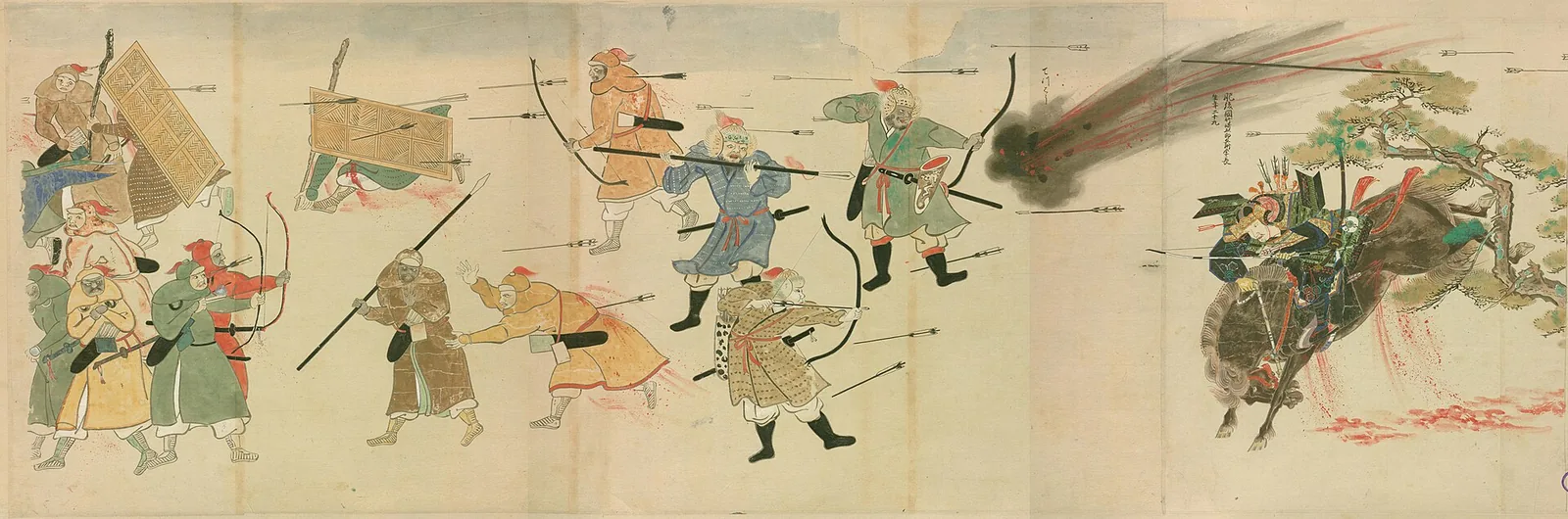
Mōko Shūrai Ekotoba, reproduction, c. 1293. National Diet Library Digital Collections · Public domain · Source page
The scene
Ships on the horizon
November 1274. In Hakata Bay, on the north coast of Kyushu, Japanese warriors watch a fleet come in from the sea: about 800 to 900 ships, the sources say.
Most people know this story as the one where a divine wind saved Japan. But did the wind save it? Historians disagree, and the answer starts with a letter that Japan did not answer.
Japan, the 1270s
Two centres of power
Japan in the 1270s has two centres of power. The emperor and his court sit in Kyoto. The warrior government, the shogunate, sits in Kamakura, and its head is the regent, Hōjō Tokimune.
In 1266 Kublai Khan, the Mongol ruler, wrote to Japan. He asked for friendship and tribute, and hinted that force would follow if Japan refused. Japan’s answer, or its silence, would shape what came next.
The invaders
Three peoples in one fleet
15,000 to 40,000 men
The fleet is not Mongol alone. It carries Mongols, Chinese from the Yuan state, and Korean fighters from the kingdom of Goryeo.
The sources give the army as about 15,000 to 40,000 men, and they do not agree. Facing it are the warriors of Kyushu. Some of them, like Takezaki Suenaga of Higo, will later petition the Kamakura government for a reward.
The road to it
1266 to 1268
A letter by a long road
Kublai’s government writes the letter in classical Chinese. It travels a long way before it reaches Japan.
In 1268 an envoy from Goryeo brings it to Dazaifu, inland from Hakata Bay. From there it goes to the court in Kyoto, which receives it.
1269 to 1271
Envoys who keep coming
Kublai does not give up. Some accounts list more envoys around 1269 to 1272, and say that Japan turned each of them away.
In 1271 Kublai founds the Yuan dynasty. He now rules much of China as well as the Mongols.
A decision point
You are Hōjō Tokimune, the regent in Kamakura.
1268, Kamakura
A letter from Kublai Khan has come by way of Goryeo and Dazaifu. It asks for friendship and tribute, and it hints that force may follow if Japan refuses.
You know what the letter says, and very little about what its writer will do next.
The court in Kyoto wants a clear answer, and so do your own warriors. None of you knows what the Mongols will do if you say no.
What do you do?
- Send a courteous reply, and offer talks without promising tribute. Probably the letter is answered, and talks buy time. But Kublai may read a polite answer as an opening, and ask for tribute again.
- Send no reply, and wait to see what the Mongols do next. The immediate result is no answer at all. Some accounts list more envoys in the years that follow, and say that Japan turned them away.
- Send a firm refusal, and begin to prepare the coast for a fight. Probably the Mongols answer with force sooner. The coast has no stone wall yet, and a firm refusal gives Kublai the excuse he may be looking for.
What really happened
Send no reply, and wait to see what the Mongols do next.
Japan sent no reply. The sources agree on the silence but not on who chose it. One Japanese study says the court decided to ignore the letter. Another says the shogunate held back a reply the court had prepared. Some accounts credit Tokimune. We have no verified words from him on the matter.
Silence committed Japan to nothing. No record gives Tokimune’s reasons, and historians read the silence in different ways.
The landing
November 1274
Tsushima and Iki
In early November the fleet sails from the Korean coast. Its first target is Tsushima, the island between Korea and Kyushu.
Tsushima is attacked in early November. Iki, a little later, is attacked and taken.
Islanders die in the fighting. No reliable count of the dead survives.
19 November 1274
The landing at Torikai
On 19 November the fleet reaches Hakata Bay, and the army lands, mainly on the beach at Torikai. Its aim is Dazaifu, inland.
The Japanese defenders number about 4,000 to 6,000 warriors, according to Thomas D. Conlan. One source says 6,000.
Among the warriors who meet the landing is Takezaki Suenaga, of Higo.
Takezaki Suenaga
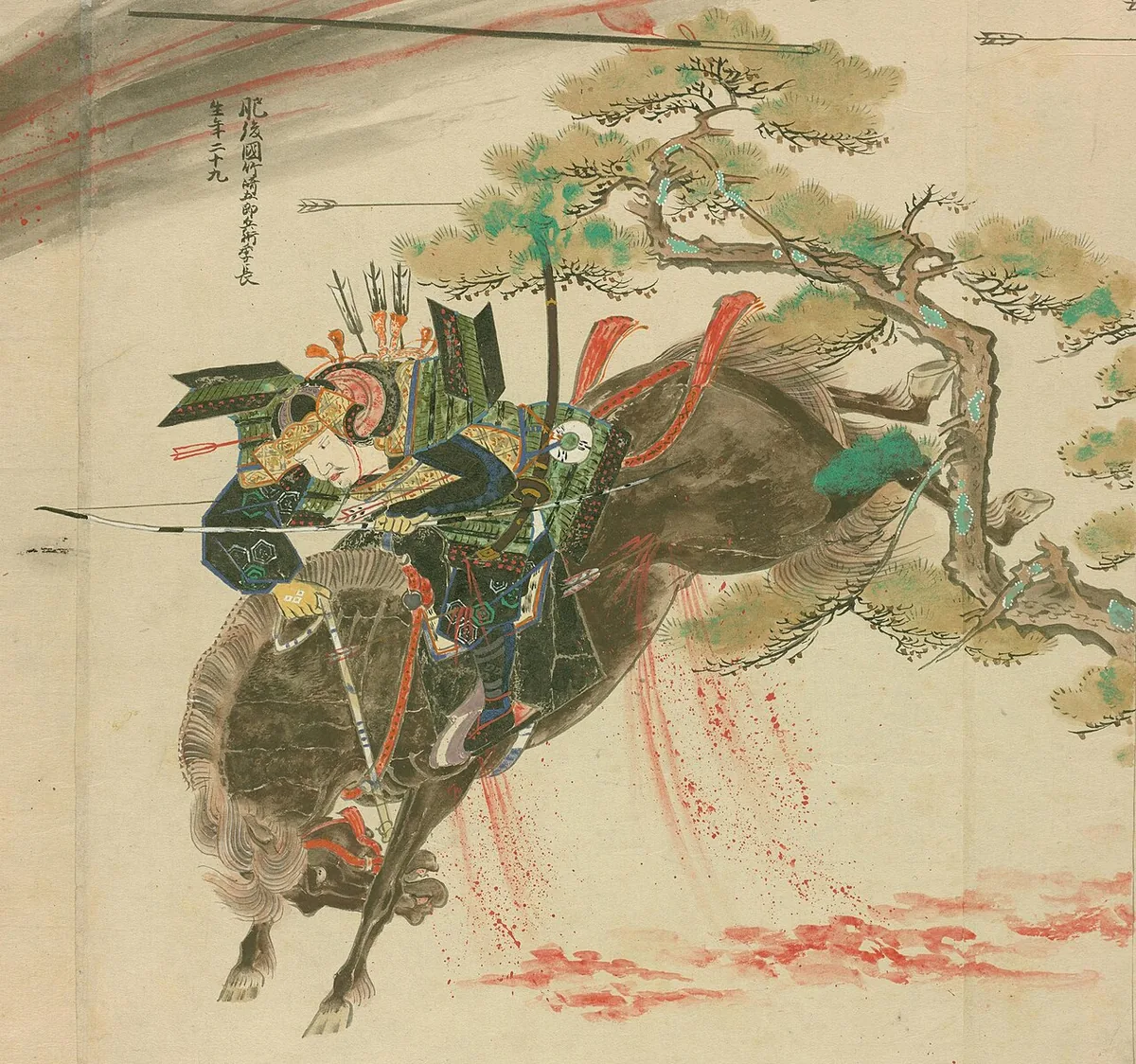
Mōko Shūrai Ekotoba, detail from the first handscroll, c. 1293 (reproduction). Holding institution not named on Commons. · Public domain · Source page
A warrior of Higo who fought at Torikai in 1274, asked Kamakura for a reward, and commissioned the scroll that tells his story.
- Born: Not known
- Died: Not known: the sources disagree
- Won: A petition to Kamakura for a reward, which one account says succeeded
Paraphrase: he says he will be the first to fight.
A decision point
You are Takezaki Suenaga, a warrior from Higo, on the beach at Torikai.
19 November 1274, Torikai beach
The enemy has landed, and its army is bigger than yours. You can see its numbers only from a distance, and the fighting is hard.
Word comes down the line: pull back with your men.
You want to be noticed for your service. A reward depends on it.
What do you do?
- Obey the order and fall back with your men. Probably you live. But the beach is lost, and no one at the front sees what you did.
- Disobey the order and stay at the front to fight. The immediate result: you fight at the front, and the warriors around you see it. Later you petition Kamakura for a reward.
- Hold your place and wait for the enemy to come to you. Probably you keep your men together and fight from a fixed place. But the enemy may flank you, and your deeds are harder to claim.
What really happened
Disobey the order and stay at the front to fight.
The scroll, as Thomas D. Conlan reads it, says Takezaki disobeyed the order to pull back. He stayed at the front and said he would be the first to fight. The scroll he later commissioned tells the story in his own favour.
A warrior who wanted a reward had reason to be seen at the front. He later petitioned the Kamakura government, and according to one account the petition succeeded. No figure for any reward survives.
About 20 November
The way back
The invaders fall back to their ships and leave, about 20 November. How long the fighting lasted is disputed: some sources say one day, others say several.
The Yuan history records a great storm that wrecked many warships. Some scholars give a Japanese account of the storm very low credibility.
Did the storm send them home? We come back to that question in the next chapter.
What we really know
Source: A scroll made to be seen
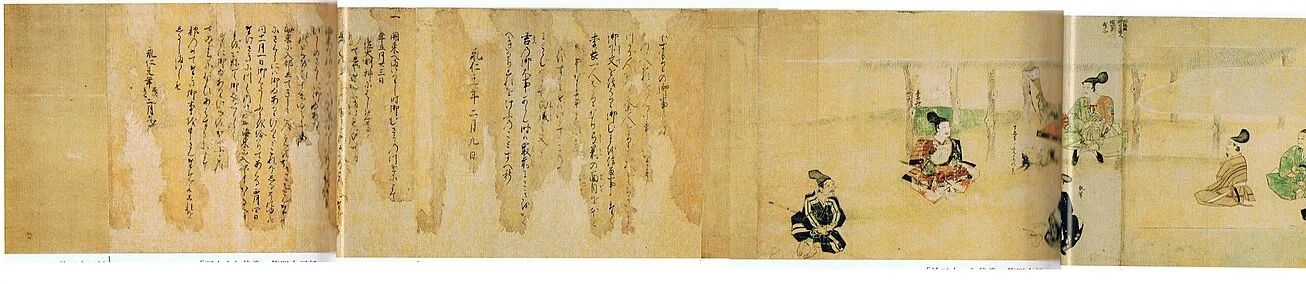
Mōko Shūrai Ekotoba, second handscroll, c. 1293 (reproduction). Holding institution not named on Commons. · Public domain · Source page
Mōko Shūrai Ekotoba (Illustrated Account of the Mongol Invasion), c. 1293. The artist is unknown; Takezaki Suenaga commissioned it.
Two handscrolls, one for each invasion, with text and pictures. Takezaki had them made to show his own service.
- Who paid for it, and what did he want from it? Takezaki Suenaga paid. He wanted credit for his service, and a reward. The scroll shows him as the hero.
- When was it made, compared with the battles? About 1293: 19 years after 1274 and 12 years after 1281. Memory and self-interest had time to shape it.
- Who drew it? Nobody knows. The artist is unknown, so we cannot ask him what he saw.
Myth
A divine wind alone saved Japan.
The truth
Not quite. Thomas D. Conlan argues that Japan’s warriors could hold the coast without help from the weather, and that the idea of a divine wind grew up after the battles.
The evidence
A storm did hit the fleet in 1281, and the stone wall at Hakata Bay kept the invaders from landing there. The weather and the defence both mattered. The word ‘alone’ is the mistake.
Source: The Yuan history, written later
Paraphrase: a great storm arose, and many warships were dashed against the rocks.
Written long after 1274, in China, by people who did not see the battle. It is one of the main written sources for a storm in 1274.
- Who wrote this, and when? Ming-dynasty scholars, long after the Yuan dynasty had fallen. They wrote the history of a dynasty their own had replaced.
- Did the writer see the storm? No. It is a later summary, so it cannot tell us exactly what happened.
- Does it prove that the storm saved Japan? No. It records a storm. It does not show that the storm, rather than the warriors, decided the outcome.
A decision point
You are Kublai Khan.
After 1274, before the summer of 1281
Your first invasion failed. The fleet pulled back from Japan, and in 1275 five of your envoys were beheaded in Kamakura.
Reports say the Japanese are building a stone wall along the bay where your army landed.
Your advisers offer three paths: give up on Japan, send one fleet from Korea, or send two fleets that join at sea. Some also advise waiting.
What do you order?
- Give up on Japan and send no fleet. Probably the cost stops, and the wall is never tested. But Japan’s refusal goes unanswered, and your court may lose its reason to press the matter.
- Send one fleet from Korea, and land it fast before the defences grow. Probably one fleet can raid, but not hold a beach. Its landing depends on how the wall and the Japanese warriors respond.
- Send two fleets, one from Korea and one from southern China, to join each other. The immediate result: the Korean fleet is held off by the wall at Hakata Bay and moves on to Matsuura. A storm in mid-August then wrecks most of the ships.
- Wait a season, and attack when your fleet is larger. Probably the defences grow in the meantime, so waiting helps Japan more than you.
What really happened
Send two fleets, one from Korea and one from southern China, to join each other.
The plan was two fleets: about 900 ships from Korea and about 3,500 from southern China, meant to join. The fleet from Korea was held off by the stone wall at Hakata Bay and moved on to Matsuura. A storm in mid-August then wrecked most of the ships off Takashima. The numbers are disputed.
No record gives Kublai’s reasons. The two-fleet plan is recorded in Chinese and Korean sources, and its two fleets were meant to join.
What followed, and the quiz
After
Japan held
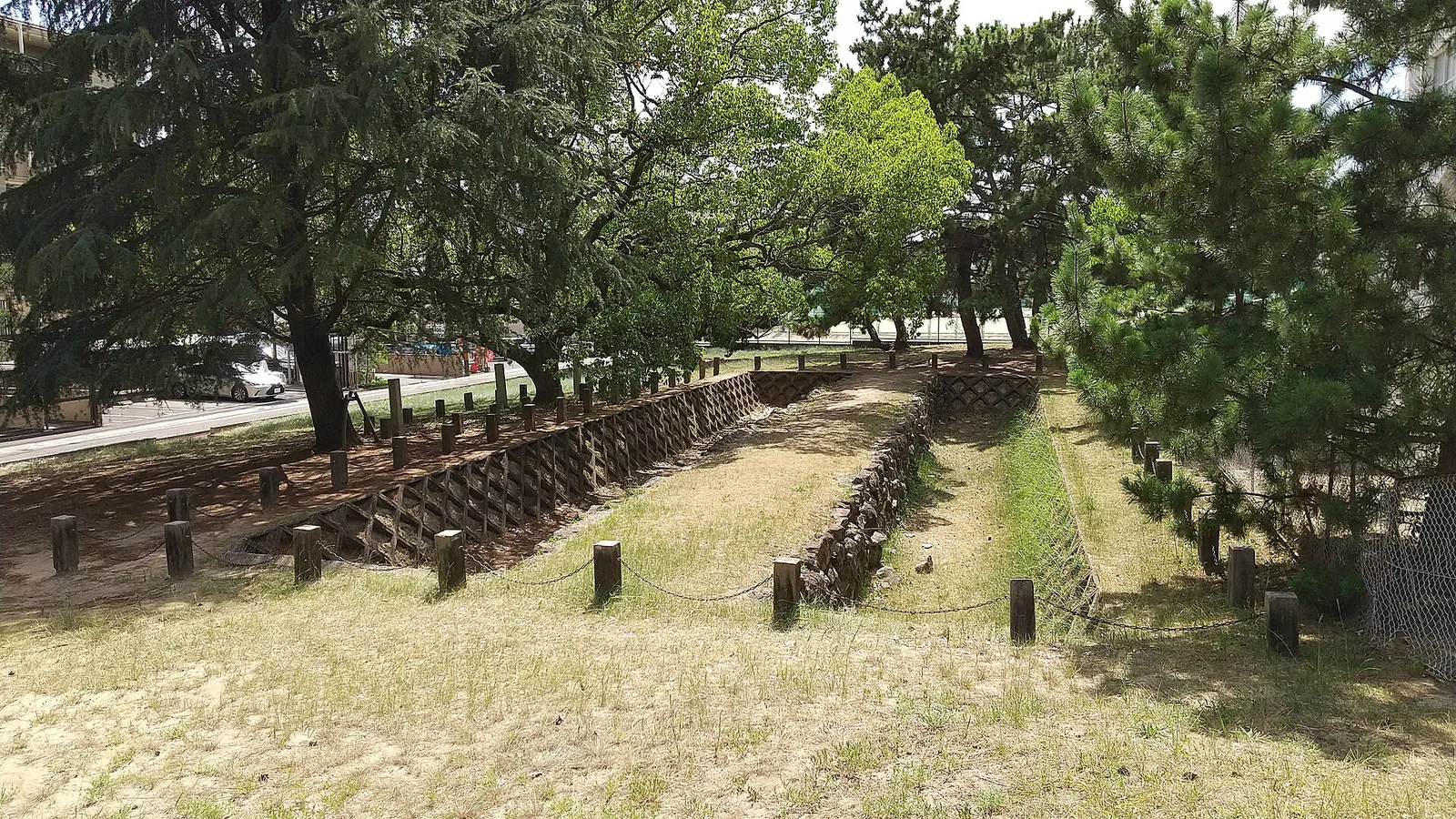
Photo: Hirho, 2021. Genkou-Bourui Stone-Wall at Hakata Bay, Nishijin-Chiku, Fukuoka · CC BY-SA 4.0 · Source page
1293
Neither invasion took Japan. The fleets went home, or what was left of them did.
Takezaki asked Kamakura for a reward for his service. According to one account, his petition succeeded.
In 1293 the scroll was finished. It is one of our best pictures of the two battles, and it is a warrior’s account, made to show his service.
The stone wall at Hakata Bay stayed. Its stretches can still be seen today.
From a letter to a scroll
- 1268 Kublai’s letter reaches Kyoto. Japan sends no reply.
- 1274 The first invasion. The army lands in Hakata Bay on 19 November and withdraws about 20 November.
- 1275 Five envoys from Kublai are beheaded in Kamakura.
- 1276 Work begins on the stone wall along Hakata Bay.
- 1281 The second invasion. In mid-August a storm wrecks most of the fleet off Takashima.
- 1293 The scroll is finished. Its own inscription dates it to 1293.
Was it the wind?
How much did the weather matter, compared with the warriors and the wall?
- Thomas D. Conlan, In Little Need of Divine Intervention (2001) The defence mattered most. Japan’s warriors could hold the coast without the weather. The invasions were smaller than they are often said to be, and the idea of a divine wind came later.
- Kenzo Hayashida, as reported in Archaeology magazine (2003) The storm was real and decisive in 1281: a wreck has been found off Takashima. But the fleet was exaggerated, and the storm sank hundreds of ships, not thousands.
What would settle it? More dated wreck sites, a count of the ships at each site, and a close reading of the Chinese and Japanese records.
Check yourself
What did Japan do when Kublai’s letter reached the court in 1268?
Answer: It sent no reply.. Right. The sources agree that no reply was sent, though they disagree about who chose the silence.
Check yourself
What did Takezaki Suenaga do when the order to pull back came?
Answer: He disobeyed and stayed at the front to fight.. Right. As Conlan reads the scroll, he disobeyed the order to pull back and stayed at the front.
Check yourself
What does the Yuan history say about the withdrawal in 1274?
Answer: It records a great storm that wrecked many warships.. Right. That is what it records, although historians disagree about how far to trust it.
Check yourself
What did the stone wall at Hakata Bay do in this story?
Answer: It kept the invaders from landing at Hakata, so they tried Matsuura.. Right. The wall kept the invaders from landing at Hakata, and they moved on to other places.
Check yourself
Who argues that the defence could hold without divine help?
Answer: Thomas D. Conlan, in his 2001 book.. Right. Conlan argues the defence was strong enough without the weather, and that the divine-wind idea came later.
Check yourself
Why do the sources disagree about how big the 1274 army was?
Answer: Because the figures come from later writers and from modern estimates.. Right. Some figures come from old records written long after the battle, and others are modern estimates.
Terms
- kamikaze ‘Divine wind’ in Japanese: the name given to the storms said to have saved Japan. When the name first appeared is not certain.
- regent The person who runs the government in the ruler’s name. In Kamakura the regent was the head of the Hōjō family; Tokimune held the post from 1268 to 1284.
- shogunate The warrior government of Japan. In this story it sits in Kamakura.
- tribute A yearly payment that a weaker ruler makes to a stronger one so that he will not be attacked.
- envoy A messenger sent by one ruler to another, to carry a letter or to negotiate.
- Yuan dynasty The dynasty that Kublai Khan founded in 1271.
- Genkō Bōrui A stone wall built along Hakata Bay from 1276, to stop landings. It was about 20 km long and, by one account, about 2 m high.
- handscroll A long painted scroll, unrolled and viewed a section at a time.
- Kublai Khan The Mongol ruler who sent Japan a letter asking for friendship and tribute. He founded the Yuan dynasty.
- Hōjō Tokimune The head of the warrior government at Kamakura during the invasions, the regent. Some accounts credit him with the decision not to reply.
- Takezaki Suenaga A warrior from Higo in Kyushu who fought in the invasion. He asked the Kamakura government for a reward.
- Thomas D. Conlan A historian who studies the two invasions. He argues the idea of a divine wind grew up after the battles.
- Hakata Bay A bay on the north coast of Kyushu. The fleet came to it, and the Japanese built a stone wall there.
- Dazaifu A town inland, away from the coast. Kublai's letter reached it before it went on to the court at Kyoto.
- Kamakura The place where Japan's warrior government sat. Its head was the regent.
- Kyoto The seat of the emperor and his court in Japan.
- Kyushu A large island in southern Japan, close to Korea. Its warriors faced the invaders.
- Goryeo The kingdom on the Korean peninsula at the time of the invasions. Its fighters joined the Mongol fleet.
- Tsushima An island between Korea and Japan. The invaders attacked it at the start of the first invasion.
- Iki An island near Tsushima. The invaders attacked it and took it.
- Hachiman A Japanese god of warriors. According to one source, the storms of the invasion were linked to an appeal to him.
- Mongols A nomadic people from the steppes of East Asia. Under Kublai Khan they conquered large parts of Asia.
- Classical Chinese The old written language of China, used for official letters and books.
- Takashima An island off the coast. The wreck of a sunken ship from the 1281 invasion was found off it.
- Matsuura A place on the Kyushu coast, where the fleet from Korea moved after it was held off at Hakata Bay.
- Torikai A beach in Hakata Bay where most of the invading army landed.
- Higo A province on Kyushu. Takezaki Suenaga came from there.
Sources
- Mōko Shūrai Ekotoba (Illustrated Account of the Mongol Invasion), two handscrolls, c. 1293, artist unknown, commissioned by Takezaki Suenaga; held by the Imperial Household’s Museum of the Imperial Collections
- Yuan shi (元史), the Yuan dynastic history, compiled by Ming-dynasty scholars long after the events
- Thomas D. Conlan, In Little Need of Divine Intervention: Takezaki Suenaga’s Scrolls of the Mongol Invasions of Japan (Cornell East Asia Series 113, 2001)
- Stephen Turnbull, The Mongol Invasions of Japan 1274 and 1281 (Osprey Campaign 217, Osprey Publishing, 2010)
Image credits
- Mōko Shūrai Ekotoba, reproduction, c. 1293. National Diet Library Digital Collections · Public domain · Source page
- Mōko Shūrai Ekotoba, detail from the first handscroll, c. 1293 (reproduction). Holding institution not named on Commons. · Public domain · Source page
- Mōko Shūrai Ekotoba, second handscroll, c. 1293 (reproduction). Holding institution not named on Commons. · Public domain · Source page
- Photo: Hirho, 2021. Genkou-Bourui Stone-Wall at Hakata Bay, Nishijin-Chiku, Fukuoka · CC BY-SA 4.0 · Source page


