The Battle of Kadesh
Decisions, questions and your own progress, in the app
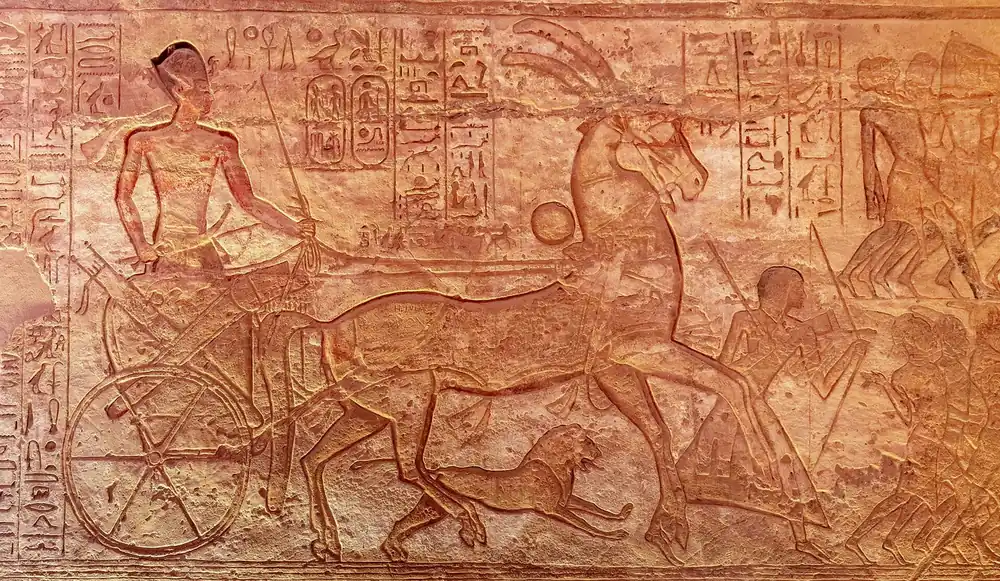
Ramesses II on his chariot at Kadesh, relief at Abu Simbel · Diego Delso · CC BY-SA 4.0 · Source page
Two empires collide
Around 1274 BC, Egypt and the Hittite Empire fought for control of Syria. Pharaoh Ramesses II marched north with four army divisions. The Hittite king Muwatalli II waited near the city of Kadesh.
A trap is sprung
Two captured nomads told Ramesses the Hittite army was far away. They were lying. Hittite chariots smashed into one Egyptian division and nearly overran the pharaoh's camp.
A sea of chariots
about 5,000
Historians think about 5,000 chariots took part in total. That makes Kadesh one of the largest chariot battles ever fought. Egyptian chariots were light and fast, while Hittite chariots usually carried three men.
Both sides claim victory
Egyptian reinforcements arrived, and Ramesses fought his way out. Neither side won a clear victory, and the Hittites kept Kadesh. Back home, Ramesses carved his version on temple walls as a glorious triumph.
An early peace treaty
About 16 years later, Egypt and the Hittites signed a peace treaty. It is one of the oldest peace treaties ever found. Both sides' versions survive, in Egyptian temple carvings and on Hittite clay tablets.
Why it still matters
A copy of the treaty hangs at United Nations headquarters in New York. It reminds visitors that even old enemies can agree to keep the peace.
Review question
What tricked Ramesses II before the battle?
Answer: False reports from two captured nomads. Two nomads claimed the Hittite army was far away. In fact it was hiding near Kadesh, ready to attack.
Why is Kadesh famous beyond the fighting?
Answer: It led to one of the oldest known peace treaties. About 16 years after the battle, the two empires signed a peace treaty. It is one of the oldest known, and both sides' versions survive.
Image credits
- Ramesses II on his chariot at Kadesh, relief at Abu Simbel · Diego Delso · CC BY-SA 4.0 · Source page
