Judah’s wars and his death at Elasa
The Temple is free, but the war is not over. Judah wins again and again, until the morning when, his book says, only 800 men stayed with him.
Decisions, questions and your own progress, in the app
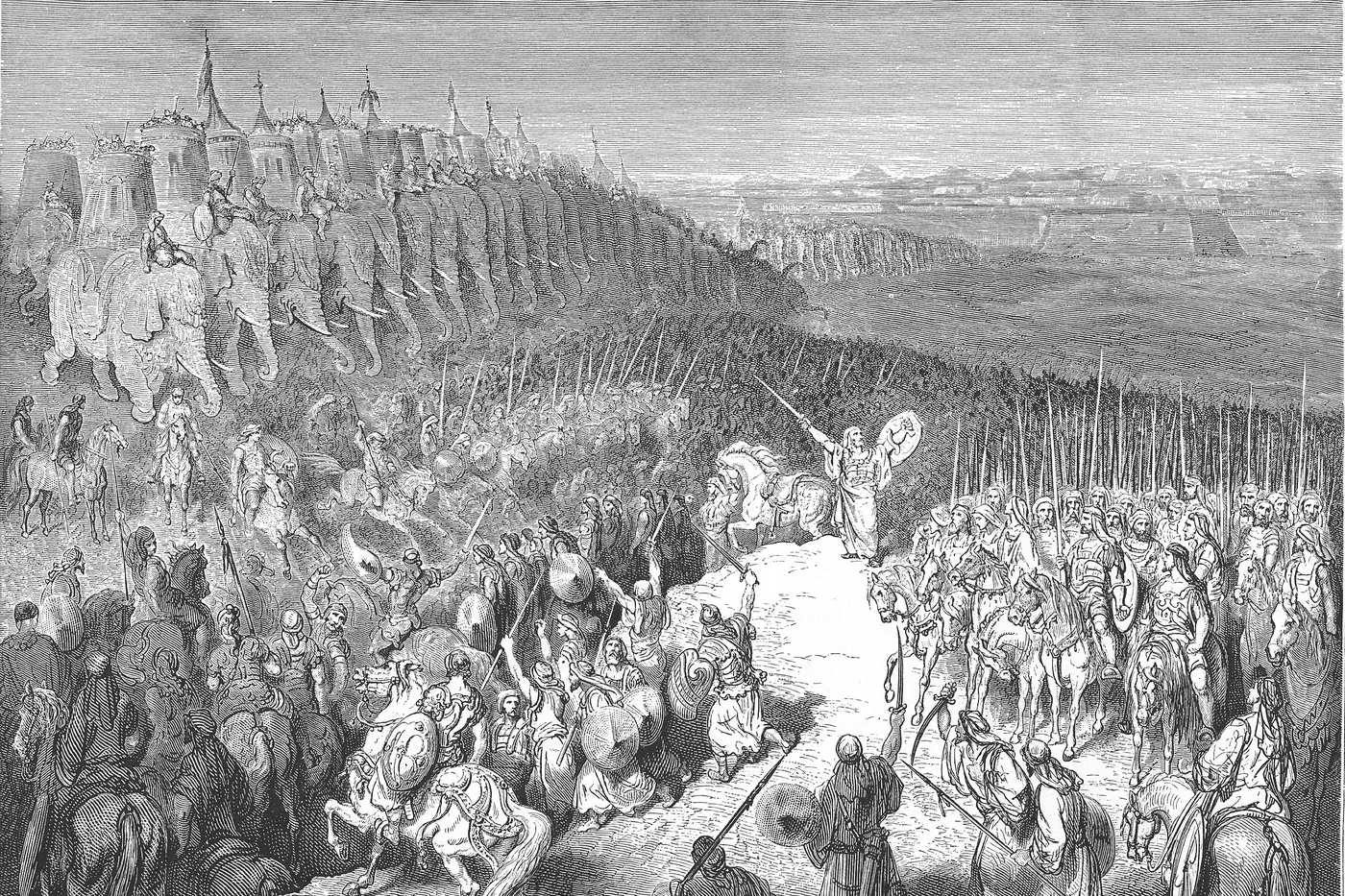
Gustave Doré, Judas Maccabeus before the Army of Nicanor, engraving for La Sainte Bible, 1866 · Public domain · Source page
Eight hundred
Yesterday 3,000. This morning 800.
Spring 160 BC, a stony plateau north of Jerusalem. Judah Maccabee counts his men. When he pitched camp at Elasa, says the book that tells his story, he had 3,000. Now, with the king’s army in sight, he has 800. His men beg him to slip away and fight another day.
Four years earlier this man led a rebel army into Jerusalem and lit the Temple’s lamp again. He has beaten one royal general after another. Why is he still fighting? And why will he not leave?
This lesson follows Judah’s last four years: rescues and raids, a boy king with war elephants, a peace that gave the Jews what they had risen for, an embassy to Rome, and the morning at Elasa. And always: how far can we trust the numbers?
Judah Maccabee
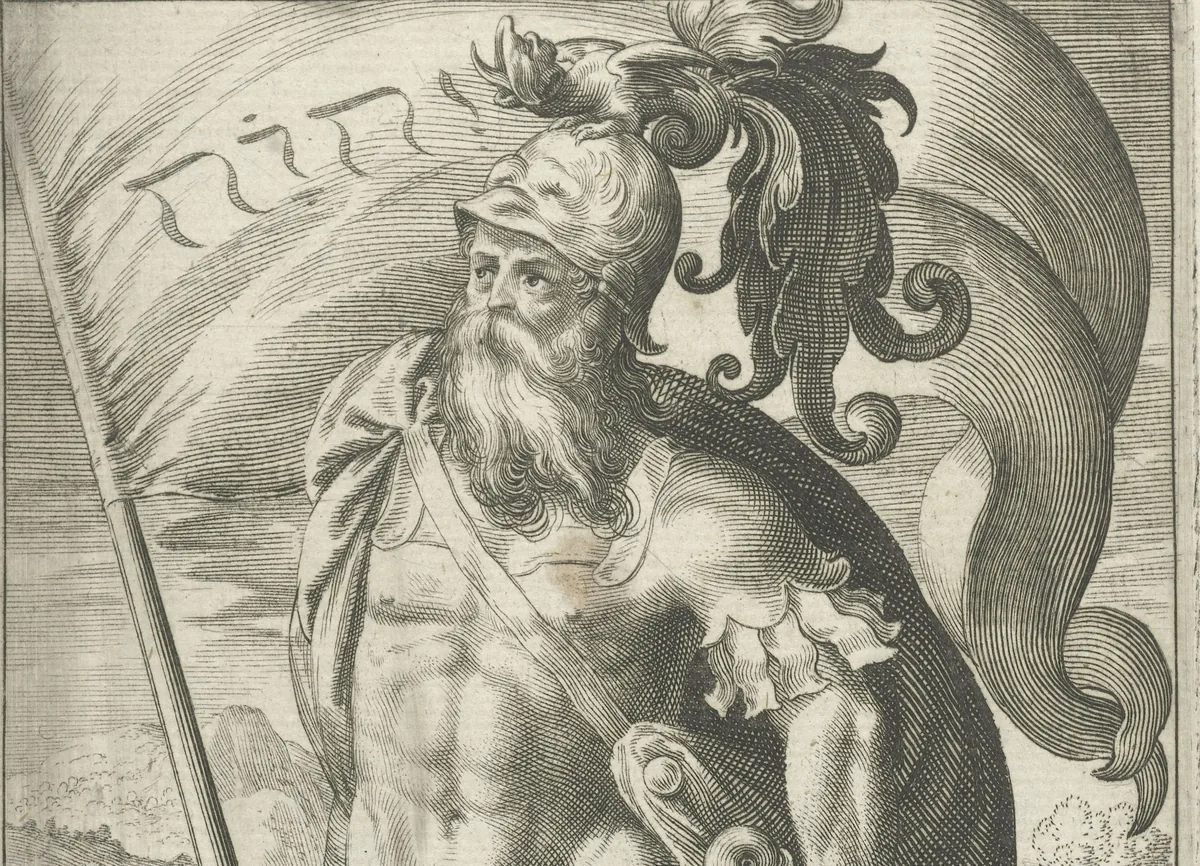
Nicolaes de Bruyn, Judas Machabeus, plate 6 of The Nine Worthies, c. 1600. Rijksmuseum, Amsterdam · CC0 · Source page
The third son of a country priest, who won back the Temple and would not stop fighting until the day he had too few men.
- Born: Unknown, Jerusalem or Modiin; the family lived in Modiin
- Died: 160 BC, Elasa, north of Jerusalem, killed in battle; buried in the family tomb at Modiin
- Won: Beth Horon, about 166 BC; Emmaus, 165 BC; Beth Zur, 164 BC; The Gilead campaign, 163 BC; Adasa, 161 BC
- Lost: Beth Zechariah, 162 BC; Elasa, 160 BC
“God forbid that I should do this thing, and flee away from them: if our time be come, let us die manfully for our brethren, and let us not stain our honour.”
Our witnesses
A family’s book and a Temple’s book
Almost everything we know about Judah comes from two books. 1 Maccabees was written in Hebrew in Judea around 100 BC, some 60 years after his death, by an admirer of his family, the Hasmoneans, who by then ruled Judea. It is full of exact places and dates, but its battle numbers are shaped by one lesson: God saves by the few.
2 Maccabees was written in Greek, a shortened version of a lost five-volume history by Jason of Cyrene, a Jew from North Africa. Its heart is the Temple; it admits no defeat of Judah, and it ends before his death.
Josephus, a Jewish priest writing in Rome more than 250 years later, mostly retells 1 Maccabees. No Seleucid account survives. So keep asking: who wrote this, and why?
After the Temple
Background
The altar is rebuilt. The war is not over
In Kislev (December) 164 BC Judah and his men rededicated the Temple. At about the same time, far to the east, King Antiochus IV died. On his deathbed he named his friend Philip guardian of his son, but Lysias, who governed at Antioch, moved first and crowned the boy, aged about nine, as Antiochus V.
The empire of the Seleucids was weakened, not gone. In Jerusalem itself, on a hill beside the Temple, the Acra still stood, with a royal garrison and Hellenizers ready to fight for the king.
163 BC
Rescue beyond the Jordan
8,000
Letters reach Jerusalem: the Jews of Gilead are besieged in the fortress of Dathema, and the Jews of Galilee are under attack from Acre, Tyre and Sidon. Simon marches to Galilee with 3,000 men. Judah and Jonathan cross the Jordan with 8,000. They storm towns, break the siege of Dathema, and bring every Jew of Gilead, “from the least unto the greatest”, home to Jerusalem. It was an evacuation, not a conquest.
The book does not hide the cost: in several towns, it says, Judah “slew all the males”. Meanwhile two commanders left behind, Joseph and Azariah, attacked Jamnia against orders and lost about 2,000 men. The author’s explanation: they “came not of the seed of those, by whose hand deliverance was given unto Israel”. This is the book of one family.
A decision point
You are Judah Maccabee.
Jerusalem, late 163 BC
You are back from Gilead. The Temple is yours, but beside it stands the Acra, whose garrison and Hellenizers harass anyone going up to the Temple.
The king is a child. Lysias, who rules in his name, is far away in Antioch and busy with rivals at court. A year ago he came at you once already, and withdrew.
What do you do?
- Besiege the Acra and try to take it now, while Antioch is weak. If the siege works, all Jerusalem is yours. But the besieged can send to the king for help, and an attack on a royal fortress invites a full war.
- Leave the Acra isolated and fortify the Temple Mount and Beth Zur. Probably less provocation, and time to grow stronger. But the garrison stays in the heart of the city, and your followers may ask why you stopped halfway.
- Approach Lysias and offer quiet in return for recognition of the Temple and the law. Perhaps an early agreement. But you beat Lysias a year ago, and it is not clear he can afford to look weak in front of his rivals at court.
What really happened
Besiege the Acra and try to take it now, while Antioch is weak.
Judah besieged the Acra with siege mounds and engines. Some of the besieged and “ungodly men of Israel” slipped out to the young king. Their complaint brought the whole royal army.
1 Maccabees says the Acra’s men “shut up the Israelites round about the sanctuary”. A boy king and a divided court looked like an opening. Bar-Kochva sees the siege as the provocation that forced the empire to send its main army: a reasonable step that led to escalation.
The boy king’s elephants
162 BC
The regent marches south
Lysias comes again in person, and this time he brings the boy king, the royal army and war elephants. Once again they come up from the south, through Idumea, and besiege Beth Zur, the fortress guarding the road to Jerusalem.
Judah leaves the siege of the Acra and goes to meet them. He camps at Beth Zechariah, about 9 kilometres north of Beth Zur, astride the road to Jerusalem. And this is a sabbatical year: the fields were not sown, and the stores are running low.
Lysias
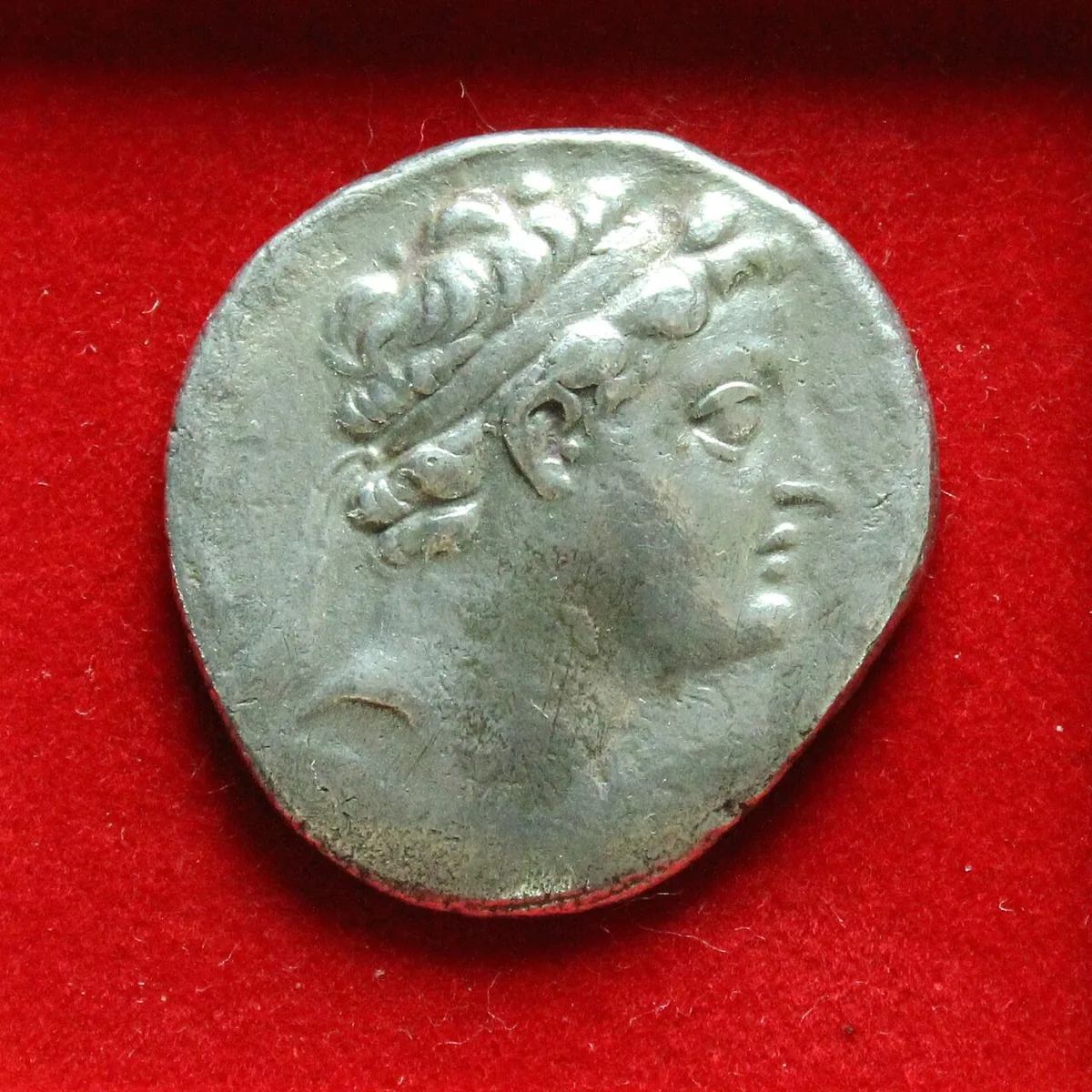
Tetradrachm of Antiochus V Eupator, Antioch mint, 164–162 BC. Photo: Samu0450 · CC BY-SA 4.0 · Source page
The regent who ruled for a boy king, won the biggest battle of the war, and gave the Jews back their laws to save his own power.
- Born: Unknown, “Of the blood royal”, says 1 Maccabees; place unknown
- Died: 162 BC, Near Antioch, put to death with the boy king on the orders of Demetrius I
- Won: Beth Zechariah, 162 BC; Antioch, against Philip, 162 BC
- Lost: Beth Zur, 164 BC
“Now therefore let us be friends with these men, and make peace with them… that they shall live after their laws, as they did before: for they are therefore displeased… because we abolished their laws.”
Beth Zechariah
162 BC (some date it to 163)
Beth Zechariah, between Beth Zur and Jerusalem
Judah’s army
- Commanders: Judah Maccabee, Eleazar Avaran
- Strength: No figure (Ancient sources); Several thousand at least; some think far more (Modern estimates)
- Losses: No figure; Eleazar among the dead (1 Maccabees)
Royal army
- Commanders: Lysias, Antiochus V (a boy)
- Strength: 100,000 foot, 20,000 horse, 32 elephants (1 Maccabees 6:30); 110,000 foot, 5,300 horse, 22 elephants, 300 chariots (2 Maccabees 13:2); 50,000 foot, 5,000 horse, 80 elephants (Josephus, Jewish War); Under 50,000 foot and 5,000 horse; few elephants, perhaps 8 (Bar-Kochva)
- Losses: 600 (1 Maccabees); 4,000 in a night raid (2 Maccabees)
The Greek historian Polybius describes the core of the royal army on parade at Daphne near Antioch in 166 BC: about 41,000 foot, about 9,000 horse and 36 elephants. An army of 120,000 for a campaign in Judea is not credible.
Outcome: Royal victory. Judah falls back, Beth Zur surrenders, and Jerusalem is besieged.
2 Maccabees admits no defeat at all. Josephus’s “80 elephants” are probably a copying error for 8.
The battle of Beth Zechariah
162 BC, from early morning (1 Maccabees 6:33)
The royal army of the regent Lysias, in the name of the boy king Antiochus V, climbs north with war elephants. Judah Maccabee camps at Beth Zechariah, on the road to Jerusalem, where the road narrows into a defile.
After 1 Maccabees 6:28–47 and Josephus (Antiquities, book 12; Jewish War, book 1). Site and reconstruction after Bezalel Bar-Kochva: the royal army came north from Beth Zur through the Valley of Berakhah and into a narrow defile below Beth Zechariah (Khirbet Beit Zakariyya, near modern Alon Shvut); Judah held the heights at its head and the spurs on both sides. The line of the ancient road, the size of Judah’s army and the order of events (Beth Zur may have fallen before the battle) are uncertain. Terrain from modern elevation data; depths exaggerated; positions approximate.
Phases of the battle
- Dawn: the king’s army comes up The royal army climbs north out of the Valley of Berakhah. 1 Maccabees says each elephant marched with 1,000 foot soldiers and 500 horsemen. Light troops move along the ridges on both sides.
- Into the defile The valley narrows to a defile 80 to 150 metres wide. The royal army must squeeze into a column of elephants and phalanx blocks. On the ridges, its flank guards run into Judah’s men.
- Eleazar and the elephant Judah’s army charges the head of the column, and 1 Maccabees says 600 of the king’s men fall. Judah’s brother Eleazar sees an elephant taller than the rest, in royal harness, and thinks the king is riding it. He cuts his way to it, stabs it from beneath, and is crushed as it falls.
- Judah gives way The column keeps coming. The Jews, “seeing the strength of the king, and the violence of his forces, turned away”, says 1 Maccabees, in a single sentence. Judah falls back north: to Jerusalem in 1 Maccabees and in Josephus’s Antiquities, to the hills of Gophna in his Jewish War. Beth Zur, out of food, surrenders.
The strategy
- Judah’s army: Judah held the heights at the head of the defile and the spurs on both sides, to block the road to Jerusalem and strike the column from above as it entered the narrow ground. He charges the head of the column.
- Royal army: The royal army aimed to march straight up the road from the Valley of Berakhah to Jerusalem, with the elephants and phalanx at the head. Flank guards on the ridges on both sides were meant to shield the column from attack from the heights.
What decided it: What decided it was that the royal column, with its elephants and phalanx, kept climbing the defile after Judah’s charge had struck its head. Judah’s men turned back before the strength of the army.
Myth
Seleucid armies routinely made their war elephants drunk on wine before battle.
The truth
1 Maccabees says they “shewed them the blood of grapes and mulberries” to rouse them for battle, probably meaning they offered them the juice, perhaps fermented, to drink. But no other battle account mentions it, and a recent study (Gerrard, 2023) concludes that drunk elephants were almost certainly never a standard practice: a frenzied elephant endangered its own army as much as the enemy.
The evidence
Josephus leaves the detail out. Aelian, some 350 years later, says war elephants drank rice or cane wine; and in 3 Maccabees, a later legend, Ptolemy IV makes his elephants drunk to trample Jews, not to fight a battle.
The siege
Hunger on the Temple Mount
The royal army reaches Jerusalem and besieges the fortified Temple Mount. But food runs out: it is the sabbatical year, and the refugees from Gilead and Galilee “had eaten up the residue of the store”. Men slip away, “every man to his own place”, until only a few are left on the mount.
Then news reaches Lysias from Antioch: Philip, the man the dead king named guardian, is back from the east with the army, and means to take over the government.
A decision point
You are one of the leaders on the Temple Mount.
Jerusalem, summer 162 BC
The food is nearly gone, and most of the men have left. The army that beat you at Beth Zechariah is at the walls.
A messenger from Lysias brings an offer: peace, and an oath that you may “live after your laws, as before”. You do not know why he is in a hurry.
What do you do?
- Accept the peace. Freedom to keep the law is what we rose for. The defenders come out alive and the decrees are gone. But the king keeps the Acra and the right to appoint the high priest, and the walls of the mount are at his mercy.
- Refuse and hold out. If Lysias is in a hurry, something threatens him. Perhaps Lysias would have had to leave anyway. But with few men and almost no food, the mount might fall first, and the Temple with it.
- Accept, but demand guarantees: the walls stay, the high priest Menelaus goes, and the Acra is given up. Fair demands, but starving men are in no position to bargain.
What really happened
Accept the peace. Freedom to keep the law is what we rose for.
The defenders accepted the oath and came out. The king entered, saw how strong the place was, broke his oath and pulled down the wall. But Menelaus, the high priest who had gone along with the persecution, was put to death, and the Jews kept their Temple and their ancestral laws.
Hunger is reason enough. But the peace also gave what many had risen for: the law and the Temple. Tcherikover and Bar-Kochva see it as the real end of the religious war. From now on the question was who would rule Judea, and Judah, who still had an army, would not give that up.
A new king, a new high priest
162–161 BC
A hostage escapes from Rome
Lysias beat Philip at Antioch, but not for long. In the autumn of 162 BC Demetrius, the boy king’s cousin, who had been held in Rome for years as a hostage, escaped. He landed on the Syrian coast; the army went over to him and handed him Lysias and the boy. “Let me not see their faces”, he said, according to 1 Maccabees, and they were put to death.
Alcimus, a priest who wanted to be high priest, came to the new king with Jews who accused Judah of driving them from their land. Demetrius made Alcimus high priest and sent him to Judea with an army under Bacchides, governor of the lands west of the Euphrates.
A split
Sixty men in one day
60
Not every Jew wanted what Judah wanted. The Hasideans and a company of scribes go out to seek peace with Alcimus. Their reason, in 1 Maccabees: “One that is a priest of the seed of Aaron is come with this army, and he will do us no wrong.” The decrees were gone; a lawful priest could be obeyed.
Alcimus swore peace to them, then seized sixty of them and killed them in a single day. 2 Maccabees, by contrast, makes Judah himself the leader of the Hasideans. The two books disagree about who stood where, but both show the same thing: “the Jews” were not one side.
161 BC
Nicanor’s Day
13 Adar
Alcimus could not rule without Bacchides’s army, so Demetrius sent a new general, Nicanor: according to Josephus, the friend who had escaped from Rome with him, and so probably not the Nicanor beaten at Emmaus. He went up to the Temple Mount and threatened the priests: unless Judah was handed over, he would burn the Temple. Then he went down to Beth Horon to meet reinforcements from Syria. Judah camped at Adasa, on the road Nicanor would take back to Jerusalem, with 3,000 men according to 1 Maccabees.
On 13 Adar (March) 161 BC Nicanor was the first to fall in the battle, and his army broke and fled. Nicanor’s head and right hand were hung up facing Jerusalem, and the people made the day a feast: Nicanor’s Day. 2 Maccabees ends here, in victory. What came next, it does not tell.
A decision point
You are Judah Maccabee.
Jerusalem, 161 BC, after Adasa
You have beaten Nicanor, but Demetrius will send a bigger army. You hear about Rome: it beat Antiochus III, and in 168 BC it ordered Antiochus IV out of Egypt through a single envoy. And its Senate has not yet recognised Demetrius, who escaped from Rome against its will.
But Rome is weeks away by sea, and helps when helping pays. And an alliance with foreigners may anger some of your own people.
What do you do?
- Send an embassy to Rome and ask for an alliance. Recognition by Rome turns your people from “rebels” into a nation, and might deter Demetrius. But nothing guarantees Rome will do more than talk.
- Leave Rome alone. Prepare on your own, in the hills. No risk of provoking Demetrius or of leaning on foreigners. But you face an empire alone.
- Try to reach terms with Demetrius: loyalty to the king in return for quiet. Perhaps quiet for a while. But Demetrius has already chosen Alcimus, and the man who killed his general would struggle to win his trust.
What really happened
Send an embassy to Rome and ask for an alliance.
Judah sent two envoys to Rome, Eupolemus son of John and Jason son of Eleazar. According to 1 Maccabees the Senate made a treaty of friendship and mutual help, written on tablets of bronze, and wrote to Demetrius: “Wherefore hast thou made thy yoke heavy upon our friends and confederates the Jews?” No Roman soldier came. Within a year Bacchides was back.
An alliance with Demetrius’s powerful enemy looked like a cheap shield. The historian Erich Gruen sees a typical Roman gesture, an amicitia that obliged Rome to nothing. Judah’s brothers renewed it again and again. A century later, in 63 BC, a Roman army entered Jerusalem.
Elasa
Spring 160 BC
Bacchides returns
When Demetrius hears of Nicanor’s death, he sends Bacchides and Alcimus again, this time with “the chief strength of his host”. On their way south they kill many people at Arbela in Galilee. In the month of Nisan they camp before Jerusalem, then move to Berea, north of the city: 20,000 foot and 2,000 horse, according to 1 Maccabees.
Judah is camped at Elasa, about two kilometres away, with 3,000 “chosen men”. Seeing the size of the army in front of them, says the book, many slip out of the camp, until only 800 are left.
A decision point
You are Judah Maccabee.
Elasa, north of Jerusalem, April 160 BC
Bacchides’s army is camped half an hour’s walk away, after killing villagers on its way. Between the camps lies an open plateau, good ground for a phalanx and for cavalry.
The men who are left beg you: “We shall never be able: let us now rather save our lives, and hereafter we will return with our brethren, and fight against them: for we are but few.”
What do you do?
- Withdraw to the hills or the desert, gather men, and fight another day. You would probably survive, as Jonathan did after you. But the villages north of Jerusalem are left to Bacchides.
- Fight a short delaying action, then slip away when the pressure grows. It is hard to break away from cavalry on open ground. You might lose men and gain nothing.
- Attack at once, and aim at Bacchides himself. At Adasa, Nicanor’s death broke his army. If Bacchides falls, the same may happen. If not, you are too few, on ground that suits the enemy.
What really happened
Attack at once, and aim at Bacchides himself.
Judah attacked. He broke Bacchides’s right wing and chased it, but the left wing came up behind him. Judah was killed, and the rest fled.
1 Maccabees presents a choice of honour: “if our time be come, let us die manfully for our brethren”. Bar-Kochva sees a political choice: Bacchides was terrorising the villages, and a leader who abandoned them would lose his followers. Courage or a mistake? Both answers can be defended.
Elasa
April 160 BC
Elasa and Berea, north of Jerusalem
Judah’s army
- Commanders: Judah Maccabee
- Strength: 3,000, of whom 800 stayed (1 Maccabees 9:5–6); 1,000, of whom 800 stayed (Josephus, Antiquities); Far more than 800: at least the 3,000 of the camp, perhaps as many as Bacchides had (Modern estimate (Avi-Yonah, Bar-Kochva))
- Losses: “Many”, Judah among them (1 Maccabees)
Bacchides’s army
- Commanders: Bacchides, Alcimus (the high priest)
- Strength: 20,000 foot, 2,000 horse (1 Maccabees 9:4; Josephus); Credible, perhaps rounded up (Bar-Kochva)
- Losses: “Many were slain on both parts” (1 Maccabees)
Outcome: Seleucid victory. Judah is killed, and Bacchides rings Judea with forts and garrisons.
A battle “from morning till night”, with wings, a centre and a long pursuit, needs far more than 800 men.
The battle of Elasa
April 160 BC, “from morning till night”
Bacchides, sent again by Demetrius, camps near Berea, about two kilometres from Judah’s camp at Elasa. Between the two camps lies an open plateau, good ground for the phalanx and for cavalry, and few men are left with Judah.
After 1 Maccabees 9:1–22 and Josephus, Antiquities, book 12, ch. 11. Elasa at Khirbet el-ʿAshshi and Berea at al-Bira (after F.-M. Abel and Bezalel Bar-Kochva), in today’s Ramallah and al-Bira, with the lines facing each other across the plateau between them. Elasa’s identification is itself uncertain. The size of Judah’s army, the place called “mount Azotus” (Baal Hazor, about 10 km north-east, in Bar-Kochva’s view; others read a Hebrew phrase meaning simply “the slopes of the mountain”), whether the flight of Bacchides’s right wing was a trap, and where Judah fell are all disputed. The pursuit is shortened to fit the map. Terrain from modern elevation data; positions approximate.
Phases of the battle
- Morning: the lines form Bacchides draws up his army on the plateau: the phalanx in the centre, cavalry on both wings, slingers and archers in front. He takes the right wing himself. Trumpets sound on both sides.
- Skirmishers, then the phalanx The light troops shoot and fall back, and the heavy infantry meet. The battle, says 1 Maccabees, lasts from morning till night.
- Judah breaks the right wing Judah sees that Bacchides and the strength of his army stand on the right. He takes “all the hardy men”, charges them and breaks them. On the far wing, his own line begins to give way.
- The pursuit Judah chases the beaten wing north-east, “unto the mount Azotus”, says the Greek text: a garbled name, perhaps for the slopes near Baal Hazor, some 10 km away. Behind him, the royal left wing turns north and follows.
- Surrounded The left wing catches Judah “hard at the heels from behind”. Caught between two forces, his men fight until Judah falls. The rest flee. Exactly where he died, we do not know.
The strategy
- Judah’s army: Judah saw that Bacchides and the core of his army stood on the right, and took his hardiest men to break the strongest point of the enemy. He then pursued the beaten wing north-east.
- Bacchides’s army: Bacchides set the phalanx in the centre, horsemen on both wings and slingers and archers in front, and took the right wing himself, where the core of his army stood. Whether the retreat of that right wing was a trap is disputed.
What decided it: What decided it was that Bacchides’s left wing turned north and caught Judah from behind as he pursued the beaten wing. Caught between two forces, Judah fell, and the rest fled.
The burial
“How is the valiant man fallen”
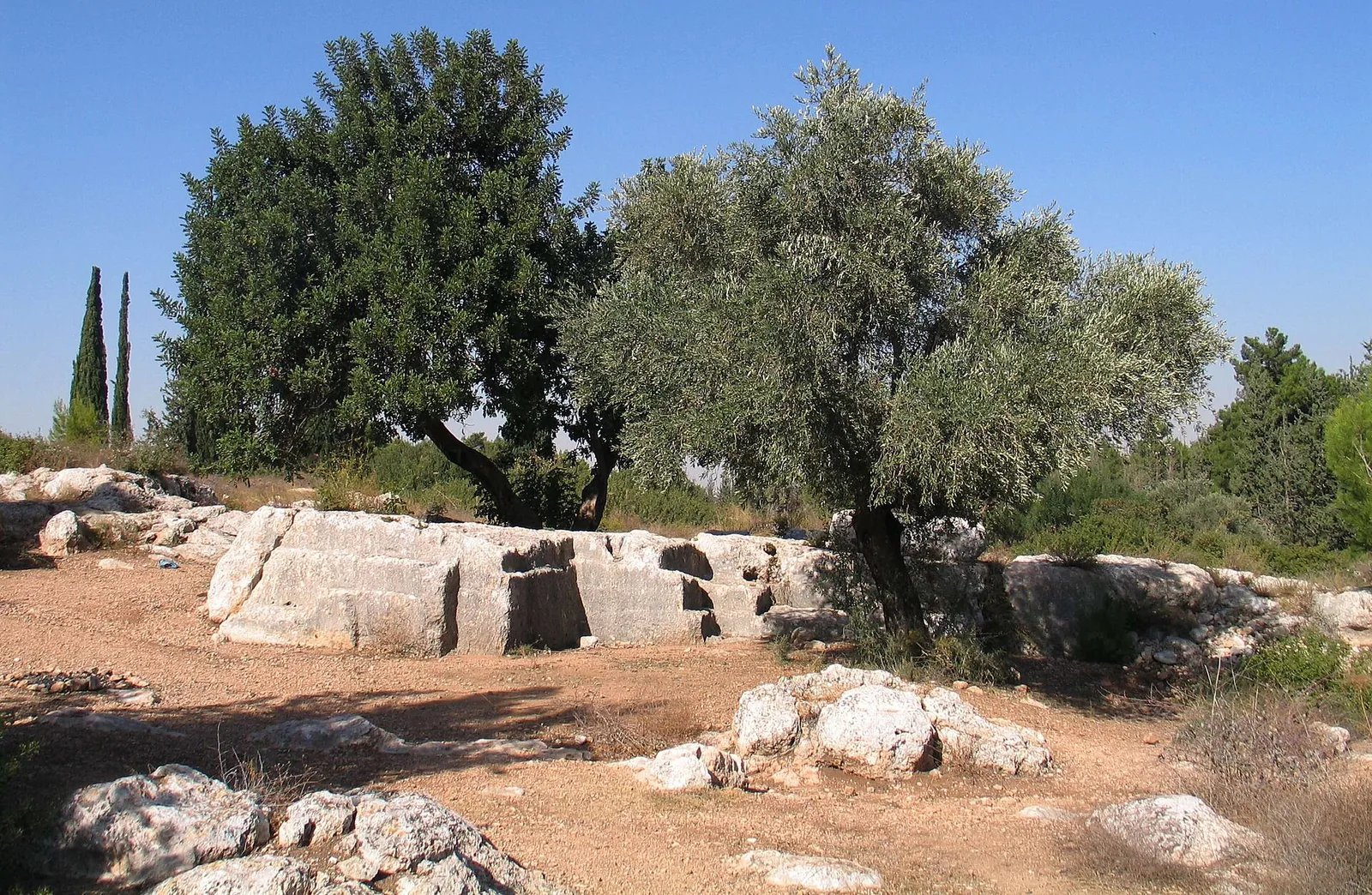
The so-called Tombs of the Maccabees near Modiin, 2013. Photo: Bukvoed · CC BY 3.0 · Source page
Jonathan and Simon took their brother’s body, by agreement with the enemy according to Josephus, and buried him in the tomb of his fathers at Modiin. “And all Israel made great lamentation for him… saying, How is the valiant man fallen, that delivered Israel!” These are almost the words of David’s lament for Saul and Jonathan: the author sets Judah among the heroes of the Bible.
Judah’s men chose his brother Jonathan as leader, and the brothers fled to the wilderness of Tekoa.
Myth
Judah died standing with 800 heroes against 20,000.
The truth
The figure 800 comes from 1 Maccabees, a book that had to explain why its hero lost. Historians such as Michael Avi-Yonah and Bezalel Bar-Kochva think Judah had several thousand men at least.
The evidence
The only source for 800 is 1 Maccabees; Josephus copies it. The Seleucid figure, 22,000 with the cavalry, is plausible. And the little band fits the lesson the book puts in Judah’s mouth in his first battles: “with the God of heaven it is all one, to deliver with a great multitude, or a small company”.
Sources, a state and a memory
Source: Eleazar and the elephant
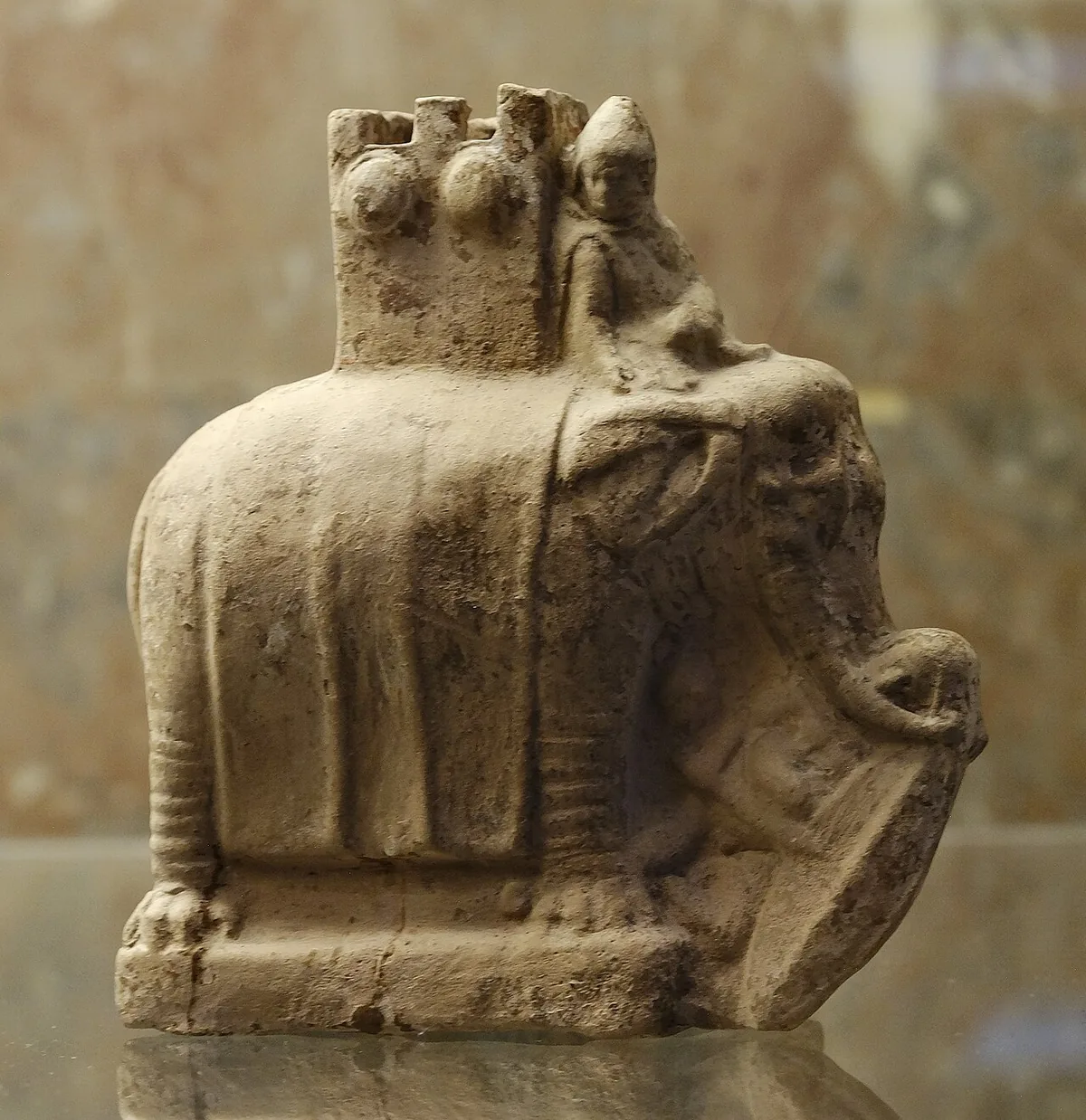
War elephant trampling a Galatian warrior, terracotta, Myrina, c. 175–125 BC. Louvre, Paris. Photo: Shonagon · CC0 · Source page
“Eleazar also, surnamed Savaran, perceiving that one of the beasts, armed with royal harness, was higher than all the rest, and supposing that the king was upon him, Put himself in jeopardy, to the end he might deliver his people, and get him a perpetual name… Which done, he crept under the elephant, and thrust him under, and slew him: whereupon the elephant fell down upon him, and there he died.”
Eleazar, the fourth son of Mattathias, is the first of the brothers to fall.
- Was the king really on the elephant? Almost certainly not. Josephus, in the Jewish War, says the rider “was but a private man”. The king was a boy of ten or eleven, and Hellenistic kings usually rode horses. Eleazar died for a mistake, and the book does not say so.
- Four verses on Eleazar, one sentence on the defeat. Why? The book was written to honour the family: a brother’s heroic death is worth a story, a lost battle is not. What a source lingers on, and what it hurries past, reveals its purpose.
- 1 Maccabees says 32 fighters rode in each tower. Look at the figurine. How many fit? Two or three, perhaps four. Most scholars think 32 is a copying error, perhaps for 4. Numbers are the easiest thing to corrupt in a text copied again and again.
Source: A king’s letter
“Since our father is translated unto the gods… We understand also that the Jews would not consent to our father, for to be brought unto the custom of the Gentiles, but had rather keep their own manner of living… Wherefore… we have determined to restore them their temple, that they may live according to the customs of their forefathers.”
2 Maccabees quotes four official letters. Most scholars think they are genuine, but out of order.
- Who is writing to whom? The boy king to his own regent: in practice Lysias, in the king’s name, to himself. Such a letter was meant to be copied and posted, to announce a new policy.
- Whose fault was the war, according to the letter? “Our father’s”, the dead king’s. That is convenient: the new government changes course without admitting the kingdom was wrong.
- What is missing from the letter? Not a word of Judah, the rebels, the Acra or independence: only the Temple and the laws. An official document is more reliable than a speech, but it too tells only what its writer meant to say.
After Judah
The brothers build a state
Jonathan and Simon won where Judah had run out of time: in politics. They played the rival claimants to the Seleucid throne against one another. In 152 BC one of them made Jonathan high priest. In 142 another freed Simon from tribute, and “the yoke of the heathen was taken away from Israel”. In 141 the Acra fell.
The brothers’ descendants, the Hasmoneans, conquered Idumea and Samaria and ruled as kings. But in 67 BC civil war broke out between two sons of Alexander Jannaeus, and both appealed to Rome, Judah’s old ally. In 63 BC Pompey took Jerusalem, and Judea became subject to Rome.
Source: A coin of the Hasmonean state
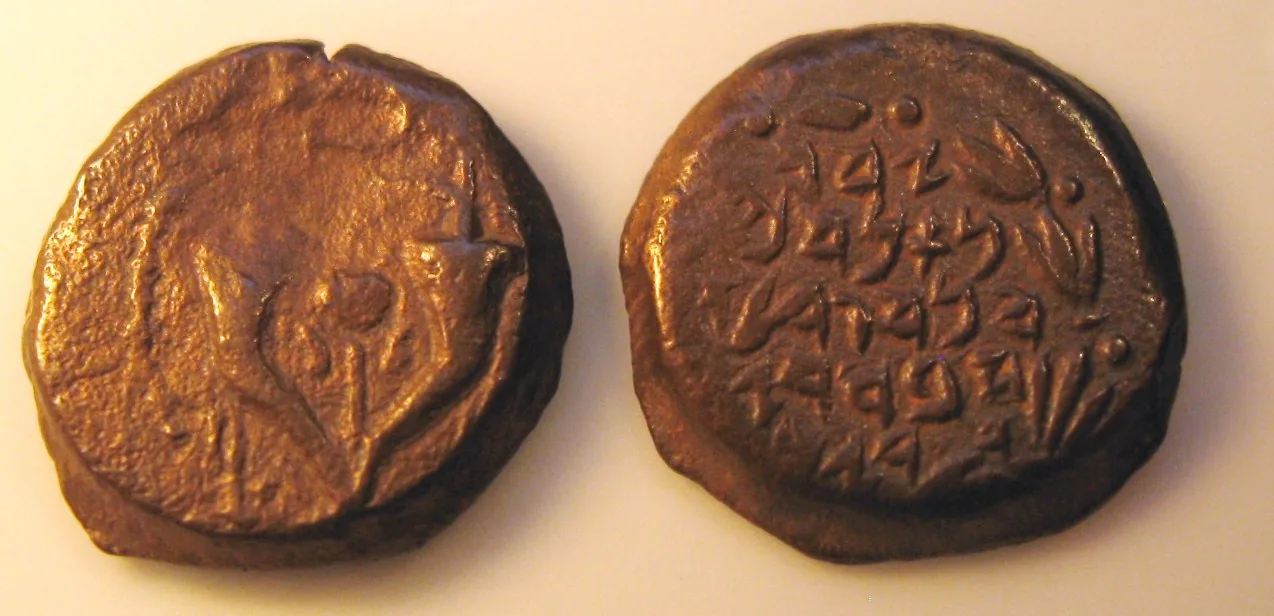
Bronze prutah of Alexander Jannaeus, 103–76 BC. Itamar Atzmon collection. Photo: Atzmonit · CC BY-SA 4.0 · Source page
Bronze prutah of Alexander Jannaeus, 103–76 BC
Jannaeus, Simon’s grandson, reigned some 60 years after Judah’s death.
- What title does the ruler take on this side? “The High Priest and the Council of the Jews”: a chief priest beside a council. On other coins Jannaeus calls himself “king”, in Hebrew and in Greek. A different title for a different audience.
- Why the old Hebrew script, and why horns of plenty? The old script recalls the kings of the First Temple. The horns of plenty were a familiar Greek emblem. The family that fought the Hellenizers ruled, in many ways, as a Hellenistic dynasty.
What came after
- 162 BC Lysias’s peace: the Jews may live by their own laws again.
- 161 BC Adasa and Nicanor’s Day. Friendship with Rome.
- 160 BC Judah falls at Elasa. Jonathan leads the rebels in the desert.
- 152 BC Jonathan becomes high priest.
- 142–141 BC Simon: the end of tribute, and the fall of the Acra.
- 129 BC After the death of Antiochus VII, Judea is fully independent under John Hyrcanus.
- 63 BC Pompey takes Jerusalem; Judea under Rome.
- 37 BC Herod, backed by Rome, ends Hasmonean rule.
- 1896 Herzl: “The Maccabeans will rise again.”
- 1932 The first Maccabiah games open in Tel Aviv.
Myth
Judah Maccabee freed Judea from the Greeks, and Hanukkah celebrates independence.
The truth
When Judah died, a Seleucid garrison still held the Acra, Bacchides’s army held the country and soon ringed it with forts, and the high priest was the king’s man. Judah won back the Temple and the freedom to keep the law. Independence was won by his brothers and their heirs, step by step, over the next 30 years.
The evidence
Tribute ended only in 142 BC, the Acra fell in 141, and full independence came only after the death of Antiochus VII in 129. Hanukkah marks the rededication of the Temple in 164 BC.
Memory
From European knight to Zionist symbol
The rabbis hardly mentioned Judah. The books of Maccabees were left out of the Hebrew Bible and survived in Greek, in the Bible of the Church. Hanukkah lived on, and the Talmud told it as the miracle of the oil.
Europe remembered Judah as a knight: one of the Nine Worthies, and the hero of an oratorio by Handel. Then Zionism took him back. Near the end of The Jewish State (1896), Theodor Herzl wrote: “The Maccabeans will rise again.” Jewish sports clubs called themselves Maccabi, and Zionist education put the fighters before the miracle.
What kind of war was it?
After 162 BC the Jews were free to keep the law. What was Judah still fighting for?
- Elias Bickerman, The God of the Maccabees (1937) A civil war among Jews. Bickerman blamed the decrees on the radical Hellenizers around Menelaus (see the previous lesson’s debate), so the war was first of all between traditional and “reforming” Jews. After 162 this shows even more clearly: the “ungodly men of Israel” who go to every king, Alcimus, and the split with the Hasideans.
- Victor Tcherikover, Hellenistic Civilization and the Jews (1959) A popular rising in Jerusalem against Menelaus, led by the pious, came first, and the decrees were the king’s answer, which turned it into a religious war. On this reading the religious aim was reached in 162. The Hasideans, who wanted only that, made peace, and what came after was a struggle for power in Judea.
- Bezalel Bar-Kochva, Judas Maccabaeus (1989; Hebrew edition 1980) A military historian’s reading. After 164 the Maccabees fielded a large, organised army, and “the few against the many” is a literary and religious pattern. After 162 Judah fought for control of Judea and against the king’s high priests, and Elasa was forced on him by politics. Earlier Zionist historians, such as Joseph Klausner, saw the whole war as a national war of liberation.
Our sources were written by admirers of the family that won in the end, and we have neither the Hellenizers’ side nor the Seleucids’. Perhaps the answer changes over time: what began as a war for the law became a war for power.
What do you know now?
Check yourself
Who wrote 1 Maccabees, and why does it matter?
Answer: An admirer of the Hasmonean family, some 60 years after Judah’s death.. Right. It was written while Judah’s family ruled Judea. It honours the family, hurries past defeats and shapes its numbers to a lesson: God saves by the few.
Check yourself
What did Lysias’s peace of 162 BC give the Jews?
Answer: The right to live by their own laws, and the Temple, but not independence.. Right. The decrees were cancelled and Menelaus was put to death, but the Acra, the high priest and the taxes stayed in the king’s hands.
Check yourself
Why did the Hasideans make peace with Alcimus?
Answer: The decrees were gone and Alcimus was a priest of Aaron’s line, so they thought they could accept him.. Right. For them the war had been about the law, and that was won. Alcimus killed sixty of them in a single day.
Check yourself
What was Nicanor’s Day?
Answer: A feast on 13 Adar for Judah’s victory at Adasa in 161 BC.. Right. Nicanor fell first in the battle, and the people made the day a feast, the day before Purim.
Check yourself
What did the alliance with Rome do for Judah?
Answer: Recognition and a warning letter to Demetrius, but no soldiers. Bacchides was back within a year.. Right. It was a gesture of honour that bound Rome to nothing.
Check yourself
1 Maccabees says only 800 men stayed with Judah at Elasa. How do historians treat that number?
Answer: With suspicion: the battle described needed far more men, and the small number explains the defeat.. Right. A day-long battle with wings, a centre and a pursuit does not fit 800. Bar-Kochva and Avi-Yonah think several thousand at least.
Terms
- Seleucids The Macedonian dynasty founded by Seleucus I, one of Alexander the Great’s generals. From Antioch in Syria it ruled a great empire, and Judea from 200 BC.
- Acra The Seleucid citadel built in Jerusalem in 167 BC, next to the Temple. It held a royal garrison and Jews loyal to the king, and it held out until 141 BC.
- Hellenizers Jews who wanted Jerusalem to adopt Greek ways. Some of them supported the king’s decrees and fought on his side against the Maccabees.
- Hasideans “The pious” (in Greek, Assideans): a group of devout Jews who joined Mattathias’s rebels. In 1 Maccabees they make peace with the high priest Alcimus in 162 BC. They have nothing to do with the Hasidic movement, which began in the 18th century.
- high priest Head of the Temple in Jerusalem and the leading man of the Jews. Under the Seleucids the king appointed him.
- phalanx The core of a Hellenistic army: a dense block of foot soldiers with pikes some six metres long, usually 16 ranks deep: twice the depth of the hoplite phalanx of the Persian Wars. Very strong in front, clumsy on rough ground.
- war elephant An elephant trained for battle, carrying a wooden tower with fighters on its back. The Seleucids got theirs from India, and an Indian driver sat on the neck.
- sabbatical year Every seventh year, when Jewish law forbids sowing the fields. 1 Maccabees puts Lysias’s campaign in a sabbatical year (163/162 or 164/163 BC: the cycle is disputed), and food ran short.
- Nicanor’s Day A feast on 13 Adar for Judah’s victory at Adasa in 161 BC. It fell out of use; the Fast of Esther now falls on that date.
- amicitia Roman “friendship”: a formal tie with Rome that gave prestige, but did not oblige Rome to send soldiers.
- Hasmoneans The family of Mattathias, named after an ancestor called Hashmonai, and the dynasty that ruled Judea from 142 to 37 BC.
- Antiochus IV A Seleucid king who persecuted the Jews and banned their customs. His death opened the way for a child to rule.
- Antiochus V The boy crowned king after his father, Antiochus IV, died. His rule leaned on commanders such as Lysias.
- Lysias A Seleucid commander who ruled in the name of the boy king from Antioch and led the army against Judah.
- Philip A courtier whom the dying king named guardian of his son. Lysias moved first and crowned the boy.
- Demetrius The boy king's cousin, who had been held in Rome as a hostage for years. He escaped, seized power and replaced Lysias.
- Bacchides A Seleucid general who governed the lands west of the Euphrates. Demetrius sent him to Judea with Alcimus.
- Alcimus A priest who wanted to be high priest. Demetrius made him high priest in Jerusalem with the help of an army.
- Timotheus The commander of the Ammonites, who opposed Judah. According to 2 Maccabees he led a large army.
- Josephus A Jewish priest who wrote in Rome long after Judah. He retold the wars, mostly from 1 Maccabees.
- 1 Maccabees A book about the Maccabean revolt, written in Hebrew in Judea. It is full of places and dates, and its numbers follow one idea.
- 2 Maccabees A book about the Maccabean revolt, written in Greek and focused on the Temple. It ends before Judah's death.
- Bar-Kochva An Israeli historian of the Maccabean period. He argues for the Babylonian calendar.
- Beth Zur A fortress on the road to Jerusalem from the south. It guarded the road, and the royal army besieged it.
- Beth Zechariah A place on the road to Jerusalem, north of Beth Zur. Judah camped there before the battle with the royal army.
- Elasa A rocky place north of Jerusalem. Judah camped there before his last battle.
- Dathema A fortress in Gilead, east of the Jordan. The Jews there were under siege until Judah broke it.
- Gilead A region east of the Jordan where Jews lived. Judah brought them from there to Jerusalem.
- Jamnia A town in the south of the land, near the sea. Two of Judah's commanders attacked it against orders.
- Hebron A town in the hills of Judea, south of Jerusalem. Judah took it and burned its towers.
- Modiin A town in the land of Israel, where Judah was buried in the tomb of his fathers.
- Menelaus A high priest who supported the king's decrees. He was put to death.
- Gnaeus Octavius A Roman envoy who had the Seleucid elephants hamstrung under the peace treaty Rome imposed.
Sources
- 1 Maccabees 4–9 and 13, King James Version (Apocrypha), 1611
- 2 Maccabees 11–15, King James Version (Apocrypha), 1611
- Josephus, Antiquities of the Jews 12.9–11 and 20.10, trans. William Whiston (1737)
- Josephus, The Wars of the Jews 1.1.4–6, trans. William Whiston (1737)
- Polybius, Histories 30.25 (the parade at Daphne) and 31.2, 31.11–15, trans. W. R. Paton (Loeb, 1927)
- Theodor Herzl, The Jewish State (1896), trans. Sylvie d'Avigdor (rev. ed., American Zionist Emergency Council, 1946)
- Megillat Taanit (13 Adar); Babylonian Talmud, Taanit 18b and Shabbat 21b
- Bezalel Bar-Kochva, Judas Maccabaeus: The Jewish Struggle against the Seleucids (Cambridge: Cambridge University Press, 1989)
- Bezalel Bar-Kochva, The Seleucid Army: Organization and Tactics in the Great Campaigns (Cambridge: Cambridge University Press, 1976)
- בצלאל בר־כוכבא, מלחמות החשמונאים: מימי יהודה המכבי (ירושלים: יד יצחק בן־צבי ומשרד הביטחון, 1980)
- Elias Bickerman, The God of the Maccabees, trans. H. R. Moehring (Leiden: Brill, 1979; German original Der Gott der Makkabäer, Berlin: Schocken, 1937)
- Victor Tcherikover, Hellenistic Civilization and the Jews, trans. S. Applebaum (Philadelphia: Jewish Publication Society of America, 1959)
- Jonathan A. Goldstein, I Maccabees (Anchor Bible 41; Garden City, NY: Doubleday, 1976)
- Daniel R. Schwartz, 2 Maccabees (Commentaries on Early Jewish Literature; Berlin: de Gruyter, 2008)
- אוריאל רפפורט, ספר מקבים א: מבוא, תרגום ופירוש (ירושלים: יד יצחק בן־צבי, 2004)
- Emil Schürer, The History of the Jewish People in the Age of Jesus Christ, rev. G. Vermes and F. Millar, vol. 1 (Edinburgh: T&T Clark, 1973)
- Erich S. Gruen, The Hellenistic World and the Coming of Rome, 2 vols. (Berkeley: University of California Press, 1984)
- Dov Gera, Judaea and Mediterranean Politics, 219 to 161 B.C.E. (Leiden: Brill, 1998)
- Linda Zollschan, Rome and Judaea: International Law Relations, 162–100 BCE (London: Routledge, 2017)
- Altay Coşkun, “Friendship and Alliance between the Judaeans under Judas Maccabee and the Romans (1Macc 8:17–32): A Response to Linda Zollschan's Rome and Judaea”, Electrum 25 (2018): 85–125
- Silvannen R. Gerrard, “Hellenistic War-Elephants and the Use of Alcohol Before Battle”, Classical Quarterly 73.1 (2023), 138–152
- Joseph Sievers, The Hasmoneans and Their Supporters: From Mattathias to the Death of John Hyrcanus I (Atlanta: Scholars Press, 1990)
- Kenneth Atkinson, A History of the Hasmonean State: Josephus and Beyond (London: Bloomsbury T&T Clark, 2016)
- Sylvie Honigman, Tales of High Priests and Taxes: The Books of the Maccabees and the Judean Rebellion against Antiochos IV (Oakland: University of California Press, 2014)
- Yael Zerubavel, Recovered Roots: Collective Memory and the Making of Israeli National Tradition (Chicago: University of Chicago Press, 1995)
Image credits
- Gustave Doré, Judas Maccabeus before the Army of Nicanor, engraving for La Sainte Bible, 1866 · Public domain · Source page
- Nicolaes de Bruyn, Judas Machabeus, plate 6 of The Nine Worthies, c. 1600. Rijksmuseum, Amsterdam · CC0 · Source page
- Tetradrachm of Antiochus V Eupator, Antioch mint, 164–162 BC. Photo: Samu0450 · CC BY-SA 4.0 · Source page
- The so-called Tombs of the Maccabees near Modiin, 2013. Photo: Bukvoed · CC BY 3.0 · Source page
- War elephant trampling a Galatian warrior, terracotta, Myrina, c. 175–125 BC. Louvre, Paris. Photo: Shonagon · CC0 · Source page
- Bronze prutah of Alexander Jannaeus, 103–76 BC. Itamar Atzmon collection. Photo: Atzmonit · CC BY-SA 4.0 · Source page


