Himiko: the queen known only from a Chinese book
In the 3rd century a shaman-queen ruled a land called Yamatai and sent envoys to the Chinese court. But no Japanese book mentions her, and no one knows where she lived. What do we really know?
Decisions, questions and your own progress, in the app
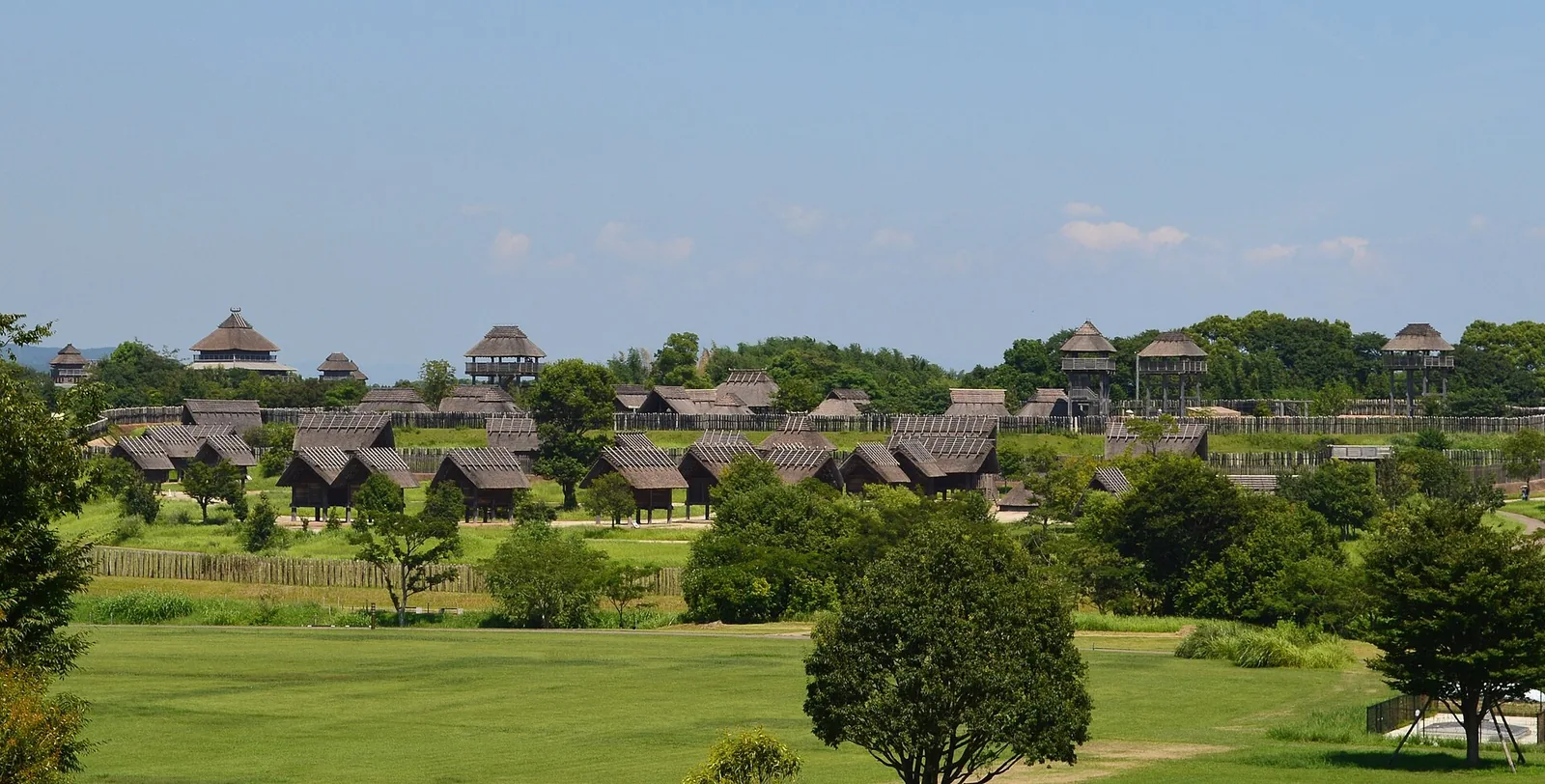
Yoshinogari site, Kyushu (reconstruction). Photo: Saigen Jiro, 2013 · CC0 · Source page
The Chinese book
A queen no Japanese book names
Imagine a queen who rules a whole land. We know her name only from a Chinese book, written decades after her death.
What do we really know about her? Just as important: what don't we know?
Background
Wa, a land of many chiefs
The Chinese book calls the peoples of the islands east of China Wa. Wa once had more than 100 small lands, and about 30 of them had contact with Chinese envoys.
The route to the queen's land, Yamatai, runs by sea from a Chinese commandery in northern Korea. The distances the book gives match no known map. That is the first reason nobody agrees where she lived.
A land after war
A decision point
You are an elder of one of the Wa lands.
Around the 3rd century AD, in years of fighting between chiefs.
The lands of Wa have fought for years, and no chief can win outright.
Two proposals are on the table: a strong war leader from a large family, or a woman who serves the spirits and is thought sacred by many.
Who do you back?
- Back the strong war leader and force peace. Maybe the fighting pauses for a while. But every family that loses will seek revenge, and a forced peace must be guarded by force.
- Back the woman who serves the 'way of spirits' and propose her as a ruler all lands can accept. Probably she is accepted, since no family loses face to a neutral figure. But she would still need armed guards to keep her position.
- Back no one, and split the land between the chiefs. Probably the split remains. Without a central figure, agreements are likely to crack soon.
What really happened
Back the woman who serves the 'way of spirits' and propose her as a ruler all lands can accept.
According to the book, the people agreed to set a woman over them. That woman was Himiko.
The book does not explain why her, and names no decisive battle.
The book gives no reasons. Historians offer one guess: a woman who led spirit rites had an authority no single chief could claim, so no family had to yield to a rival.
What happened
Years of disorder
The book describes years of disorder. At the end, its people agreed to set a woman over them.
That woman was Himiko. The book says she was old and unmarried, and followed the 'way of spirits', which many translators call shamanism. Her younger brother helped her govern.
Check yourself
What does the Chinese book say about how Himiko was chosen?
Answer: That the people agreed on a woman. Correct. The book describes years of disorder, then agreement on a woman, with no reason given.
Envoys and mirrors
A decision point
You are Himiko's closest adviser.
Around 238, as her envoys are ready to sail.
Wei is a large kingdom in northern China, and you do not know how it will treat envoys from a distant land. The journey is slow and risky, and the answer uncertain.
But a title from the emperor might give you weight against the chiefs, and nothing guarantees it.
What do you advise?
- Send envoys to the Wei court and ask for formal recognition. Possibly the title and gifts strengthen her at home, as every chief sees a great emperor recognise her. But the journey is long and the answer uncertain.
- Send gifts to the Chinese commandery in Korea, but not to the court. Probably the commandery passes the gifts on, but it cannot grant a royal title. The likely result: goods without recognition.
- Send no envoys and stay fully independent. Probably the land stays without Chinese recognition, with no title and no gifts. Anyone with links of his own to China could gain an edge.
What really happened
Send envoys to the Wei court and ask for formal recognition.
Himiko sent envoys to Wei, and the reply, from the Wei court, included a formal title and gifts. So she took the first option.
The book does not explain the choice. Historians suggest that a title from a great emperor strengthened a leader against her chiefs. That is an inference.
Around 238
The envoys set out
In the sixth month of the second year of the Jingchu era, Himiko sent envoys to the Chinese commandery in northern Korea. The reply came from the Wei court. The year is 238 or 239, because the sources disagree.
The reply was an investiture: a gold seal on a purple ribbon, 100 bronze mirrors and other gifts. The title reads 'Queen of Wa, Friendly to Wei'.
Source: The Chinese book, reworded
This is a paraphrase, not a quotation. The book says Wa had many chiefs; after years of disorder, the people agreed to set Himiko over them.
She served the spirits and lived in a palace guarded by armed men. About a thousand women attended her, and one man brought her food and carried her messages. Her younger brother helped her govern. Envoys went to Wei, and the reply was a title.
- Who wrote this, and when? Chen Shou, a Chinese historian who died in 297, about 50 years after Himiko's death. The chapter sits in the Wei zhi. He wrote from envoys' and interpreters' reports, and never visited Japan.
- What is missing from this account? Her own voice. We cannot check whether the reports that reached the writer were accurate.
The gift
One hundred mirrors
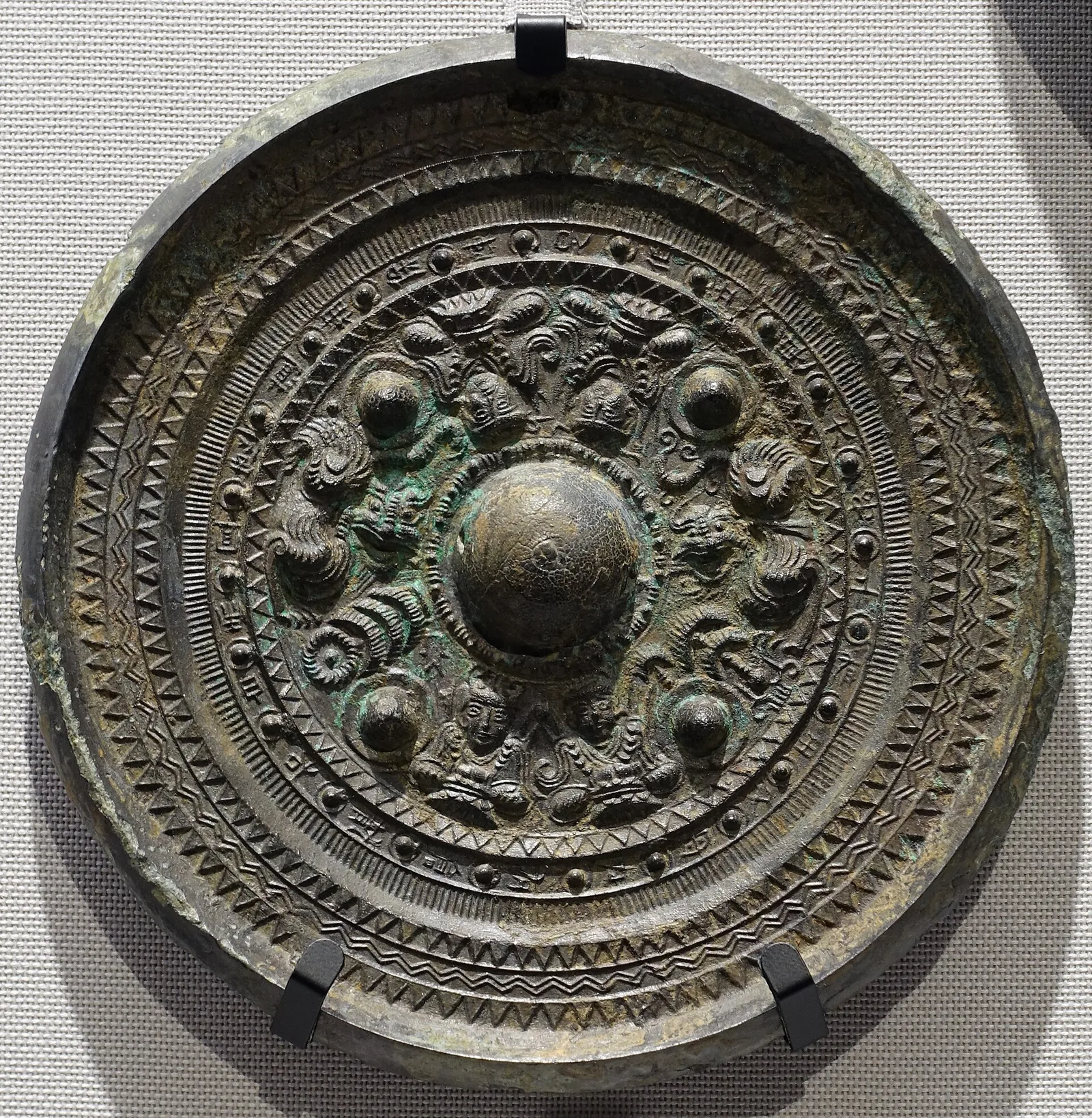
Bronze mirror with a triangular rim and animal designs, about the 3rd–4th century AD. Tokyo National Museum. Photo: Daderot · Public domain · Source page
The book says Wei's gift included 100 bronze mirrors. Some scholars link them to the triangular-rimmed type, decorated with figures and animals and found in Japanese tombs. Others argue they were made in Korea or a Chinese commandery. No one has proved which view is right.
Check yourself
What is certain about the 100 mirrors?
Answer: That the book lists them as part of Wei's gift. Correct. The book lists 100 bronze mirrors in Wei's gift. The open question is what type they were, not whether they are mentioned.
After the queen
247 or 248
Her death
Himiko died in 247 or 248; the book gives both years. A mound more than 100 paces across was raised over her, and more than 100 servants were buried with her.
A decision point
You are one of Wa's leaders after Himiko's death.
Around 247–248.
Himiko has died, and the land has no leader. The lands do not agree on what comes next.
The council weighs three options: appoint a male king, put forward a young relative of the queen, or leave decisions to a council of chiefs.
What do you propose to the council?
- Appoint a male king to lead the land. Probably some lands accept him and others refuse. A community that has just lost its leader may slide into violence.
- Put forward a young relative of the queen, with a council ruling in her name. Probably the family link gives her legitimacy, but a young girl needs a strong council. Much depends on her advisers.
- Leave decisions to a council of chiefs, without a single ruler. Probably the council splits, as each chief seeks an advantage. With no single leader, no one settles the disputes.
What really happened
Appoint a male king to lead the land.
The book says they installed a male king, and the people rejected him. Violence followed, and only then did they make a 13-year-old girl queen. She was called Iyo, or Toyo in another reading, and was a relative of Himiko.
The book does not say why they chose a male king. What is clear is that the choice was not accepted, and it led to violence.
Check yourself
According to the book, what happened right after Himiko died?
Answer: A male king was rejected, then violence. Correct. The book describes a male king who was rejected, followed by violence. Only after that was the girl put forward.
Where did she live?
The dispute
Two possible lands
The book's directions and distances match no known map, so there are two main theories.
One puts Yamatai in northern Kyushu, where the Yoshinogari site lies: a large Yayoi settlement with ditches and palisades. The other puts it in the Nara basin of central Japan, around Makimuku and its big early burial mounds. Yoshinogari is one candidate, not a proof.
Source: A tomb with an official owner
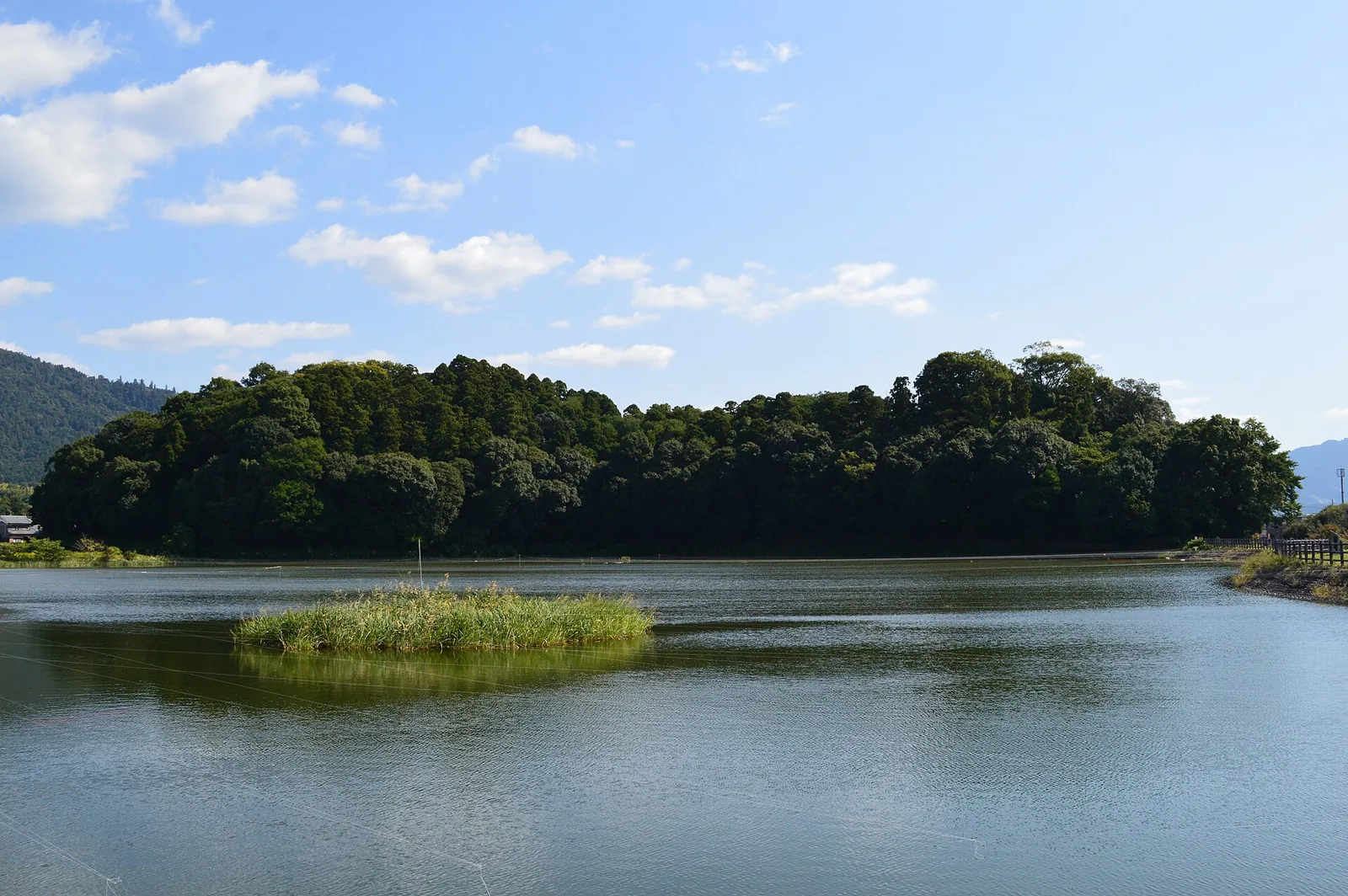
Hashihaka mound, Sakurai, Nara, 2013. Photo: Saigen Jiro · CC0 · Source page
Photo by Saigen Jiro, Wikimedia Commons (2013)
The Imperial Household Agency manages the mound as a mausoleum and officially assigns it to Princess Yamato Totohi Momoso, but says the real burial site is unknown. Some researchers propose it is Himiko's tomb: one theory among several, not a proof.
- Who says this is a princess's tomb, and how sure are they? The agency assigns the mound to a princess, yet says the real burial place is unknown. The label is a claim, not a proof.
- What would settle whether this mound is Himiko's tomb? Dated finds inside the mound, such as an inscription, and access to excavate. Access is restricted, and dating methods such as radiocarbon are disputed.
Myth
Japan's history begins in 660 BC with its first emperor, Jimmu, and Himiko appears in Japan's own ancient history books.
The truth
Neither part is right. 660 BC is a tradition in the Nihon Shoki (AD 720), and historians treat Jimmu as legendary. Her name appears in the Chinese record, but neither the Kojiki nor the Nihon Shoki names her.
What came after
- 238 or 239 Her envoys reach the Chinese commandery in Korea. The Wei reply includes a title and 100 mirrors.
- 247 or 248 Himiko dies, and more than 100 servants are buried with her. A male king is rejected and violence follows. A Wei envoy calls for calm.
- AD 712 and 720 The Kojiki and the Nihon Shoki are written. Neither names her.
- 1910 Two scholars sharpen the debate: one places Yamatai in Kyushu, the other in the Kinai region of central Japan.
Where was Yamatai?
Was Yamatai in northern Kyushu, or in central Japan?
- The Kyushu theory Supporters argue that the book's route, read in one way, ends in northern Kyushu, and point to large Yayoi sites such as Yoshinogari. Critics reply that the distances and directions fit that area poorly, and that no decisive evidence has been found there.
- The Kinai theory Supporters place Yamatai in the Nara basin, around Makimuku and its large mounds. Some say the early mounds fit the period, though their dates are disputed. Critics say the book's directions do not fit that area either.
What would change your mind? A dated find, an inscription, or something else?
Check yourself
Why do scholars disagree about where Yamatai was?
Answer: Because its distances match no known map. Correct. The distances and directions in the book do not match any known map, so there are several readings. That is the basis of the dispute.
Check yourself
What is the status of the claim that Hashihaka is Himiko's tomb?
Answer: One theory among several, not proven. Correct. It is a proposal by some researchers, and it is not proven. The dating of the mound is disputed.
Check yourself
What do the two oldest Japanese chronicles, the Kojiki and the Nihon Shoki, say about Himiko?
Answer: That neither book names her. Correct. Her name survives mainly in Chinese sources, which is why scholars rely on them.
Terms
- Wa The name the Chinese record gives to the peoples of the islands east of China. The record says Wa once had more than 100 small lands.
- Yamatai The queen's land in the Chinese record. Its location is not known for certain: some place it in northern Kyushu, others in the Nara basin of central Japan.
- Wei zhi The part of the Records of the Three Kingdoms that covers the state of Wei. Its chapter on Wa was written in the late 3rd century, and it is the main source on Himiko.
- shaman A person who claims to speak with spirits and to heal or foretell through rituals. The Chinese record says Himiko followed the 'way of spirits'.
- investiture A formal grant of a title, often with a seal, from a ruler to someone else. The title can be a mark of honour without direct rule.
- kofun A large burial mound, often keyhole-shaped, built by Japanese elites from about the 3rd century AD.
- Kojiki One of Japan's oldest history books, from AD 712. The Nihon Shoki of AD 720 is its companion.
- Wei A large kingdom in northern China. Himiko sent envoys to it, and its court replied with a formal title and gifts.
- Jingchu era A Chinese era name. Years were counted by the year within the era, not by one fixed count.
- Iyo A 13-year-old girl made queen after a male king was rejected and violence followed. She was a relative of Himiko.
- Jimmu The first emperor of Japan according to tradition. Historians treat him as a legendary figure, not a historical one.
- Nihon Shoki One of Japan's oldest official histories, written in AD 720. It records traditions that historians treat with caution.
- Chinese record Chinese written sources about the island lands east of China. They name Himiko, but the Kojiki and the Nihon Shoki do not.
- Yoshinogari A large archaeological site in northern Kyushu from the Yayoi period, with ditches and wooden fences. Some see it as one candidate for Yamatai, not a proof.
- Makimuku A site in the Nara basin of central Japan, with big early burial mounds around it.
- Nara basin A region of central Japan where Makimuku lies. It is one of the two main theories about where Yamatai was.
- Yayoi A period of early Japanese history, when rice farming spread and settlements grew.
- mausoleum A grand tomb built to honor an important person, often a king or prince.
- Imperial Household Agency The Japanese government agency that runs the affairs of the imperial family, and also manages the big mound attributed to a princess.
- Yamato Totohi Momoso A princess to whom the big mound is officially attributed. The Imperial Household Agency says her real burial place is unknown.
- bronze mirror A mirror made of bronze, an alloy of copper and tin. Mirrors like these were part of Wei's gift.
- triangular-rimmed mirror A bronze mirror with a triangular rim, decorated with figures and animals. Such mirrors have been found in Japanese tombs.
- Chinese commandery A territorial unit of early China, often under military command. One stood in northern Korea, and the sea route to Yamatai began there.
- gold seal A seal of gold, a sign of official authority. The one given to Himiko was on a purple ribbon.
- Kyushu One of Japan's four main islands, the southernmost of them. The Yoshinogari site lies in its north.
Sources
- Chen Shou, Records of the Three Kingdoms (Sanguozhi), Book of Wei, ch. 30, the section on the Wa people (c. 280–297). The passage is paraphrased in this lesson, not translated.
- Course reading 'Wei Chronicles', Asia 201, Willamette University. It gives the dates of the envoys and the title in translation.
- Wikipedia, 'Wajinden' (the Wa section of the Book of Wei)
- Wikipedia, 'Hashihaka Kofun'
Image credits
- Yoshinogari site, Kyushu (reconstruction). Photo: Saigen Jiro, 2013 · CC0 · Source page
- Bronze mirror with a triangular rim and animal designs, about the 3rd–4th century AD. Tokyo National Museum. Photo: Daderot · Public domain · Source page
- Hashihaka mound, Sakurai, Nara, 2013. Photo: Saigen Jiro · CC0 · Source page


