The Jews and the First Crusade, 1096–1100
One Sabbath in Speyer, 1096: the bishop saved most of the Jews. Within four weeks, at Worms and Mainz, no one could.
Decisions, questions and your own progress, in the app
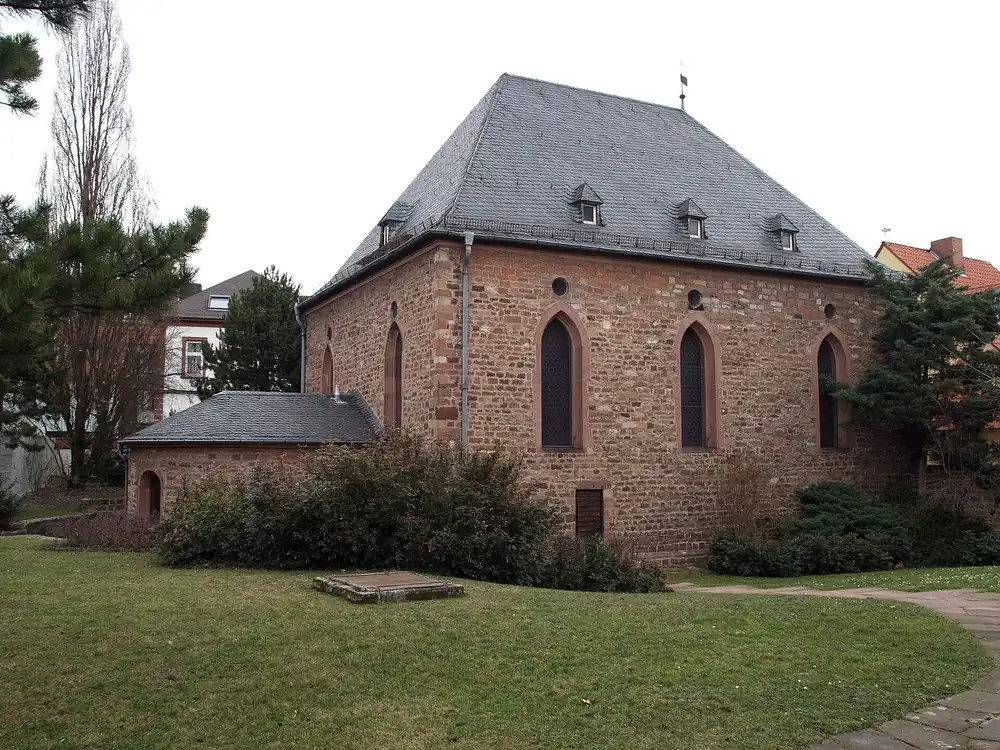
Ilsemarie, Worms synagogue, garden side, photograph, 19 March 2005 · CC BY-SA 3.0 · Source page
Three cities on the Rhine
A Sabbath in Speyer
This lesson tells of the killing of Jewish communities in 1096, and of people who took their own lives, without graphic detail. There are no scores and no decisions; the questions at the end only help you remember. You can stop at any point.
Speyer, on the Rhine, Saturday 3 May 1096. The Jews of Speyer have heard that a crowd of crusaders and townsmen means to seize them all together in the synagogue. So they pray early, and leave.
The crowd attacks anyway. Eleven people are killed. Then the bishop arrives with armed men and protects the rest.
Within four weeks, at Worms and Mainz, the bishops’ shelter will not hold. Who were these communities, who attacked them, and who tried to protect them? And how do we know?
Background
ShUM: three communities
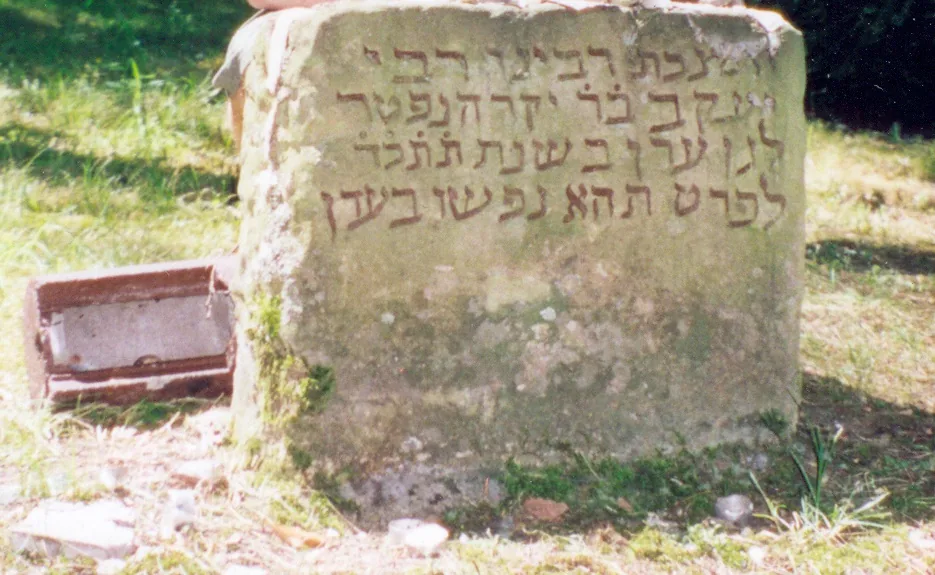
Vischroni, gravestone of Jacob ben Yakar, Mainz Jewish cemetery, photograph, 1 March 2003 · CC BY-SA 3.0 · Source page
Jews had lived on the Rhine for centuries: an edict of the emperor Constantine from the year 321 already mentions Jews in Cologne. By the 11th century the great communities were at Speyer, Worms and Mainz, known by the initials of their Hebrew names as ShUM.
They were merchants, with synagogues, cemeteries and courts of their own. Rabbenu Gershom of Mainz, “Light of the Exile”, laid down rulings that shaped Jewish life in northern Europe for centuries. A young man from Troyes in France came to study at Worms and Mainz; we know him as Rashi. The tradition of Ashkenazi Jews grew from here.
Source: A bishop who wants a city
“I, Rudeger, by cognomen Huozman, humble bishop of Speyer, when I wished to make a city of my village of Speyer, thought that it would greatly add to its honor if I should establish some Jews in it.”
The bishop gave the Jews a walled quarter, a cemetery, freedom to trade, and a head of their own, to judge them “as the mayor of the city” judges the citizens.
- Why does the bishop want Jews in Speyer? To make his village a city, which would “greatly add to its honor”. He gave the Jews trade, the right to change coin, and a wall: protection was part of the bargain.
- The 1905 English says the wall guards against “the attacks and violence of the mob”; a later translation, against “the insolence of the citizens”. Why does it matter? “Violence” is the 1905 wording. Always ask what a translation adds.
1090
The emperor’s promise
Around 1090 Henry IV, king of Germany and emperor, took the Jews of Speyer and Worms under his protection with privileges: freedom to trade, their own law, and a ban on baptising them by force. A confirmation of 1157 fines anyone who baptises a Jew by force, or plots to kill one, twelve pounds of gold.
On paper the law was strong. But only the bishops, with their few soldiers, could enforce it. And Henry himself was in Italy from 1090 to 1097, excommunicated and at war with the pope’s party.
Spring 1096
After Clermont
One call, many bands
In November 1095 Pope Urban II called the knights of the West to go east. The princes’ armies set out only in August 1096; many did not wait. From the spring, crowds followed preachers such as Peter the Hermit, and leaders such as Count Emicho, a lord of the Rhineland, and the priests Volkmar and Gottschalk: not one army, but many bands.
Some said it openly: why go far to fight the enemies of Christ, when his enemies live among us? So the Hebrew chronicles report it; Albert of Aachen says the killers called it the beginning of their expedition and their duty against the enemies of the faith.
Myth
Pope Urban II called for the killing of the Jews.
The truth
No version of his speech at Clermont, no decree of the council and none of his letters says so. Even the Hebrew chronicles, which blame the pope for setting the march in motion, never say he ordered killing. The idea of vengeance on the “enemies of Christ” was in the air; how far it grew out of the preaching itself is still argued.
The evidence
The versions of the speech (Munro, 1895; Krey, 1921); the Hebrew chronicles (Eidelberg, 1977).
Winter 1095 – spring 1096
A letter from France
In France, men who had taken the cross attacked the Jews of Rouen, and the communities of northern France wrote to warn the Rhine. The answer from Mainz, as the Mainz Anonymous gives it: all the communities have declared a fast, we have done our duty; we are anxious for you, but for ourselves there is no great cause for fear.
The communities paid. According to Solomon bar Samson, the Jews of Trier gave provisions to a priest named Peter, probably Peter the Hermit. Kalonymus ben Meshullam, the parnas of Mainz, sent a messenger to the emperor in Italy, and Henry wrote to the bishops and to Godfrey of Bouillon: the Jews were to be protected. Solomon, who was hostile to Godfrey, says Godfrey had sworn to avenge Christ’s blood on the Jews; the Jews of Mainz and Cologne paid him a large sum.
May–June 1096: the cities
Speyer, 3 May
What the bishop of Speyer knew, and what he could do
11
What he knew. Bands of crusaders were on the roads, and people of Bishop John’s own town had joined them.
What he could do. He had armed men and fortified towns: he could give shelter, punish rioters, and wait for the bands to pass.
What happened. On the Sabbath, 3 May, the attackers killed eleven Jews. Then John came with his men and took the rest into his own quarters. The Mainz Anonymous says he punished some of the townsmen who had joined the attack, and hid the survivors in his fortified towns until the danger had passed, taking no bribe.
The rest of the community survived. Protection could succeed when the lord of a town acted at once, and with force.
Worms, May
Worms: a shelter that did not stand
At Worms some Jews stayed in their houses, and others took shelter in the bishop’s palace. According to Solomon bar Samson, crusaders and townspeople broke into the houses on 18 May, and a week later stormed the palace itself.
Most of the Jews of Worms were killed, or killed their families and themselves rather than be baptised. A few were baptised. The chronicle counts about 800 dead; the surviving list of names has about 400.
Mainz, the weeks before 27 May
What the leaders of Mainz knew, and what they could do
What they knew. The news from Speyer and Worms, and that Emicho’s band was coming down the Rhine. The chronicles suggest over a thousand people.
What they could do. Appeal again to the distant emperor. Fast and pray. Pay. Ask the archbishop for shelter. Arm themselves. Or leave.
What happened. They did all of it, except leave. They gave Archbishop Ruthard 300 zekukim (a weight) of silver, and some 400 more to him, his officers and the townsmen; they sent Emicho seven pounds of gold. On 25 May he camped outside the gates. The Jews moved into the archbishop’s hall and the count’s courtyard. Their leader was Kalonymus ben Meshullam.
Kalonymus ben Meshullam
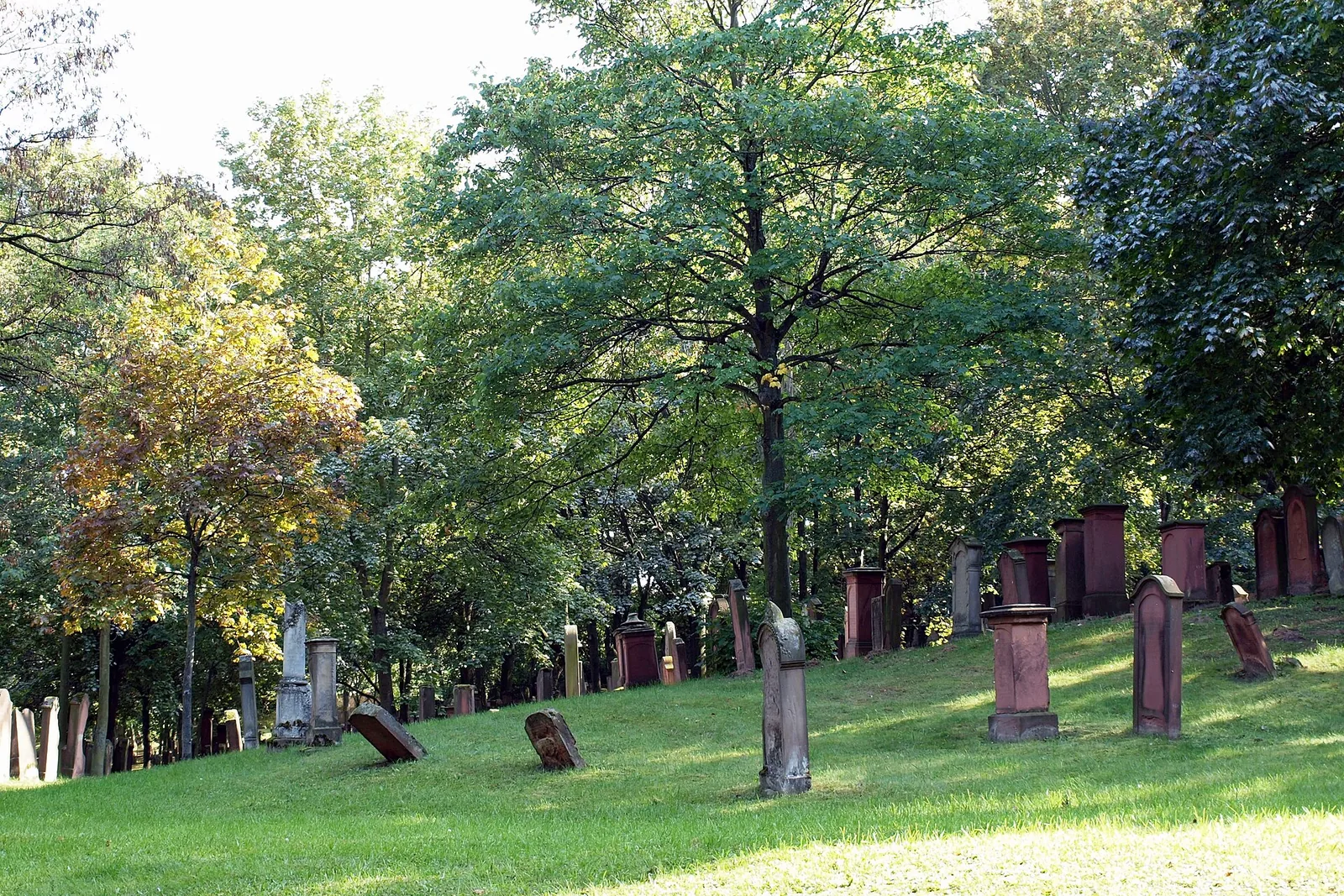
Ralf.Mauer, Judensand, Mainz, photograph, 25 September 2011 (Wiki Loves Monuments) · CC BY-SA 3.0 · Source page
The head of the Jews of Mainz, who sent to the emperor for help and put on armour at the gate on 27 May 1096; the chronicle tells his death three ways.
- Born: Unknown, Probably Mainz; a later tradition says his family, the Kalonymides, came from Italy
- Died: 1096, at the end of May or early in June, Rüdesheim, on the Rhine, killed after refusing baptism; the chronicle gives three versions of how
- Won: Sent a messenger to Henry IV in Italy, who ordered the Jews protected; Paid Godfrey, the archbishop and the townsmen, and sent gold to Emicho; Led the defence of the archbishop’s courtyard; Hid with fifty-three young men and escaped by boat to Rüdesheim
- Lost: The gate was opened, the archbishop’s men fled, and at Rüdesheim he was told to convert or die
Mainz, Tuesday 27 May
What the archbishop knew, and what he could do
What he knew. That Emicho’s band stood outside his walls.
What he could do. Hide the Jews, shut the gates, fight, or leave the city.
What happened. For two days the gates held. At noon on 27 May, the 3rd of Sivan, townspeople opened a gate to Emicho’s men. The Jews in the courtyard put on armour and fought, Kalonymus at their head. The archbishop’s men fled first, then the archbishop himself. Whether his force was too small or he would not fight pilgrims, historians disagree.
By evening most of the Jews of Mainz were dead. Some fell fighting; many, the chronicles say, killed their families and themselves rather than be baptised by force. Kalonymus and fifty-three young men were smuggled by boat that night to Rüdesheim. There, according to Solomon bar Samson, the archbishop demanded they convert. Kalonymus refused, and died there.
Ruthard, archbishop of Mainz
The archbishop who sheltered the Jews of Mainz and could not protect them; one chronicler calls him excellent, another says he fled.
- Born: Unknown
- Died: 1109
- Won: Took the Jews and their money into his hall and palace; The gates stayed shut against Emicho for two days; Had Kalonymus and his companions taken by boat to Rüdesheim
- Lost: His men fled from the courtyard, and he left the city; At Rüdesheim, says the Hebrew chronicle, he told the survivors to convert; Accused in 1098 of keeping some of the murdered Jews’ property (the sources disagree on who was accused), he left Mainz for years
“Then that excellent Bishop of the city cautiously set aside the incredible amount of money received from them.”
Source: The archbishop’s hall, as Albert tells it
“But Emico and the rest of his band held a council and, after sunrise, attacked the Jews in the hall with arrows and lances. Breaking the bolts and doors, they killed the Jews, about seven hundred in number, who in vain resisted the force and attack of so many thousands.”
Albert, a canon of Aachen, never went on crusade. He wrote from returning crusaders’ stories, 25 to 50 years later.
- Albert gives about seven hundred dead; the Hebrew chronicles 1,100 and 1,300. Why? Albert counts only the killing in the hall, from hearsay; the Hebrew writers counted the whole community, in round numbers. The honest range: about 700 to 1,300.
- “Who in vain resisted”: what does this tell you? That the Jews fought, as the Hebrew chronicle says too, though the two judge the archbishop in opposite ways.
Myth
The crusaders killed the Jews for their money.
The truth
Money played a part, but it does not explain what happened. The Jews of the Rhine were mostly merchants; the picture of the Jewish moneylender belongs to later centuries. At Mainz Emicho took their gold and attacked anyway. And demanding baptism has nothing to do with money. Historians weigh greed together with religious fury and local quarrels.
The evidence
Solomon bar Samson on the payments at Mainz; Jonathan Riley-Smith (1984) on the motive of vengeance.
Cologne, 29 May – 27 June
What the Jews of Cologne could do
What they knew. On 29 May, the eve of Shavuot, the news from Mainz arrived.
What could be done. Hide; ask neighbours to take them in; leave the city with the archbishop’s help.
What happened. Each family hid with a Christian acquaintance. The crowd broke into the empty houses and the synagogue and burned the Torah scrolls. On 3 June Archbishop Hermann III scattered the Jews among seven of his villages, among them Neuss, Altenahr and Xanten. At the end of June crusader bands found them, place after place, and most were killed or took their own lives.
In Cologne some neighbours hid Jews while a crowd looted the empty houses; at Worms and Mainz townsmen joined the bands.
Beyond the Rhine
Trier, Metz, Regensburg, Prague
At Trier the Jews found refuge in the palace of Archbishop Egilbert, who spoke against the mob and then told them to be baptised or leave; some were killed or took their own lives, and most of the rest were baptised. At Metz twenty-two were killed, and most of the others were forced to convert. At Regensburg the whole community was baptised in the Danube. In Prague Jews were baptised by force, while Bishop Cosmas protested in vain.
Emicho’s band went on east. In July King Coloman stopped it at the Hungarian border, at Moson, and after a six-week siege it fell apart.
Sanctifying the Name, and baptism by force
The chronicles’ own words
“Sanctifying the Name”
The Hebrew chroniclers had a name for the choice they honoured above all: Kiddush HaShem, sanctifying the Name of God. In their eyes those who fell fighting, those killed for refusing baptism, and those who killed their families and themselves, all died this way.
They describe them in the language of the Bible and the Sages: they compare each death to the binding of Isaac, call the dead “offerings”, and set Rabbi Akiva before them as a model. They call the Christian world “Edom”, and use abusive names for the Christian faith, which this lesson does not repeat.
Some historians read these pages as a record of what the martyrs themselves believed; others, like Jeremy Cohen, see in them as much the doubt, grief and guilt of the survivors who wrote them.
Myth
The Jews of the Rhineland all chose death, or waited quietly to be killed.
The truth
They did many things to live: they wrote to each other, sent to the emperor, paid, hid with Christian neighbours, and at Mainz fought. Many accepted baptism to save themselves and their children, and returned to Judaism as soon as they could. The chronicles honour the martyrs above all; the survivors are the reason there were communities left to remember them.
The evidence
The Hebrew chronicles (Eidelberg, 1977); Albert of Aachen I.29; David Malkiel (2009).
Baptism by force
Baptised in fear
Many Jews were baptised under threat. Even the Latin chronicler Albert of Aachen saw what it meant: “a few because of fear, rather than because of love of the Christian faith, were baptized.”
Since Pope Gregory the Great, about the year 600, popes had taught that Jews must not be baptised by force. Yet many churchmen also held that a baptism, even one taken in fear, made a Christian. The forced converts of 1096 were caught between the two: Christians in the eyes of many churchmen, Jews in their own.
Their communities took them back. In a ruling that the scholar Jacob Marcus dates to these years, Rashi held that a woman married while she, her husband and the witnesses were all forced converts was validly married: even a Jew who sins is still a Jew, and these, he notes, returned to Judaism as soon as they could escape.
Spring 1097
What the emperor knew, and what he could do
What he knew. In the spring of 1096 Henry IV, in Italy, heard from a Jewish messenger what crusaders were saying. He was excommunicated, at war with the pope’s party, and hundreds of kilometres away.
What he could do. Write letters. He could not come.
What happened. He wrote to the bishops and to Godfrey, ordering them to protect the Jews. In the spring of 1097 he came back to Germany and allowed those baptised by force to return to Judaism; the Mainz Anonymous credits the pleading of Rabbi Moses, the parnas of Speyer. The antipope Clement III, Henry’s own ally, protested. Many returned.
Myth
Nobody tried to protect the Jews: the Church and the emperor did nothing.
The truth
Several tried, with very different results. John of Speyer saved nearly all his town’s Jews. Hermann of Cologne hid them in his villages. Ruthard of Mainz took them into his hall, then fled. Egilbert of Trier sheltered them, then demanded they convert. Henry IV ordered them protected. They failed where the bishops could not or would not use force and townsmen joined the attackers. “The Church” did not speak with one voice.
The evidence
The Hebrew chronicles; Albert of Aachen I.27–30; Robert Chazan (1987).
Voices and silences
The Hebrew chronicles
Three accounts, written later
Most of what we know comes from three Hebrew accounts of the persecutions of 1096, written by Jews of the Rhineland between about 1100 and 1150, from survivors’ reports and earlier writings.
The longest, by Solomon bar Samson, has a closing note saying he had written the account of Mainz by 1140, 44 years after the events; later hands may have added the rest. Eliezer bar Nathan, a Mainz scholar who was a child in 1096, wrote a shorter account with laments. The third, the Mainz Anonymous, may be the oldest or may be late; scholars disagree.
None is a neutral report. They were written to honour the dead and to explain why God let it happen. Historians trust them on places and events, less on numbers; above all, they tell us what the communities wanted remembered.
Solomon bar Samson
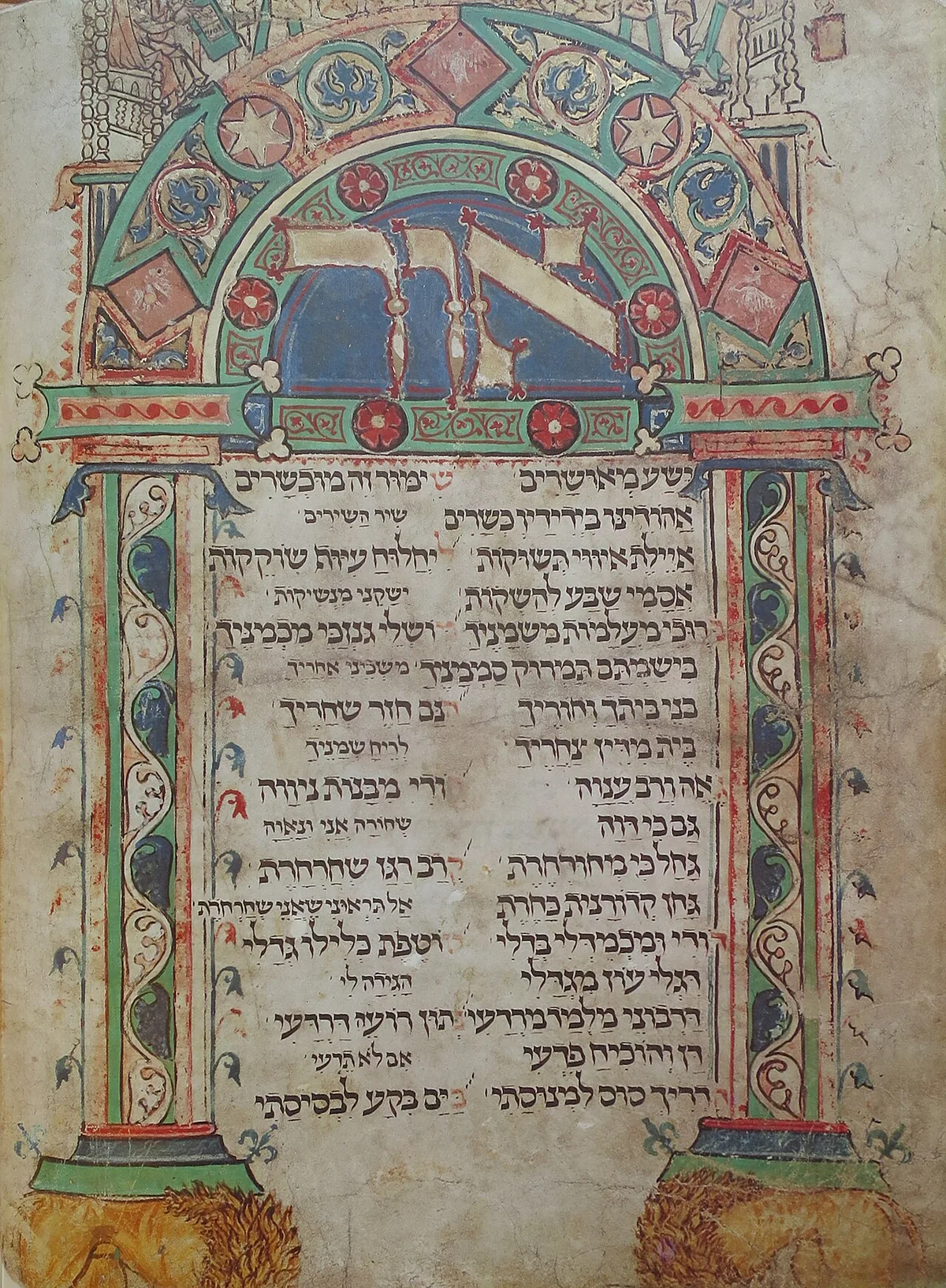
Worms Mahzor, 1272 (scribe Simhah ben Judah; illuminator Shemiah ha-Zarfati). National Library of Israel · Public domain · Source page
The writer whose chronicle is the fullest Hebrew account of 1096; his closing note says he had written the Mainz account by 1140.
- Born: Unknown
- Died: Unknown
- Won: Wrote down the towns, the dates by the Jewish calendar and the deeds of the dead; Joined survivors’ reports and earlier accounts into one story
- Lost: His own life: beyond the closing note, nothing is known of him; The fall of Jerusalem in 1099: his chronicle ends with the crusaders’ defeat in Hungary
Source: What the chronicler says they said
In our words: as the end came at Mainz, the chronicler tells, the Jews said to one another that it was not right to question what God does, who gave the Torah and the command to give one’s life for the unity of His Name; happy are those who do His will, for they go to the World to Come, to Rabbi Akiva and his companions. Afterwards the chronicler himself asks whether the world has ever seen eleven hundred offerings in one day, each like the binding of Isaac.
The chronicler writes some 44 years later, as a believer seeking meaning in a disaster.
- Whose words are these: the martyrs’, or the chronicler’s? The chronicler’s, in the martyrs’ mouths. Some read it as evidence of their faith, others as the survivors’ way of making sense of what happened.
- Why does he call the dead “offerings”? To give their deaths a biblical meaning and comfort his readers; a frame that leaves out those who chose to live.
Source: Two churchmen, two views
Albert of Aachen: “... who had slaughtered the exiled Jews through greed of money, rather than for the sake of God’s justice, although the Jews were opposed to Christ. The Lord is a just judge and orders no one unwillingly, or under compulsion, to come under the yoke of the Catholic faith.”
Ekkehard of Aura: “... they either utterly destroyed the execrable race of the Jews wherever they found them (being even in this matter zealously devoted to the Christian religion) or forced them into the bosom of the Church.”
Both are churchmen writing for Christians: Albert never went east; Ekkehard went in 1101.
- What does Albert condemn, and what does he still believe? He blames the pilgrims’ greed, not the idea of punishing Jews “for the sake of God’s justice”, and says God forces no one into the faith. Yet he calls the Jews “opposed to Christ”.
- How does Ekkehard see the same events? With no sign of disapproval: the Jews are an “execrable race”, the killers “zealously devoted” (some read the phrase as irony). Two churchmen of the same years judged it very differently.
Jerusalem, July 1099
What the sources say about the Jews of Jerusalem
On 15 July 1099 the crusaders took Jerusalem. The city had a Jewish community of Karaites and Rabbanites.
The Latin eyewitnesses we checked do not mention Jews there. Ibn al-Qalanisi, a Damascus official writing decades later, is the only source we know that puts Jews inside the burning synagogue: they gathered in it, he says, and the Franks burned it over them.
Letters from the Cairo Genizah add that many Jews were taken captive, and communities in Egypt and at Ascalon paid to free them. Some were killed; some were captured and ransomed. How many died, we do not know.
Myth
The crusaders drove all the Jews of Jerusalem into the synagogue and burned them alive.
The truth
Ibn al-Qalanisi, in Damascus decades later, is the only source we know that puts Jews inside the synagogue the Franks burned. The Latin eyewitnesses we checked are silent, and no one says the crusaders drove them there. A Genizah letter reportedly mentions a burned synagogue with no one inside; others show many captured and ransomed.
The evidence
Ibn al-Qalanisi (trans. Gibb, 1932); S. D. Goitein (1952).
Ascalon, 1100
What the elders of Ascalon knew, and what they could do
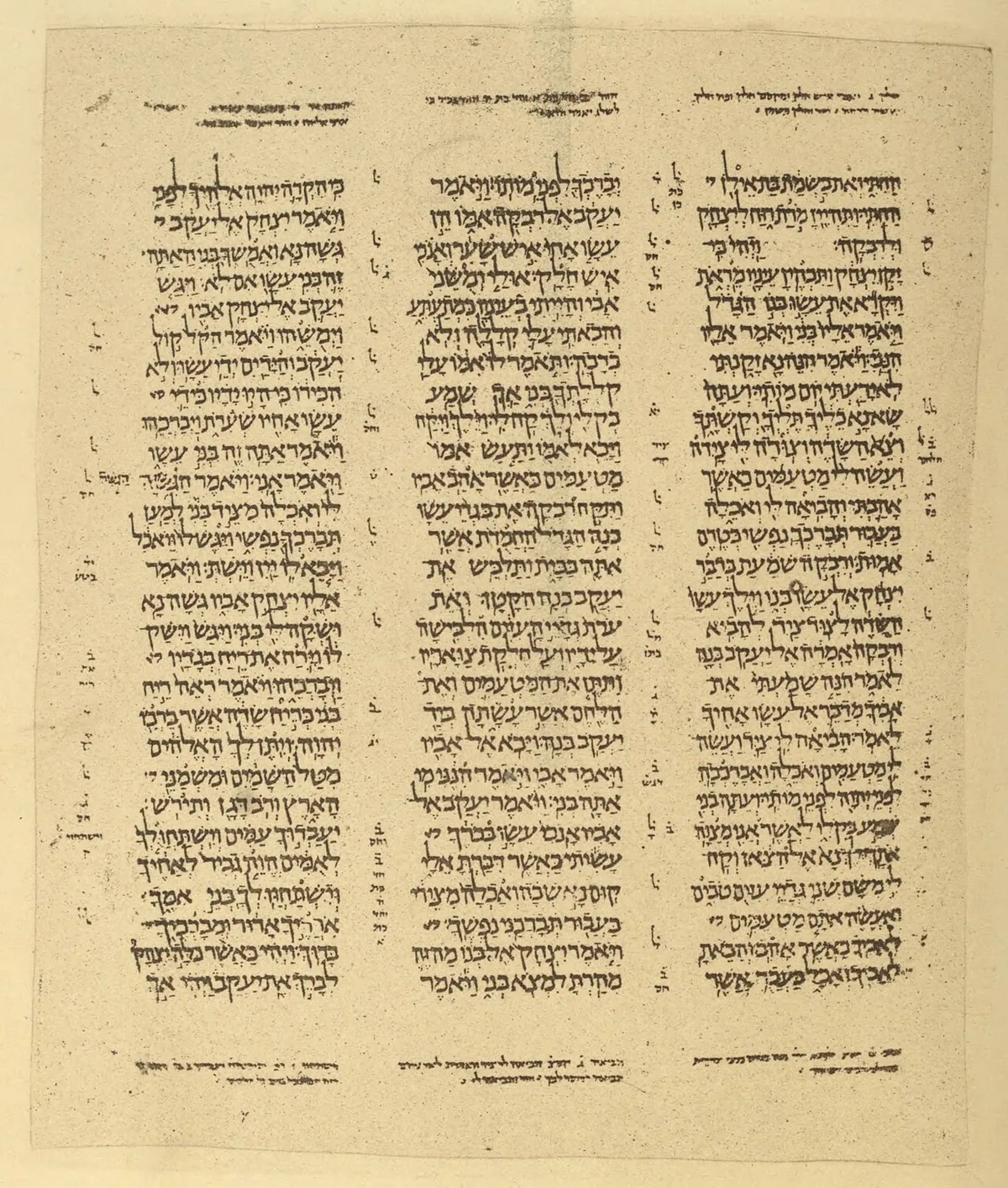
Aleppo Codex, 10th century (Solomon ben Buya’a, scribe; Aaron ben Asher, masorete). Photograph by William Wickes, 1887 · Public domain · Source page
What they knew. Ascalon was still in Egyptian hands. The elders of its Karaite community knew that Jews from Jerusalem were captives of the Franks, and that by the accepted rate, three captives for a hundred dinars, their money would free only a few.
What they could do. Pay, ask Alexandria for more, and ransom the holy books too.
What happened. The price proved lower than the accepted rate. With money from Alexandria they ransomed captives, and 230 volumes, 100 codices and eight Torah scrolls. Some of the freed died on the road, at sea or of plague; some captives, tired of waiting, converted. The elders were left owing 200 dinars. Their letter, kept in the Genizah, is the closest Jewish witness to 1099.
Haifa, summer 1100
Haifa: the town that fought
One more story comes from Albert of Aachen, and only from him. In the summer of 1100, after Godfrey of Bouillon died, Tancred and a Venetian fleet besieged Haifa, a Fatimid town on the coast.
Among its defenders, Albert writes, were “citizens of Jewish stock”, settled there by the ruler of Egypt in return for tribute. They fought on the walls beside the Muslim garrison until the Christians, worn down, gave up attacking for fifteen days. Then Tancred renewed the assault; next day the defenders broke, and Tancred’s knights pursued them through the town, “killing them cruelly” (our translation from the Latin).
Albert does not say how many died or what became of the community; books that say it was wiped out, or date it to 1099, go beyond him.
What remained
Memory
Names read aloud
The communities wrote down their dead. The best-known memorial book, the Memorbuch of Nuremberg, was begun in 1296; its lists of the martyrs of 1096 were read aloud on the Sabbath before Shavuot and before Tisha B’Av.
Poets wrote kinot for the communities, and some entered the Ashkenazi prayer books. The prayer Av HaRachamim, which asks God to remember the “holy communities”, was most likely written after the crusade massacres, and is still said on most Sabbaths.
And the communities rose again. A new synagogue was consecrated at Speyer in 1104, and within a generation the Rhine towns were again centres of learning.
Consequences
What changed
For a time, rulers tried harder. In 1103 Henry IV included the Jews in his peace of the empire. About 1120 Pope Calixtus II repeated the old rule in the bull Sicut Judaeis: Jews were not to be harmed or baptised by force.
But every new crusade brought new danger. In 1146 the monk Radulf called for attacks on the Jews of the Rhine, and Bernard of Clairvaux came to Mainz to stop him, though among his reasons was the hope that they would convert.
In the long run, the Jews’ place in western Europe grew harder. How much of that began in 1096, historians disagree.
After 1096
- 1097 Henry IV lets the forced converts return to Judaism.
- 1099 The crusaders take Jerusalem; many Jews are taken captive.
- 1100 The elders of Ascalon ransom captives and books. Haifa falls to Tancred.
- c. 1120 The bull Sicut Judaeis: Jews are not to be harmed or baptised by force.
- 1146 The Second Crusade: the monk Radulf preaches against the Jews; Bernard of Clairvaux opposes him.
- 1296 The Nuremberg Memorbuch is begun, with the names of the martyrs of 1096.
- 2021 The ShUM sites become a UNESCO World Heritage Site.
Why did it happen, and what do the chronicles show?
Why did armed pilgrims on their way to Jerusalem kill the Jews of the Rhineland, and why did those who might have stopped them fail?
- Robert Chazan, European Jewry and the First Crusade (1987); God, Humanity, and History (2000) Argues that the violence came from particular crusader bands, joined by townspeople, who read the call to fight in the East as a call to fight the “infidels” at home. It was never papal policy, and the bishops opposed it but could not stop it. He reads the Hebrew narratives as valuable reports of events, and also as part of the Jewish religious response.
- Jonathan Riley-Smith, “The First Crusade and the Persecution of the Jews” (1984) Calls it “the first pogrom in western European History”, and begins the story in France, in the winter of 1095–96. He emphasises the idea of vengeance, revenge for Christ carried by the crusade’s own language, as a central motive.
- Jeremy Cohen, Sanctifying the Name of God (2004) Argues that the three twelfth-century chronicles tell us more about the storytellers who wrote them than about the martyrs: beside their praise of self-sacrifice they air doubt, guilt and conflict about those who submitted and survived.
- Israel Jacob Yuval, Two Nations in Your Womb (Hebrew 2000; English 2006) Reads the martyrs’ acts as part of a messianic hope for God’s vengeance on “Edom” and for redemption, and links the Christian reaction to them with the origins of the blood libel. The most contested view; many historians reject it.
Agreed: the killing was widespread; the pope did not order it; the emperor and several bishops tried to stop it, with too little force; and the main Jewish sources were written decades later, to remember. Open: how far the crusade’s own ideas drove it, and what the martyrs themselves believed.
Looking back
Check yourself
What do the versions of Urban II’s speech at Clermont say about the Jews?
Answer: None of them calls for attacks on Jews. Right. Not the four versions of the speech, not the council’s decrees, not Urban’s letters. Even the Hebrew chronicles never say he ordered killing.
Check yourself
In which city were eleven Jews killed, while the bishop saved the rest of the community?
Answer: Speyer. Right. Bishop John came with his men, took the Jews into his own quarters and punished the attackers.
Check yourself
What did Albert of Aachen write about forced baptism?
Answer: That no one may be forced into the faith. Right. He also wrote that a few were baptised “because of fear, rather than because of love”. Yet he still called the Jews “opposed to Christ”.
Check yourself
Why can the Hebrew chronicles not simply be called eyewitness reports?
Answer: They were written decades later, to honour the dead and explain the disaster. Right. Solomon bar Samson wrote the Mainz account by 1140; Eliezer bar Nathan was a child in 1096. They are trusted on places and events, less on numbers.
Check yourself
Which source says the Jews of Jerusalem were burned in their synagogue in 1099?
Answer: Ibn al-Qalanisi, of Damascus. Right. One sentence, in one source written decades later. It may well be true, but the Latin sources we checked are silent, and the Genizah letters tell of captives.
Check yourself
What did Henry IV do in 1097 for those who had been baptised by force?
Answer: He allowed them to return to Judaism. Right. The antipope Clement III, his own ally, protested, and many returned.
Terms
- ShUM The Hebrew initials of Shpira, Warmaisa and Magenza, that is Speyer, Worms and Mainz: the three great Jewish communities of the medieval Rhine, which issued shared rulings. Their sites became a World Heritage Site in 2021.
- privilege A charter in which a king, emperor or bishop grants a group rights and protection: a place to live, freedom to trade, its own courts. The Jews of the Rhine held privileges from the bishop of Speyer (1084) and from Emperor Henry IV (1090).
- parnas The head of a Jewish community, who spoke for it to the authorities and ran its affairs. In 1096 the parnas of Mainz was Kalonymus ben Meshullam.
- Kiddush HaShem “Sanctifying the Name” of God: the self-sacrifice of a Jew who will not give up the faith even in the face of death. The Hebrew chronicles of 1096 use it for all who died rather than accept baptism.
- Akedah The binding of Isaac (Genesis 22), when Abraham is ready to sacrifice his son at God’s command. The chronicles of 1096 compare the martyrs’ deaths to it.
- “Edom” In medieval Hebrew writing, a name for Rome and for the Christian world, after Esau, the brother of Jacob. The chronicles of 1096 use it for the crusaders and for Christians in general.
- forced converts Jews baptised as Christians under threat of death. In 1096 many returned to Judaism as soon as they could, and their communities took them back.
- Karaites A Jewish movement that accepted only the written Bible and rejected the rabbis’ oral law. In 1099 Jerusalem had both Karaites and Rabbanites, who followed the Talmud.
- Cairo Genizah A storeroom of the Ben Ezra synagogue in Fustat (Old Cairo), where writings in Hebrew letters were laid away for centuries. Hundreds of thousands of pages were found there, among them letters from the time of the First Crusade.
- Memorbuch A “memorial book” of an Ashkenazi community: lists of the dead, the martyrs of persecutions among them, read aloud in the synagogue. The Memorbuch of Nuremberg, begun in 1296, includes the martyrs of 1096.
- kinot Laments for destruction. Kinot for the communities lost in 1096 were written in the following decades, and some are still said on Tisha B’Av, the fast for the destruction of the Temple.
- Speyer A city on the Rhine, one of the three great Jewish communities of the Rhineland in the 11th century.
- Worms A city on the Rhine, one of the three great Jewish communities of the Rhineland. In 1096 most of its Jews were killed.
- Mainz A city on the Rhine and a major centre of Ashkenazi Jewry. In 1096 most of its Jews were killed.
- Rabbenu Gershom A rabbi of Mainz whose rulings shaped Jewish life in northern Europe for centuries.
- Rashi A scholar from Troyes in France who studied at Worms and Mainz. His commentaries on the Bible and Talmud are still studied today.
- Henry IV King of Germany and emperor, who gave the Jews charters of privileges. From 1090 to 1097 he stayed in Italy, excommunicated and at war with the pope's party.
- Godfrey of Bouillon A leader of the crusade. According to Solomon bar Samson he swore to avenge Christ's blood on the Jews, and the Jews of Mainz and Cologne paid him a large sum.
- Emicho A nobleman of the Rhineland who led a band of crusaders in 1096. The sources place him at Mainz, where most of the city's Jews were killed.
- Ekkehard of Aura A German monk who wrote about Emicho and the crusaders. He went on crusade himself in 1101.
- Albert of Aachen A canon of Aachen who wrote from the stories of returning crusaders, 25 to 50 years later. He never went on crusade.
- Solomon bar Samson A Rhineland Jewish writer who wrote the longest account of the events of 1096, including Mainz.
- Eliezer bar Nathan A Mainz scholar who was a child in 1096. He wrote a shorter account with laments for the communities.
- Jeremy Cohen A scholar who argues that the chronicles cannot show what the martyrs themselves thought, and that they show the doubt and guilt of the survivors.
- Haym Soloveitchik A scholar who thinks later generations had to stretch Jewish law to justify what had been done in 1096.
- Israel Yuval A scholar who read the martyrs' acts as part of a hope that God would avenge Edom and bring redemption. His view was sharply attacked.
- Ibn al-Qalanisi A Damascus official who wrote decades after the conquest of Jerusalem. He is the only source that puts Jews inside the burning synagogue.
- Ascalon A port city on the coast of the Holy Land, still held by Egypt in 1099.
- Alexandria A great port city in Egypt, from which money came to ransom captives from Jerusalem.
- Aleppo Codex An ancient manuscript of the Bible. A later tradition says it was ransomed together with other holy books in the Crusader period.
- Clement III An antipope and ally of Henry IV. He protested when the king let Jews baptised by force return to Judaism.
- Peter the Hermit A preacher whose crowds marched behind him from spring 1096. He is probably the priest Peter who received food from the Jews of Trier.
- Urban II The pope who in November 1095 called the knights of the West to go east.
- Kalonymus ben Meshullam Head of the Jewish community of Mainz in 1096. He led the Jews who fought in the archbishop's courtyard, and died at Rüdesheim.
- Ruthard Archbishop of Mainz. He took the Jews into his hall and then fled. Later he was accused of keeping some of the murdered Jews' property.
- John of Speyer The bishop of Speyer, who saved nearly all the town's Jews with his armed men and fortified towns.
Sources
- Albert of Aachen, Historia Ierosolimitana I.27–30 (the Rhineland, 1096) and VII.21–25 (Haifa, 1100); Latin in J.-P. Migne, Patrologia Latina 166; the Rhineland chapters in English in August C. Krey, The First Crusade: The Accounts of Eyewitnesses and Participants (Princeton University Press, 1921), pp. 54–56. The Haifa passages are our translation from the Latin
- Ekkehard of Aura, Hierosolymita, extract in Krey, The First Crusade (1921), pp. 53–54
- Solomon bar Samson, Eliezer bar Nathan and the Mainz Anonymous: Hebrew text with German translation in A. Neubauer and M. Stern, Hebräische Berichte über die Judenverfolgungen während der Kreuzzüge (Berlin, 1892); English in Shlomo Eidelberg (trans. and ed.), The Jews and the Crusaders: The Hebrew Chronicles of the First and Second Crusades (Madison: University of Wisconsin Press, 1977). Paraphrased in this lesson
- Bishop Rüdiger of Speyer, charter for the Jews, 1084, and Frederick I’s privilege for the Jews of Worms, 1157, in Oliver J. Thatcher and Edgar H. McNeal, A Source Book for Mediaeval History (New York: Scribner, 1905), nos. 299–300
- Rashi, responsum on a marriage of forced converts, in Jacob R. Marcus, The Jew in the Medieval World: A Source Book, 315–1791 (Cincinnati: Sinai Press, 1938), pp. 301–302. Paraphrased in this lesson
- Ibn al-Qalanisi, Dhayl ta’rikh Dimashq, year 492 AH (paraphrased in this lesson); English trans. H. A. R. Gibb, The Damascus Chronicle of the Crusades (London: Luzac, 1932)
- Letter of the Karaite elders of Ascalon to Alexandria, 1100 (Cambridge University Library, T-S 20.113)
- Privileges granted to crusaders by the Fourth Lateran Council (1215), in Dana C. Munro, “Urban and the Crusaders”, Translations and Reprints from the Original Sources of European History 1.2 (University of Pennsylvania, 1895)
- S. D. Goitein, “Contemporary Letters on the Capture of Jerusalem by the Crusaders”, Journal of Jewish Studies 3:4 (1952), 162–177
- Robert Chazan, European Jewry and the First Crusade (Berkeley: University of California Press, 1987)
- Robert Chazan, God, Humanity, and History: The Hebrew First-Crusade Narratives (Berkeley: University of California Press, 2000)
- Jonathan Riley-Smith, “The First Crusade and the Persecution of the Jews”, in W. J. Sheils (ed.), Persecution and Toleration, Studies in Church History 21 (Oxford: Blackwell, 1984), 51–72
- Jeremy Cohen, Sanctifying the Name of God: Jewish Martyrs and Jewish Memories of the First Crusade (Philadelphia: University of Pennsylvania Press, 2004)
- Israel Jacob Yuval, Two Nations in Your Womb: Perceptions of Jews and Christians in Late Antiquity and the Middle Ages, trans. Barbara Harshav and Jonathan Chipman (Berkeley: University of California Press, 2006)
- David Malkiel, Reconstructing Ashkenaz: The Human Face of Franco-German Jewry, 1000–1250 (Stanford University Press, 2009)
- Benjamin Z. Kedar, “Crusade Historians and the Massacres of 1096”, Jewish History 12:2 (1998), 11–31
- Alan V. Murray, “The army of Godfrey of Bouillon, 1096–1099”, Revue belge de philologie et d’histoire 70 (1992), 301–329
- Gavin I. Langmuir, Toward a Definition of Antisemitism (Berkeley: University of California Press, 1990)
- Richard Gottheil and Joseph Jacobs, “Crusades, The”, The Jewish Encyclopedia, vol. 4 (New York: Funk & Wagnalls, 1903)
- David Nirenberg, “The Rhineland Massacres of Jews in the First Crusade: Memories Medieval and Modern”, in Gerd Althoff, Johannes Fried and Patrick J. Geary (eds.), Medieval Concepts of the Past (Cambridge University Press, 2002), 279–309
- Benjamin Z. Kedar, “The Jerusalem Massacre of July 1099 in the Western Historiography of the Crusades”, Crusades 3 (2004)
Image credits
- Ilsemarie, Worms synagogue, garden side, photograph, 19 March 2005 · CC BY-SA 3.0 · Source page
- Vischroni, gravestone of Jacob ben Yakar, Mainz Jewish cemetery, photograph, 1 March 2003 · CC BY-SA 3.0 · Source page
- Ralf.Mauer, Judensand, Mainz, photograph, 25 September 2011 (Wiki Loves Monuments) · CC BY-SA 3.0 · Source page
- Worms Mahzor, 1272 (scribe Simhah ben Judah; illuminator Shemiah ha-Zarfati). National Library of Israel · Public domain · Source page
- Aleppo Codex, 10th century (Solomon ben Buya’a, scribe; Aaron ben Asher, masorete). Photograph by William Wickes, 1887 · Public domain · Source page


