Istanbul's first coffeehouses
Decisions, questions and your own progress, in the app
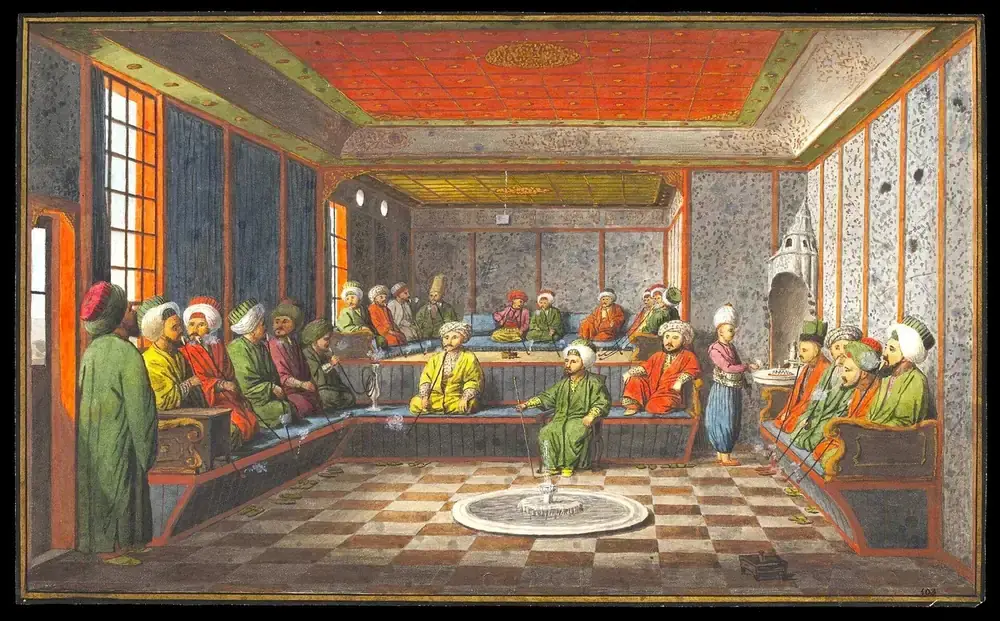
A coffeehouse in Istanbul, watercolour, about 1809 · Unknown Greek watercolourist · Public domain · Source page
From Yemen to the capital
In the 1400s, Sufi mystics in Yemen drank coffee to stay awake during night prayers. The drink spread to Mecca and Cairo. By the 1550s, it reached Istanbul, capital of the Ottoman Empire.
The first coffeehouses open
Around 1555, two men from Syria opened a coffeehouse in Istanbul, according to the Ottoman historian Peçevi. Others soon followed. Men gathered to drink, play backgammon, hear storytellers and talk.
Schools of the wise
Coffeehouses became places to share news, poems and opinions. People nicknamed them schools of the wise. Craftsmen, scholars and officials sat side by side.
A sultan bans them
Rulers worried that coffeehouse talk could turn into rebellion. In 1633, Sultan Murad IV ordered them closed. The ban did not last, and coffeehouses returned after his reign.
Coffee reaches London
1652
In 1652, Pasqua Rosée opened London's first coffeehouse. He had worked for an English merchant in the Ottoman port of Smyrna. Within decades, coffeehouses spread across Europe.
Why it still matters
The coffeehouse created a new kind of public space for news and debate. Cafes around the world follow the same idea. In 2013, UNESCO listed Turkish coffee culture as part of humanity's living heritage.
Review question
Why did Sufis in Yemen first drink coffee?
Answer: To stay awake for night prayers. Sufi mystics used coffee to keep alert during long night devotions. From there the habit spread across the Islamic world.
What did Sultan Murad IV do in 1633?
Answer: Ordered the coffeehouses closed. Murad IV feared coffeehouses were breeding grounds for unrest and banned them. They reopened after his reign.
Image credits
- A coffeehouse in Istanbul, watercolour, about 1809 · Unknown Greek watercolourist · Public domain · Source page
