Chaldiran, 1514: the sultan, the shah and the guns
On 23 August 1514, on a plain in north-west Iran, the Ottoman army of Sultan Selim met the Safavid army of Shah Ismail. Many people say the guns decided the day. Was it really that simple? The sources disagree, and the answer is more interesting than the myth.
Decisions, questions and your own progress, in the app
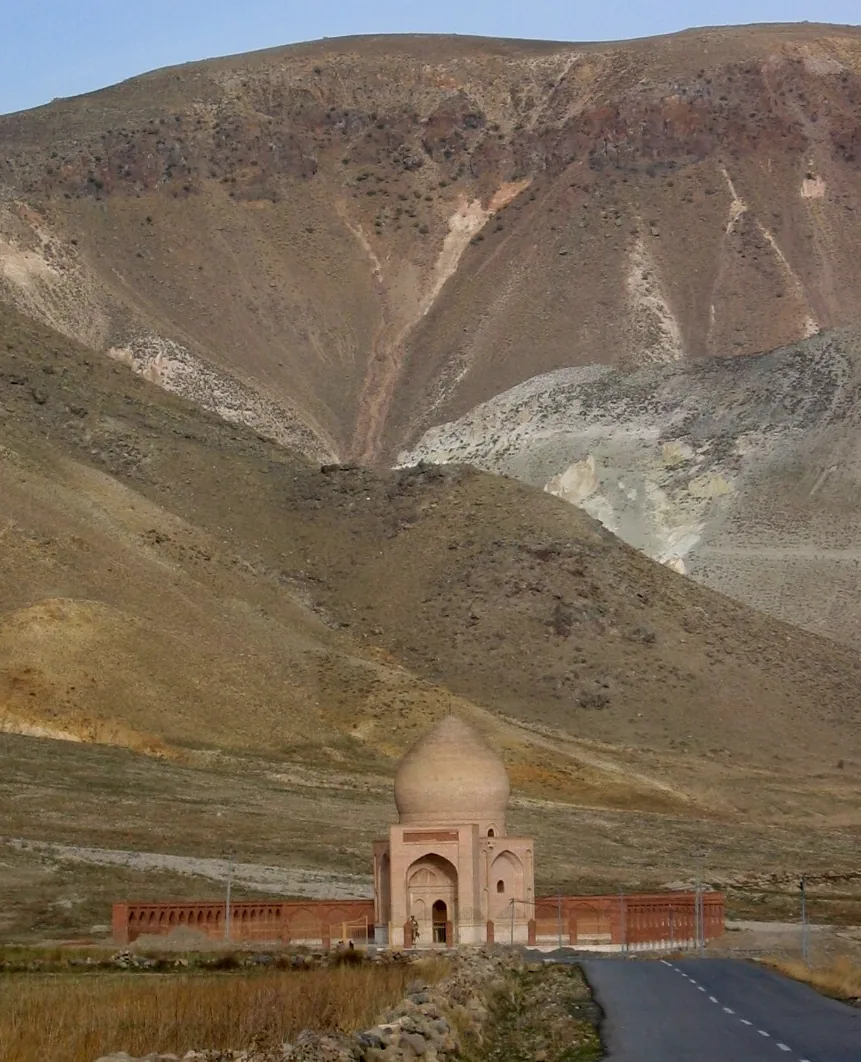
Photo: Malikbek, December 2003 (own work). Chaldiran battlefield monument, Iran. Wikimedia Commons. · Public domain · Source page
The scene
Two armies, one plain
23 August 1514. On a plain in north-west Iran, two armies face each other.
On one side is shah Ismail, who took Tabriz in 1501 and the title of shah with it. On the other is Sultan Selim of the Ottomans, with cannon and janissaries armed with muskets.
One of them is about to lose. Many people say the guns decided it. Was it really that simple?
Why it matters
A rivalry that outlived one battle
Ismail and Selim were rivals in power and in faith. Ismail made the Shi'i branch of Islam, in its Twelver form, the state religion of Iran.
Ismail’s Safavid Iran and the Ottoman Empire were neighbours, and rivals for power in the same region.
The rivalry did not end at Chaldiran. A later war, from 1532 to 1555, ended only with the Peace of Amasya, signed on 29 May 1555. The battle on this plain was not the last word.
Shah Ismail I
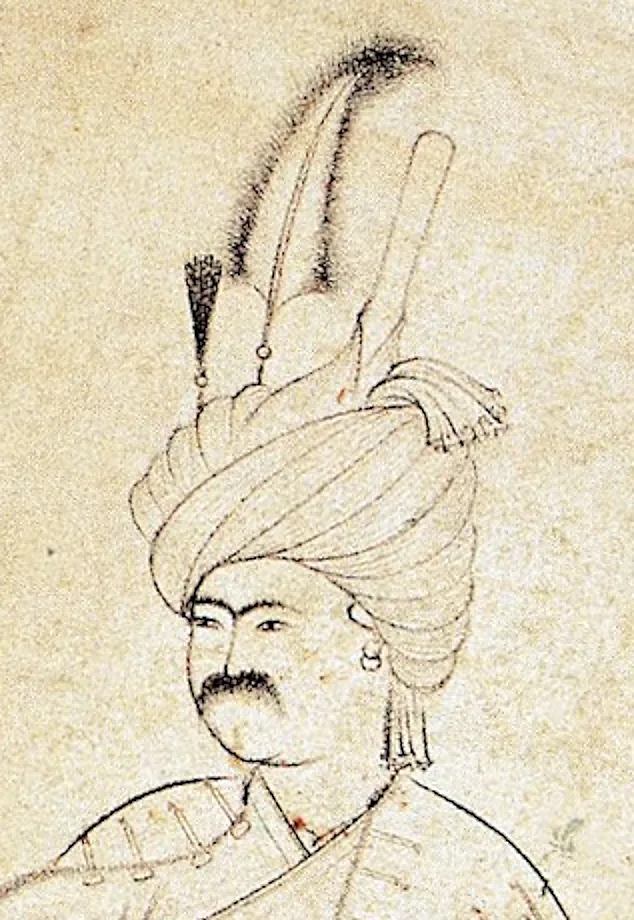
Kamāl ud-Dīn Behzād (copy), c. 1520 (Commons description). Topkapı Palace Museum Library, H. 2169, fol. 64b. · Public domain · Source page
A young shah who took Tabriz in 1501, and lost the battle of Chaldiran in 1514.
- Born: 1487
- Died: 23 May 1524, Sources differ on the place
- Won: Tabriz taken, 1501
- Lost: Chaldiran, 1514
A shah who was also a spiritual guide to his followers.
The road to it
Background
A shah with devoted followers
In 1501 Ismail took Tabriz, and with it the title of shah. His core followers were Turkmen horsemen called Qizilbash.
They saw Ismail as their spiritual guide, and regarded him as infallible. According to the Cambridge History of Iran, the defeat at Chaldiran undermined that belief.
Background
Selim’s Ottomans
Selim was born in Amasya in 1470. He became sultan, and he ruled the Ottoman lands until his death in 1520.
Why did the two rulers fight at all? A modern study by Hasan Mojarabi argues that the war grew from two things: Ottoman policy in eastern Anatolia, which began under the earlier sultan Bayezid II, and Ismail’s religious state.
Some of Ismail’s followers lived inside the sultan’s own lands. In the years before the war, Qizilbash followers in Anatolia had risen in revolt against the sultan.
A decision point
You are Shah Ismail I.
August 1514, on the plain of Chaldiran.
An Ottoman army is marching towards you, under Sultan Selim. You know the Ottomans have cannon and janissaries armed with muskets.
Your army relies on horsemen, and it has few cannon, if any. Your officers want to attack at once.
Earlier, in the west, you ordered scorched earth in front of the enemy, so that the Ottoman army would find no food.
What do you do?
- Attack at once, as your officers urge. Probably your horsemen charge straight at the Ottoman line. You keep the initiative, but must break the guns and the janissaries behind the carts.
- Burn the land ahead of the Ottomans, and let them march through empty country. Probably the Ottoman army runs short of food, but your own farms and villages suffer too. The plan works only if the enemy runs out first.
- Refuse the attack, and hold your ground on the open plain. Probably the Ottomans choose the moment and bring their guns to bear. You keep your horsemen, but the enemy chooses when and where you fight.
What really happened
Refuse the attack, and hold your ground on the open plain.
Ismail refused the attack. The armies met on the open plain. Ottoman cannon and musket-armed janissaries stood behind carts, and Ismail was wounded in the fighting.
In Savory’s account, his reply to the attack was that he would not fight like a raider. The sources do not say what he knew of Ottoman numbers, so his reasons remain open.
The event
The day
The guns behind the carts
Wounded
On 23 August 1514 the armies met. The Ottomans stood behind carts and earthworks, with their cannon and their musket-armed janissaries.
The Safavid horsemen charged. Later historians describe Turkmen cavalry breaking against the janissaries behind their defences. The sources disagree on whether the Safavids had cannon of their own at all.
Ismail was wounded in the fighting. By the end of the day the Ottomans held the field.
Chaldiran: who fought whom
23 August 1514
The Chaldiran plain, north-west Iran
The Ottoman army
- Commanders: Sultan Selim I's army (the sources do not say he led it in person)
- Strength: about 100,000 or more (Encyclopaedia Britannica); about 60,000 (Modern research guide (EBSCO, 2019))
- Losses: No reliable total survives (The sources in general)
Modern estimates differ. One popular review reports that some 16th-century writers give far higher figures. Counts of guns differ widely, so none is given here.
The Safavid army
- Commanders: Shah Ismail I, wounded in the battle
- Strength: under 60,000 (Modern research guide (EBSCO, 2019)); 40,000, 55,000 or 80,000 (Wikipedia, in its summary of the battle); 12,000 to 40,000 (A popular history site (WarHistory))
- Losses: No reliable total survives (The sources in general)
The sources also disagree on whether the Safavids had cannon. One says they had none; another says they had some and did not use them.
Outcome: An Ottoman victory. Ismail was wounded, and Selim’s army entered Tabriz in early September.
Each figure names its source. Where the sources disagree, the card gives each one and does not pick a winner.
Tabriz
Selim enters Tabriz
In early September Selim entered Tabriz, the city Ismail had taken in 1501. The sources give three dates for the entry: 5, 6 or 7 September.
Sources say the army looted the city.
The sultan now held the city that had been the shah’s, and the question was what to do with it.
A decision point
You are Sultan Selim I, in Tabriz.
September 1514.
Ismail’s army has been beaten, and Ismail was wounded. Tabriz lies open to you, and its wealth is within your reach.
Winter is coming. Your army is far from home, and the reports on its supplies disagree.
Some of your advisers want to press deep into Iran. Others want to head west before the cold sets in.
What do you do?
- Press deeper into Iran while Ismail’s army is still broken. Probably you win more ground for a while. But your supply lines grow longer, and your army is already restless.
- Hold Tabriz through the winter, and make it a base for the spring. Probably your men are housed and fed for a while. But food and money run short in the city, and the cold wears on an army far from home.
- Leave Tabriz, and plan to return in the spring. Probably you keep your army and your gains together. But Ismail gets time to rebuild his strength.
What really happened
Leave Tabriz, and plan to return in the spring.
Selim left Tabriz after about eight to ten days and turned back towards Anatolia. Turkish sources say he planned to winter in the region and attack Iran again in the spring, but he left because conditions were not suitable.
Historians disagree on why. One modern review of the sources finds that Turkish sources blame the army’s disobedience. Venetian reports blame a shortage of supplies and a fear of Ismail’s revenge. Safavid accounts blame famine and unrest. Some modern accounts point to discontent among the janissaries.
Afterwards
What the shah did next
Accounts disagree about what Ismail did after the battle. Some accounts say he withdrew from war to his palace and never led another campaign. A Safavid account, as one modern review reports it, says he retook Tabriz about eight days after Selim left.
The sources do not agree, and the evidence is thin. What is clear is that Ismail died on 23 May 1524, ten years after the battle.
What we really know
Source: A court book’s version of the battle
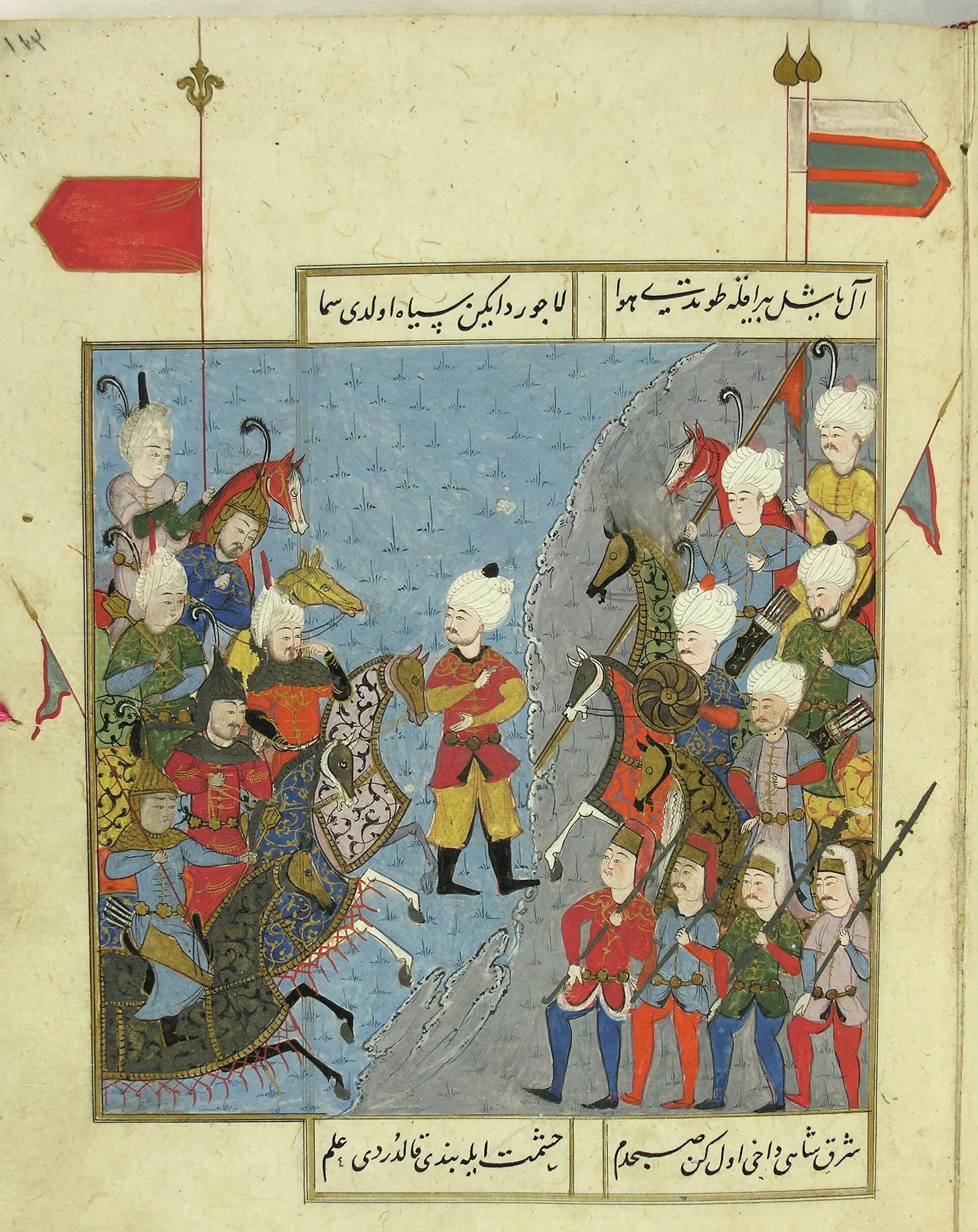
Şükrî-i Bitlisi, Selimnâme, c. 1525–30. Topkapı Palace Museum Library, Istanbul, MS H. 1597–98, fol. 113a. Photo: Zeynep Tarım Ertuğ, courtesy of the Topkapı Palace Museum Library. · Public domain · Source page
Şükrî-i Bitlisi, Selimnâme, c. 1525–30; Topkapı Palace Museum Library, MS H. 1597–98, fol. 113a. A painting, not a quotation.
A miniature, a small painting, from a book about the reign of Sultan Selim I, made more than ten years after the battle for the Ottoman court. Not to be confused with Idris Bitlisi, an Ottoman official who died in Istanbul in 1520. He wrote his own Selim-name after 1514, for the sultan, and presents the Ottoman side. The catalogue describes the lone figure in the picture as a Safavid soldier watching the Ottoman army.
- Who made it, and who was it for? The Ottoman court, in a book about its own sultan. It shows the court’s version of the war.
- What does the picture say about the Safavid side? The catalogue reads the lone figure as a Safavid soldier watching the Ottoman army. If that reading is right, the Safavid side is shown as watchers, not fighters.
- What is missing? The Safavid side’s own account, and any count of men or guns. A picture shows what its makers wanted remembered.
Myth
The Ottomans won only because of their guns.
The truth
Guns were central, but ‘only’ goes too far. The cannon and the musket-armed janissaries mattered. But the battle was also decided by the fighting itself, by cavalry charges that broke against the janissaries, and by Safavid planning and discipline, which some historians blame.
The evidence
The gunpowder view has a famous name behind it: Marshall Hodgson, who coined the term gunpowder empires. Gábor Ágoston argues that firearms usually did not come before the Ottomans’ territorial gains. Douglas Streusand argues that the gunpowder idea is too broad to fit the evidence.
Source: A later copy of a portrait of the shah
Identified on Commons as Kamāl ud-Dīn Behzād, c. 1520; a later copy, Topkapı Palace Museum Library, MS H. 2169, fol. 64b. A drawing, not a quotation.
A later copy of a portrait that Commons identifies as the work of Behzad, about 1520. It is a drawing of a face and turban, not a photograph, and it comes from a manuscript in the Topkapı Palace Museum Library.
- Who made the picture, and when? Commons identifies the artist as Behzad, about 1520. This is a later copy, not the original.
- What does the portrait tell us about how the court wanted the shah seen? A composed face under a tall, plumed turban. It presents authority, not a candid likeness.
- What is missing? A firm date for the copy, the name of whoever commissioned it, and any sign of how close it is to the original. Copies can drift from their model.
A decision point
You are Qansuh al-Ghawri, Mamluk sultan of Egypt and Syria.
1515, in Cairo.
Selim has had Ala al-Dawla, the ruler of Dulkadir and your vassal, killed, and he has sent the dead man’s head to Cairo.
Last year the Ottoman sultan beat the Safavid shah at Chaldiran. Now the Ottomans stand on your northern frontier.
Your advisers are divided. You could march north into Syria, stay in Cairo and wait, or try to reach an arrangement with Ismail.
What do you do?
- Stay out of the war, and let the Ottomans and the Safavids wear each other down. Probably you keep your army and treasury intact for a while. But the Ottomans will not forget a vassal’s death, and they choose when to come to you.
- March north into Syria and meet Selim before he reaches your lands. Probably a hard battle far from Cairo, with no certain win. You might lose your army, but you would choose where the fighting happens.
- Make a secret deal with Ismail to strike Selim from the east. Probably Ismail, so far away and weakened, could give little help. And a secret deal is hard to keep for long.
What really happened
March north into Syria and meet Selim before he reaches your lands.
Qansuh marched north into Syria. He died at Marj Dabiq, near Aleppo, on 24 August 1516. No source shows the Mamluks fighting at Chaldiran.
No statement by Qansuh about his choice survives in the sources checked here, so his reasons are a matter of judgement. How he died is also disputed: some accounts say he fell on the field, others say his own commanders betrayed him.
What followed, and the quiz
What followed
A war that outlived the battle
Chaldiran did not settle the frontier. In 1515 Selim annexed Dulkadir, the land of Ala al-Dawla. In 1517 the Ottomans conquered Mamluk Egypt.
Ismail ruled until his death in 1524. The two states fought again from 1532 to 1555. The Peace of Amasya, on 29 May 1555, ended that war.
So the battle was not the last word. On one day it showed what cannon and musket-armed janissaries could do; the frontier itself was settled much later, and by treaty.
After Chaldiran
- 23 August 1514 Chaldiran: an Ottoman victory. Ismail is wounded.
- September 1514 Selim enters Tabriz, and leaves after about eight to ten days.
- 1515 Selim annexes Dulkadir. Ala al-Dawla’s head is sent to Cairo.
- 24 August 1516 Qansuh al-Ghawri dies at Marj Dabiq, near Aleppo.
- 1517 The Ottomans conquer Mamluk Egypt.
- 23 May 1524 Ismail dies.
- 29 May 1555 The Peace of Amasya ends the war that began in 1532.
Was it the guns?
Did firepower decide Chaldiran, or was something else more important?
- The gunpowder view: Marshall Hodgson, who coined the term ‘gunpowder empires’ in his history of Islam (1974), and writers who followed him. Firepower decided the day. The Safavids had few cannon, if any, while the Ottoman guns and musket-armed janissaries stood ready behind the carts.
- Gene Garthwaite, in The Persians, and Douglas Streusand, in Islamic Gunpowder Empires. Firepower mattered, but the gunpowder idea is too broad. Garthwaite gives firepower the largest share, but blames poor Safavid planning and discipline. Streusand argues that the thesis does not fit the evidence.
- Hasan Mojarabi, in a modern study of the battle. This modern study argues that the war grew from politics and religion: Ottoman policy in eastern Anatolia, and an Iranian state built on Shi'i faith.
Which of these answers would you test first? What source would you need, and would it be Ottoman, Safavid or a later painting?
Check yourself
When his officers urged an immediate attack, what did Ismail do?
Answer: He refused, and the battle was fought on the open plain.. Right. The sources report that he refused, saying he would not fight like a raider, and the battle came on the open plain.
Check yourself
How long did Selim stay in Tabriz?
Answer: About eight to ten days, in September 1514.. Right. The sources give a stay of about eight to ten days, and disagree on the exact dates of entry and departure.
Check yourself
Which statement about the guns at Chaldiran fits the sources best?
Answer: Ottoman guns stood behind carts, and historians disagree on their effect.. Right. The guns and the janissaries were central, but the sources and historians disagree on how much they settled the battle.
Check yourself
Why must you read the Ottoman miniature of the battle with care?
Answer: Made for the Ottoman court over ten years later, so it shows that court’s view.. Right. Books and pictures made for a court show what the patron wanted remembered.
Check yourself
What does the portrait of Ismail, a later copy of a picture that Commons dates to c. 1520, tell us most clearly?
Answer: How the Safavid court wanted its shah to look.. Right. The portrait presents authority rather than a candid likeness, and that tells us about the court as much as about the shah.
Check yourself
The sources give very different army sizes for Chaldiran. How should a careful writer report them?
Answer: Give each figure with its source, and say the estimates are disputed.. Right. Each number needs its source, and the disagreement itself is part of the history.
Terms
- shah The title of a king in Persia (Iran). Ismail took it in 1501, when he took Tabriz.
- Safavid The dynasty of shahs that ruled Iran from 1501, beginning with Ismail.
- Qizilbash Turkmen tribal horsemen who followed Ismail and saw him as their spiritual guide.
- Shi'ism A branch of Islam. Ismail made its Twelver form the state religion of Iran.
- janissary A soldier of the Ottoman sultan’s standing infantry. At Chaldiran, janissaries stood behind the carts with muskets.
- Mamluk A member of the military rulers of Egypt and Syria. Qansuh al-Ghawri was their sultan.
- scorched earth A tactic: destroy crops, food and villages before an enemy army arrives, so it cannot live off the land.
- cannon A heavy gun that throws a ball or shell. Sources describe Ottoman guns at Chaldiran and disagree on whether the Safavids had any.
- gunpowder empire A term coined by the historian Marshall Hodgson for empires whose power rested on firearms, such as the Ottomans. Historians argue about whether the label fits.
- Selim-name A history of Sultan Selim I’s reign, written for the Ottoman court. Idris Bitlisi wrote one after 1514.
- Tabriz City in north-west Iran. Ismail took it, and with it the title of shah.
- Anatolia Large region in western Asia, most of it part of today's Turkey. It was the heartland of the Ottoman lands.
- Peace of Amasya The peace treaty that ended the war between the Ottomans and the Safavid Iran.
- Hasan Mojarabi Modern scholar who argued that the war grew from two causes: Ottoman policy in eastern Anatolia and Ismail's religious state.
- Bayezid II Ottoman sultan, the predecessor of Selim. Ottoman policy in eastern Anatolia began under him.
- Ottoman Empire A large empire centred in today's Turkey. It ruled much of the Middle East and the Balkans.
- Sultan Title of a ruler in Muslim states, such as the Ottoman Empire.
- Musket A long gun for infantry, loaded through the muzzle. In this period it was a key weapon in armies.
- Earthworks A temporary defence of earth, built on the battlefield to shelter the troops behind it.
- Turkmen Nomadic horsemen of Turkic origin, living in Central Asia and Iran. Their horsemen were the core of Ismail's strength.
- Miniature A small, detailed painting, often inside a hand-written book.
- Idris Bitlisi Ottoman official who wrote his own book about Sultan Selim, presenting the Ottoman side.
- Behzad Famous Persian painter. A portrait attributed to him survives in a later copy.
- Topkapı Palace Palace of the Ottoman sultans in Istanbul, now a museum.
- Cairo Capital of Egypt. At this time the Mamluks ruled there.
- Aleppo Large city in northern Syria. The battle of Marj Dabiq took place near it.
- Marj Dabiq Battlefield in northern Syria where the Mamluk sultan Qansuh died.
- Qansuh Mamluk sultan who marched north into Syria and died at Marj Dabiq.
- Dulkadir Small principality in Anatolia that was a vassal of the Mamluks. Selim annexed it.
- Vassal A ruler or state that owes loyalty and service to a greater lord.
- Ala al-Dawla Ruler of Dulkadir and a vassal of the Mamluks. Selim had him killed and sent his head to Cairo.
- Cambridge History of Iran A large series of books on the history of Iran, written by many scholars.
Sources
- Idris Bitlisi, Selimname (Selim-name), written after 1514; the author died in Istanbul in 1520
- Şükrî-i Bitlisi, Selimnâme, c. 1525–30, Topkapı Palace Museum Library, MS H. 1597–98, fol. 113a
- Portrait of Shah Ismail I, c. 1520, identified on Commons as the work of Kamāl ud-Dīn Behzād; later copy, Topkapı Palace Museum Library, MS H. 2169, fol. 64b
- Roger Savory, Iran under the Safavids (Cambridge University Press, 1980)
- Gábor Ágoston, Guns for the Sultan: Military Power and the Weapons Industry in the Ottoman Empire (Cambridge University Press, 2005)
- Marshall G. S. Hodgson, The Venture of Islam, vol. 3 (University of Chicago Press, 1974)
- Douglas E. Streusand, Islamic Gunpowder Empires (Westview Press, 2010)
- Gene R. Garthwaite, The Persians (Blackwell)
- Hasan Mojarabi, “A Study of the Factors, and Political, Social and Cultural Consequences of the Battle of Chaldiran (920 AH / 1514 AD) According to Turkish Historians”, Historical Study of War 2(3) (2018), pp. 115–148
Image credits
- Photo: Malikbek, December 2003 (own work). Chaldiran battlefield monument, Iran. Wikimedia Commons. · Public domain · Source page
- Kamāl ud-Dīn Behzād (copy), c. 1520 (Commons description). Topkapı Palace Museum Library, H. 2169, fol. 64b. · Public domain · Source page
- Şükrî-i Bitlisi, Selimnâme, c. 1525–30. Topkapı Palace Museum Library, Istanbul, MS H. 1597–98, fol. 113a. Photo: Zeynep Tarım Ertuğ, courtesy of the Topkapı Palace Museum Library. · Public domain · Source page


