Ashoka turns to Buddhism
Decisions, questions and your own progress, in the app
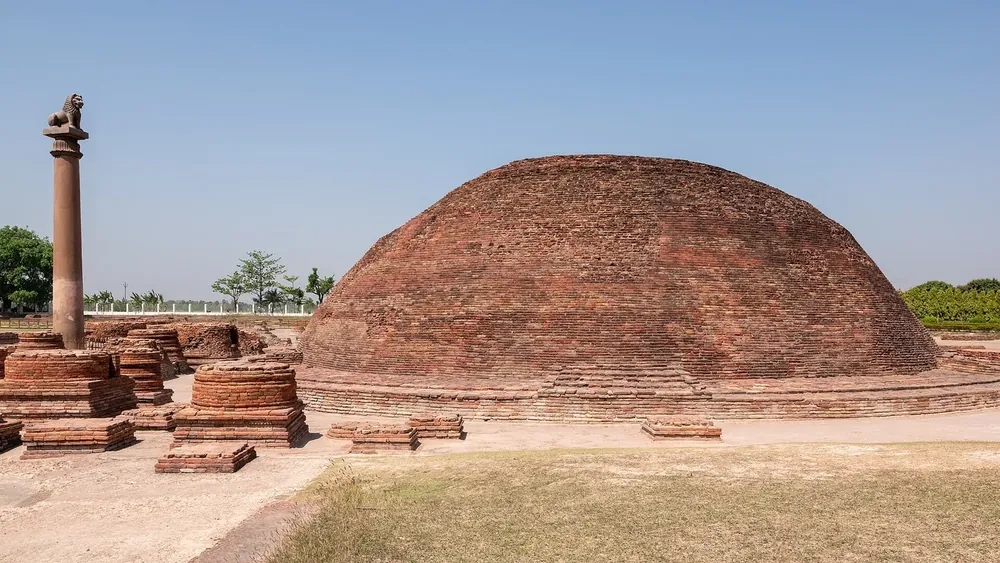
An Ashoka pillar with its lion beside a stupa at Vaishali · Rohit Sharma · CC BY-SA 4.0 · Source page
An empire built by war
Ashoka ruled the Maurya Empire, which covered most of the Indian subcontinent. Around 261 BC, he invaded Kalinga, a kingdom on India's east coast.
The cost of Kalinga
100,000
Ashoka's own inscriptions say about 100,000 people were killed in the war. About 150,000 more were carried away as captives. Many others died later from hunger and disease.
A king's regret
After the war, Ashoka became a devoted follower of Buddhism. He announced that he regretted the suffering he had caused. He promised to rule by dhamma, a code of moral conduct.
Messages carved in stone
Ashoka had his ideas carved on rocks and stone pillars across his empire. They urged kindness to animals, respect for elders and tolerance of other faiths. They are among the oldest readable writings from India.
Buddhism travels abroad
Ashoka sent Buddhist missionaries to other lands. Tradition says his son Mahinda carried the faith to Sri Lanka. Buddhism later spread across much of Asia.
Why it still matters
India's national emblem is the lion capital from one of Ashoka's pillars at Sarnath. The Ashoka wheel sits at the centre of India's flag.
Review question
What event led Ashoka to embrace Buddhism?
Answer: His bloody conquest of Kalinga. The huge loss of life in the Kalinga war filled Ashoka with regret. He then devoted himself to Buddhism.
How did Ashoka spread his message across his empire?
Answer: Inscriptions carved on rocks and pillars. Ashoka's edicts were carved on rocks and stone pillars. Many still survive across India, Nepal, Pakistan and Afghanistan.
Image credits
- An Ashoka pillar with its lion beside a stupa at Vaishali · Rohit Sharma · CC BY-SA 4.0 · Source page
