Wu Zetian rules China
Decisions, questions and your own progress, in the app
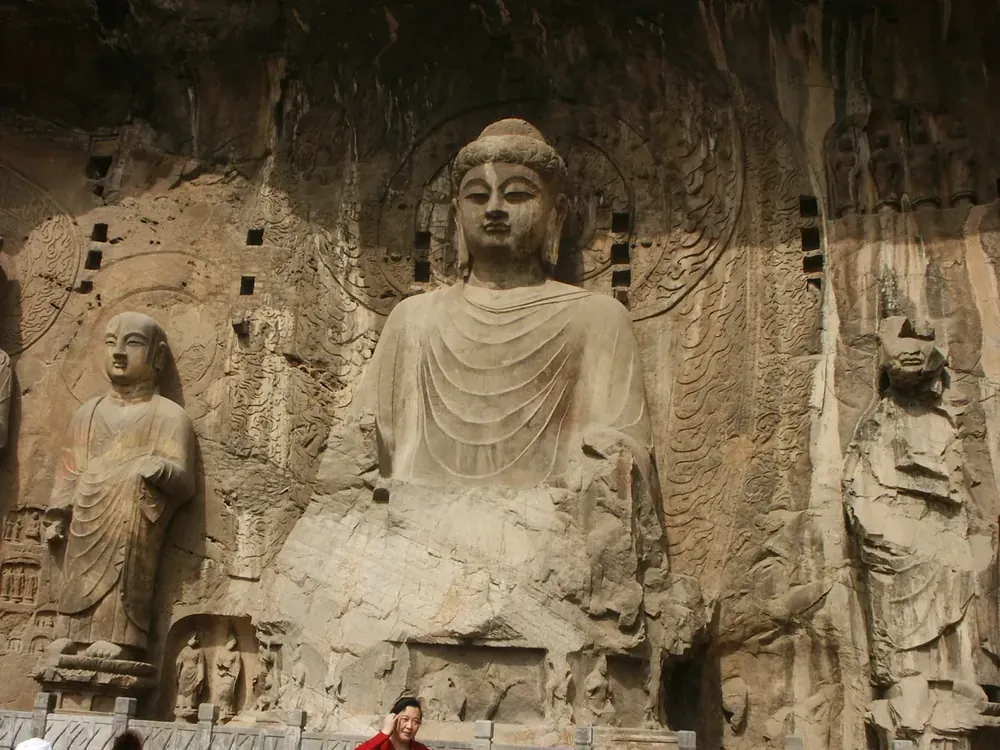
The Vairocana Buddha at Longmen, from Tang times · Gary Todd · CC0 · Source page
From the palace edges
Wu Zhao entered the Tang court as a young concubine in the 630s. After Emperor Taizong died, she returned as a consort of his son, Emperor Gaozong. In 655, she became his empress.
Power behind the throne
Gaozong suffered from poor health, including strokes. Wu began handling government business and joined him at court. After he died in 683, she ruled through her sons.
Emperor in her own name
In 690, Wu declared a new dynasty called Zhou and took the title of emperor. She is the only woman in Chinese history to rule in her own name. She made Luoyang her main capital.
Half a century of power
Nearly 50 years
Wu stood at the centre of power for nearly 50 years, as empress, regent and then emperor. Her own reign lasted 15 years. A palace coup forced her to give up the throne in 705.
Talent and terror
Wu expanded the civil service exams, so more officials rose through merit. She was a strong patron of Buddhism. She also used informers and secret police, and many rivals were exiled or killed.
Why it still matters
Traditional Confucian historians often painted Wu as a villain. Many now see her as capable and ruthless, like many emperors. Her story shows a woman reaching the top of a system built to keep her out.
Review question
What did Wu Zetian name the dynasty she declared in 690?
Answer: Zhou. Wu named her dynasty Zhou, after an ancient and respected Chinese dynasty. It ended when she was forced from the throne in 705.
How did Wu change the way officials were chosen?
Answer: She expanded the civil service exams. Wu widened the exam system, so more officials won posts through ability. This weakened the hold of old aristocratic families.
Image credits
- The Vairocana Buddha at Longmen, from Tang times · Gary Todd · CC0 · Source page
