Building the Taj Mahal
Decisions, questions and your own progress, in the app
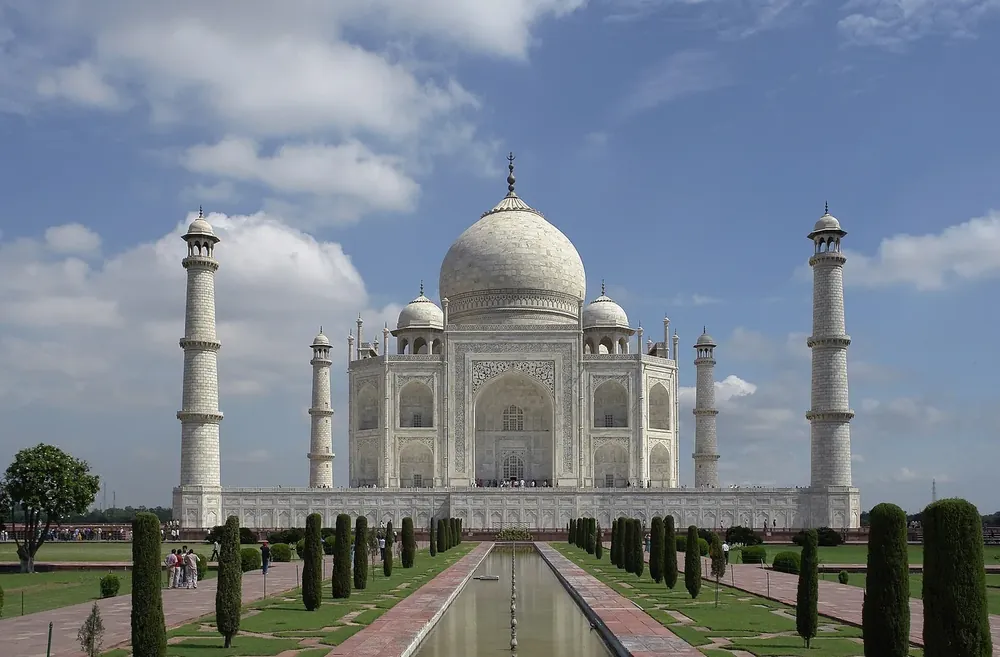
The Taj Mahal, Agra · Yann; edited by King of Hearts · CC BY-SA 4.0 · Source page
An emperor's grief
In 1631, Mumtaz Mahal died while giving birth to her fourteenth child. She was the beloved wife of Shah Jahan, the Mughal emperor. Heartbroken, he planned a tomb unlike any other.
An army of builders
about 20,000
About 20,000 workers built the Taj Mahal in Agra, beside the Yamuna River. Work began in 1632. The main tomb was finished around 1643, and the whole complex around 1653.
White marble and jewels
The tomb is faced with white marble from Makrana in Rajasthan. Craftsmen inlaid it with semi-precious stones in flower patterns. Verses from the Quran decorate the great arches.
Perfect balance
The design is almost perfectly symmetrical. The four minarets lean slightly outward, probably so they would fall away from the tomb if they ever collapsed. Long gardens with water channels lead visitors toward the dome.
A sad ending
In 1658, Shah Jahan's son Aurangzeb seized power and imprisoned him in Agra Fort. Tradition says he could see the Taj Mahal from his rooms. After his death, he was buried beside Mumtaz.
Why it still matters
The Taj Mahal became a UNESCO World Heritage Site in 1983. It is the most famous example of Mughal architecture. Millions of people visit it every year.
Review question
Why did Shah Jahan build the Taj Mahal?
Answer: As a tomb for his wife Mumtaz Mahal. Shah Jahan built it as a tomb after Mumtaz Mahal died in 1631. He was later buried there beside her.
What stone covers the Taj Mahal's main tomb?
Answer: White marble. The tomb is faced with white marble from Makrana. Red sandstone appears in nearby buildings like the gateway and mosque, which makes it a tempting wrong answer.
Image credits
- The Taj Mahal, Agra · Yann; edited by King of Hearts · CC BY-SA 4.0 · Source page
