New Zealand women win the vote
Decisions, questions and your own progress, in the app
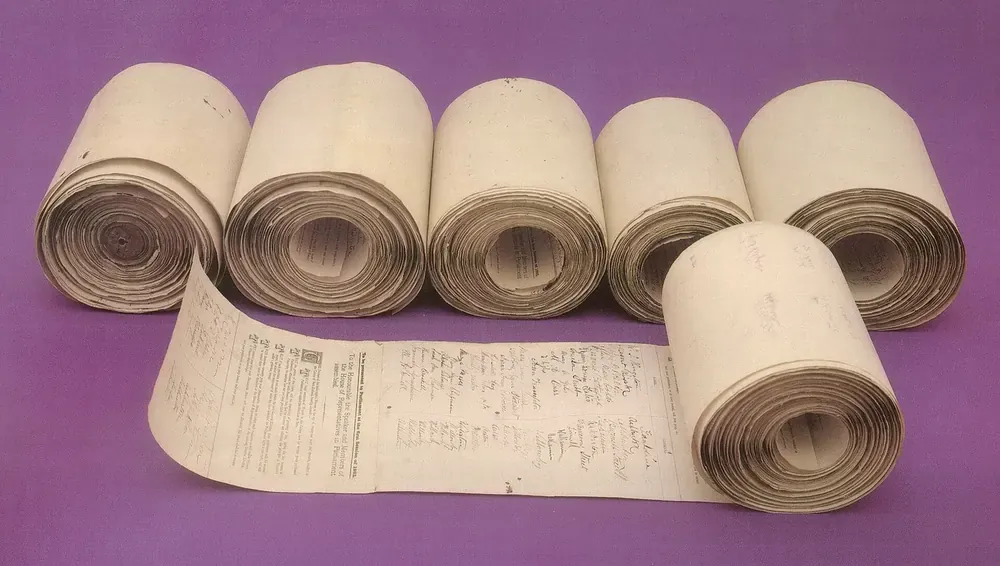
The 1893 women’s suffrage petition · Archives New Zealand from New Zealand · CC BY-SA 2.0 · Source page
A world of male voters
In the 1800s, almost no country let women vote in national elections. In the self-governing British colony of New Zealand, women organised to change that.
Kate Sheppard leads
Kate Sheppard led the campaign through the Women's Christian Temperance Union. Campaigners wrote pamphlets, held meetings and lobbied politicians. They sent a series of petitions to Parliament between 1891 and 1893.
A record petition
Nearly 32,000
In 1893, the petitions carried nearly 32,000 signatures. The largest held about 24,000, glued into one roll about 270 metres long. The MP John Hall unrolled it across the floor of the debating chamber.
The law passes
On 19 September 1893, the Governor signed the new Electoral Act into law. New Zealand became the first self-governing country where women could vote in national elections. Māori women won the vote too.
A rush to vote
Women had only about ten weeks to enrol before the November election. Even so, most adult women signed up, and many voted for the first time. Women could not stand for Parliament until 1919.
Why it still matters
New Zealand's success gave campaigners in Britain, the United States and elsewhere a real example to point to. Kate Sheppard now appears on the country's ten-dollar note.
Review question
Which organisation did Kate Sheppard work through to lead the campaign?
Answer: The Women's Christian Temperance Union. The Women's Christian Temperance Union ran the suffrage campaign in New Zealand. The New Zealand Labour Party was not founded until 1916.
What was unusual about the largest 1893 petition?
Answer: Its sheets formed a roll about 270 metres long. Its sheets, holding about 24,000 signatures, were glued end to end. The huge roll showed Parliament how much support the cause had.
Image credits
- The 1893 women’s suffrage petition · Archives New Zealand from New Zealand · CC BY-SA 2.0 · Source page
