Maria Theresa and the War of the Austrian Succession
Decisions, questions and your own progress, in the app
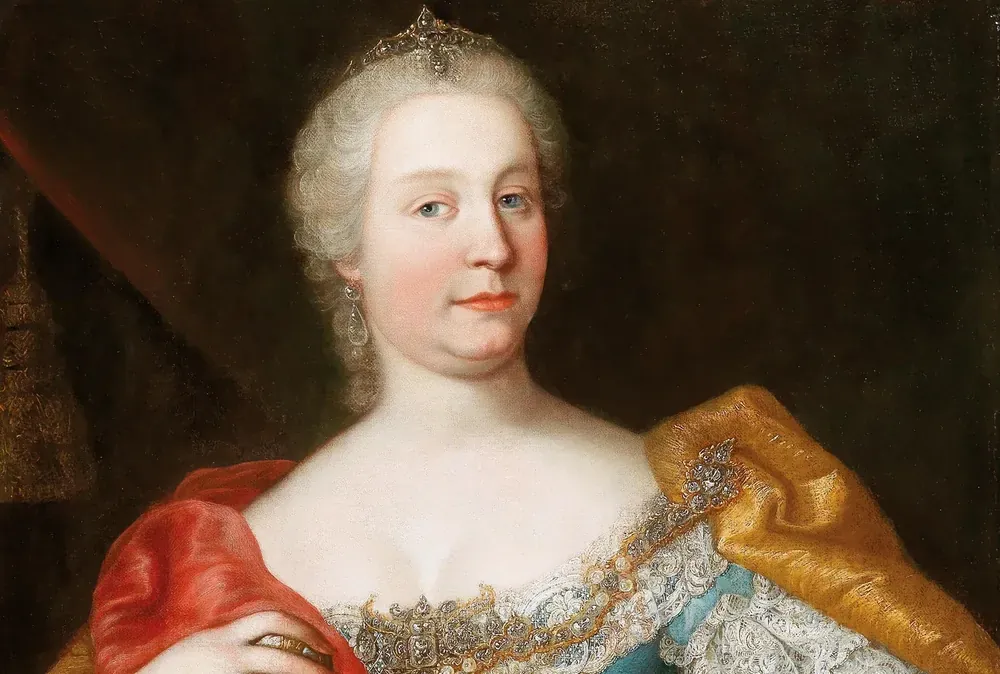
Maria Theresa, workshop of Martin van Meytens · Workshop of Martin van Meytens · Public domain · Source page
An inheritance in doubt
Emperor Charles VI of the Habsburgs had no son. He spent years getting other rulers to accept a law, the Pragmatic Sanction, so that his daughter Maria Theresa could inherit his lands.
Twenty-three and alone
When Charles died in October 1740, Maria Theresa was 23, with little training in government, and the treasury was almost empty. Within two months Frederick II of Prussia invaded the rich province of Silesia.
Eight years of war
8 years
Bavaria, France and Spain also moved to take Habsburg lands. The War of the Austrian Succession lasted from 1740 to 1748.
An appeal to Hungary
In 1741 she went to Pressburg and spoke to the Hungarian nobles, with her baby son in her arms. Tradition says they shouted that they would give their lives for their king. Hungary sent troops and money.
She kept most of her lands
The peace of 1748 left Austria without Silesia but with the rest of her inheritance. Her husband Francis was elected Holy Roman Emperor in 1745, and she ruled for forty years as archduchess and queen.
Why it still matters
She built a modern state: a standing army, regular taxes and state schools. She had sixteen children, among them Marie Antoinette and the future emperor Joseph II.
Review question
What did Frederick II of Prussia seize in 1740?
Answer: Silesia. Silesia was a rich Habsburg province. Prussia kept it after the war.
Which of Maria Theresa's daughters became queen of France?
Answer: Marie Antoinette. Marie Antoinette married the future Louis XVI in 1770.
Image credits
- Maria Theresa, workshop of Martin van Meytens · Workshop of Martin van Meytens · Public domain · Source page
