Pachacuti builds the Inca Empire
Decisions, questions and your own progress, in the app
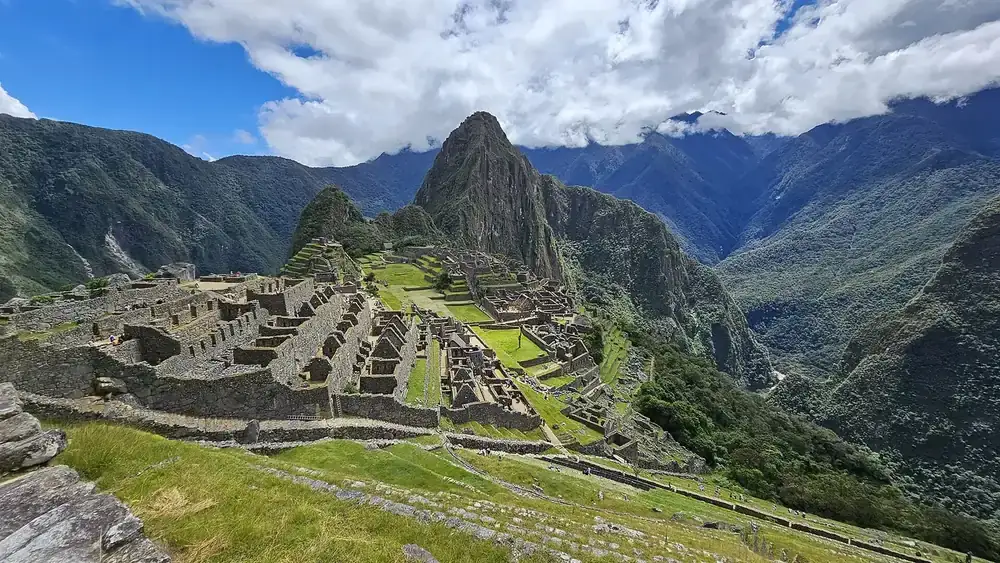
Machu Picchu, an estate of Pachacuti · Jorge Castro Ruso · CC BY-SA 2.0 · Source page
A small kingdom in danger
In the early 1400s, the Inca were one of many peoples in the Andes mountains. Their capital was Cusco, in modern Peru. Around 1438, the rival Chanka people attacked the city.
A new ruler
A prince named Cusi Yupanqui led the defence and defeated the Chanka. He took the throne and the name Pachacuti. The name is often translated as "earth-shaker".
An empire on the move
Pachacuti and his son Topa Inca expanded the kingdom quickly. By the early 1500s, it stretched from southern Colombia to central Chile. The Inca called it Tawantinsuyu, meaning "the four parts together".
Roads across the Andes
over 30,000 km
The Inca built a road network more than 30,000 kilometres long. Relay runners called chasquis carried messages along it. Rope bridges took the roads across deep gorges.
Ruling without writing
The Inca had no known written script. Instead, they kept records on khipus, which were cords tied with knots. Officials used them to track people, taxes and goods.
Why it still matters
Spanish conquerors led by Francisco Pizarro toppled the empire in the 1530s. Machu Picchu, probably built as an estate for Pachacuti, survives today. Quechua, the Inca language, is still spoken by millions.
Review question
How did the Inca keep records without writing?
Answer: Knotted cords called khipus. Khipus stored information in the type and position of knots on cords. Officials used them for counts and accounts.
Who carried messages along the Inca roads?
Answer: Relay runners called chasquis. The Inca had no horses. Chasquis ran in relays between stations to move messages quickly across the empire.
Image credits
- Machu Picchu, an estate of Pachacuti · Jorge Castro Ruso · CC BY-SA 2.0 · Source page
