The Code of Hammurabi
Open the interactive lesson
Decisions, questions and your own progress, in the app
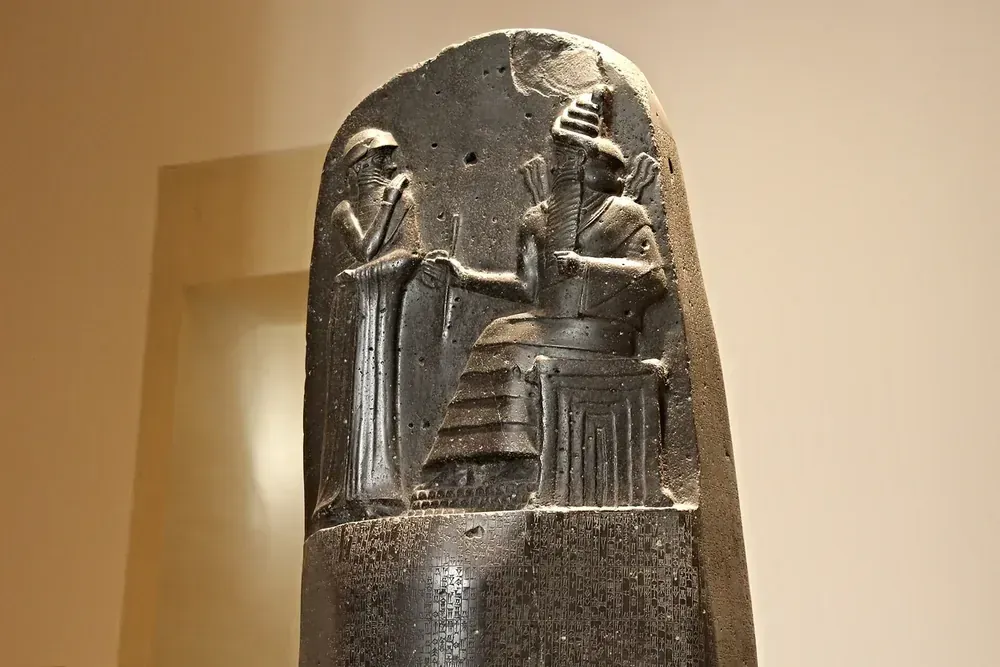
The stele of Hammurabi in the Louvre, with the sun god giving the law to the king · Fred Romero from Paris, France · CC BY 2.0 · Source page
The story
King Hammurabi of Babylon had 282 laws carved onto a black stone pillar and set up in public, so anyone could see the rules.
What happened next
Punishments depended on who you were. "An eye for an eye" applied between equals, but hurting a poorer person often meant only a fine.
Remember
- One of the oldest written law codes
- Carved on a basalt pillar over 2 m tall
- The pillar is now in the Louvre, Paris
Review question
Where can you see the pillar of Hammurabi today?
Answer: The Louvre, Paris. French archaeologists found it at Susa, in Iran, in 1901 and took it to Paris.
Image credits
- The stele of Hammurabi in the Louvre, with the sun god giving the law to the king · Fred Romero from Paris, France · CC BY 2.0 · Source page
