The Haitian Revolution
Decisions, questions and your own progress, in the app
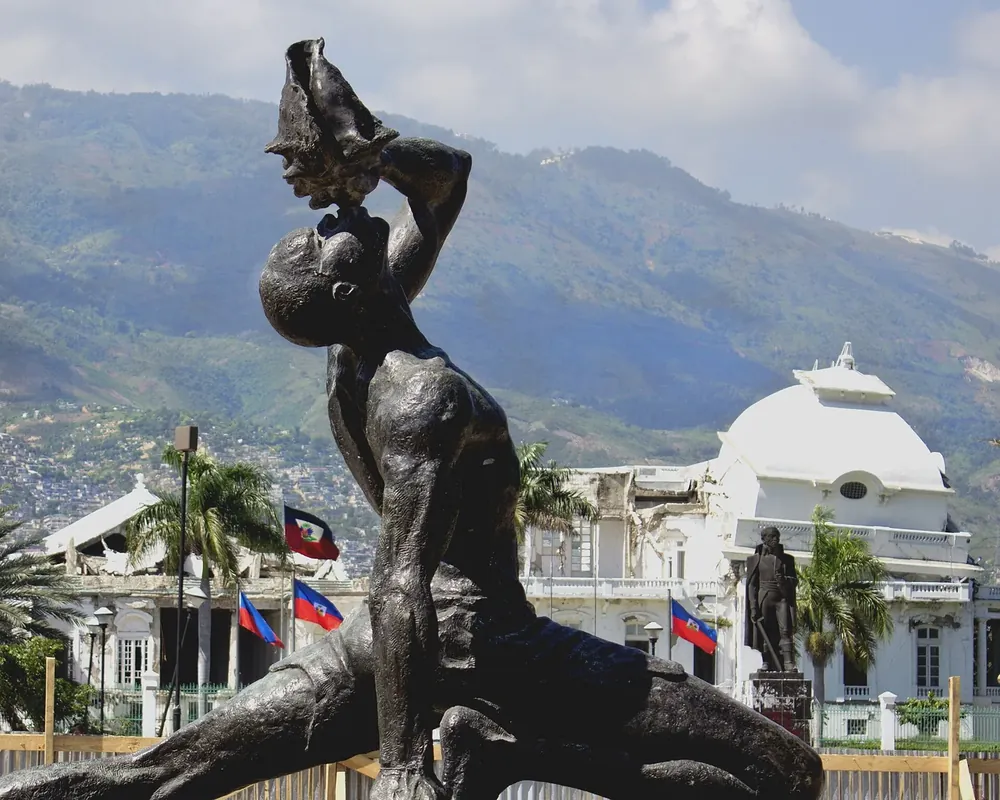
The Unknown Maroon statue in Port-au-Prince · | Kristina Just · CC BY 2.0 · Source page
France's richest colony
In the 1780s, Saint-Domingue was France's richest colony and a world leader in sugar and coffee. That wealth came from enslaved Africans forced to work on plantations in brutal conditions.
A colony built on slavery
About 500,000
About half a million enslaved people lived in the colony. They far outnumbered the roughly 40,000 white colonists. Many enslaved Africans died within a few years of arriving.
The uprising begins
In August 1791, enslaved people on the northern plains rose up. They burned plantations and fought for their freedom. Within weeks, the revolt had spread across the north.
Toussaint Louverture
Toussaint Louverture, a formerly enslaved man, became the revolution's leading general. In 1794, France abolished slavery in its colonies. Toussaint went on to govern the colony and gave it a constitution.
Defeating Napoleon's army
In 1802, Napoleon sent a large army to retake the colony. Toussaint was captured and died in a French prison. His officer Jean-Jacques Dessalines led the fight that defeated the French in 1803. He declared Haiti independent on 1 January 1804.
Why it still matters
Haiti became the first nation founded by people who freed themselves from slavery. Its revolution alarmed slaveholders and inspired enslaved people across the Americas. It showed that ideas of liberty belonged to everyone.
Review question
Who declared Haiti's independence on 1 January 1804?
Answer: Jean-Jacques Dessalines. Toussaint had died in a French prison in 1803. Dessalines led the final victory and proclaimed independence.
What made Haiti's founding unique?
Answer: It was the first nation founded by formerly enslaved people. Haiti was created by people who overthrew slavery themselves. The United States had already broken away from Britain in 1776.
Image credits
- The Unknown Maroon statue in Port-au-Prince · | Kristina Just · CC BY 2.0 · Source page
