The Dutch Revolt against Spain
Decisions, questions and your own progress, in the app
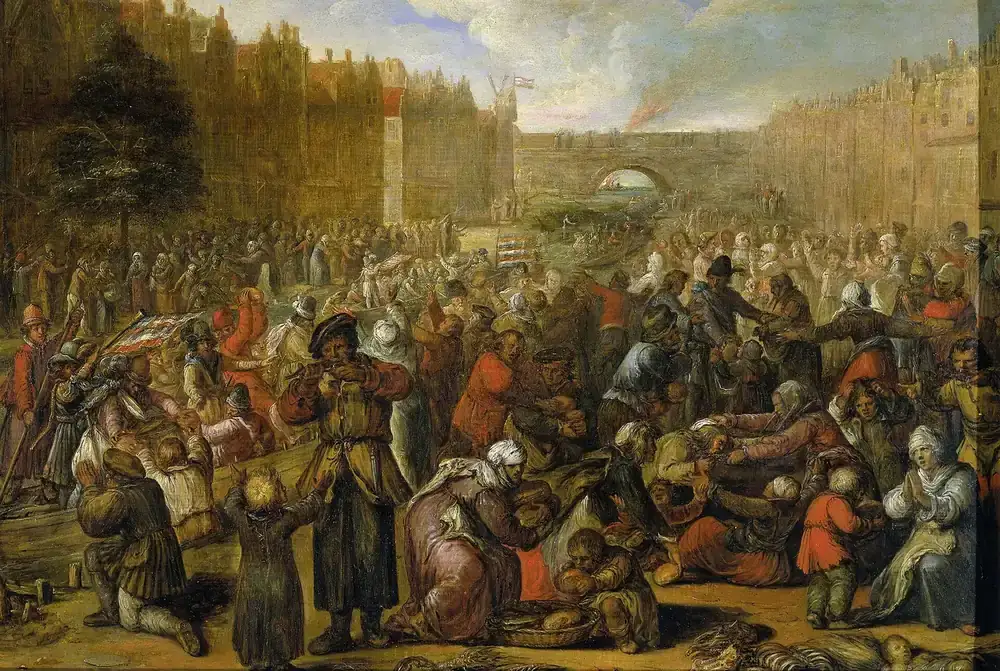
Herring and bread handed out after the relief of the Siege of Leiden, 1574, painting by Otto van Veen · Public domain · Source page
Rich cities under a foreign king
In the 1500s the Netherlands belonged to the Spanish king Philip II. Its cities were among the richest in Europe, but people resented Spanish taxes and the harsh hunt for Protestants.
William of Orange
William of Orange, a nobleman nicknamed William the Silent, first served the king. After the Spanish governor began executing nobles and Protestants, William left the country and led a revolt that began in 1568.
Eighty years
80 years
The war lasted, with pauses, until 1648, so it is called the Eighty Years' War. Spain's armies were the best in Europe, but the Dutch opened dikes to flood the land and break sieges, as at Leiden in 1574.
North against south
In 1579 the northern provinces joined in the Union of Utrecht, and in 1581 they declared that they no longer obeyed Philip. A killer murdered William in 1584, but the revolt went on.
A republic of merchants
The northern Netherlands became the Dutch Republic, ruled by provincial councils and rich merchants, not by a king. It allowed more religious freedom than most states, and Jews forced out of Spain and Portugal settled in Amsterdam.
Why it still matters
Spain accepted Dutch independence in 1648. The small republic grew into a trading empire. Its anthem, the Wilhelmus, which is about William, is one of the oldest national anthems in the world.
Review question
Which king did the Dutch rebel against?
Answer: Philip II of Spain. Philip II ruled the Netherlands from Spain. Louis XIV came to the throne in 1643, and Elizabeth was not their ruler.
How did the Dutch save Leiden in 1574?
Answer: They opened the dikes and flooded the land. The flood let ships bring food to the starving city and forced the Spanish to leave.
Image credits
- Herring and bread handed out after the relief of the Siege of Leiden, 1574, painting by Otto van Veen · Public domain · Source page
