Athens invents democracy
Open the interactive lesson
Decisions, questions and your own progress, in the app
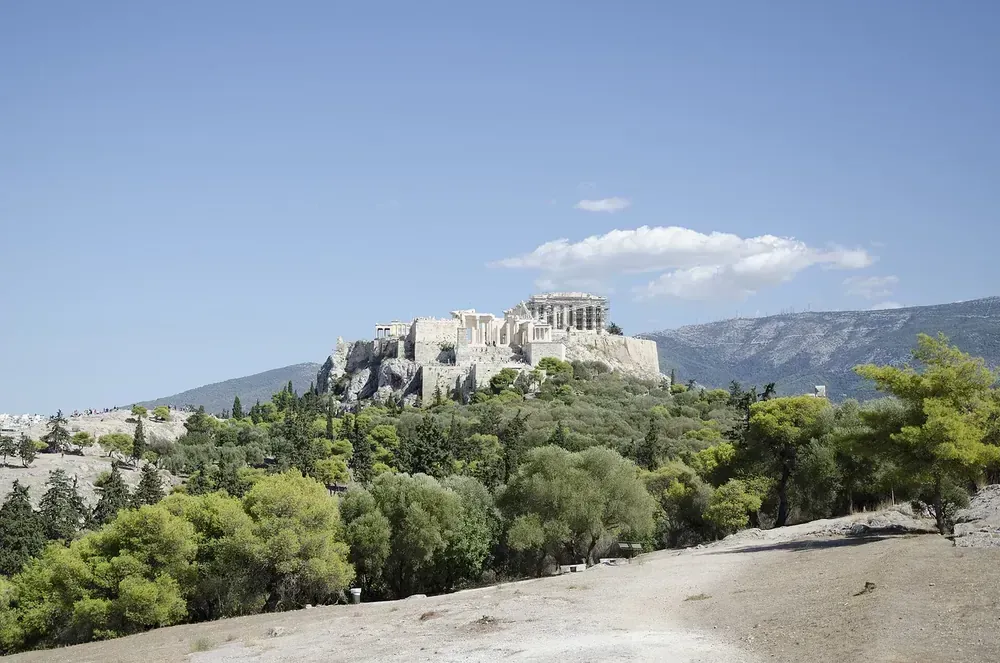
The Acropolis seen from the Pnyx, where the Assembly met · Peulle · CC BY-SA 4.0 · Source page
The story
The reformer Cleisthenes gave power to the citizens of Athens. They met on a hill called the Pnyx and voted on laws by raising their hands.
What happened next
Not everyone counted as a citizen. Women, enslaved people and foreigners could not vote, so only a minority of the people living in Athens had a say.
Remember
- "Democracy" comes from the Greek demos, "people", and kratos, "power"
- Citizens could vote to exile a leader for ten years. This was called ostracism.
- Many officials were picked by lottery, not by election
Review question
Who was allowed to vote in ancient Athens?
Answer: Adult male citizens. Women, enslaved people and foreigners were left out, but citizens did not need to be rich.
Image credits
- The Acropolis seen from the Pnyx, where the Assembly met · Peulle · CC BY-SA 4.0 · Source page
