Angkor Wat, a temple city
Decisions, questions and your own progress, in the app
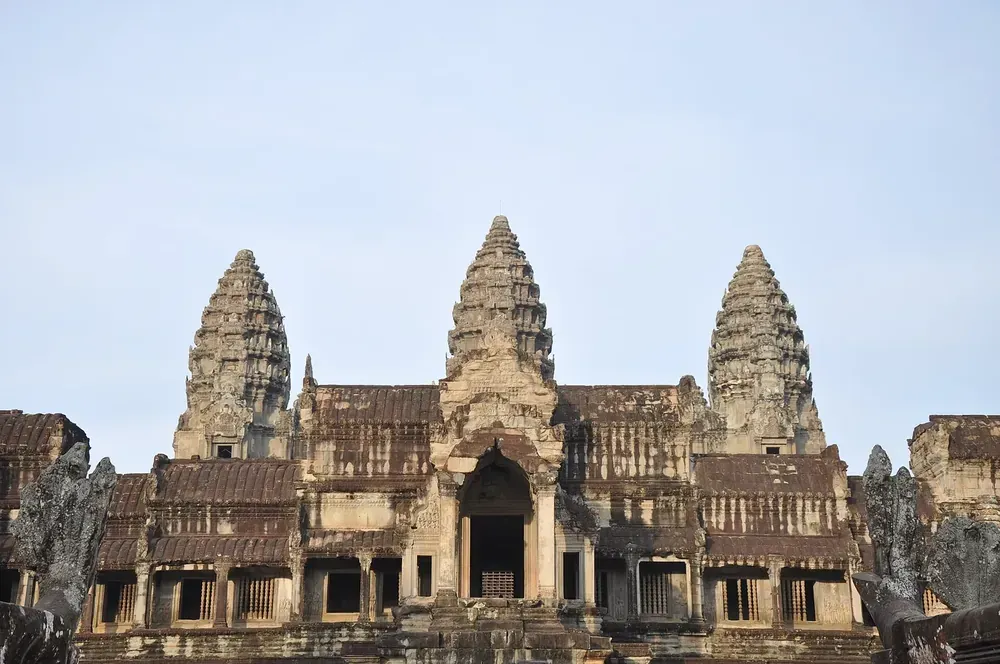
The towers of Angkor Wat · Jorge Láscar from Australia · CC BY 2.0 · Source page
A king's grand plan
In the early 1100s, King Suryavarman II ruled the Khmer Empire from Angkor, in today's Cambodia. He ordered a vast stone temple dedicated to the Hindu god Vishnu.
A mountain made of stone
The temple's five towers stand for the peaks of Mount Meru, home of the gods in Hindu belief. A wide moat around it represents the ocean surrounding the world.
The largest religious site
about 400 acres
The temple complex covers about 400 acres, or 162 hectares. It is often called the largest religious monument in the world. Building it took several decades.
Stories carved in stone
Workers moved huge sandstone blocks from quarries about 40 kilometres away, probably by canal. Artists covered the walls with carvings of battles, gods and legends. One famous panel shows gods and demons churning a sea of milk.
From Hindu to Buddhist
Over time, Angkor Wat became a Buddhist temple. Monks kept using it after the Khmer capital moved away in the 1400s. It was never fully abandoned.
Why it still matters
Angkor Wat appears on Cambodia's national flag. It became a UNESCO World Heritage Site in 1992. Visitors from around the world gather to watch the sunrise over its towers.
Review question
Which god was Angkor Wat first dedicated to?
Answer: Vishnu. Suryavarman II dedicated the temple to Vishnu. It later became a Buddhist temple.
What do Angkor Wat's five towers represent?
Answer: The peaks of Mount Meru. In Hindu belief, Mount Meru is the home of the gods. The towers recreate its five peaks in stone.
Image credits
- The towers of Angkor Wat · Jorge Láscar from Australia · CC BY 2.0 · Source page
