Amundsen reaches the South Pole
Decisions, questions and your own progress, in the app
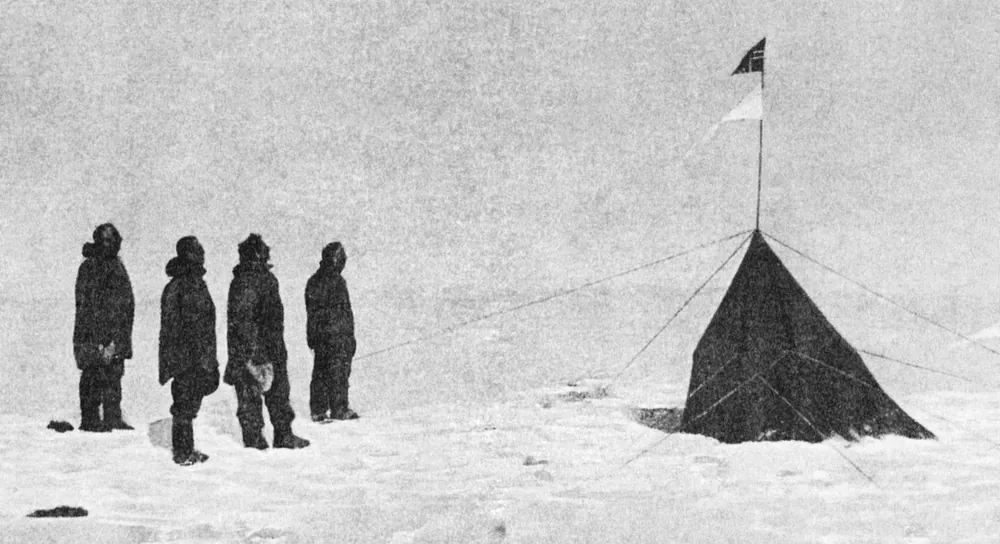
Amundsen's party at the South Pole, December 1911 · Olav Bjaaland (1863-1961)[1] · Public domain · Source page
A secret change of plan
In 1910, Norwegian explorer Roald Amundsen set sail on the ship Fram. He had said he was heading to the Arctic. At a stop in Madeira, he revealed his real goal: the South Pole.
Lessons from the Arctic
Years earlier, Amundsen had lived among Inuit people in northern Canada. From them he learned to drive dog sleds and wear fur clothing. These skills helped him travel fast over ice.
Dogs that pulled them
52 dogs
The polar team set out with 52 dogs pulling four sledges. As planned, many dogs were later killed to feed the men and the other dogs. Eleven dogs made it back to base.
Planting the flag
On 14 December 1911, Amundsen and four companions reached the South Pole. They were the first people known to stand there. They raised the Norwegian flag and left a tent with letters inside.
Scott arrives too late
British explorer Robert Falcon Scott reached the pole on 17 January 1912. He found Amundsen's tent already waiting. Scott and his four companions all died on the journey back.
Why it still matters
Amundsen's success showed the value of careful planning and learning from local peoples. Today the Amundsen-Scott South Pole Station honours both explorers. Scientists there study climate and space.
Review question
What helped Amundsen travel quickly across the ice?
Answer: Dog sleds and Inuit-style clothing. Amundsen copied Inuit methods he had learned in the Arctic. Scott relied partly on motor sledges and ponies, which struggled in the cold.
Who reached the South Pole about a month after Amundsen?
Answer: Robert Falcon Scott. Scott's team arrived on 17 January 1912 and found Amundsen's tent. All five men died on the return journey.
Image credits
- Amundsen's party at the South Pole, December 1911 · Olav Bjaaland (1863-1961)[1] · Public domain · Source page
